Acetic acid, 2-(triphenylphosphoranylidene)-, ethyl ester → Ethyl 4-(3-bromophenyl)butanoate
HRID 53303
反応式
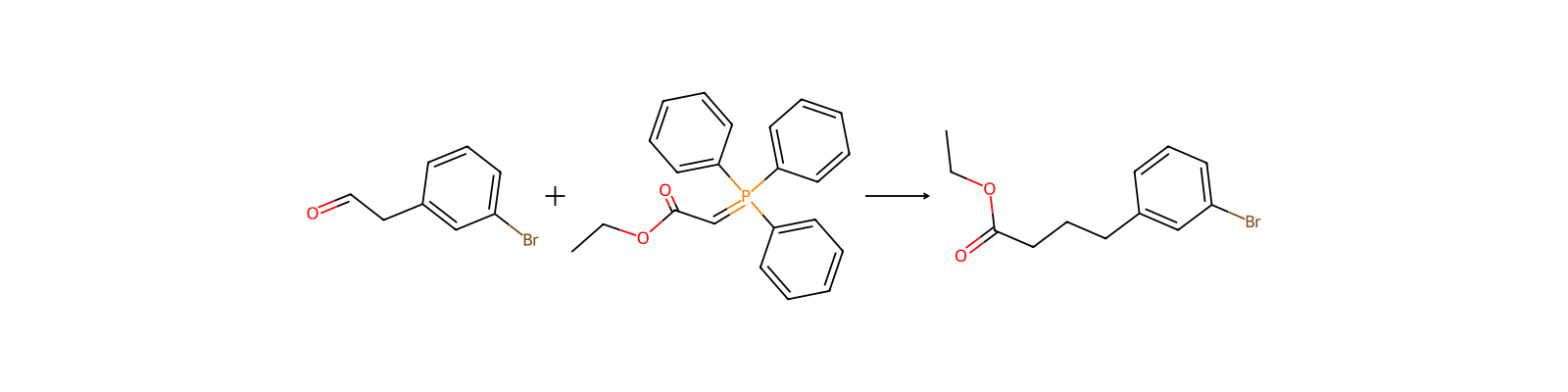
[Br:1][C:2]1[CH:3]=[C:4]([CH2:8][CH:9]=O)[CH:5]=[CH:6][CH:7]=1.[C:11]([CH:16]=P(C1C=CC=CC=1)(C1C=CC=CC=1)C1C=CC=CC=1)([O:13][CH2:14][CH3:15])=[O:12]>>[Br:1][C:2]1[CH:3]=[C:4]([CH2:8][CH2:9][CH2:16][C:11]([O:13][CH2:14][CH3:15])=[O:12])[CH:5]=[CH:6][CH:7]=1参加物
3


実験手順
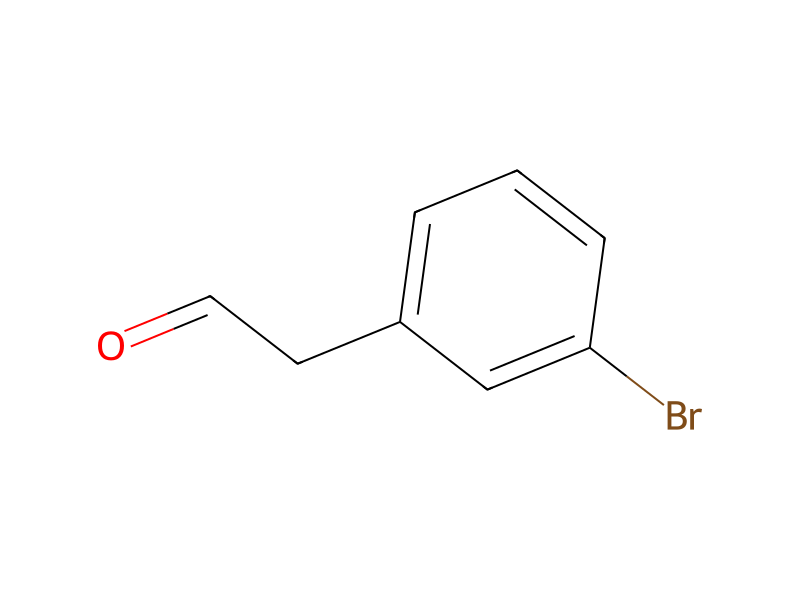
In the preferred compounds of the invention the two R1 substituents are methyl, and the R2 and R3 substituents are hydrogen. Reaction Scheme 2 illustrates a synthetic process for preparing 7-bromo-3,4-dihydro-4,4-dimethylnaphthalen-1-one (Compound G) which serves as a starting material for the synthesis of several preferred compounds of the invention. Thus, referring now specifically to Reaction Scheme 2, ethyl 3-bromophenylacetate (Compound B, made by esterification of 3-bromophenylacetic acid) is reduced with diisobutylaluminum hydride (DIBAL-H) to yield (3-bromophenyl)acetaldehyde. (3-Bromophenyl)acetaldehyde is reacted in a Wittig reaction with (carbethoxymethylene)triphenylphosphorane to provide a mixture of E and Z ethyl 4-(3-bromophenyl)but-2-enoates. The latter compounds are hydrogenated to yield ethyl 4-(3-bromophenyl)butanoate (Compound D). Compound D is reacted with the Grignard reagent derived from methylbromide to give the tertiary alcohol 5-(3-bromophenyl)-2-methylpentan-2-ol (Compound E) (It should be apparent to those skilled in the art, that the choice of the Grignard reagent used in this reaction step determines the nature of the R1 substituent in the resulting compounds of the invention.) Compound E is then treated with acid to cyclize it and to form 6-bromo-1,2,3,4-tetrahydro-1,1-dimethylnaphthalene (Compound F). Compound F is oxidized with chromium trioxide to yield 7-bromo-3,4-dihydro-4,4-dimethylnaphthalen-1(2H)-one (Compound G). Compound G is covered by Formula 10 and in accordance with Reaction Scheme 1 serves as a starting material in the synthesis of several preferred compounds of the invention.