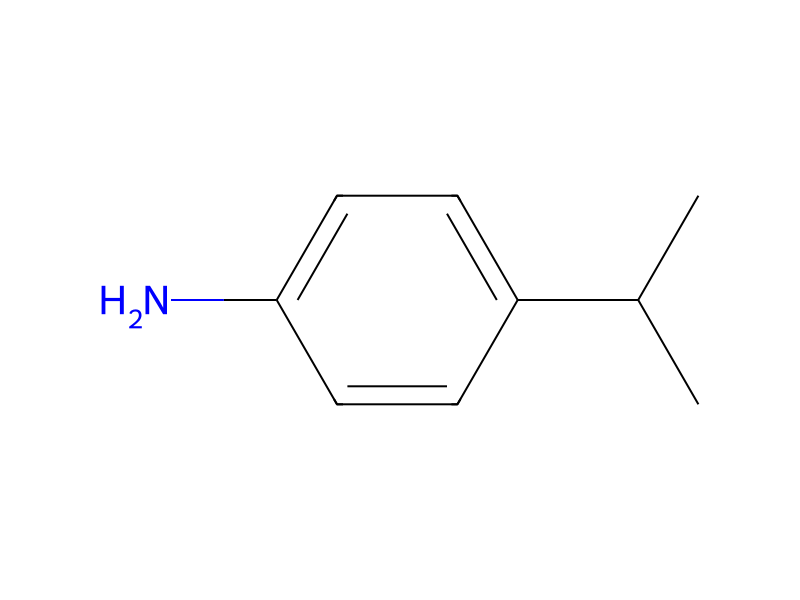
4-Isopropylaniline → HCID 13121218、化合物
HRID 544387
反応式

Cl[C:2]1[C:7]([CH3:8])=[C:6]([CH3:9])[N:5]=[CH:4][N:3]=1.[CH:10]([C:13]1[CH:19]=[CH:18][C:16]([NH2:17])=[CH:15][CH:14]=1)([CH3:12])[CH3:11]>>[CH:10]([C:13]1[CH:19]=[CH:18][C:16]([NH:17][C:2]2[C:7]([CH3:8])=[C:6]([CH3:9])[N:5]=[CH:4][N:3]=2)=[CH:15][CH:14]=1)([CH3:12])[CH3:11]参加物
3


実験手順
To 3.6 g (0.025 mole) of 4-chloro-5,6-dimethylpyrimidine were added 3.4 g (0.025 mole) of p-isopropylaniline; the mixture was then heated at 100°-150° C. for about 3 minutes. The reaction mixture quickly became a solution and soon produced a precipitate, which was separated and then made alkaline by the addition of 50 ml of a dilute aqueous solution of sodium hydroxide. The mixture was then extracted with ethyl acetate and the extract was washed, in turn, with water and with a saturated aqueous solution of sodium chloride. It was then dried over anhydrous sodium sulphate and then the ethyl acetate was distilled off under reduced pressure, to give crystals, which, on recrystallisation froma 3:1 by volume mixture of benzene and hexane, gave 1.4 g (yield 23%) of the desired product in the form of very fine colourless needles melting at132°-133° C.