Ethylene → Ethene propene ethylidenenorbornene
HRID 565615
反応式

C=C.[CH:3](=[C:5]1[CH2:10][CH:9]2[CH2:11][CH:6]1[CH:7]=[CH:8]2)[CH3:4].[CH2:12]=[CH:13][CH3:14]>ClC1C=CC=CC=1Cl>[CH2:3]=[CH2:4].[CH2:12]=[CH:13][CH3:14].[CH:3](=[C:5]1[CH2:10][CH:9]2[CH2:11][CH:6]1[CH:7]=[CH:8]2)[CH3:4]参加物
5

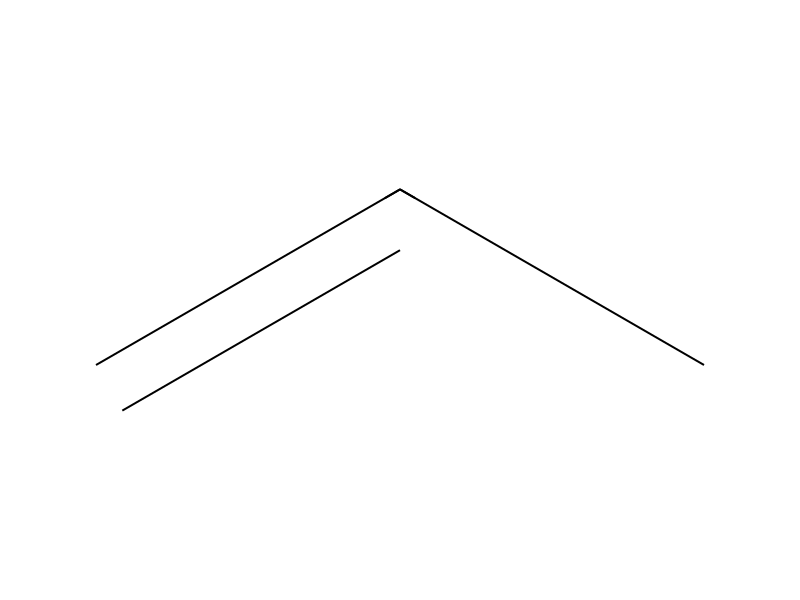


実験手順
The procedure was as in Example 60, but 5×10⁻⁷ mol of rac-[(ind)Et2PBCl2(ind)ZrCl2] activated with 5×10⁻³ mol of MAO were used as the catalyst. The internal pressure was increased by 2 bar with ethene. The polymerization took place in the presence of 1 g of ethylidene-norbornene (ENB). The terpolymer formed (1.5 g) comprised 63% by weight of ethene, 35% by weight of propene and 2% by weight of ENB. The limiting viscosity in ortho-dichlorobenzene at 140° C. was 1.86 dl/g. The GPC measurement in o-Cl2-benzene at 140° C. gave Mw=460 kg/mol, Mn=203 kg/mol. The DSC measurement in the second heating up showed an amorphous polymer with a glass transition Tg=−50° C.