Perhydroxyl radical → Peroxylinoleic acid
HRID 567655
反応式

[O-:1]O.[C:3]([OH:22])(=[O:21])[CH2:4][CH2:5][CH2:6][CH2:7][CH2:8][CH2:9][CH2:10]/[CH:11]=[CH:12]\[CH2:13]/[CH:14]=[CH:15]\[CH2:16][CH2:17][CH2:18][CH2:19][CH3:20]>C(Cl)Cl>[C:3]([O:22][OH:1])(=[O:21])[CH2:4][CH2:5][CH2:6][CH2:7][CH2:8][CH2:9][CH2:10]/[CH:11]=[CH:12]\[CH2:13]/[CH:14]=[CH:15]\[CH2:16][CH2:17][CH2:18][CH2:19][CH3:20]参加物
4

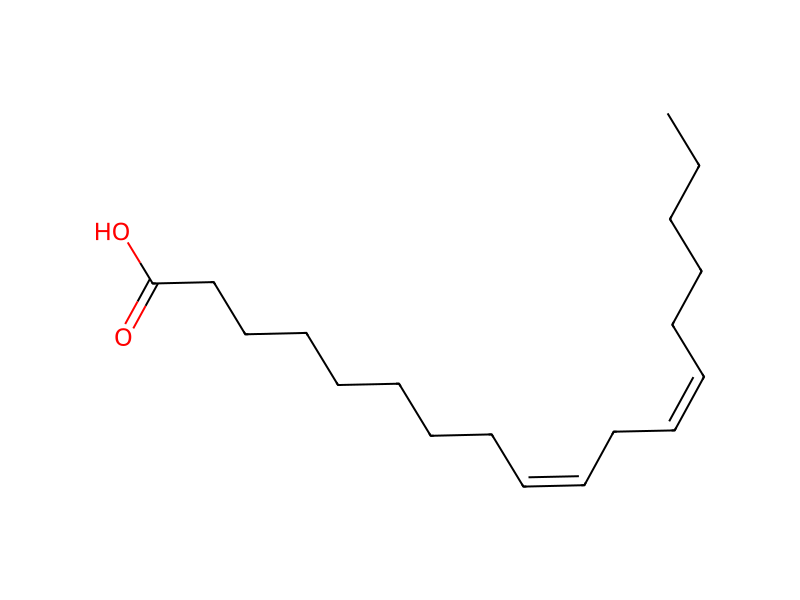


反応条件
- 温度
- 15 °C
実験手順
Measurement of Enzymatic Activity. The activity of the immobilized lipoxygenase was assayed by measurement of hydroperoxide formation (Parra-Diaz, D. et al. [1993] supra). An aliquot of the substrate (5 μmoles of linoleic acid) dissolved in methylene chloride was placed in a 10 mL flask and evaporated to dryness under a stream of nitrogen. The reaction medium containing 0.2 mL of 100 mM deoxychlorate (DOC) and 1.8 mL of sodium borate buffer (0.2 M, pH 9.0) was added to the substrate, and the mixture was then shaken at 250 rpm for 0.5 h at 15° C. The reaction was initiated by adding a suitable amount (approximately 0.15 mg) free or immobilized LOX. Oxidation was conducted at 15° C. with agitation at 250 rpm for two hours. The reaction was quenched by adding 400 μL of 1 M citric add. Linoleic acid hydroperoxide was isolated by extracting the reaction mixture twice with 2 mL chloroform:methanol (2/1, v/v). After removing the solvent under a stream of nitrogen, the hydroperoxide was redissolved in 3 mL ethanol. The amount of hydroperoxide was determined spectrophotometrically by the xylenol orange method (Jiang, T.-Y. et al. [1991] Lipids 26:853-856). Standards were prepared by diluting a commercial cumene peroxide. All results were corrected by subtracting the reading from controls without enzymes. All measurements were in triplicate.