反応式

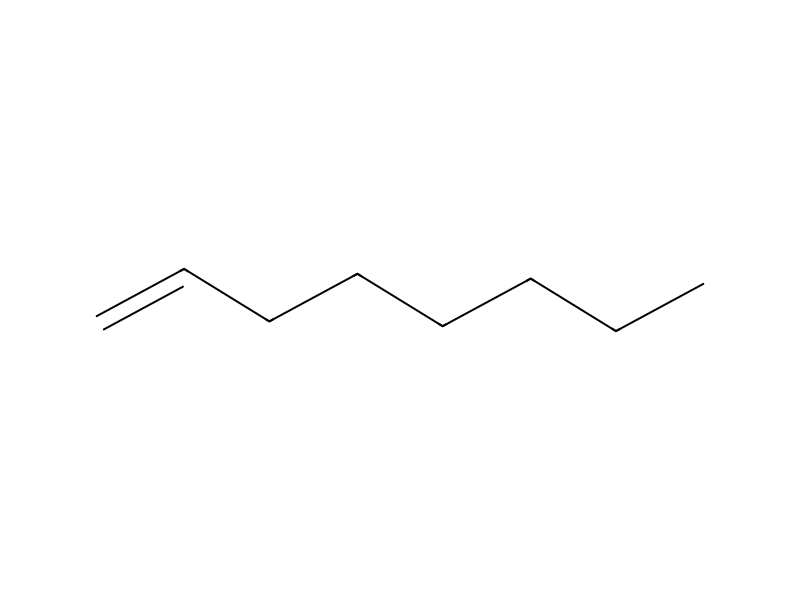
[CH2:1]=[CH:2][CH2:3][CH2:4][CH2:5][CH2:6][CH2:7][CH3:8].C=C.FC1C([B-](C2C(F)=C(F)C(F)=C(F)C=2F)(C2C(F)=C(F)C(F)=C(F)C=2F)C2C(F)=C(F)C(F)=C(F)C=2F)=C(F)C(F)=C(F)C=1F.C[NH+](C)C1C=CC=CC=1.CC(C[Al](CC(C)C)CC(C)C)C.C([Zn]CC)C>CCCCCC>[CH2:1]=[CH2:2].[CH2:1]=[CH:2][CH2:3][CH2:4][CH2:5][CH2:6][CH2:7][CH3:8]参加物




実験手順
Under the pressure of 89 bar, 1-octene and ethylene as monomers and a hexane solvent (3.20 kg/h) were fed into a 1.5 L continuous stirred tank reactor preheated up to 100 to 150° C. Into the reactor were fed a catalyst A, a catalyst B, and a dimethylanilinium tetrakis(pentafluorophenyl) borate cocatalyst from a catalyst storage tank and then added a scavenger (TIBAL) and diethyl zinc to activate a copolymerization reaction. The scavenger was first mixed with reactants in order to eliminate impurities potentially contained in the reactants and then fed into the reactor. In the Examples, the polymerization reaction was carried out at a relatively high temperature of 140 to 150° C., and the polymer solution resulting from the copolymerization reaction was transferred into a solvent separator to remove most of the solvent. The resultant solution was passed through a cooling water and a cutter to yield a granulated polymer product. The polymerization conditions for ethylene and 1-octene according to the Comparative Examples 1 and 2 and Examples 1 to 10 are presented in the following Table 1.
後処理
- custompreheated up to 100 to 150° C
- customa copolymerization reaction
- additionThe scavenger was first mixed with reactants in order
- customwas carried out at a relatively high temperature of 140 to 150° C.
- customthe polymer solution resulting from the copolymerization reaction
- customto remove most of the solvent
- customa cutter to yield a granulated polymer product
出典と根拠
- ORDレコード
- ord-154d3b16e3444c2cbf80002b8b95097b
- 出典データセット
- uspto-grants-2015_05
- 特許番号
- US09035006B2
関連ノート
読み込み中…