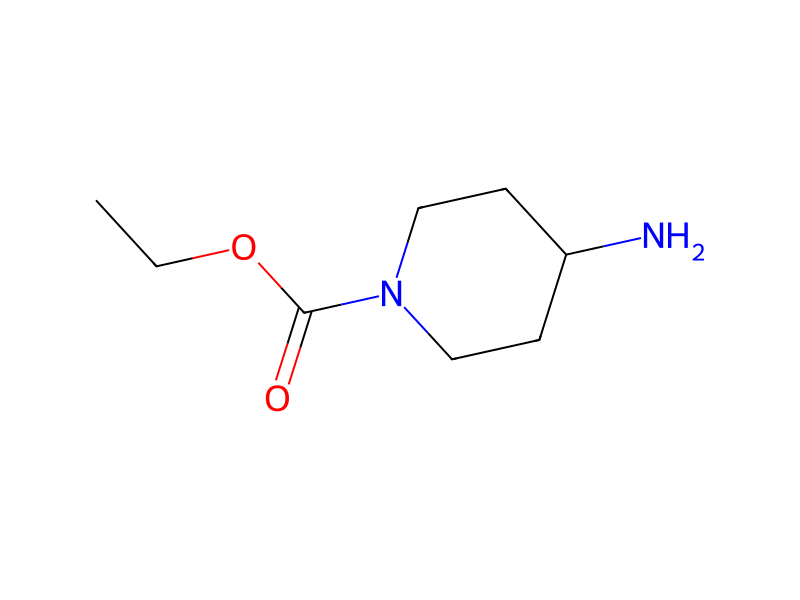
[F:1][C:2]1[CH:18]=[CH:17][C:5]([CH2:6][N:7]2[C:11]3[CH:12]=[CH:13][CH:14]=[CH:15][C:10]=3[N:9]=[C:8]2Cl)=[CH:4][CH:3]=1.[NH2:19][CH:20]1[CH2:25][CH2:24][N:23]([C:26]([O:28][CH2:29][CH3:30])=[O:27])[CH2:22][CH2:21]1.ClCCl>C(OCC)(=O)C.ClCCl>[F:1][C:2]1[CH:18]=[CH:17][C:5]([CH2:6][N:7]2[C:11]3[CH:12]=[CH:13][CH:14]=[CH:15][C:10]=3[N:9]=[C:8]2[NH:19][CH:20]2[CH2:21][CH2:22][N:23]([C:26]([O:28][CH2:29][CH3:30])=[O:27])[CH2:24][CH2:25]2)=[CH:4][CH:3]=1Combine 1-(4-fluorobenzyl)-2-chloro-1H-benzimidazole (22.1 g, 84 mmol) and ethyl 4-aminopiperidine-1-carboxylate (27.7 g, 161 mmol) and heat to 170° C. After 4 hours, partition the reaction mixture between aqueous 2.5M sodium hydroxide solution and chloroform. Separate the layers and extract the aqueous layer twice with chloroform. Combine the organic layers, dry over Na2SO4, filter, and evaporate in vacuo to give a residue. Chromatograph the residue on a short column of silica gel eluting sequentially with dichloromethane and then 15% ethyl acetate/dichloromethane. Evaporate the product containing fractions, triturate with hexane, filter, and dry to give (1-(4-fluorobenzyl)-1H-benzimidazol-2-yl)(1-ethoxycarbonylpiperidin-4-yl)amine as a solid.