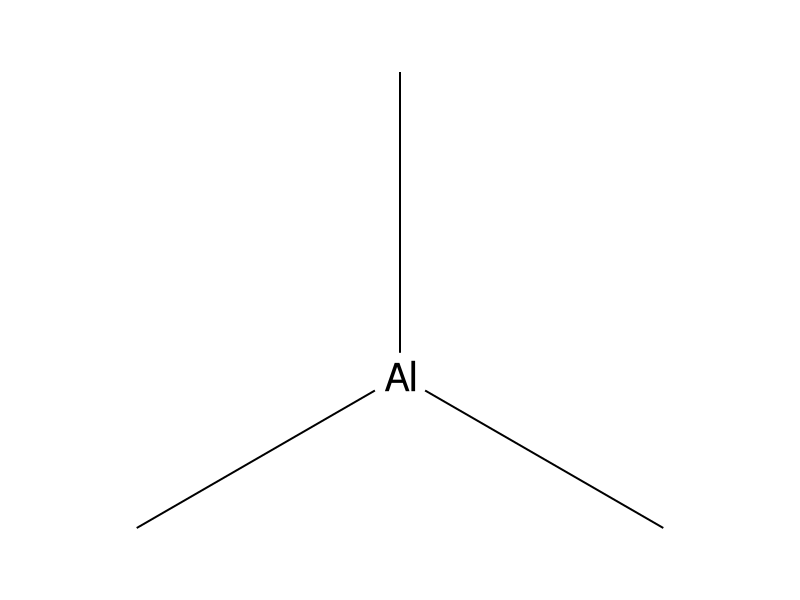
The product from Example 70D (0.207 g, 0.96 mmol) in dichloromethane (10 mL) was treated with trimethylaluminum (1 mL, 2.0 mmol, 2M in toluene) dropwise. After 30 minutes, the mixture was teated with 4-(trifluoromethyl)benzylamine (0.350 g, 2.0 mmol) in dichloromethane (2 mL) and then refluxed for 16 hours. The reaction mixture was allowed to cool to room temperature, treated with 1M HCl (3 mL), basified to between pH 9 and 10 with concentrated NH4OH, treated with water and CH2Cl2 and the phases separated. The organic layer was washed with water (1×10 mL), brine (1×10 mL), dried (MgSO4), and the filtrate was concentrated under reduced pressure. The residue was purified by column chromatography (5% methanol/CH2Cl2) to provide a yellow residue which was triturated with diethyl ether to provide the title compound as a white solid (0.122 g, 37%). MS (ESI+) m/z 345 (M+H)+; MS (ESI−) m/z 343 (M−H)−; 1H NMR (DMSO, 300 MHz) δ 4.00 (s, 2H), 4.37 (d, J 5.7, 2H), 7.46 (d, J 7.8, 2H), 7.67 (m, 4H), 7.93 (d, J 5.4, 1H), 8.03 (d, J 7.8, 1H), 8.52 (d, J 5.8, 1H), 8.80 (t, J 5.7, 1H), 9.31 (s, 1H); Anal. Calcd for C19H15F3N2O: C, 66.28; H, 4.39; N, 8.14. Found: C, 66.16; H, 4.27; N, 7.96.