Triethylamine → 1-(4'-Chloro benzyl)-2-phenyl-4-(piperidino ethyl) piperazine
反応式

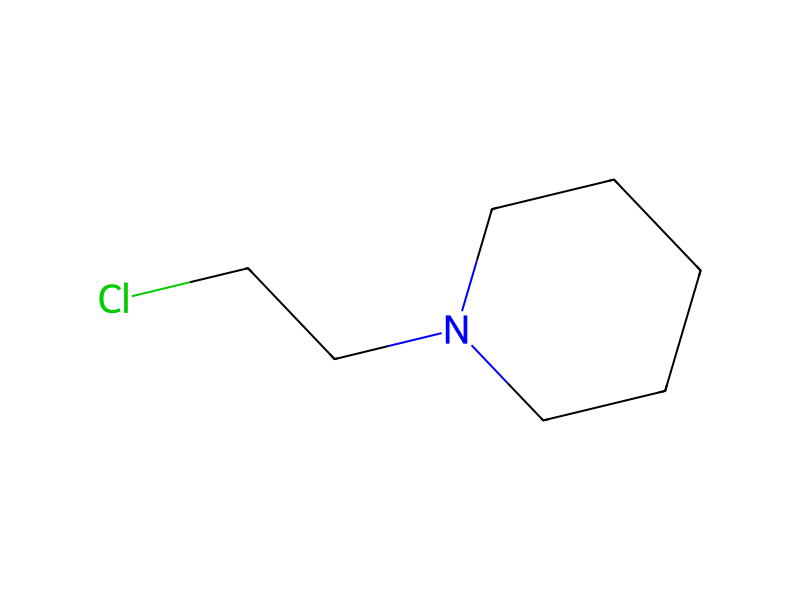
[Cl:1][C:2]1[CH:20]=[CH:19][C:5]([CH2:6][N:7]2[CH2:12][CH2:11][NH:10][CH2:9][CH:8]2[C:13]2[CH:18]=[CH:17][CH:16]=[CH:15][CH:14]=2)=[CH:4][CH:3]=1.[N:21]1([CH2:27][CH2:28]Cl)[CH2:26][CH2:25][CH2:24][CH2:23][CH2:22]1.C(N(CC)CC)C>CC(C)=O>[Cl:1][C:2]1[CH:20]=[CH:19][C:5]([CH2:6][N:7]2[CH2:12][CH2:11][N:10]([CH2:28][CH2:27][N:21]3[CH2:26][CH2:25][CH2:24][CH2:23][CH2:22]3)[CH2:9][CH:8]2[C:13]2[CH:18]=[CH:17][CH:16]=[CH:15][CH:14]=2)=[CH:4][CH:3]=1参加物
5




実験手順
31 g. of 1-(4'-chloro benzyl)-2-phenyl piperazine prepared according to Example B), 25 g. of piperidino ethylchloride, 20 g. of triethylamine, and 250 cc. of acetone are boiled under reflux for 18 hours. The filtered reaction solution is freed of its solvent by concentration by evaporation. The residue is dissolved in benzene. The benzene solution is washed with water. After drying and distilling off the solvent, the base is obtained in the form of a viscous, yellow oil on distillation at 210° C./0.06 Torr. The oil crystallizes on trituration with isopropanol. After twice recystallizing the crystals from n-heptane (41 g. of yellow crystals of the melting point 85°-87° C.) are obtained. The yield is 95 % of the theoretical yield.