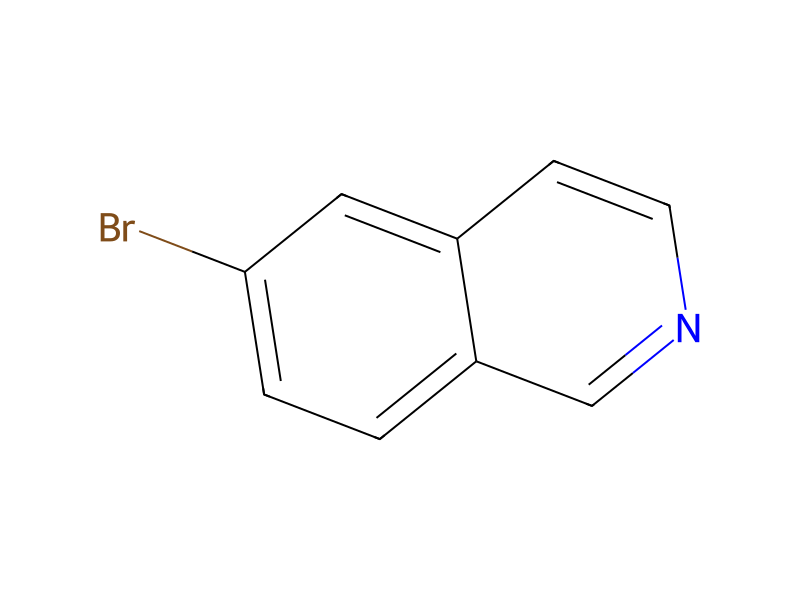
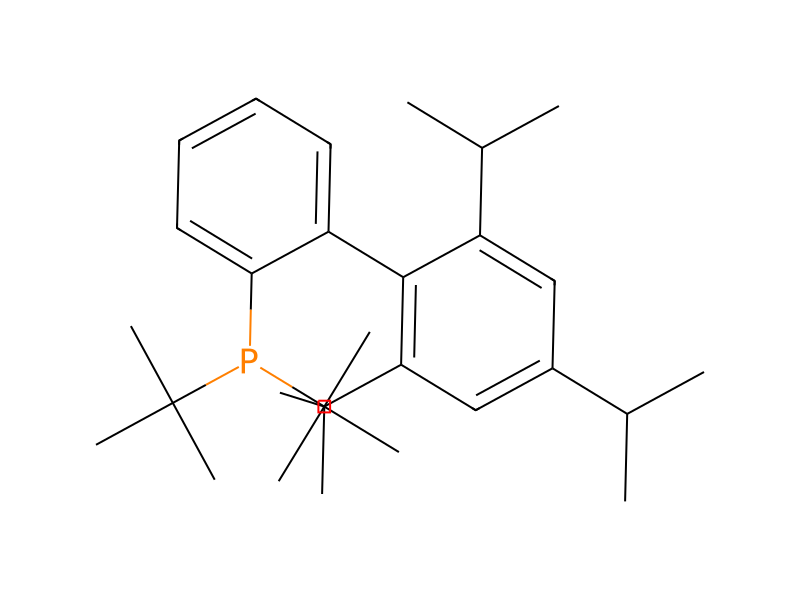
A mixture of 4-nitro-1H-pyrazole (510 mg, 4.51 mmol), 6-bromoisoquinoline (375 mg, 1.80 mmol) (commercially available from Gateway Chemical Technology, Inc.), tris(dibenzylideneacetone)dipalladium (0) (165 mg, 180 μmol), 2-ditert-butylphosphino-2′,4′,6′-triisopropyl-1,1′-biphenyl (153 mg, 360 μmol), and cesium carbonate (1.76 g, 5.41 mmol) in dioxane (4 mL) was heated in a sealed vial at 105° C. for 6 hours. The mixture was cooled to ambient temperature and partitioned between DCM (30 mL) and H2O (30 mL). The layers were separated, and the aqueous layer was extracted with DCM (2×20 mL) and 10% MeOH/DCM (30 mL). The combined organic layers were dried (MgSO4) and concentrated under reduced pressure. The resulting yellow solid was dissolved in DCM, evaporated onto silica gel, and purified by flash chromatography (Biotage Si 40+M, 20% to 50% acetone/hexanes) to provide 6-(4-nitro-1H-pyrazol-1-yl)isoquinoline (374 mg, 86% yield) as a white solid. LCMS (API-ES) m/z (%): 241.1 (100%, M++H); 1H NMR (300 MHz, CDCl3) δ ppm 7.76 (d, J=5.8 Hz, 1H), 8.01 (dd, J=8.8, 2.2 Hz, 1H), 8.14-8.23 (m, 2H), 8.36 (s, 1H), 8.65 (d, J=5.8 Hz, 1H), 8.83 (s, 1H), 9.34 (s, 1H).