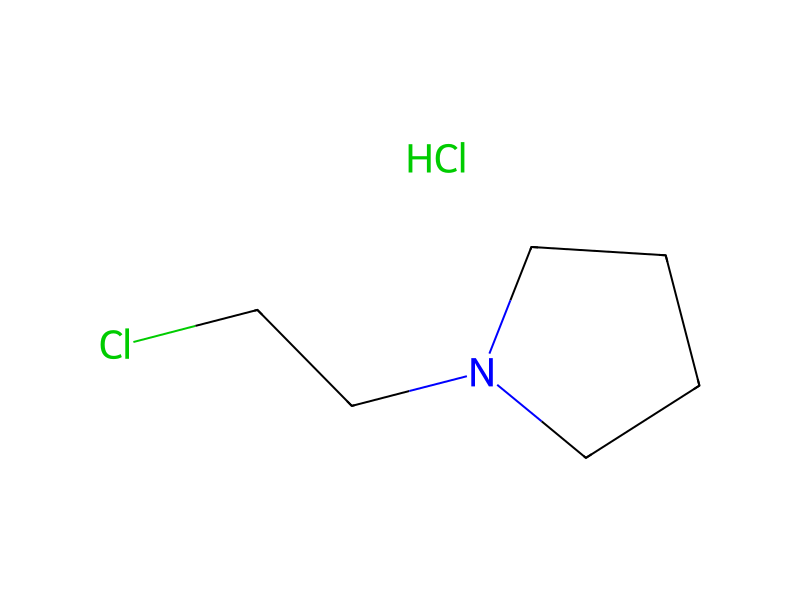
Cl.Cl[CH2:3][CH2:4][N:5]1[CH2:9][CH2:8][CH2:7][CH2:6]1.[OH:10][C:11]1[CH:20]=[C:19]2[C:14]([C:15]([O:21][C:22]3[CH:27]=[CH:26][CH:25]=[CH:24][CH:23]=3)=[N:16][CH:17]=[N:18]2)=[CH:13][C:12]=1[O:28][CH3:29].C(=O)([O-])[O-].[K+].[K+]>CN(C=O)C>[CH3:29][O:28][C:12]1[CH:13]=[C:14]2[C:19](=[CH:20][C:11]=1[O:10][CH2:3][CH2:4][N:5]1[CH2:9][CH2:8][CH2:7][CH2:6]1)[N:18]=[CH:17][N:16]=[C:15]2[O:21][C:22]1[CH:23]=[CH:24][CH:25]=[CH:26][CH:27]=11-(2-Chloroethyl)pyrrolidine hydrochloride (1.27 g, 7.5 mmol) was added to 7-hydroxy-6-methoxy-4-phenoxyquinazoline (1.0 g, 3.7 mmol), (prepared as described for the starting material in Example 16), and potassium carbonate (3.9 g, 28.3 mmol) in DMF (30 ml). The mixture was heated at 110° C. for 4 hours and allowed to cool. The mixture was filtered, and the volatiles were removed from the filtrate by evaporation. The residue was purified by column chromatography eluting with methylene chloride/methanol/ammonia, (100/8/1) to give an oil which was triturated with ethyl acetate to give 6-methoxy-4-phenoxy-7-(2-(pyrrolidin-1-yl)ethoxy)quinazoline (200 mg, 15%) as a white solid.