Water → 5-chloro-N-((1-(4-iodophenyl)-1H-pyrazol-3-yl)methyl)thiophene-2-carboxamide
HRID 643037
反応式

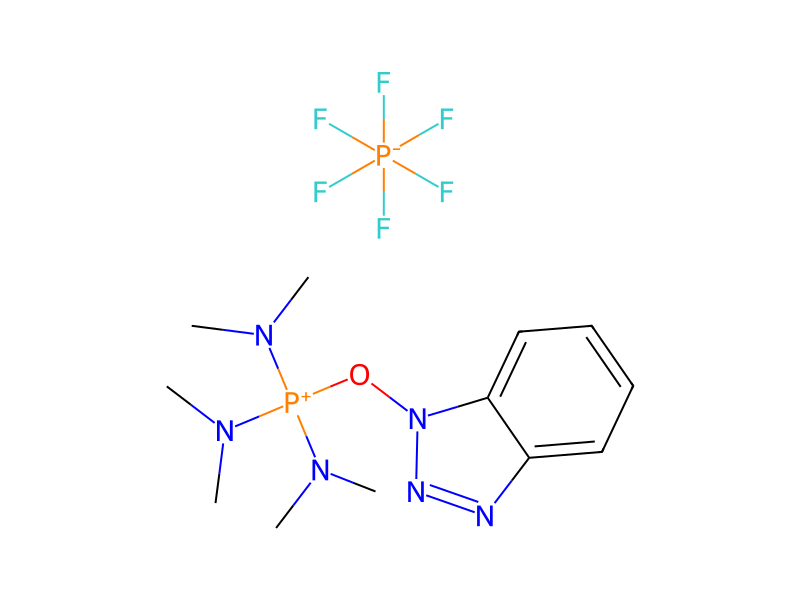
[Cl:1][C:2]1[S:6][C:5]([C:7]([OH:9])=O)=[CH:4][CH:3]=1.[I:10][C:11]1[CH:16]=[CH:15][C:14]([N:17]2[CH:21]=[CH:20][C:19]([CH2:22][NH2:23])=[N:18]2)=[CH:13][CH:12]=1.F[P-](F)(F)(F)(F)F.N1(O[P+](N(C)C)(N(C)C)N(C)C)C2C=CC=CC=2N=N1.O>CN(C=O)C.CCOC(C)=O>[Cl:1][C:2]1[S:6][C:5]([C:7]([NH:23][CH2:22][C:19]2[CH:20]=[CH:21][N:17]([C:14]3[CH:15]=[CH:16][C:11]([I:10])=[CH:12][CH:13]=3)[N:18]=2)=[O:9])=[CH:4][CH:3]=1参加物
7