Potassium Carbonate → 2-[4-(4-pyrimidin-2-ylpiperazin-1-yl)butyl]isoindole-1,3-dione
反応式

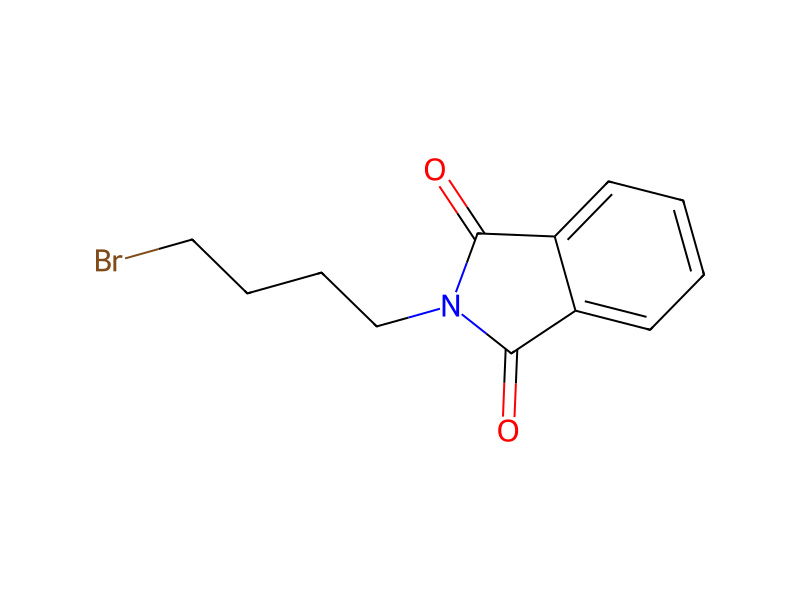
Br[CH2:2][CH2:3][CH2:4][CH2:5][N:6]1[C:14](=[O:15])[C:13]2[C:8](=[CH:9][CH:10]=[CH:11][CH:12]=2)[C:7]1=[O:16].[N:17]1[CH:22]=[CH:21][CH:20]=[N:19][C:18]=1[N:23]1[CH2:28][CH2:27][NH:26][CH2:25][CH2:24]1.C([O-])([O-])=O.[K+].[K+]>>[N:17]1[CH:22]=[CH:21][CH:20]=[N:19][C:18]=1[N:23]1[CH2:28][CH2:27][N:26]([CH2:2][CH2:3][CH2:4][CH2:5][N:6]2[C:14](=[O:15])[C:13]3[C:8](=[CH:9][CH:10]=[CH:11][CH:12]=3)[C:7]2=[O:16])[CH2:25][CH2:24]1参加物
4



実験手順
0.2 mol of 2-(4-bromobutyl)isoindole-1,3(2H)dione and 0.2 mol of 1-(2-pyrimidyl)piperazine are stirred with 0.2 mol of K2CO3 at 120°-130° C. under an atmosphere of N2 overnight. The mixture is then evaporated to dryness. Water is added and the residue is taken up in methylene chloride. After drying the organic solution, it is evaporated to obtain an oil which crystallises on trituration with cyclohexane. Yield: 96% of theory; melting point=138° C.