Cesium carbonate → 2-{6-[5-(5-Fluoropyridin-3-yl)-1,3-thiazol-2-yl]pyridin-2-yl}pyrimidine
反応式

Br[C:2]1[CH:3]=[N:4][CH:5]=[C:6]([F:8])[CH:7]=1.[S:9]1[CH:13]=[CH:12][N:11]=[C:10]1[C:14]1[N:19]=[C:18]([C:20]2[N:25]=[CH:24][CH:23]=[CH:22][N:21]=2)[CH:17]=[CH:16][CH:15]=1.C(=O)([O-])[O-].[Cs+].[Cs+]>CN(C)C=O>[F:8][C:6]1[CH:7]=[C:2]([C:13]2[S:9][C:10]([C:14]3[N:19]=[C:18]([C:20]4[N:21]=[CH:22][CH:23]=[CH:24][N:25]=4)[CH:17]=[CH:16][CH:15]=3)=[N:11][CH:12]=2)[CH:3]=[N:4][CH:5]=1参加物
5

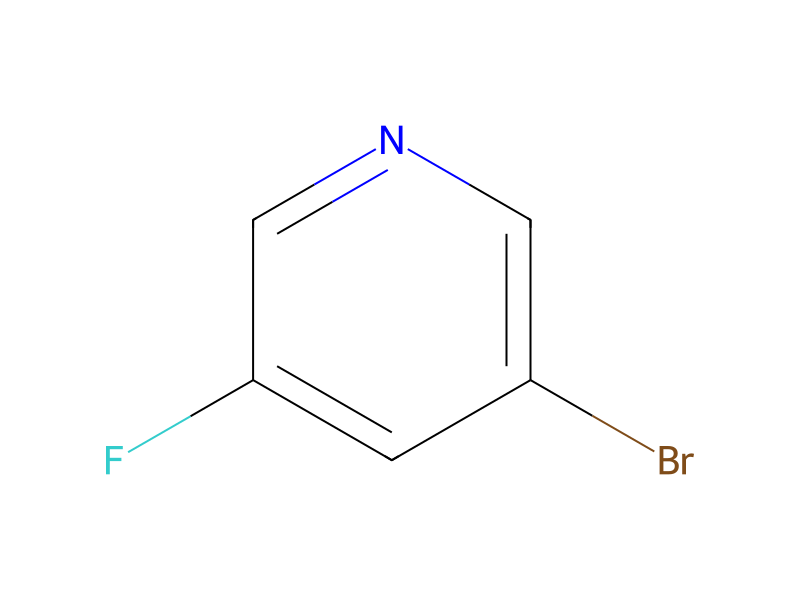



実験手順
Under argon, 88 mg (0.50 mmol) of 3-bromo-5-fluoropyridine, 120 mg (0.50 mmol) of 2-[6-(1,3-thiazol-2-yl)pyridin-2-yl]pyrimidine (cf. Example K, step 1), 326 mg (1.0 mmol) of cesium carbonate and 8 mg (0.01 mmol) of [(t-Bu)2P(OH)]2PdCl2 (“POPd”) in 10 ml of N,N-dimethylformamide were stirred at 120° C. for 16 hours. For work-up, the solvent was removed under reduced pressure, the residue was partitioned between ethyl acetate and water and the organic phase was dried, concentrated under reduced pressure and purified by column chromatography on silica gel RP-18 (mobile phase: water/acetonitrile/formic acid). This gave 11 mg (7% of theory) of 2-{6-[5-(5-fluoropyridin-3-yl)-1,3-thiazol-2-yl]pyridin-2-yl}pyrimidine.