反応式
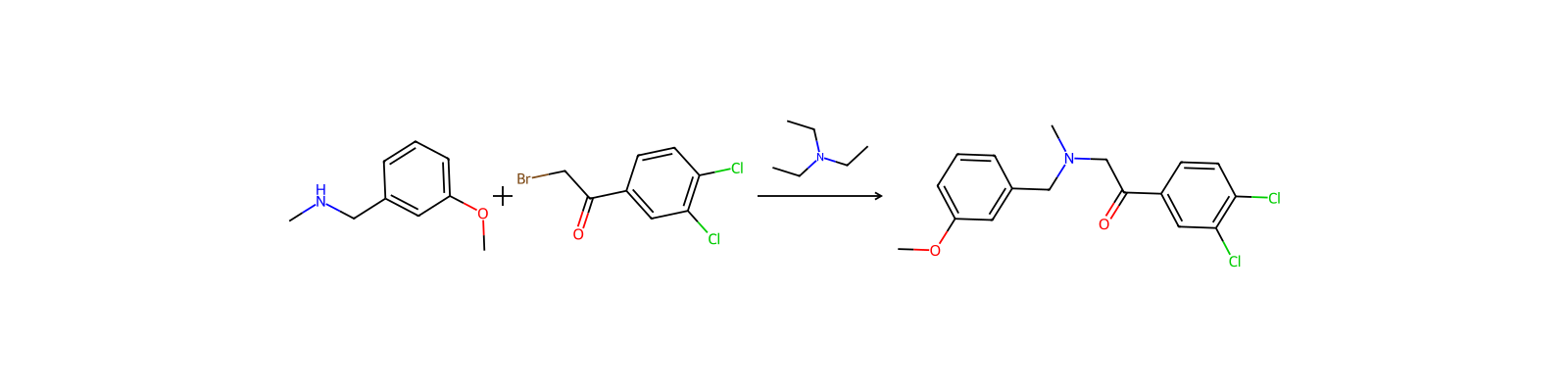
[CH3:1][O:2][C:3]1[CH:4]=[C:5]([CH2:9][NH:10][CH3:11])[CH:6]=[CH:7][CH:8]=1.[Cl:12][C:13]1[CH:14]=[C:15]([CH:20]=[CH:21][C:22]=1[Cl:23])[C:16](=[O:19])[CH2:17]Br>C(N(CC)CC)C>[Cl:12][C:13]1[CH:14]=[C:15]([C:16](=[O:19])[CH2:17][N:10]([CH2:9][C:5]2[CH:6]=[CH:7][CH:8]=[C:3]([O:2][CH3:1])[CH:4]=2)[CH3:11])[CH:20]=[CH:21][C:22]=1[Cl:23]参加物


実験手順
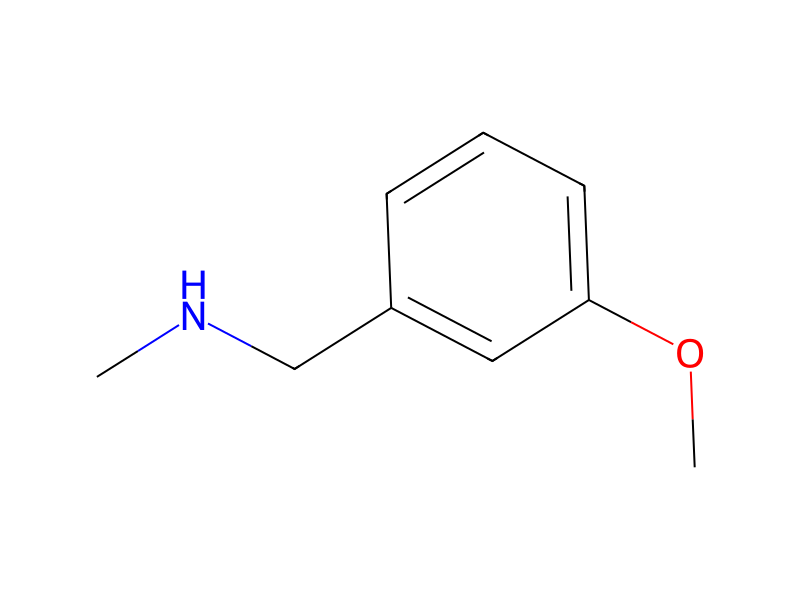
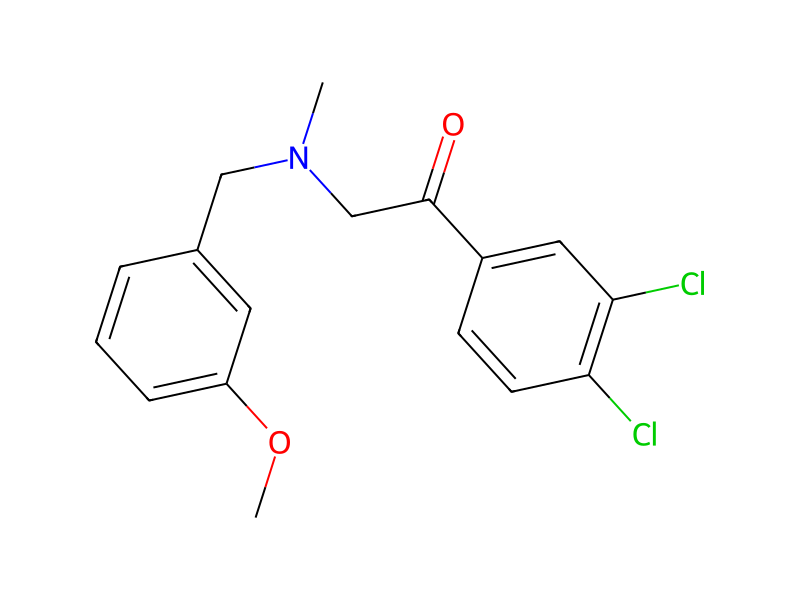
1-(3-Methoxyphenyl)-N-methylmethanamine is reacted with 3,4-dichlorophenacyl bromide in the presence of triethylamine to give 1-(3,4-dichlorophenyl)-2-((3-methoxybenzyl)(methyl)amino)ethanone. Reduction of this ketone by sodium borohydride yields 1-(3,4-dichlorophenyl)-2-((3-methoxybenzyl)(methyl)amino)ethanol, which undergoes acid mediated cyclization to give 4-(3,4-dichlorophenyl)-7-methoxy-2-methyl-1,2,3,4-tetrahydroisoquinoline. This racemic tetraisoquinoline derivative can be separated via chiral HPLC or supercritical fluid chromatography (SFC) to give the single enantiomers. Alternatively, the chiral separation can be achieved by recrystallization using chiral acids such as di-p-toluoyl-D-tartaric acid or di-p-toluoyl-L-tartaric acid.
出典と根拠
- ORDレコード
- ord-2cc336777abc4b36a6be82a6f3f5443e
- 出典データセット
- uspto-grants-2015_11
- 特許番号
- US09173879B2
関連ノート
読み込み中…