反応式

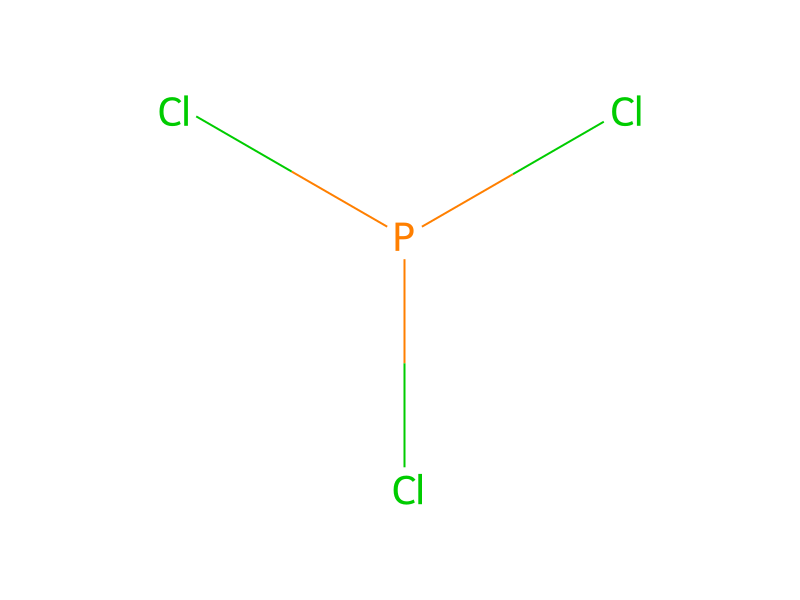
BrCCCCC.[CH2:7]([PH:12](=O)[CH2:13][CH2:14][CH2:15][CH2:16][CH3:17])[CH2:8][CH2:9][CH2:10][CH3:11].P(Cl)(Cl)[Cl:20]>>[Cl:20][P:12]([CH2:13][CH2:14][CH2:15][CH2:16][CH3:17])[CH2:7][CH2:8][CH2:9][CH2:10][CH3:11]参加物



実験手順
Following the procedure of Example 3, 1-bromopentane (181.2 g) was used as starting material to prepare di-n-pentylphosphine oxide (22.4 g), and this compound was further reacted with phosphorus trichloride to give chloro di-n-pentylphosphine, b.p. 88° C. at a pressure of 0.3 mm of mercury. This compound (10.4 g) was added to a solution of hexamethyldisilazane (4.02 g) in dry toluene (10 cm3) under nitrogen, and the solution was heated at 100° C. for 5 hr. with distillation of chlorotrimethylsilane. The solution was cooled to 25° C. and sulphur (1.6 g) was added causing the temperature to rise to 60° C. The solution was heated to 100° C. for 4 hr. and then allowed to cool. Work up as described in Example 3 gave a crude product (10.6 g) which was also titrated in the presence of zinc and found to have a purity of 55% of theoretical (in this case based on MW 425). Further purification by chromatography on silica gel using hexane with increasing amounts of ethyl acetate (0-30% by volume) as eluent gave N-(di-n-pentylphosphinothioyl)-P,P-di-n-pentylphosphinothioic amide (2.4 g) of 95% purity, m.p. 59°-63.5° C. (MS: m/z 426, 31P NMR in CDCl3, singlet 68.3 ppm downfield of H3PO4). The compound of Formula I in which R1 =R2 =R3 =R4 =n-pentyl was tested by the procedure of Test 1. The results show that the product of this Example is a weak extractant for zinc at pH 1.7 but that it extracts zinc selectively in the presence of iron and has good solubility in ESCAID 100.
出典と根拠
- ORDレコード
- ord-5b1458c78fa84c26b0714a972c21516a
- 出典データセット
- uspto-grants-1996_09
- 特許番号
- US05557003
関連ノート
読み込み中…