Ammonia → HCID 178420856、化合物
HRID 843185
反応式

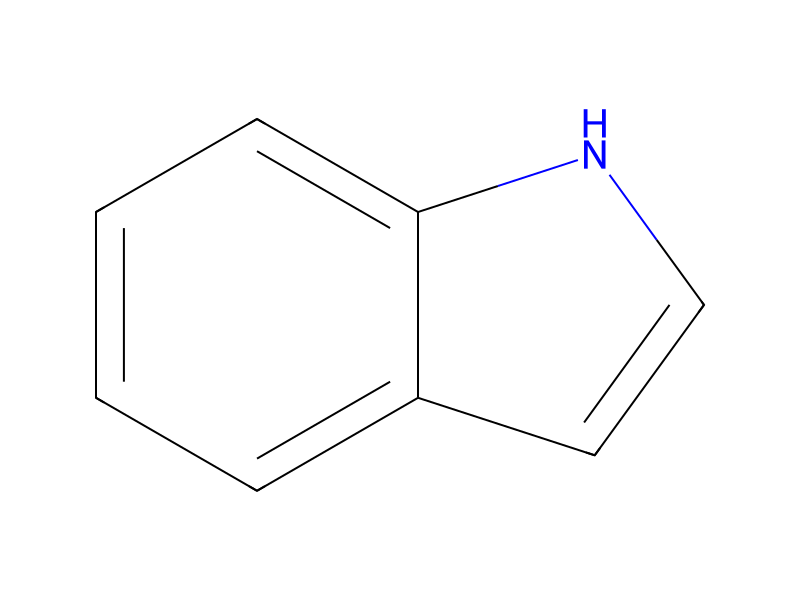
[NH:1]1[C:9]2[C:4](=[CH:5][CH:6]=[CH:7][CH:8]=2)[CH:3]=[CH:2]1.N>>[N:1]1[C:9]2[C:4]([CH:5]=[CH:6][C:7]3[C:8]=2[CH:3]=[C:4]2[C:9]=3[CH:8]=[CH:7][CH:6]=[CH:5]2)=[CH:3][CH:2]=1参加物
3


実験手順
In step two, the aryl hydrazone cyclizes in the presence of an acidic catalyst in a Fischer indole reaction with elimination of ammonia to give an indenoindole ligand precursor. The reaction apparently involves an interesting [3,3]sigmatropic rearrangement (see J. March, Advanced Organic Chemistry, 2nd ed. (1977) 1054). A variety of acidic catalysts are suitable, including, for example, Lewis acids (zinc chloride, boron trifluoride), and protic acids (hydrochloric acid, acetic acid, p-toluenesulfonic acid). Usually, the crude aryl hydrazone is simply heated with the acidic catalyst for a brief period to cause the cyclization reaction. The reaction product is isolated and purified by any suitable method. In one method, the cyclization reaction mixture is poured into ice water and extracted into an organic solvent. The solution is dried, filtered, and evaporated to give the crude indenoindole ligand precursor, which can be further purified by recrystallization. In contrast to the previous step, it is preferred to purify this reaction product prior to using it in the next step.