反応式

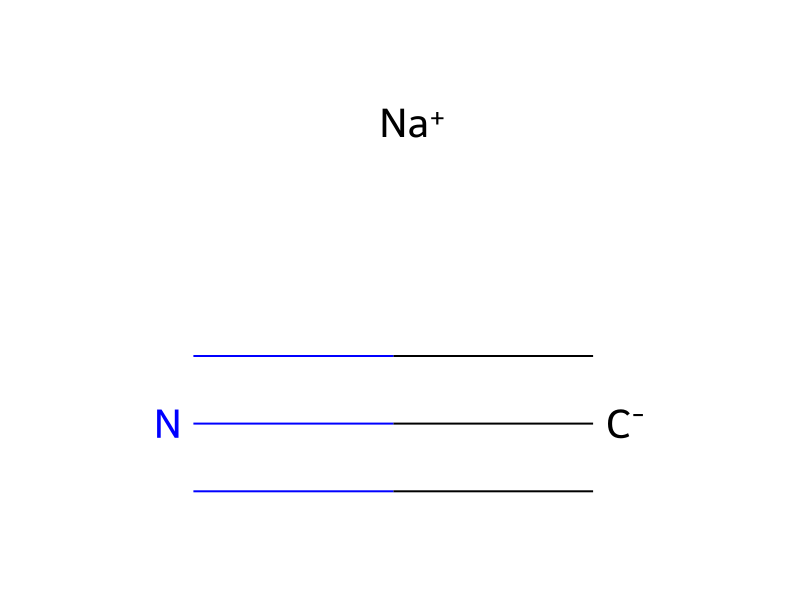
[NH2:1][C:2]1[C:15]2[C:14](=[O:16])[C:13]3[C:8](=[CH:9][CH:10]=[CH:11][CH:12]=3)[C:7](=[O:17])[C:6]=2[C:5]([NH2:18])=[CH:4][C:3]=1S(O)(=O)=O.[CH3:23][NH:24]C=O.[C-]#N.[Na+].[N+](C1C=CC=CC=1)([O-])=O.C([O-])(=O)C.[Na+]>>[NH2:1][C:2]1[C:15]2[C:14](=[O:16])[C:13]3[C:8](=[CH:9][CH:10]=[CH:11][CH:12]=3)[C:7](=[O:17])[C:6]=2[C:5]([NH2:18])=[CH:4][C:3]=1[C:23]#[N:24]参加物
6



実験手順
A mixture of 174 g of 91.2 percent pure 1,4-diamino-anthraquinone-2-sulphonic acid (as the Na salt), 1,200 ccs of N-methyl-formamide, 63.7 g of sodium cyanide, 62.0 g of nitrobenzene and 41 g of sodium acetate is heated to 80°-85° C., whilst stirring, until, according to the TLC, the starting material has reacted without trace, that is to say for about 8 hours. The reaction mixture is worked up as described in Example 1. After drying, 133 g of a dark blue, crystalline product which, according to analysis, contains 85.5% of 1,4-diamino-2,3-dicyano-anthraquinone and no 1,4-diamino-2-cyanoanthraquinone are obtained. This corresponds to a yield of 78.9% of the pure product.
後処理
- temperatureis heated to 80°-85° C.
- customthe starting material has reacted without trace, that
- customAfter drying
出典と根拠
- ORDレコード
- ord-c057825404e045adb6d6c91de5e7ecc5
- 出典データセット
- uspto-grants-1981_10
- 特許番号
- US04294769
関連ノート
読み込み中…