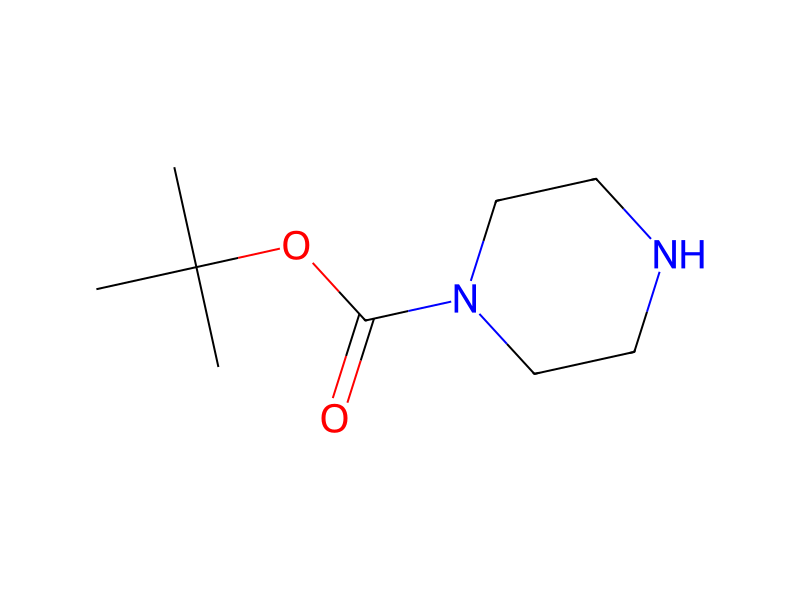
[Cl:1][C:2]1[N:3]([CH2:10][C@:11]2([CH3:14])[CH2:13][O:12]2)[CH:4]=[C:5]([N+:7]([O-:9])=[O:8])[N:6]=1.[N:15]1([C:21]([O:23][C:24]([CH3:27])([CH3:26])[CH3:25])=[O:22])[CH2:20][CH2:19][NH:18][CH2:17][CH2:16]1.CN(C=O)C>O>[Cl:1][C:2]1[N:3]([CH2:10][C@:11]([OH:12])([CH3:14])[CH2:13][N:18]2[CH2:17][CH2:16][N:15]([C:21]([O:23][C:24]([CH3:27])([CH3:26])[CH3:25])=[O:22])[CH2:20][CH2:19]2)[CH:4]=[C:5]([N+:7]([O-:9])=[O:8])[N:6]=1A mixture of (R)-2-chloro-1-(2-methyloxiran-2-ylmethyl)-4-nitroimidazole prepared in Example 12 (7.00 g, 32.2 mmol) and tert-butyl piperazine-1-carboxylate (6.29 g, 33.8 mmol) and DMF (70 ml) was stirred at 70° C. for 8 hours. The reaction mixture was allowed to return to room temperature, then diluted with water, and then the solution was extracted with ethyl acetate twice. The organic phases were combined, washed with water three times, dried over sodium sulfate and then filtered. The filtrate was concentrated under reduced pressure. To the residue, diethyl ether was added. The precipitates were filtered off, and dried at room temperature under reduced pressure to afford tert-butyl (S)-4-[3-(2-chloro-4-nitroimidazol-1-yl)-2-hydroxy-2-methylpropyl]piperazin-1-carboxylate (10.25 g, yield 79%) as a light yellow powder.