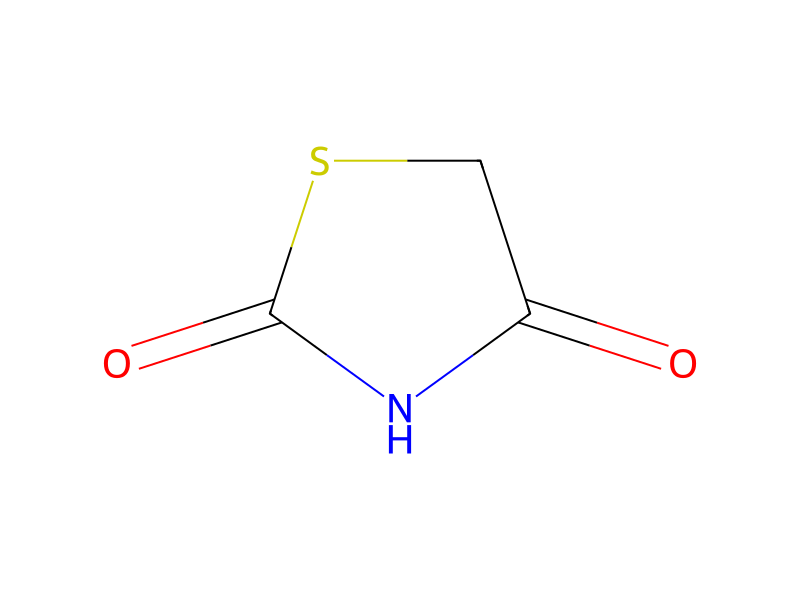
A solution of toluene (2.5 mL), piperidine (0.003 mL), acetic acid (0.003 mL), 6-[3-(1-methylcyclohexyl)-4-methoxyphenyl]-2-naphthaldehyde (0.100 g, 0.28 mmol) and 2,4-thiazolidinedione (0.033 mg, 0.28 mmol) was heated at reflux for 15 hours under an argon atmosphere. The resulting suspension was filtered and the solid was stirred at room temperature in EtOH. After 1 hours, the solid was filtered and dried under high vacuum to afford 0.048 g (37%) of 6-[3-(1-methylcyclohexyl)-4-methoxyphenyl]-naphthalen-2-yl-methylene-2,4-thiazolidinedione, mp 268–271° C. 1H NMR (300 MHz, DMSO-d6): δ 1.21–1.61 (m, 9H), 1.69–1.81 (m, 2H), 2.15 (t, J=10.7 Hz, 2H), 3.86 (s, 3H), 7.14 (d, J=8.7 Hz, 1H), 7.65 (s, 1H), 7.69 (brt, J=9.6 Hz, 2H), 7.90 (d, J=9.9 Hz, 1H), 7.94 (s, 1H), 8.10 (d, J=8.7 Hz, 1H), 8.12 (d, J=8.7 Hz, 1H), 8.19 (s, 2H), 12.66 (brs, 1H).