反応式

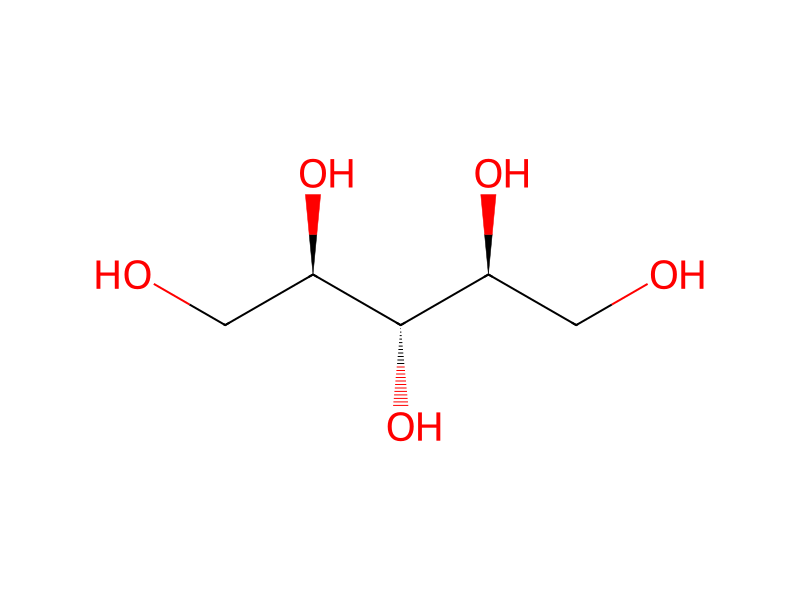
[O:1]=[C:2]([O-:11])[C@H:3]([C@@H:5]([C@@H:7]([CH2:9][OH:10])O)[OH:6])[OH:4].[Na+].[O:13]=[C:14]([O-])[C@@H:15]([C@@H:17]([C@@H:19]([CH2:21][OH:22])[OH:20])[OH:18])[OH:16].[Na+]>[Ni]>[C:2]1(=[O:1])[O:11][C@H:7]([CH2:9][OH:10])[C@@H:5]([OH:6])[C@H:3]1[OH:4].[CH2:14]([OH:13])[C@@H:15]([C@@H:17]([C@@H:19]([CH2:21][OH:22])[OH:20])[OH:18])[OH:16]参加物



実験手順
According to this example the dissolution of the nickel catalyst was prevented by lowering the acidity of the reaction solution with an addition of alkali. The hydrogenation proceeded smoothly and the yield of pentitols was close to the maximum value of 75% in this case. The salts of pentonic acids, of course, did not undergo hydrogenation. On the contrary, sodium D-arabinonate was partly isomerized to sodium D-ribonate, and the subsequent hydrogenation of D-ribono-1,4-lactone resulted in enhanced formation of ribitol. In spite of the isomerization of the starting material, the control of pH can be applied in the production of xylitol from D-arabinonic acid as both arabinitol and ribitol yield xylitol in the second isomerization step. On the contrary, the control of pH can not be applied when L-xylonic acid is to be converted to xylitol.
後処理
- additionwith an addition of alkali
出典と根拠
- ORDレコード
- ord-38311581f21548e4a6b21d10460f8d81
- 出典データセット
- uspto-grants-1996_10
- 特許番号
- US05563303
関連ノート
読み込み中…