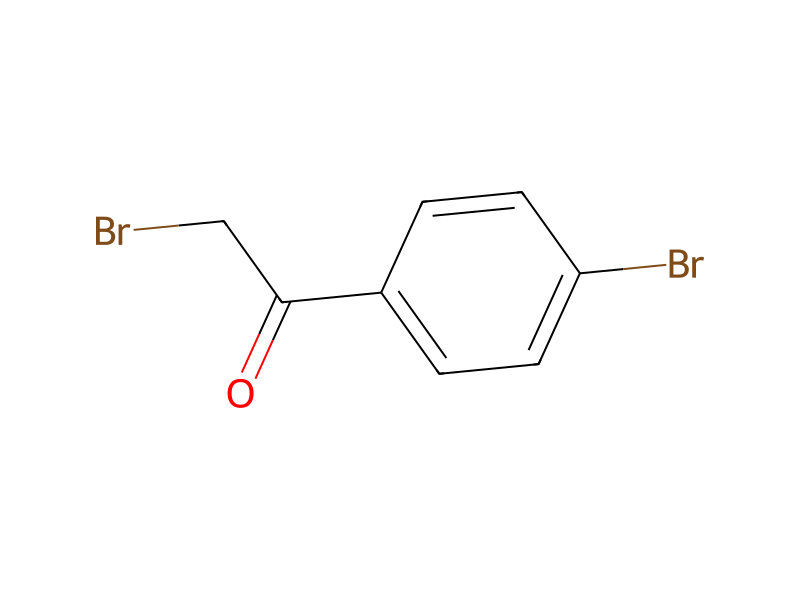
4-Bromophenacyl bromide → N-{4-(4-bromophenyl)-3-[3-(dimethylamino) propyl]thiazol-2(3H)-ylidene}aniline
HRID 896610
反応式

[CH3:1][N:2]([CH3:16])[CH2:3][CH2:4][CH2:5][NH:6][C:7]([NH:9][C:10]1[CH:15]=[CH:14][CH:13]=[CH:12][CH:11]=1)=[S:8].Br[CH2:18][C:19]([C:21]1[CH:26]=[CH:25][C:24]([Br:27])=[CH:23][CH:22]=1)=O>C(O)C>[Br:27][C:24]1[CH:25]=[CH:26][C:21]([C:19]2[N:6]([CH2:5][CH2:4][CH2:3][N:2]([CH3:1])[CH3:16])[C:7](=[N:9][C:10]3[CH:15]=[CH:14][CH:13]=[CH:12][CH:11]=3)[S:8][CH:18]=2)=[CH:22][CH:23]=1参加物
4



実験手順
A mixture of N-[3-(dimethylamino)propyl]-N′-phenylthiourea (800 mg) obtained in Reference Example 3 as described below and 2-bromo-4′-bromoacetophenone (1.09 g) in ethanol (30 ml) was heated with reflux under nitrogen atmosphere. Nine hours thereafter, the reaction mixture was concentrated under reduced pressure, and to the residue was added a saturated aqueous sodium hydrogen carbonate solution, and the mixture was extracted with chloroform. The organic layer was washed with a saturated brine, dried over sodium sulfate, and the solvent was evaporated under reduced pressure. The residue was purified by silica gel column chromatography (chloroform:methanol (50:1)), and crystallized from isopropyl alcohol to give the title compound (830 mg)