Hydrochloric Acid → 6-Bromo-7-fluoro-2-(4-methoxybenzylamino)quinoline-3-carbaldehyde
HRID 930235
反応式

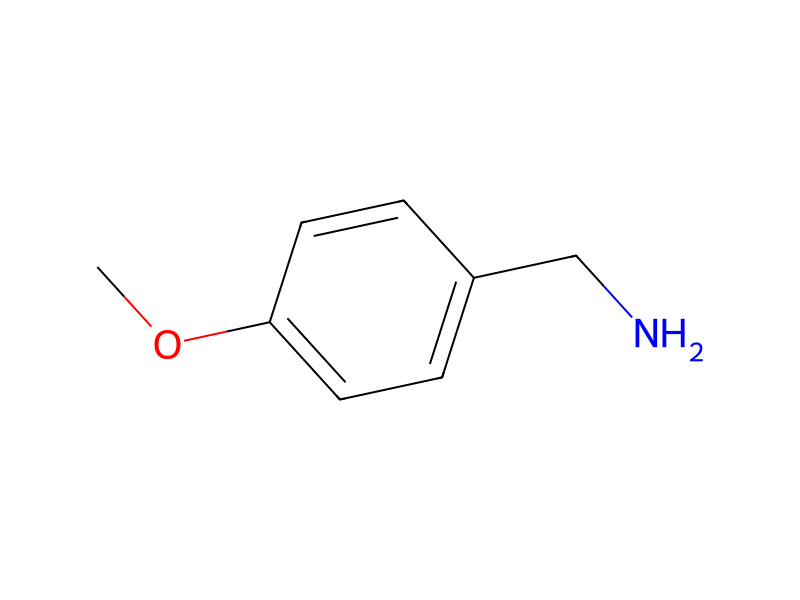
[Br:1][C:2]1[CH:3]=[C:4]2[C:9](=[CH:10][C:11]=1[F:12])[N:8]=[C:7](Cl)[C:6]([CH:14]=[O:15])=[CH:5]2.[CH3:16][O:17][C:18]1[CH:25]=[CH:24][C:21]([CH2:22][NH2:23])=[CH:20][CH:19]=1.Cl>CCO>[Br:1][C:2]1[CH:3]=[C:4]2[C:9](=[CH:10][C:11]=1[F:12])[N:8]=[C:7]([NH:23][CH2:22][C:21]1[CH:24]=[CH:25][C:18]([O:17][CH3:16])=[CH:19][CH:20]=1)[C:6]([CH:14]=[O:15])=[CH:5]2参加物
5




実験手順
DMF (54 ml, 701 mmol, 2.5 eq.) was added dropwise (via a syringe pump) to phosphoryl trichloride (179 ml, 1962 mmol, 7.0 eq.) in a 350 mL sealed tube in an ice bath under nitrogen. After the addition, the water bath was removed and N-(3-fluoro-4-bromophenyl)acetamide (65 g, 280 mmol) was added in one portion and stirred until a homogenous solution was observed (approx. 30 min.). The reaction vessel was sealed and heated at 75° C. for 48 h. The reaction was allowed to cool and slowly poured onto ice (final volume of 2 L) and stirred for 25 min. The solid was filtered and washed with water until the filtrate was no longer acidic (˜3 L) and the product was dried in an oven vacuum overnight at 50° C. to afford a light tan/gold colored solid, 6-bromo-2-chloro-7-fluoroquinoline-3-carbaldehyde. Step 2 6-Bromo-2-chloro-7-fluoroquinoline-3-carbaldehyde (10.6 g, 37.0 mmol) and 4-methoxybenzylamine (14.4 ml, 110.9 mmol) in EtOH (200 mL) were heated at 125° C. in a sealed tube for 2.5 hours. The reaction mixture was cooled and poured into 1N HCl (200 mL) and stirred 2 h. The mixture was extracted with chloroform and the combined organic layers were washed with 1N HCl and brine, dried over sodium sulfate, filtered and concentrated to afford 6-bromo-7-fluoro-2-(4-methoxybenzylamino)quinoline-3-carbaldehyde. Step 3 Methyl(triphenylphosphoranylidene)acetate (13.4 g, 40.0 mmol) was added to a solution of 6-bromo-7-fluoro-2-(4-methoxybenzylamino)quinoline-3-carbaldehyde (12.9 g, 33.4 mmol) in THF (200 mL) and the reaction was heated to 70° C. for 2.5 h. The reaction was concentrated and dissolved in a minimal amount of DCM and loaded onto a filter plug of silica washed with hexanes. The product was eluted with 4:1 Hex/EtOAc to give (E)-methyl 3-(6-bromo-7-fluoro-2-(4-methoxybenzylamino)quinolin-3-yl)acrylate. Step 4 A 1M aqueous solution of LiOH (8.9 mL, 8.9 mmol) was added to a solution of (E)-methyl 3-(6-bromo-7-fluoro-2-(4-methoxybenzylamino)quinolin-3-yl)acrylate (3.9 g, 8.9 mmol) in MeOH (9 mL) and THF (30 mL) at RT. The reaction was stirred 45 min before the organics were removed in vacuo and the remaining aqueous solution was brought to a pH ˜1 with 1N HCl aq and the solution was extracted with a 2:1 chloroform/i-PrOH mixture. The combined organics were washed with brine, dried over sodium sulfate, filtered, and concentrated to afford the methyl acrylate adduct which was used without further purification. Step 5 O-(Benzotriazol-1-yl)-N,N,N′ N′-tetramethyluronium tetrafluoroborate (0.15 g, 0.47 mmol) was added to a solution of (E)-methyl 3-(6-bromo-7-fluoro-2-(4-methoxybenzylamino)quinolin-3-yl)acrylic acid (0.154 g, 0.36 mmol), cyclohexylmethanamine (0.14 ml, 1.1 mmol), and DIPEA (0.25 mL, 1.5 mmol) in NMP (1.2 mL) and the reaction was stirred 1 h before being poured into a vigorously stirred solution of saturated aqueous sodium bicarbonate. After 30 min, the mixture was diluted with EtOAc. The layers were separated and the aqueous layer was extracted with EtOAc. The combined organic layers were washed with water, brine, dried over sodium sulfate, filtered, and concentrated to afford (E)-3-(6-bromo-7-fluoro-2-(4-methoxybenzylamino)quinolin-3-yl)-N-(cyclohexylmethyl)acrylamide (representative compound 28). Step 6 Platinum, 5 wt. % on activated carbon, (1.8 g, 9.0 mmol) was added to a degassed solution of (E)-3-(6-bromo-7-fluoro-2-(4-methoxybenzylamino)quinolin-3-yl)-N-(cyclohexylmethyl)acrylamide (4.7 g, 9.0 mmol) in EtOH (100 mL). The flask was degassed with hydrogen gas and then stirred under a balloon of hydrogen 18 h. The reaction was purged with nitrogen and filtered through a pad of celite with ethanol and concentrated. The crude product was purified by silica gel chromatography with 1.5:1 Hexene/EtOAc to afford 3-(6-bromo-7-fluoro-2-(4-methoxybenzylamino)quinolin-3-yl)-N-(cyclohexylmethyl)propanamide. Step 7 Dichloro 1,1′-bis(diphenylphosphino)ferrocene palladium (0.096 g, 0.12 mmol) was added to a solution of 3-(6-bromo-7-fluoro-2-(4-methoxybenzylamino)quinolin-3-yl)-N-(cyclohexylmethyl)propanamide (1.3 g, 2.4 mmol), potassium acetate (0.69 g, 7.1 mmol), and 4,4,5,5-tetramethyl-2-(4,4,5,5-tetramethyl-1,3,2-dioxaborolan-2-yl)-1,3,2-dioxaborolane (0.72 g, 2.8 mmol) in dioxane (20 mL). The solution was heated at 85° C. for 4 h. The reaction was cooled and concentrated. The crude product was diluted with ethyl acetate and filtered. The filtrate was concentrated to afford N-(cyclohexylmethyl)-3-(7-fluoro-2-(4-methoxybenzylamino)-6-(4,4,5,5-tetramethyl-1,3,2-dioxaborolan-2-yl)quinolin-3-yl)propanamide which was used without further purification. Step 8 Bis(4-(di-tert-butylphosphino)-N,N-dimethylbenzenamine)dichloropalladium (II) (0.0064 g, 0.0090 mmol) was added to a degassed solution of N-(cyclohexylmethyl)-3-(7-fluoro-2-(4-methoxybenzylamino)-6-(4,4,5,5-tetramethyl-1,3,2-dioxaborolan-2-yl)quinolin-3-yl)propanamide (0.10 g, 0.18 mmol), potassium acetate (0.035 g, 0.36 mmol), and 2-bromotoluene (0.046, 0.27 mmol) in EtOH (1.7 mL) and water (0.30 mL). The reaction was refluxed 5 h until determined to be complete by LC/MS. After cooling, the reaction was partitioned between DCM and a 9:1 saturated aqueous ammonium chloride/ammonium hydroxide solution. The aqueous layer was extracted with DCM and the combined organics were washed with a 9:1 saturated ammonium chloride/ammonium hydroxide solution, water, brine, dried over sodium sulfate, filtered, and concentrated to afford N-(cyclohexylmethyl)-3-(7-fluoro-2-(4-methoxybenzylamino)-6-o-tolylquinolin-3-yl)propanamide. Step 9 N-(cyclohexylmethyl)-3-(7-fluoro-2-(4-methoxybenzylamino)-6-o-tolylquinolin-3-yl)propanamide (0.070 g, 0.14 mmol) was refluxed in TFA (5.0 mL, 65 mmol) for 3 hours. The reaction was concentrated and the crude material was purified by reversed phase HPLC (10:100, 20 minutes) to afford 3-(2-amino-7-fluoro-6-o-tolylquinolin-3-yl)-N-(cyclohexylmethyl)propanamide with MS (ESI, pos. ion) m/z: 420 (M+1).