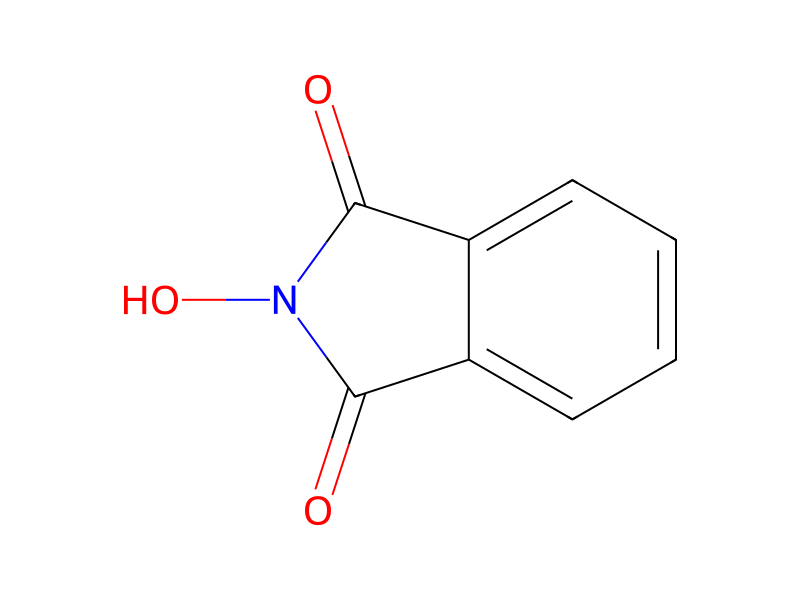
Br.[CH2:2]([O:4][C:5]([C@@H:7]1[CH2:12][CH2:11][CH2:10][N:9]([CH2:13][CH2:14]Br)[CH2:8]1)=[O:6])[CH3:3].C(N(CC)CC)C.[OH:23][N:24]1[C:28](=[O:29])[C:27]2=[CH:30][CH:31]=[CH:32][CH:33]=[C:26]2[C:25]1=[O:34]>CN(C=O)C>[CH2:2]([O:4][C:5]([C@@H:7]1[CH2:12][CH2:11][CH2:10][N:9]([CH2:13][CH2:14][O:23][N:24]2[C:25](=[O:34])[C:26]3=[CH:33][CH:32]=[CH:31][CH:30]=[C:27]3[C:28]2=[O:29])[CH2:8]1)=[O:6])[CH3:3]To a suspension of (R)-1-(2-bromoethyl)-3-piperidinecarboxylic acid ethyl ester hydrobromide (6.90 g, 20 mmol) and triethylamine (4.04 g, 40 mmol) in DMF (30 ml) was added N-hydroxyphthalimide (3.26 g, 20 mmol). The mixture was stirred for 5 h, filtered and the solvent was evaporated from the filtrate in vacuo. The residue was dissolved in dichloromethane (50 ml) and the resulting mixture washed with 10% aqueous potassium carbonate (3×20 ml) and water (20 ml). The solvent was evaporated in vacuo and the residue crystallised from absolute ethanol (25 ml). The precipitate was collected, washed with cold absolute ethanol and dried in vacuo to give 3.3 g of (R)-1-(2-((phthalimido)oxy)ethyl)-3-piperidinecarboxylic acid ethyl ester.