Water → 3,5-Dimethoxypyridine
HRID 986366
反応式

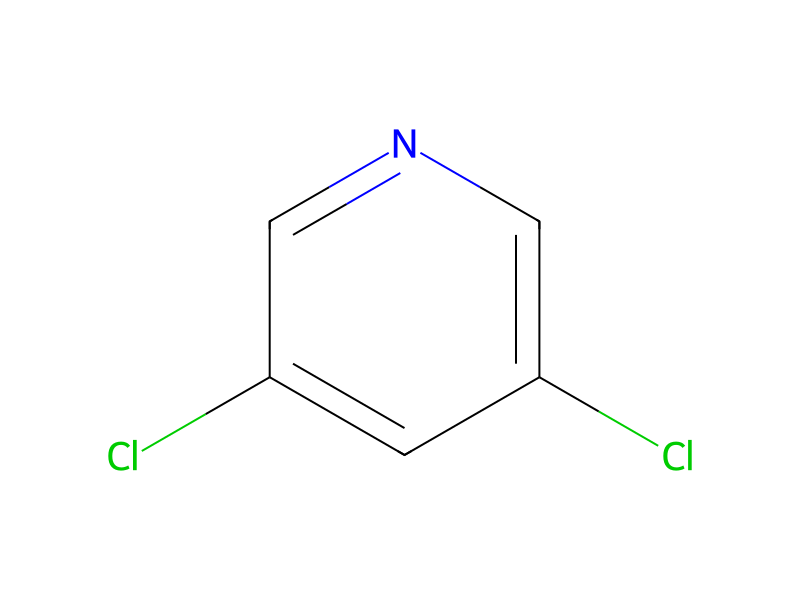
ClC1C=NC=C(Cl)C=1.[CH3:9][O-:10].[Na+].O.Cl[C:14]1[CH:15]=[N:16][CH:17]=[C:18]([O:20][CH3:21])[CH:19]=1>CS(C)=O.C(OCC)C>[CH3:9][O:10][C:14]1[CH:15]=[N:16][CH:17]=[C:18]([O:20][CH3:21])[CH:19]=1ClC1C=NC=C(Cl)C=1.[CH3:9][O-:10].[Na+].O.Cl[C:14]1[CH:15]=[N:16][CH:17]=[C:18]([O:20][CH3:21])[CH:19]=1>CS(C)=O.C(OCC)C>[CH3:9][O:10][C:14]1[CH:15]=[N:16][CH:17]=[C:18]([O:20][CH3:21])[CH:19]=150 g of 3,5-dichloro-pyridine are dissolved in 250 ml dimethylsulfoxide. 15 g sodium methylate are added to this solution under stirring. It is stirred under exclusion of moisture at 60°-80° C. 15 g sodium methylate are further added after each of 8 and 16 hours. After a total of 72 hours' stirring, the reaction mixture is reacted with a little water and shaked out with diethylether. The ether phase, after drying, is distilled in a vacuum, resulting in 24 g (51% of theoretical amount) of 3,5-dimethoxy-pyridine in the boiling range 90°-120° C. at 1.6·103Pa. The product is polluted with a small amount of 3-chloro-5-methoxypyridine. It can, however, be employed directly in the next stage for nitrification, since the chloro-compound is not dinitrified and therefore can easily be removed upon crystallization of the 3,5-dimethoxy-2,6-dinitro-pyridine.