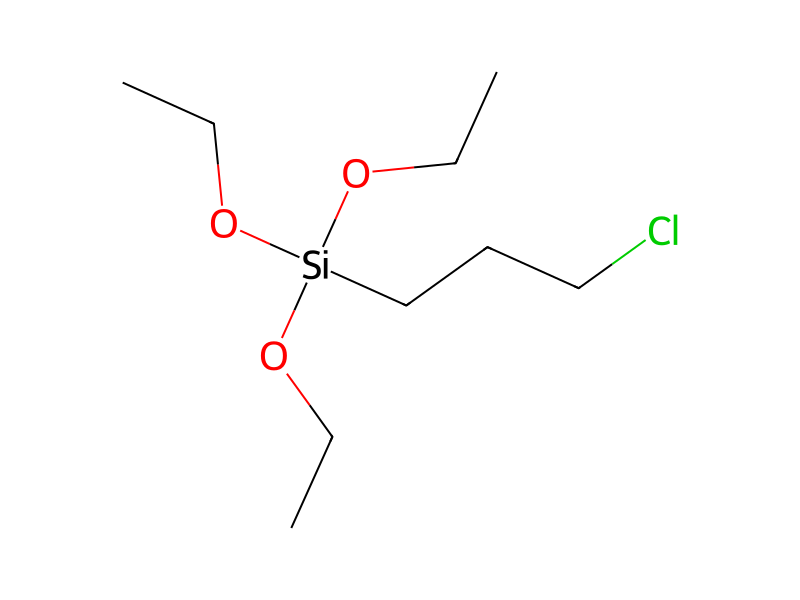
17.8 kg of virtually anhydrous sodium sulfide are mixed with 190 l of ethanol and added to an enameled 500 l capacity reactor. This is followed by the addition through a fine nozzle of 13.85 kg of sulfur in molten form. The mixture is heated to 50° C. and 190 l of 3-chloropropyltriethoxysilane are metered in within 10 minutes. On account of the exothermic reaction the temperature of the reactor contents rises to 74° C. A further 4.45 kg of virtually anhydrous sodium sulfide are added at this temperature. Three further portions of sodium sulfide are added at 5 minute intervals (i.e. each 5 minutes), the temperature of the reactor contents rising to 82° C. After completion of the sodium sulfide addition the reaction mixture is kept for 1.5 hours at 82-83° C. and the sodium chloride that has precipitated is separated after cooling the mixture. A yellow product is obtained after evaporating the reaction mixture in vacuo and renewed fine filtration. HPLC analysis confirms the presence of a product with a mean polysulfane chain length of 2.