홈MCP워크벤치Skills
홈워크벤치알림마이페이지
llms.txt · MCP 가이드개인정보처리방침 · 이용약관 · 지원v1.8.0
  1. 홈
  2. /화합물

케텐

Ketene

HCID 10038
새 노트새 반응견적 요청하기
인쇄 미리보기
기본 정보개요이름 및 식별자물성안전 및 규제화학 및 산업관련 반응화합물 노트
부분 구조 검색유사 구조 찾기

기본 정보

CAS
12071-23-7
표준 SMILES
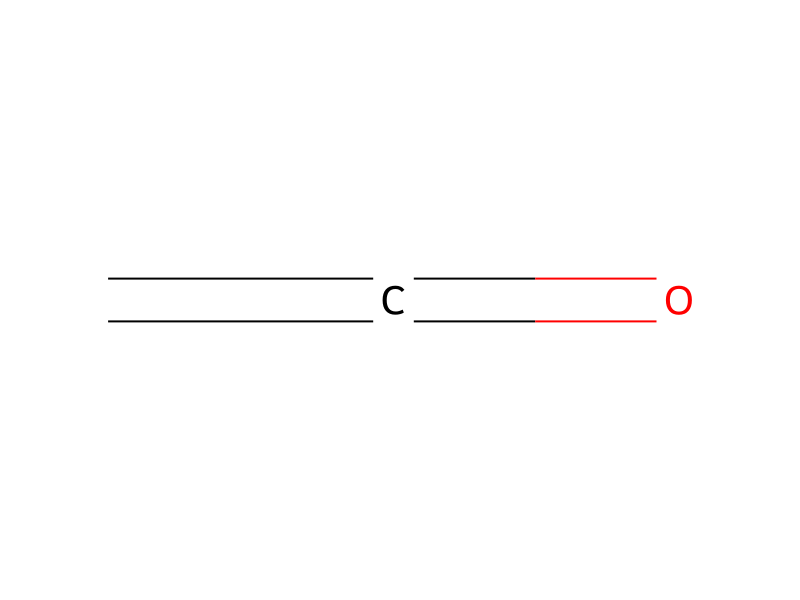
C=C=O
InChIKey
CCGKOQOJPYTBIH-UHFFFAOYSA-N
분자식
C2H2O
평균 분자량
42.04 g/mol
단동위원소 질량
42.01056468

개요

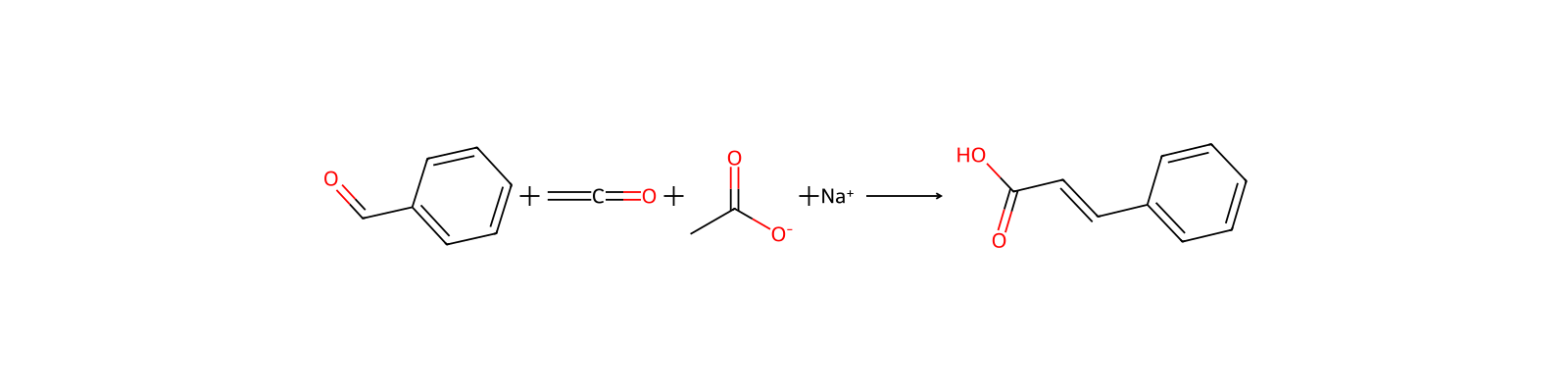
Ketene appears as a colorless highly reactive gas with a penetrating odor. mp: -150 °C, bp: -56 °C. Reacts violently with water. Soluble in diethyl ether and acetone. Severely irritates the eyes, the skin and the respiratory tract. Used is the manufacture of acetic anhydride, sorbic acid, cinnamic acids, chloroacetyl chloride and other materials. Readily polymerizes and cannot be shipped or stored. Is obtained instead as needed from diketene. DIKETENE (CAS: 674-82-8; Formula: C4H2O2 ) is a colorless liquid with a pungent odor. mp: -6.5 °C; bp: 127 °C. Density 1.08 g/cm3. Reacts violently with water. Is obtained from the dimerization of ketene and can be stored and transported under refrigeration. A severe lachrymator (irritates the eyes, the respiratory tract, and the skin as well). Depolymerizes at 650 °C to give ketene.

이름 및 식별자

우선 이름
Ketene
IUPAC
ethenone
현지명
케텐
영어명
ketene
분자식
C2H2O
분자량
42.04

이름 및 동의어

EthenoneKETENECarbometheneKeto-ethylene463-51-4LEP3SM032ADTXSID1052113CHEBI:48003KETOETHYLENERefChem:794269DTXCID3030682CHEBI:48002
이름 더 보기
케텐carbometeneEthen-1-oneketene ISO 9001:2015 REACH
207-336-9EthylenoneKETEN12071-23-7HSDB 633EINECS 207-336-9UNII-LEP3SM032Aoxoethylene

데이터베이스 식별자

CAS
12071-23-7、463-51-4
PubChem CID
10038
DTXSID
DTXSID1052113
ChEBI
CHEBI:48003
UNII
LEP3SM032A
EC Number
207-336-9
Nikkaji
J2.590I

물성

구조 계산 물성

XLogP
0.8
극성 표면적
17.1 Ų
수소 결합 공여자 수
0
수소 결합 수용자 수
1
회전 가능 결합 수
0
무거운 원자 수
3
형식 전하
0
복잡도
25.8

실험 및 물리화학적 성질

Chemical Classes · 2건

Toxic Gases & Vapors -> Other Toxic Gases & Vapors

Flammable agents - 3rd degree

SpringerMaterials PropertiesCoriolis coupling
Odor · 2건

PENETRATING ODOR

Penetrating odor.

TasteDISAGREEABLE TASTE
Density1.45(relative gas density)
Color/Form · 2건

COLORLESS GAS

Colorless gas.

Solubility · 5건

Reacts with water (NIOSH, 2024)

SLIGHTLY SOL IN ETHER

Fairly sol in acetone

Solubility in water: reaction

Reacts

Flash Point · 2건

Flammable gas

NA (Gas)

Boiling Point · 5건

-69 °F at 760 mmHg (NIOSH, 2024)

-56 °C

-56 °C

-49.8 °C @760 [mm Hg]

-69 °F

Melting Point · 5건

안전 및 규제

안전 정보는 참고용이며, 공급업체의 물질안전보건자료(SDS), 관련 법규 및 전문가 평가를 대체하지 않습니다.

GHS 분류

GHS Classification · 6건

Danger

H220 (100%): Extremely flammable gas [Danger Flammable gases]

P203, P210, P222, P260, P261, P264, P264+P265, P271, P280, P284, P302+P352, P304+P340, P305+P354+P338, P316, P317, P319, P320, P321, P332+P317, P362+P364, P377, P381, P403, P403+P233, P405, and P501 (click each P-code to see the statement)

Aggregated GHS information provided per 111 reports by companies from 2 notifications to the ECHA C&L Inventory. Each notification may be associated with multiple companies.

Danger

H220: Extremely flammable gas [Danger Flammable gases]

유해성 정보

Regulatory Information · 3건

Chemical: Ethenone

Ketene: Does not have an individual approval but may be used as a component in a product covered by a group standard. It is not approved for use as a chemical in its own right.

The New Jersey Worker and Community Right to Know Act requires public and private employers to provide information about hazardous substances at their workplaces. (N.J.S.A. 34:5A-1 et. seq.)

DOT LabelPoison Inhalation Hazard Flammable Liquid
Fire Hazards · 2건

Excerpt from ERG Guide 131 [Flammable Liquids - Toxic; polymerization hazard]:

Extremely flammable. Gas/air mixtures are explosive.

Health HazardsExcerpt from NIOSH Pocket Guide for Ketene:
Hazards Summary · 1건

TLV Basis is pulmonary edema, lung damage, and eye irritation. Animal studies show that ketene is an inhalation irritant with toxicity similar to that of phosgene. [ACGIH] A severe irritant of the skin, eyes, and respiratory tract; [CAMEO] Reacts violently with water producing acetic acid; A skin, eye, and respiratory tract irritant; Inhalation may cause pulmonary edema; Chronic or repeated exposure may cause emphysema and fibrosis; [ICSC] Causes acute pulmonary edema, other changes in lungs, thorax, or respiration, convulsions, and dyspnea in lethal-concentration inhalation studies of rodents; [RTECS]

화학 및 산업

용도 및 제조

Uses · 5건

Used in the synthesis of acetic anhydride and other organic chemicals; [ACGIH] Polymerizes readily and cannot be stored. Obtained from diketene; [CAMEO]

CONVERSION OF HIGHER ACIDS INTO THEIR ANHYDRIDES

ACETYLATION IN MFR OF CELLULOSE ACETATE & ASPIRIN

PRINCIPALLY CHEM INT FOR ACETIC ANHYDRIDE FROM ACETIC ACID; FOR DEHYDROACETIC ACID AND ACETOACETIC ESTERS; FOR ACETOACETANILIDE & N,N-DIALKYLACETOACETAMIDES

Acetylating agent, generally reacting with compounds having an active hydrogen atom; reacts with ammonia to give acetamide. Starting point for making various commercially important products, especially acetic anhydride and acetate esters.

Methods of Manufacturing · 2건

BY THERMAL DECOMPOSITION OF ACETONE, DIKETENE OR ACETIC ANHYDRIDE.

PYROLYSIS OF ACETONE OR ACETIC ACID BY PASSING ITS VAPOR THROUGH A TUBE AT 500-600 °C.

General Manufacturing InformationEthenone: ACTIVE

응용 분야

용도For the conversion of higher acids into their anhydrides; for acetylation in the manufacture of cellulose acetate and aspirin.

제조 방법 · 1건

생산 방법Ketene may be prepared also by pyrolysis of acetic anhydride or phenyl acetate or diketene. Other sources are quite unsatisfactory from a standpoint of yield. Small quantities may be made conveniently by heating acetone in a “ketene lamp.” This is a glass apparatus containing a Nichrome filament, heated electrically to red heat. Larger amounts are made by passing acetone or acetic acid through a tube at 700 °C. A very brief contact time is required, so that much of the acetone is undecomposed and has to be condensed and recycled. Also, it is imperative that the reaction tube be of inert material such as porcelain, glass, quartz, copper or stainless steel. A copper tube, if used, should be protected from oxidation by an iron sheath. Inert packing may be used (glass, vanadium pentoxide, porcelain), but just as good yields are obtained with empty tubes. No catalyst is known which accelerates this decomposition at significantly lower temperatures.

관련 반응

49건
반응 기록 만들기
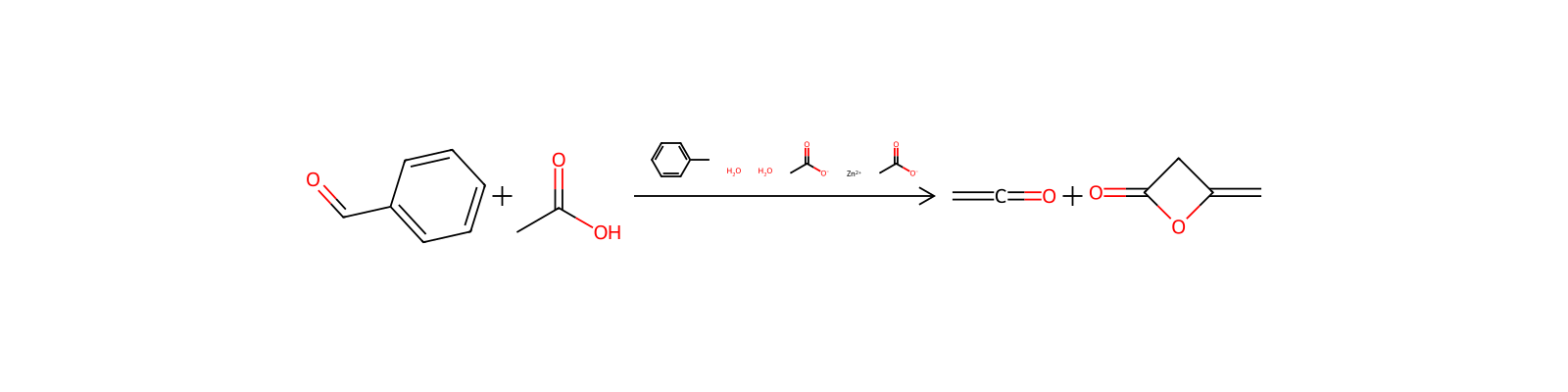
HRID 64739 반응식
HRID 64739반응물로uspto-grants-1986_09
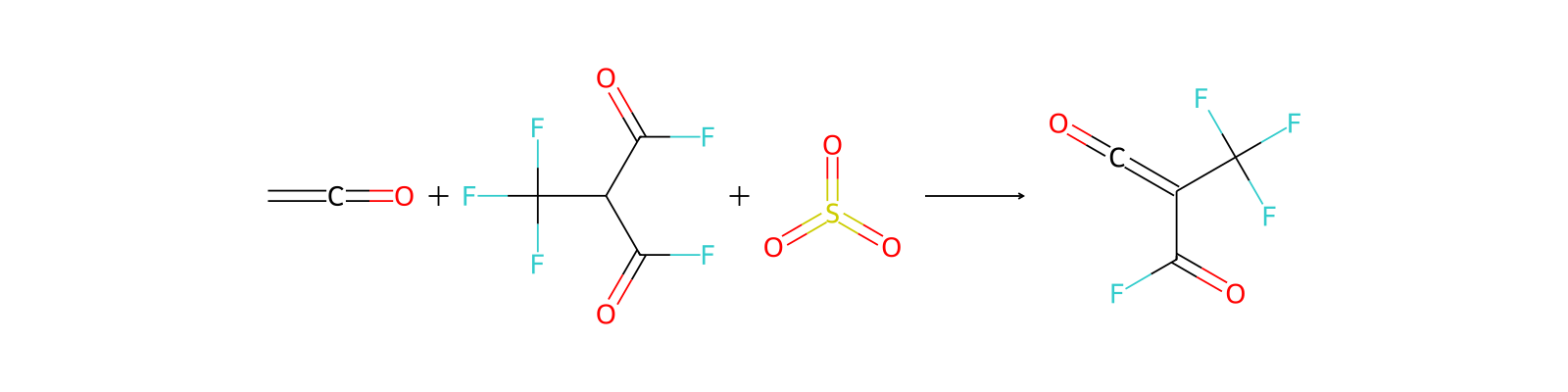
HRID 64740 반응식
HRID 64740반응물로uspto-grants-1986_09
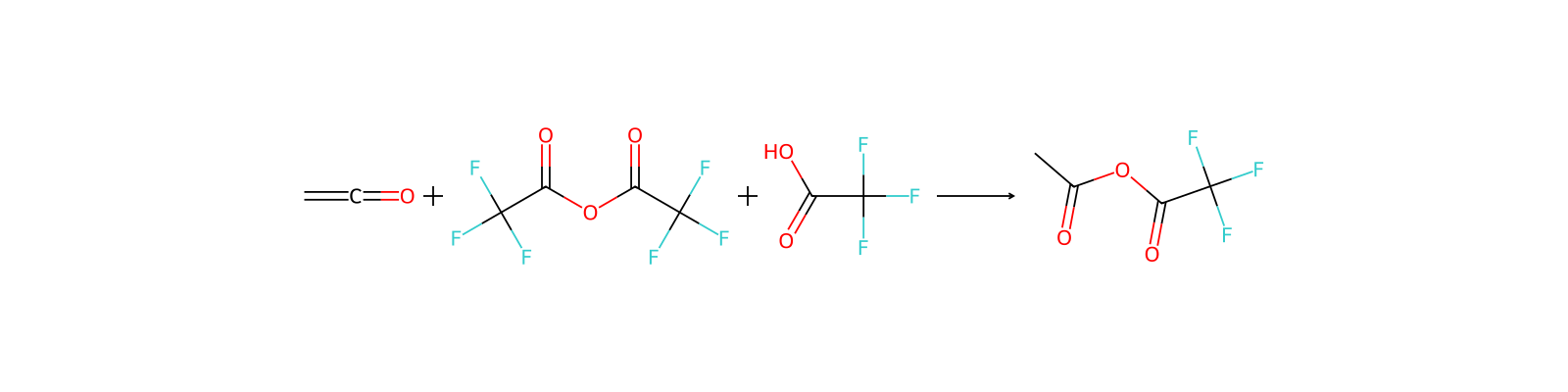
HRID 64741 반응식
HRID 64741생성물로uspto-grants-1986_09
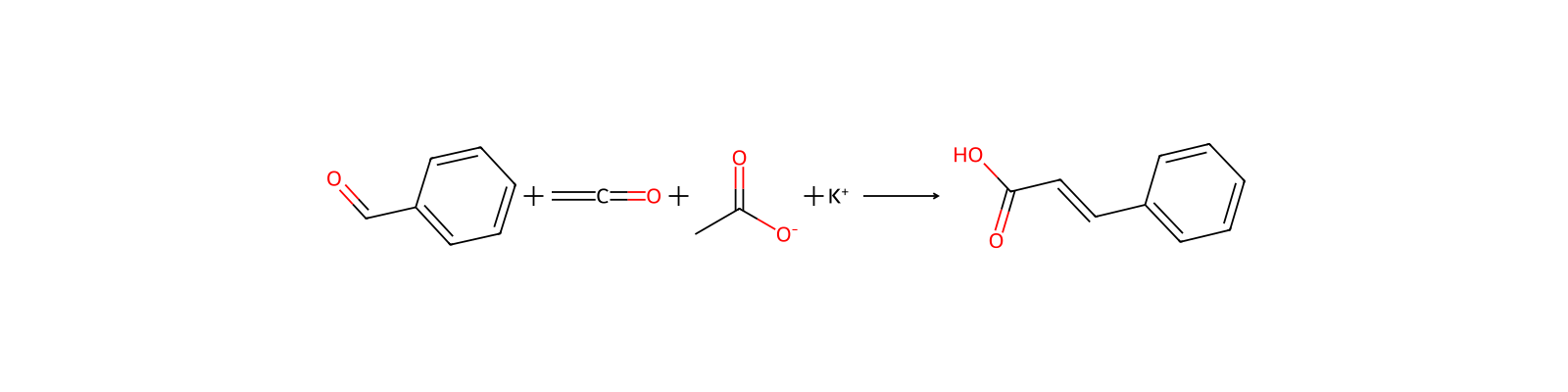
HRID 121068 반응식
HRID 121068반응물로Training data from https://doi.org/10.1039/C8SC04228D (2/10)
HRID 123836 반응식
HRID 123836반응물로Training data from https://doi.org/10.1039/C8SC04228D (2/10)
HRID 127734 반응식
HRID 127734반응물로uspto-grants-1981_03
HRID 151544 반응식
HRID 151544반응물로Training data from https://doi.org/10.1039/C8SC04228D (9/10)
HRID 192488 반응식
HRID 192488반응물로Training data from https://doi.org/10.1039/C8SC04228D (6/10)
1 / 7 페이지

화합물 노트

불러오는 중…

이 페이지에서기본 정보개요이름 및 식별자물성안전 및 규제화학 및 산업관련 반응화합물 노트
더보기
새 노트새 반응견적 요청하기

-238 °F (NIOSH, 2024)

-150 °C

-150 °C

-151 °C

-238 °F

Vapor Density · 3건

1.45 (NIOSH, 2024) - Heavier than air; will sink (Relative to Air)

1.45 (AIR= 1)

Relative vapor density (air = 1): 1.4

Vapor Pressure · 4건

greater than 1 atm (NIOSH, 2024)

1.04X10+4 mm Hg @ 25 °C /calculated from experimentally derived coefficients/

750 [mm Hg] @-50 °C

>1 atm

물리화학적 성질

녹는점
-150 ° · -150°
끓는 점
-56 ° · bp -56°
밀도
0.66 · 0.6600
굴절률
1.304 · 1.3040 (estimate)
물리적 상태
가스
EPA
Ketene (463-51-4)

화학적 성질

Colorless gas with a sharp penetrating odor;liquefies at -56°C (-68.8°F); solidifies at-151°C (-239.8°F); soluble in alcohol andacetone, decomposed by water.

Reactive GroupKetones
Reactivity AlertsHighly Flammable
OSHA Standards · 2건

Permissible Exposure Limit: Table Z-1 8-hr Time Weighted Avg: 0.5 ppm (0.9 mg/cu m).

Vacated 1989 OSHA PEL TWA 0.5 ppm (0.9 mg/cu m); STEL 1.5 ppm (3 mg/cu m) is still enforced in some states.

Reactivity ProfileKETENE is extremely flammable. Mixtures with air are explosive. Reacts violently with water; reacts vigorously with alcohols, ammonia. Readily polymerizes and cannot be shipped or stored. Is obtained instead as needed from diketene.
Atmospheric Standards · 1건

This action promulgates standards of performance for equipment leaks of Volatile Organic Compounds (VOC) in the Synthetic Organic Chemical Manufacturing Industry (SOCMI). The intended effect of these standards is to require all newly constructed, modified, and reconstructed SOCMI process units to use the best demonstrated system of continuous emission reduction for equipment leaks of VOC, considering costs, non air quality health and environmental impact and energy requirements. Ketene is produced, as an intermediate or a final product, by process units covered under this subpart.

Chemical DangersThe substance may readily polymerize. Reacts violently with many organic compounds. Reacts with water. This produces acetic acid. Decomposes in alcohol and ammonia.
Flammable LimitsFlammable Gas

안전 및 보호

Fire Fighting · 2건

Excerpt from ERG Guide 131 [Flammable Liquids - Toxic; polymerization hazard]:

Use powder, carbon dioxide. NO water. In case of fire: keep cylinder cool by spraying with water. NO direct contact with water.

First Aid Measures · 3건

Fresh air, rest. Half-upright position. Artificial respiration may be needed. Refer for medical attention.

Remove contaminated clothes. Rinse skin with plenty of water or shower.

First rinse with plenty of water for several minutes (remove contact lenses if easily possible), then refer for medical attention.

First Aid · 2건

Excerpt from NIOSH Pocket Guide for Ketene:

(General first aid procedures)

Safe StorageThe substance cannot be stored or shipped.
Storage Conditions · 2건

...CANNOT BE...STORED IN A GASEOUS STATE.

Protect containers against physical damage by shock. Outdoor or detached storage is preferable. For indoor storage, use standard combustible liquid storeroom or cabinet.

Cleanup Methods · 1건

PERSONS NOT WEARING PROTECTIVE EQUIPMENT AND CLOTHING SHOULD BE RESTRICTED FROM AREAS OF LEAKS UNTIL CLEANUP HAS BEEN COMPLETED. IF KETENE IS LEAKED, THE FOLLOWING STEPS SHOULD BE TAKEN: 1. REMOVE ALL IGNITION SOURCES. 2. VENTILATE THE AREA OF LEAK. 3. STOP FLOW OF GAS. DISPOSAL METHODS: KETENE MAY BE DISPOSED OF BY BURNING AT A SAFE LOCATION OR IN A SUITABLE COMBUSTION CHAMBER.

Nonfire Spill ResponseExcerpt from ERG Guide 131 [Flammable Liquids - Toxic; polymerization hazard]:
Spillage DisposalEvacuate danger area! Consult an expert! Ventilation. Personal protection: gas-tight chemical protection suit including self-contained breathing apparatus.
Preventive Measures · 1건

SRP: The scientific literature for the use of contact lenses in industry is conflicting. The benefit or detrimental effects of wearing contact lenses depend not only upon the substance, but also on factors including the form of the substance, characteristics and duration of the exposure, the uses of other eye protection equipment, and the hygiene of the lenses. However, there may be individual substances whose irritating or corrosive properties are such that the wearing of contact lenses would be harmful to the eye. In those specific cases, contact lenses should not be worn. In any event, the usual eye protection equipment should be worn even when contact lenses are in place.

Isolation and EvacuationExcerpt from ERG Guide 131 [Flammable Liquids - Toxic; polymerization hazard]:
Eye PreventionWear safety goggles or eye protection in combination with breathing protection.
Fire PreventionNO open flames, NO sparks and NO smoking. Closed system, ventilation, explosion-proof electrical equipment and lighting.

독성 정보

Target OrgansEyes, skin, respiratory system
Adverse EffectsToxic Pneumonitis - Inflammation of the lungs induced by inhalation of metal fumes or toxic gases and vapors.
Exposure Routes · 2건

The substance can be absorbed into the body by inhalation.

inhalation, skin and/or eye contact

Signs and Symptoms · 4건

Cough. Shortness of breath. Symptoms may be delayed.

Redness.

Redness. Pain.

irritation eyes, skin, nose, throat, respiratory system; pulmonary edema

Human Toxicity Excerpts · 5건

SEVERE PULMONARY IRRITANT CAUSING PULMONARY EDEMA IF INHALED.

STRONG IRRITANT TO SKIN & MUCOUS MEMBRANES.

TOXIC BY ... INHALATION ... .

KETENE IS ONE OF THE MOST HIGHLY IRRITANT GASES TO THE RESP TRACT; ITS TOXICITY APPEARS TO BE OF THE SAME ORDER OF MAGNITUDE AS THAT OF PHOSGENE AND ALSO RESEMBLES PHOSGENE IN ITS DELAYED ACTION ON THE RESPIRATORY SYSTEM.

For more Human Toxicity Excerpts (Complete) data for KETENE (8 total), please visit the HSDB record page.

Non-Human Toxicity Excerpts · 4건

/IN MICE AND RATS/ CONCN OF OVER 100 PPM ... PROVED FATAL WITH DEATH OCCURRING RAPIDLY WITH ... MARKED EYE, NOSE, THROAT, & PULMONARY IRRITATION. AUTOPSIES SHOWED THAT THERE WAS DILATATION OF THE RIGHT HEART & MAJOR DAMAGE TO ALVEOLAR WALLS WITH PULMONARY EDEMA.

... REPEATED INHALATIONS AT 1 PPM IN THE RAT, CAT, & MONKEY ... SHOWED EVIDENCE OF LUNG DAMAGE ... INTERSTITIAL FIBROSIS, CELLULAR INFILTRATION, ATELECTASIS, & EMPHYSEMA /ON AUTOPSY/.

EXPOSURE OF MONKEYS TO 23 PPM IN AIR FOR FOUR HOURS CAUSED THE ANIMALS TO RUB THEIR EYES, COUGH, & BECOME LETHARGIC.

/IN GUINEA PIGS/ CONCN OF OVER 100 PPM ... PROVED FATAL WITH DEATH OCCURRING RAPIDLY WITH ... MARKED EYE, NOSE, THROAT, & PULMONARY IRRITATION. AUTOPSIES SHOWED THAT THERE WAS DILATATION OF THE RIGHT HEART & MAJOR DAMAGE TO ALVEOLAR WALLS WITH PULMONARY EDEMA.

Probable Routes of Human ExposureInhalation, eye and skin contact.
Toxicity DataLCLo (mouse) = 23 ppm/30min
Non-Human Toxicity ValuesLC50 MOUSE INHALATION 17 PPM/10 MIN

규제 정보

Atmospheric Standards · 1건

This action promulgates standards of performance for equipment leaks of Volatile Organic Compounds (VOC) in the Synthetic Organic Chemical Manufacturing Industry (SOCMI). The intended effect of these standards is to require all newly constructed, modified, and reconstructed SOCMI process units to use the best demonstrated system of continuous emission reduction for equipment leaks of VOC, considering costs, non air quality health and environmental impact and energy requirements. Ketene is produced, as an intermediate or a final product, by process units covered under this subpart.

안전 데이터

OEB
C
OEL
TWA: 0.5 ppm (0.9 mg/m3), STEL: 1.5 ppm (3 mg/m3)
IDLA
5 ppm
tsca
TSCA listed
ridadr
1955
위험 등급
2.3
기존화학 물질
KE-21786
유해 물질 데이터
463-51-4(Hazardous Substances Data)

상·하류 제품 정보

상류 원료

PIPE실리카겔일산화탄소(가스)트리에틸인산염p-클로로벤즈알데히드Flow Cell메틸케텐Phenoxatellurin

하류 제품

아세틸 케텐초산 리나릴무수부틸산아세토카민소르빈산2,4-펜탄디온부타클로르무수초산HEXANOIC ANHYDRIDE아세페이트초산에틸아크릴산메틸WL 108477시트르산2,2,6-트리메틸-4H-1,3-다이옥신-4-온다이클로로아세틸 염화물