피루브 산, 나트륨 염
Sodium pyruvate, BioXtra, >=99%
HCID 10154024
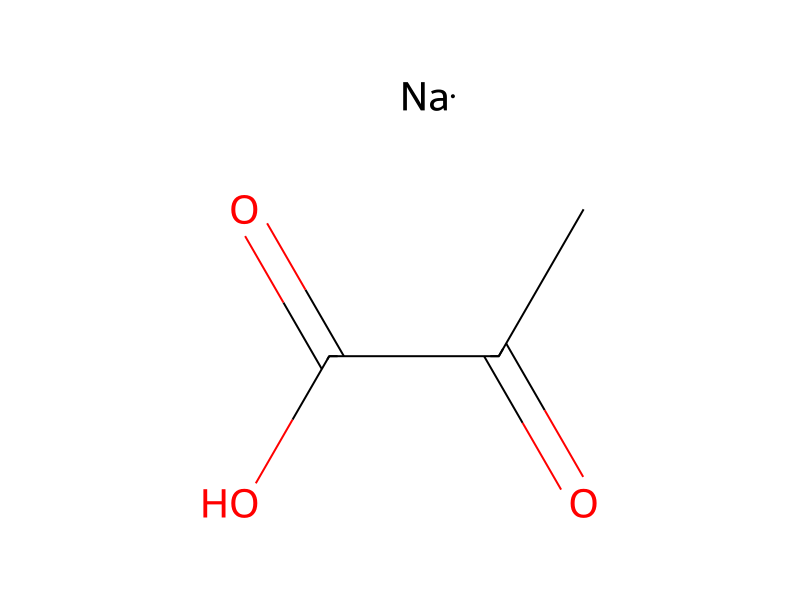
기본 정보
- CAS
113-24-6- 표준 SMILES
CC(=O)C(=O)O.[Na]- InChIKey
DAQHMCWYXJEOCG-UHFFFAOYSA-N- 분자식
- C3H4NaO3
- 평균 분자량
- 111.05 g/mol
이름 및 식별자
- 우선 이름
- Sodium pyruvate, BioXtra, >=99%
- 현지명
- 피루브 산, 나트륨 염
- 영어명
- Sodium pyruvate
- 분자식
- C3H5NaO3
- 분자량
- 112.06
이름 및 동의어
Sodium pyruvate, p.a., 99%SCHEMBL30123187Sodium pyruvate, BioXtra, >=99%Sodium pyruvate, purum, >=99.0% (NT)Sodium pyruvate, ReagentPlus(R), >=99%Sodium pyruvate, SAJ special grade, >=95.0%Sodium pyruvate, Vetec(TM) reagent grade, 98%Sodium pyruvate, powder, BioXtra, suitable for mouse embryoSodium pyruvate, Hybri-Max(TM), powder, suitable for hybridomaSodium pyruvate, anhydrous, free-flowing, Redi-Dri(TM), ReagentPlus(R), >=99%Sodium pyruvate, powder, BioReagent, suitable for cell culture, suitable for insect cell culture, >=99%피루브산,나트륨염
이름 더 보기
피루브산,나트륨염소듐파이루베이트PYRUVATEPYRUVIC ACID SODIUM SALTSODIUM 2-OXOPROPANOATEpyruvic acid sodiumSodiuM pyruvat2-KETOPROPIONIC ACID SODIUM SALTPYR NAp.A.,100gbinrongsuannaSodium pyruate
데이터베이스 식별자
- CAS
113-24-6- PubChem CID
- 10154024
물성
구조 계산 물성
- 극성 표면적
- 54.4 Ų
- 수소 결합 공여자 수
- 1
- 수소 결합 수용자 수
- 3
- 회전 가능 결합 수
- 1
- 무거운 원자 수
- 7
- 형식 전하
- 0
- 복잡도
- 84
물리화학적 성질
- 녹는점
- 300 °C · >300 °C (lit.)
- 끓는 점
- 300 ℃ · >300℃
- 밀도
- 1 · 1,267g/cm
- 증기압
- 0 Pa · 0Pa at 20℃
- 굴절률
- 1 · 1,426-1,43
- 저장 조건
- 2 · 2-8°C
- 용해도
- 2 O: · H2O: 100 mg/mL
- 물리적 상태
- 액체
- 색상
- 흰색에서 연한 노란색
- 수소이온지수(pH)
- pH(100g/l, 25℃) : 4.0~8.0
- 생물학적 소스
- synthetic (organic)
- 수용성
- 물에 용해됩니다.
- BRN
- 3568341 · 3568341
- 안정성
- 안정적인. 강한 산화제와 호환되지 않습니다.
- 화장품 원료 기능
- 피부 컨디셔닝
- InChI
- 1S/C3H4O3.Na/c1-2(4)3(5)6;/h1H3,(H,5,6);/q;+1/p-1
- InChIKey
- DAEPDZWVDSPTHF-UHFFFAOYSA-M
- SMILES
- [Na+].CC(=O)C([O-])=O
- LogP
- -3.83 at · -3.83 at 20℃
- EPA
- Sodium pyruvate (113-24-6)
안전 및 규제
안전 정보는 참고용이며, 공급업체의 물질안전보건자료(SDS), 관련 법규 및 전문가 평가를 대체하지 않습니다.
안전 데이터
- wgk
- 3
- tsca
- TSCA listed
- HS 번호
- 29183000
- risk_code
- 36/38-36/37/38
- hazard_code
- Xi
- safety_code
- 37/39-26-24/25-36
- 기존화학 물질
- KE-27653
- Hazard Classifications
- Eye Irrit. 2Skin Sens. 1B
- 스토리지 클래스
- 11 - Combustible Solids
화학 및 산업
응용 분야
개요Sodium pyruvate is the sodium salt of pyruvate. It is frequently supplemented to the cell culture medium to act as a source of energy since it is a key intermediate during the production of the high-energy ATP molecules inside cells. For example, it can be used as a carbon source for bacteria. It may also protect cell against hydrogen peroxide, an oxidant to scavenger oxygen radicals. It is an important metabolic intermediate in many essential metabolic pathways such as carbohydrate metabolism. For example, it is converted into acetyl coenzyme A and enters into the TCA cycle (Kreb’s cycle) in organisms. It is also involved in the amino acid metabolism in organisms.
용도Sodium pyruvate is used in cell culture media as an additional source of energy. It acts as an antioxidant and finds protective effects against oxygen radicals. It serves as an intermediate in many metabolic pathways such as sugar metabolism. It is converted into acetyl coenzyme A and enters the trichloroacetic acid cycle. In addition, it is involved with amino acid metabolism and initiates the Kreb's cycle. It plays an important role as a free radical scavenger.
일반 설명Sodium pyruvate (SP) is a simplest keto-acid. It crystallizes as very thin plates and belongs to the monoclinic system. Its utility in Knoevenagel condensation carried out in an aqueous medium has been examined. The standard molar enthalpy of formation and molar enthalpy of dissolution of SP at infinite dilution have been obtained. Its efficacy in treating mitochondrial DNA depletion syndromes has been investigated.
제조 방법
The preparation of sodium pyruvate is as follows:Synthesis of pyruvate, a salt of a compound of formula (II) by ozonolysis of methacrylic acid, a compound of formula (II) A solution of methacrylic acid obtained in Example la or lb (15.31 g, 178 mmol) in dichloromethane/methanol (5 % methanol, 50 ml) was cooled to -78 0C and a stream of ozone was passed through until the solution turned blue. Dimethylsulfide (12.41 g, 200 mmol) was added and the mixture was allowed to reach room temperature. Excess dimethylsulfide was removed by passing a stream of nitrogen through the reaction mixture. The reaction mixture was evaporated in vacuo at 30 0C. To the residue was added water (100 ml) and then slowly added a solution of aq. NaOH (IM, 178 ml). The mixture was concentrated and left for crystallisation at 4 °C. The white crystalline material obtained was filtered and washed with acetone (3x100 ml). Yield: 14.50 g (92 %). Purity: 95 %.
관련 반응
0건
아직 관련 반응이 없습니다