

기본 정보
- CAS
489-98-5- 표준 SMILES
Nc1c([N+](=O)[O-])cc([N+](=O)[O-])cc1[N+](=O)[O-]- InChIKey
IAHOUQOWMXVMEH-UHFFFAOYSA-N- 분자식
- C6H4N4O6
- 평균 분자량
- 228.12 g/mol
- 단동위원소 질량
- 228.01308386
개요
2,4,6-trinitroaniline appears as yellow monoclinic crystals. (NTP, 1992)
이름 및 식별자
- 우선 이름
- 2,4,6-Trinitroaniline
- IUPAC
- 2,4,6-trinitroaniline
- 현지명
- 2,4,6-트리니스토아닐린
- 영어명
- 2,4,6-Trinitroaniline
- 분자식
- C6H4N4O6
- 분자량
- 228.12
이름 및 동의어
2,4,6-TRINITROANILINEPicramide2,4,6-Trinitrobenzenamine1-Amino-2,4,6-trinitrobenzeneBenzenamine, 1,4,6-trinitro-NSC 4860MATB (EXPLOSIVE)EINECS 207-703-3UN0153Aniline, 2,4,6trinitroBenzenamine, 2,4,6trinitroAI3-28913
이름 더 보기
2,4,6-트리니스토아닐린2,4,6-트리니트로아닐린TNAMATBCLEC3BPicramide, MATBPicramide TNA MATBBenzenamine,2,4,6-trinitro-(2,4,6-trinitrophenyl)amine
DTXSID9074850RefChem:82162Benzenamine, 1,4,6trinitroDTXCID70406532,4,6TRINITROBENZENAMINEAniline, 2,4,6trinitro (8CI)1AMINO2,4,6TRINITROBENZENE2AMINO1,3,5TRINITROBENZENE
데이터베이스 식별자
- CAS
489-98-5- PubChem CID
- 10271
- DTXSID
DTXSID9074850- UNII
- ZL7CZQ6FZC
- EC Number
- 207-703-3
물성
구조 계산 물성
- XLogP
- 0.6
- 극성 표면적
- 163 Ų
- 수소 결합 공여자 수
- 1
- 수소 결합 수용자 수
- 7
- 회전 가능 결합 수
- 0
- 무거운 원자 수
- 16
- 형식 전하
- 0
- 복잡도
- 292
실험 및 물리화학적 성질
Chemical ClassesOther Uses -> Explosives
SpringerMaterials PropertiesBoiling point
Density1.762 at 54 °F (NTP, 1992) - Denser than water; will sink
SolubilityInsoluble (NTP, 1992)
Boiling PointExplodes (NTP, 1992)
Melting Point378 to 383 °F (NTP, 1992)
Physical Description
2,4,6-trinitroaniline appears as yellow monoclinic crystals. (NTP, 1992)
Yellow crystals; [CAMEO]
Ionization Efficiency
Positive
1.11
2.7
Agilent XCT
Electrospray ionization
formic acid (5.3nM)
물리화학적 성질
- 녹는점
- 193.5 °C · 193.5°C
- 끓는 점
- 369.91 °C · 369.91°C (rough estimate)
안전 및 규제
안전 정보는 참고용이며, 공급업체의 물질안전보건자료(SDS), 관련 법규 및 전문가 평가를 대체하지 않습니다.
유해성 정보
DOT LabelExplosive 1.1D
Fire HazardsFlash point data for this chemical are not available. It is probably combustible. (NTP, 1992)
Health HazardsSYMPTOMS: Symptoms of exposure to this compound may include skin and eye irritation; headache; drowsiness, weakness; cyanosis; and respiratory distress. Chronic exposure may lead to weight loss, anemia, and possible liver damage.
Hazards SummaryAdverse effects include skin irritation, headache, cyanosis, respiratory distress, anemia, and liver damage; [CAMEO]
Reactive GroupNitro, Nitroso, Nitrate, and Nitrite Compounds, Organic
Reactivity AlertsExplosive
Reactivity Profile
Explosive by heat or shock. 2,4,6-TRINITROANILINE is an aromatic nitrate. Aromatic nitrates range from slight to strong oxidizing agents. If mixed with reducing agents, including hydrides, sulfides and nitrides, they may begin a vigorous reaction that culminates in a detonation. The aromatic nitro compounds may explode in the presence of a base such as sodium hydroxide or potassium hydroxide even in the presence of water or organic solvents. The explosive tendencies of aromatic nitro compounds are increased by the presence of multiple nitro groups.
Air and Water ReactionsInsoluble in water.
안전 및 보호
Fire FightingFires involving this material can be controlled with a dry chemical, carbon dioxide or Halon extinguisher. (NTP, 1992)
화학 및 산업
용도 및 제조
Uses
Used in explosives; [Hawley]
Forbidden: Transport of Trinitroaniline (Picramide) by cargo aircraft or passenger aircraft/rail; [HMT]
응용 분야
용도Explosive compositions.
일반 설명Yellow monoclinic crystals.
제조 방법
생산 방법Picric acid is converted to 2,4,6-trinitrochlorobenzene by treatment with PCl5, or a similar chlorinating agent; this is then aminated under mild reaction conditions.
상·하류 제품 정보
상류 원료
하류 제품
관련 반응
18건


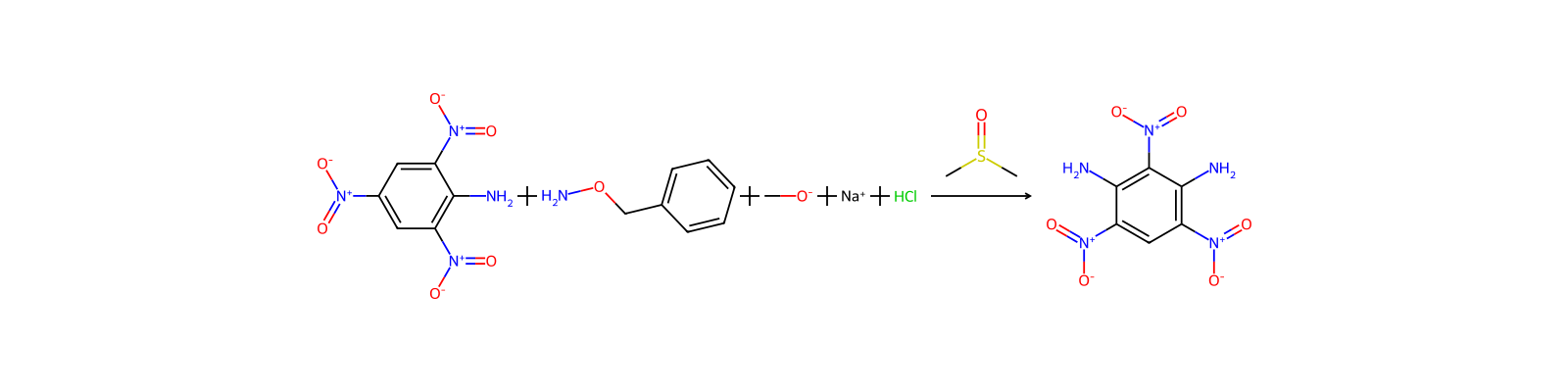


화합물 노트
불러오는 중…