

기본 정보
- 표준 SMILES
O=C(NO)c1ccccc1- InChIKey
VDEUYMSGMPQMIK-UHFFFAOYSA-N- 분자식
- C7H7NO2
- 평균 분자량
- 137.14 g/mol
- 단동위원소 질량
- 137.04767847
이름 및 식별자
- 우선 이름
- Benzohydroxamic acid
- IUPAC
- N-hydroxybenzamide
- 영어명
- Benzohydroxamic acid
- 분자식
- C7H7NO2
- 분자량
- 137.14
이름 및 동의어
N-HydroxybenzamideBENZOHYDROXAMIC ACID495-18-1Benzhydroxamic acidBenzamide, N-hydroxy-Phenylhydroxamic acidBenzoylhydroxamic acidHydroxylamine, N-benzoyl-DTXSID7025421K8YW73872DNSC-147248DTXCID305421
이름 더 보기
N-BENZOYLHYDROXYLAMINEBHAMNSC 3136NSC 147248n-hydroxy-benzamidBenzohydroxamsαureBENZOHYROXAMICACID
RefChem:163535207-797-6N-Hydroxy-benzamideBenzohydroxamateBenzohyroxamatebenzenecarbohydroxamic acid122231-61-2MFCD00002109
데이터베이스 식별자
- CAS
32685-16-8、495-18-1- PubChem CID
- 10313
- DTXSID
DTXSID7025421- ChEMBL
CHEMBL16300- UNII
- K8YW73872D
- EC Number
- 207-797-6
- Nikkaji
- J1.560A
물성
구조 계산 물성
- XLogP
- 0.3
- 극성 표면적
- 49.3 Ų
- 수소 결합 공여자 수
- 2
- 수소 결합 수용자 수
- 2
- 회전 가능 결합 수
- 1
- 무거운 원자 수
- 10
- 형식 전하
- 0
- 복잡도
- 119
실험 및 물리화학적 성질
LogP0.26
Solubility5 to 10 mg/mL at 74.7 °F (NTP, 1992)
Boiling PointExplodes (NTP, 1992)
Melting Point
259 to 266 °F (NTP, 1992)
128
Physical DescriptionRhombic crystals or light beige solid. (NTP, 1992)
물리화학적 성질
- 녹는점
- 126 · 126-130 °C(lit.)
- 끓는 점
- 251.96 °C · 251.96°C (rough estimate)
- 밀도
- 1.2528 · 1.2528 (rough estimate)
- 굴절률
- 1.503 · 1.5030 (estimate)
- 저장 조건
- 2 · 2-8°C
- 용해도
- 알코올에 용해됩니다. 에테르에 약간 용해됩니다. 벤젠에 불용성.
- 산도 계수 (pKa)
- 1 · pK1: 8.89(0) (20°C)
- 물리적 상태
- 고체
- 색상
- 다이아몬드 모양의 정제
- 수용성
- 22 g/L · 22g/L(6℃)
- BRN
- 1907585 · 1907585
- 안정성
- 수분 및 온도에 민감함
- InChI
- 1S/C7H7NO2/c9-7(8-10)6-4-2-1-3-5-6/h1-5,10H,(H,8,9)
- InChIKey
- VDEUYMSGMPQMIK-UHFFFAOYSA-N
- SMILES
- ONC(=O)c1ccccc1
- NIST
- Benzamide, n-hydroxy-(495-18-1)
- EPA
- Benzohydroxamic acid (495-18-1)
화학적 성질
Crystalline Solid
안전 및 규제
GHS 분류
GHS Classification
Warning
H315 (100%): Causes skin irritation [Warning Skin corrosion/irritation];H319 (100%): Causes serious eye irritation [Warning Serious eye damage/eye irritation];H335 (97%): May cause respiratory irritation [Warning Specific target organ toxicity, single exposure; Respiratory tract irritation];H341 (97%): Suspected of causing genetic defects [Warning Germ cell mutagenicity]
P203, P261, P264, P264+P265, P271, P280, P302+P352, P304+P340, P305+P351+P338, P318, P319, P321, P332+P317, P337+P317, P362+P364, P403+P233, P405, and P501 (click each P-code to see the statement)
Aggregated GHS information provided per 33 reports by companies from 3 notifications to the ECHA C&L Inventory. Each notification may be associated with multiple companies.;Information may vary between notifications depending on impurities, additives, and other factors. The percentage value in parenthesis indicates the notified classification ratio from companies that provide hazard codes. Only hazard codes with percentage values above 10% are shown. For more detailed information, please visit ECHA C&L website.
유해성 정보
Regulatory Information
Chemical: Benzamide, N-hydroxy-
Status: No longer Valid Update: 18-05-2018 https://echa.europa.eu/registration-dossier/-/registered-dossier/24948
Benzamide, N-hydroxy-: Does not have an individual approval but may be used under an appropriate group standard
Fire HazardsFlash point data for this chemical are not available; however, it is probably combustible. (NTP, 1992)
Health HazardsACUTE/CHRONIC HAZARDS: When heated to decomposition this compound emits toxic fumes of nitrogen oxides. (NTP, 1992)
Reactive GroupAlcohols and Polyols;Amides and Imides
Reactivity Profile
N-HYDROXYBENZAMIDE is an amide. Amides/imides react with azo and diazo compounds to generate toxic gases. Flammable gases are formed by the reaction of organic amides/imides with strong reducing agents. Amides are very weak bases (weaker than water). Imides are less basic yet and in fact react with strong bases to form salts. That is, they can react as acids. Mixing amides with dehydrating agents such as P2O5 or SOCl2 generates the corresponding nitrile. The combustion of these compounds generates mixed oxides of nitrogen (NOx).
Air and Water ReactionsSlightly soluble in water.
Hazard Classes and CategoriesSkin Irrit. 2 (100%);Eye Irrit. 2 (100%);STOT SE 3 (97%);Muta. 2 (97%)
안전 및 보호
Fire FightingFires involving this material can be controlled with a dry chemical, carbon dioxide or Halon extinguisher. (NTP, 1992)
First Aid
EYES: First check the victim for contact lenses and remove if present. Flush victim's eyes with water or normal saline solution for 20 to 30 minutes while simultaneously calling a hospital or poison control center. Do not put any ointments, oils, or medication in the victim's eyes without specific instructions from a physician. IMMEDIATELY transport the victim after flushing eyes to a hospital even if no symptoms (such as redness or irritation) develop.;SKIN: IMMEDIATELY flood affected skin with water while removing and isolating all contaminated clothing. Gently wash all affected skin areas thoroughly with soap and water. If symptoms such as redness or irritation develop, IMMEDIATELY call a physician and be prepared to transport the victim to a hospital for treatment.;INHALATION: IMMEDIATELY leave the contaminated area; take deep breaths of fresh air. If symptoms (such as wheezing, coughing, shortness of breath, or burning in the mouth, throat, or chest) develop, call a physician and be prepared to transport the victim to a hospital. Provide proper respiratory protection to rescuers entering an unknown atmosphere. Whenever possible, Self-Contained Breathing Apparatus (SCBA) should be used; if not available, use a level of protection greater than or equal to that advised under Protective Clothing.;INGESTION: DO NOT INDUCE VOMITING. If the victim is conscious and not convulsing, give 1 or 2 glasses of water to dilute the chemical and IMMEDIATELY call a hospital or poison control center. Be prepared to transport the victim to a hospital if advised by a physician. If the victim is convulsing or unconscious, do not give anything by mouth, ensure that the victim's airway is open and lay the victim on his/her side with the head lower than the body. DO NOT INDUCE VOMITING. IMMEDIATELY transport the victim to a hospital. (NTP, 1992)
Nonfire Spill Response
SMALL SPILLS AND LEAKAGE: If you spill this chemical, you should dampen the solid spill material with water, then transfer the dampened material to a suitable container. Use absorbent paper dampened with water to pick up any remaining material. Seal your contaminated clothing and the absorbent paper in a vapor-tight plastic bag for eventual disposal. Wash all contaminated surfaces with a soap and water solution. Do not reenter the contaminated area until the Safety Officer (or other responsible person) has verified that the area has been properly cleaned.;STORAGE PRECAUTIONS: You should store this material in a refrigerator. (NTP, 1992)
Personal Protective Equipment (PPE)
RECOMMENDED RESPIRATOR: Where the neat test chemical is weighed and diluted, wear a NIOSH-approved half face respirator equipped with an organic vapor/acid gas cartridge (specific for organic vapors, HCl, acid gas and SO2) with a dust/mist filter. (NTP, 1992)
규제 정보
Regulatory Information
Chemical: Benzamide, N-hydroxy-
Status: No longer Valid Update: 18-05-2018 https://echa.europa.eu/registration-dossier/-/registered-dossier/24948
Benzamide, N-hydroxy-: Does not have an individual approval but may be used under an appropriate group standard
안전 데이터
- wgk
- 3
- tsca
- TSCA listed
- rtecs
- DF9650000
- 독성
- LD orl-rat: >500 mg/kg NCNSA6 5,26,53
- HS 번호
- 29280090
- risk_code
- 68-40-20/21/22
- hazard_code
- Xn
- safety_code
- 45-36/37-36-22
- 스토리지 클래스
- 11 - Combustible Solids
화학 및 산업
용도 및 제조
General Manufacturing InformationBenzamide, N-hydroxy-: ACTIVE
응용 분야
용도Benzhydroxamic acid is used as precursor in the synthesis of novel mono-anionic and di-anionic hydroxamato complexes by reacting with BiPh3 and Bi(O(t)Bu)3, which has anti-bacterial activity against helicobacter pylori. It is used in the photometric determination of trace amounts of vanadium in alloy steels by making mixed-ligand vanadium chelates with ammonium thiocyanate. It is also involved in the palladium catalyzed synthesis of benzisoxazolones.
일반 설명Rhombic crystals or light beige solid.
제조 방법
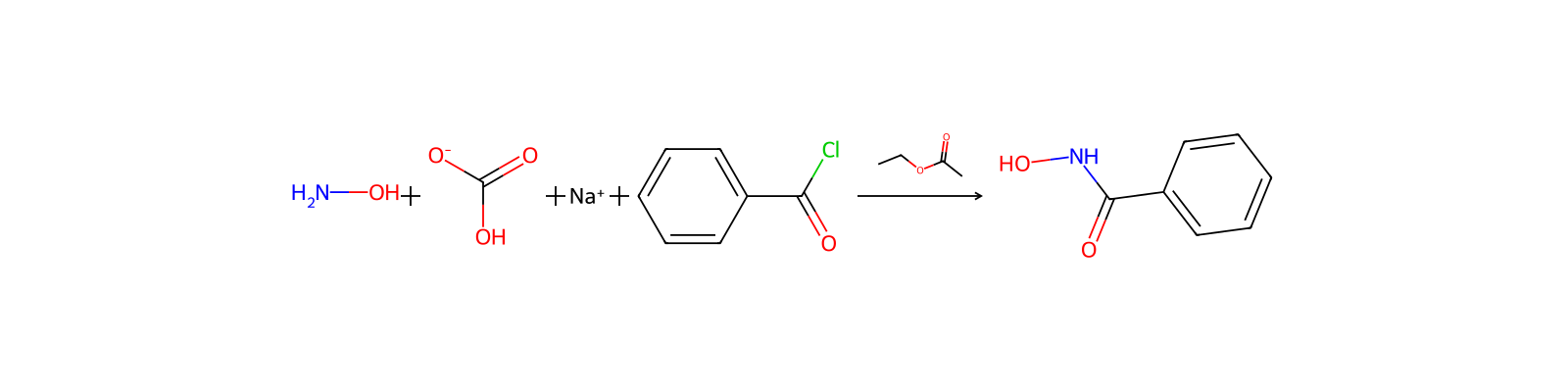
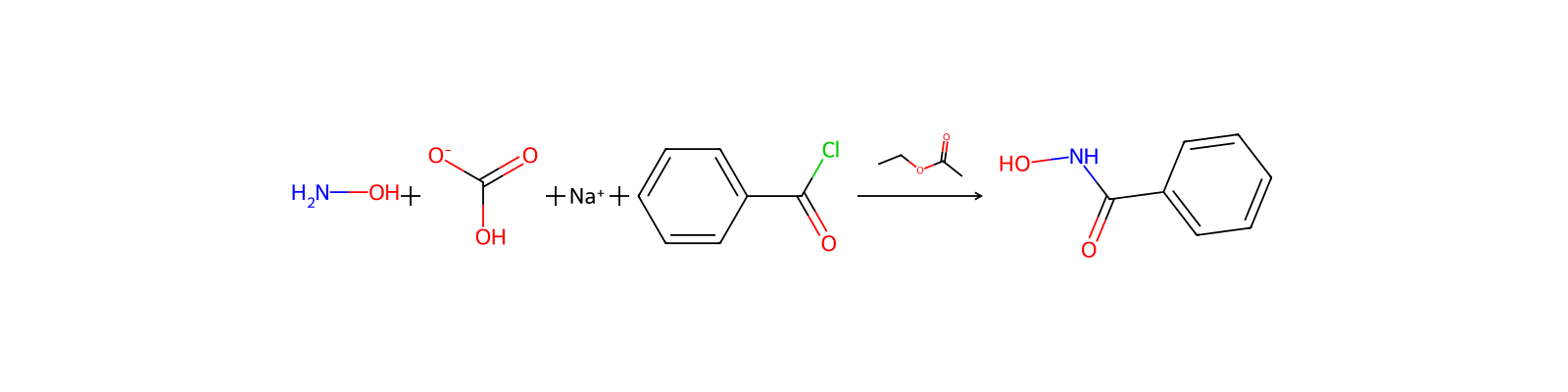
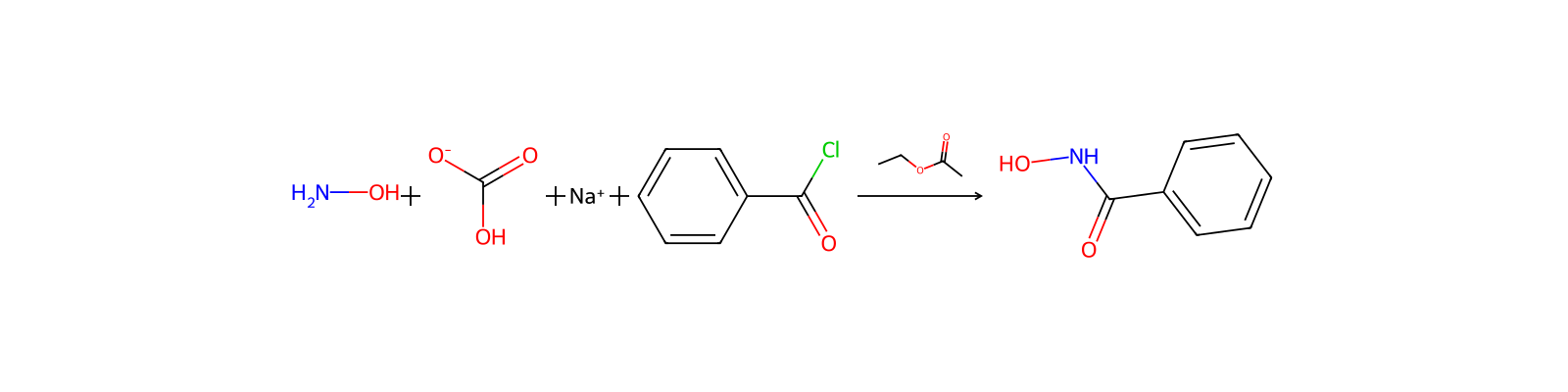
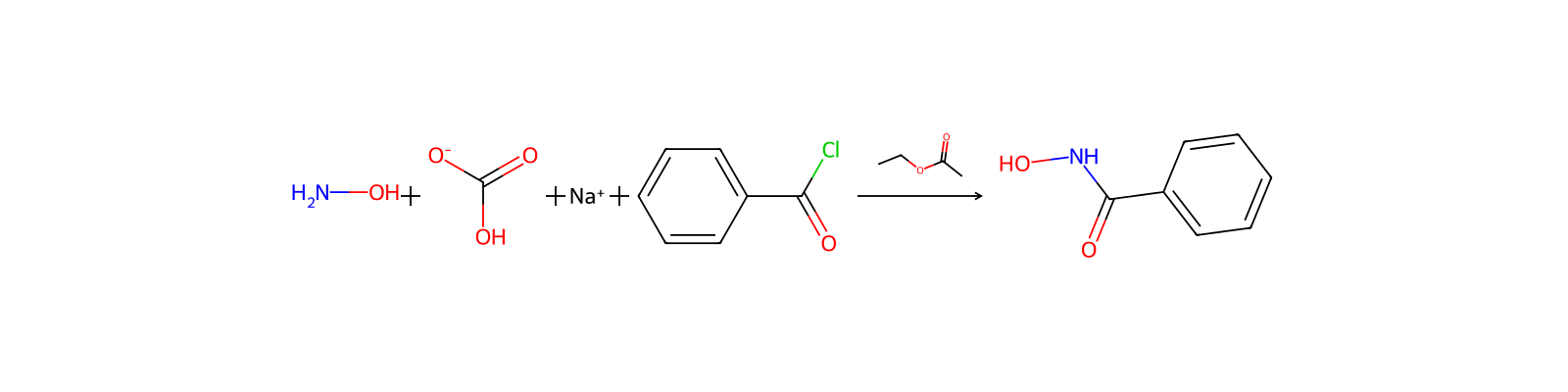
To a rapidly stirred suspension of 19.6 gm (0.35 mole) of powdered anhydrous potassium hydroxide in 120 ml of pyridine, maintained at 0-5°C, is a added a solution of 13.9 gm (0.2 mole) of hydroxylamine hydrochloride in 100 ml of pyridine. While maintaining the reaction temperature at 0-5°C, 15 gm (0.1 mole) of ethyl benzoate is added. Vigorous stirring is continued at room temperature for 6 hr. Then the solids are filtered off. The solids are washed with cold water to remove inorganic coproducts. The remainder, recrystallized from aqueous ethanol, represents a 94% yield of potassium benzohydroxamate. This salt is triturated with cold 0.01 TV hydrochloric acid. From this mixture, by the usual procedures, 12.5 gm (91% overall) of benzohydroxamic acid is isolated, m.p. 131°C (from aqueous alcohol).
상·하류 제품 정보
상류 원료
하류 제품
공급사50 곳
国药集团化学试剂有限公司86-21-63210123 · [email protected]
梯希爱(上海)化成工业发展有限公司021-67121386 · [email protected]
湖北永阔科技有限公司027-59223108 15972152991 · [email protected]
上海阿拉丁生化科技股份有限公司400-6206333 13167063860 · [email protected]
Shandong chuangyingchemical Co., Ltd.18853181302 · [email protected]
南通润丰石油化工有限公司66017690 19952660367 · [email protected]
武汉欣扬瑞和化学科技有限公司13720274133 · [email protected]
河北创海生物科技有限公司+86-86-13131129325 · [email protected]
武汉吉业升化工有限公司027-83360216 18040558719 · [email protected]
爱斯特(成都)生物制药股份有限公司+86-28-85122536 85324413 · [email protected]
焦作沃恩生物科技有限责任公司0391-3702345 18739121806
Dayang Chem (Hangzhou) Co.,Ltd.+86-0571-88938639 17705817739 · [email protected]
Hebei Yanxi Chemical Co., Ltd.+86-17531190177 · [email protected]
衢州明锋化工有限公司0570-3062502 13819002126;13819008176 · [email protected]
Syntechem Co.,Ltd[email protected]
上海迈瑞尔生化科技有限公司4006356688 18621169109 · [email protected]
武汉易泰科技有限公司上海分公司18930552037 · [email protected]
武汉市聚舜化工有限公司027-02783261126 18971318572 · [email protected]
阿法埃莎(中国)化学有限公司400-6106006 · [email protected]
山东穗泰生物科技有限公司15689727968 · [email protected]
安耐吉化学&3A(安徽泽升科技股份有限公司)400-0056266 · [email protected]
上海速博化学科技有限公司21-54820552 17702105771
武汉卡诺斯科技有限公司027-83238443 15327105076 · [email protected]
上海瀚鸿科技股份有限公司021-54306202 13764082696 · [email protected]
郑州研德生物科技有限公司0371-63682289 15538176268 · [email protected]
武汉丰泰威远科技有限公司+86-27-8746-5837 +86-18627785180 · [email protected]
武汉丰泰威远科技有限公司027-87465837 19945049750 · [email protected]
常州桦晟化工科技有限公司0519-85861892 13861049519 · [email protected]
山东西亚化学有限公司13355009207 13355009207 · [email protected]
四川库利南科技有限公司400-1166-196 18981987031 · [email protected]
天津希恩思生化科技有限公司400 638 7771 · [email protected]
武汉吉业升化工有限公司027-13545242311 13545242311 · [email protected]
南京精瑞久安生物技术有限公司025-58196018 800028039 · [email protected]
江苏艾康生物医药研发有限公司025-66113011 13913916777 · [email protected]
TCI AMERICA800-4238616 · [email protected]
TOKYO CHEMICAL INDUSTRY CO., LTD.03-36680489 · [email protected]
TCI Europe320-37350700 · [email protected]
武汉卡诺斯科技有限公司153-37111468 15337111468 · [email protected]
熵哲(兰州)生物医药科技有限公司18119421752 13919408782
深圳菲斯生物科技有限公司0755-83725350 13380397412 · [email protected]
上海笛柏生物科技有限公司400-008-9730,021-54359730 400-008-9730 · [email protected]
重庆星灿医药科技有限公司13594048950 19923294409 · [email protected]
成都零六生物科技有限公司400-1166-196 13458535857 · [email protected]
上海创赛科技有限公司400-6087598 15021221957 · [email protected]
上海御略医药科技有限公司021-60345187 13671753212 · [email protected]
上海鑫圭生物科技有限公司15121041756 · [email protected]
上海麦克林生化科技股份有限公司15221275939 15221275939 · [email protected]
上海兴鲁化工科技有限公司02120970332 · [email protected]
凯试(上海)科技有限公司021-50135380 · [email protected]
Sigma-Aldrich西格玛奥德里奇(上海)贸易有限公司021-61415566 800-8193336 · [email protected]
관련 반응
15건


연결된 노트
불러오는 중…