홈MCP워크벤치Skills
홈워크벤치알림마이페이지
Huagongshe 오픈 프로젝트:[email protected]AI 접속: llms.txt · MCP 가이드개인정보처리방침 · 이용약관 · 지원v1.7.8
  1. 홈
  2. /화합물

Carboplatin

HCID 10339178
노트반응
기본 정보개요이름 및 식별자물성안전 및 규제화학 및 산업관련 반응화합물 노트
부분 구조 검색유사 구조 찾기

기본 정보

CAS
41575-94-4
표준 SMILES
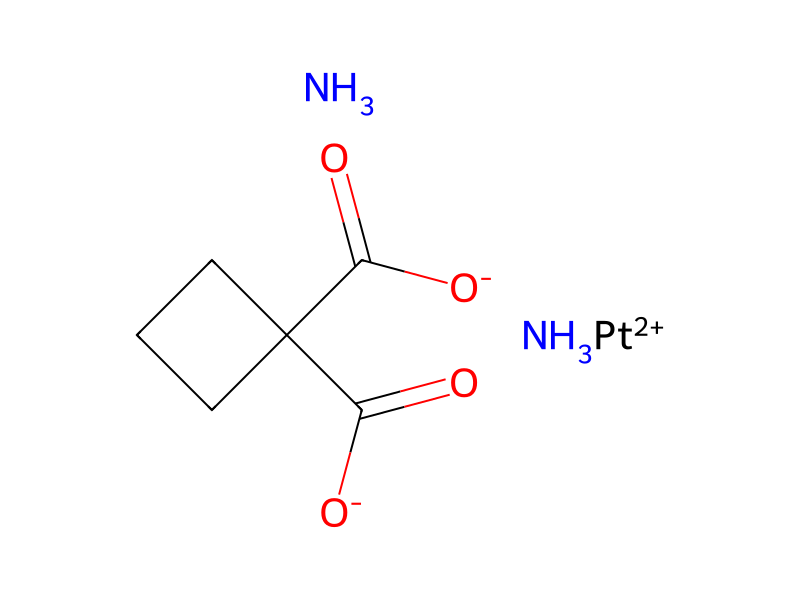
N.N.O=C([O-])C1(C(=O)[O-])CCC1.[Pt+2]
InChIKey
OLESAACUTLOWQZ-UHFFFAOYSA-L
분자식
C6H12N2O4Pt
평균 분자량
371.25 g/mol
단동위원소 질량
371.044501

개요

Carboplatin is an organoplatinum antineoplastic alkylating agent used in the treatment of advanced ovarian carcinoma. Early clinical studies of carboplatin were performed in 1982. Carboplatin was developed as an analog of [cisplatin] with reduced nephrotoxicity and vomiting. Carboplatin was granted FDA approval on 3 March 1989.

이름 및 식별자

우선 이름
Carboplatin
IUPAC
azane;cyclobutane-1,1-dicarboxylate;platinum(2+)
영어명
Carboplatin
분자식
C6H12N2O4Pt
분자량
371.25

이름 및 동의어

ParaplatinCbdcaCarboplatinumCarboplatineCarboplatinoErcarBlastocarbNSC-241240BG3F62OND5CHEBI:31355NSC 241240cis-Diammine(1,1-cyclobutanedicarboxylato)platinum
이름 더 보기
1,1-cyclobutanedicarboxylatediammineplatinum(ii)Platinum, diammine[1,1-cyclobutanedi(carboxylato-kO)(2-)]-, (SP-4-2)-JM-8CarbopLFITC-CBPNSC-17102
cis-Diammine(1,1-cyclobutanedicarboxylato)platinum(II)NSC-201345DTXSID3046742Diammine(1,1-cyclobutanedicarboxylato)platinum (II)NSC241240cis-(1,1-Cyclobutanedicarboxylato)diammineplatinum(II)ParaplatineCarboplat

데이터베이스 식별자

CAS
41575-94-4
PubChem CID
10339178
DTXSID
DTXSID3046742
ChEMBL
CHEMBL1351、CHEMBL288376
UNII
BG3F62OND5

물성

구조 계산 물성

극성 표면적
82.3 Ų
수소 결합 공여자 수
2
수소 결합 수용자 수
6
회전 가능 결합 수
0
무거운 원자 수
13
형식 전하
0
복잡도
153

실험 및 물리화학적 성질

Color/FormWhite crystals
Solubility · 5건

Sol in water

Water > 15 (mg/mL)

pH 4 Acetate Buffer 5 - 10 (mg/mL)

pH 9 Carbonate Buffer 5 - 10 (mg/mL)

10% Ethanol/H2O 5 - 10 (mg/mL)

Human Drugs · 4건

Breast Feeding; Lactation; Milk, Human; Antineoplastic Agents; Platinum Compounds

FDA approved drugs -> Active ingredient

FDA approved drugs -> Active ingredient

Cytotoxic medicines

DecompositionWhen heated to decomposition it emits toxic fumes of /nitrogen oxides/.
Physical DescriptionSolid
Stability/Shelf Life · 2건

The manufacturer states that constituted solns are stable for 8 hr at a room temp not exceeding 25 °C. However, other information indicates that the drug may be stable for a much longer time. At a concn of 15 mg/ml in sterile water for injection or at concns of 2 & 0.5 mg/ml in dextrose 5% in water, no decomp occurs in 24 hr at 22-25 °C. Aqueous solns of 10 mg/ml prefilled into plastic syringes exhibited no decomp in 5 days at 4 °C & only a 3% loss in 24 hr at 37 °C.

Bulk: No decomposition was detected after 30 days at 60 °C in the dark (HPLC). Solution: After 48 hours at room temperature an aqueous solution showed < 1% decomposition (HPLC).

안전 및 규제

안전 정보는 참고용이며, 공급업체의 물질안전보건자료(SDS), 관련 법규 및 전문가 평가를 대체하지 않습니다.

유해성 정보

Regulatory InformationHazard Traits - Developmental Toxicity
Special Reports · 2건

Judson I, Kelland LR; Drugs 59 Suppl 4: 29-36 (2000). New developments and approaches in the platinum arena.

Giaccone G; Drugs 59 Suppl 4:9-17 (2000). Clinical perspectives on platinum resistance. The platinum compounds cisplatin and carboplatin are widely used in the treatment of a number of solid malignancies.

Toxic Combustion ProductsToxic gases and vapors (such as chlorine) may be released when chlorine-containing soluble platinum salts decompose. /Soluble platinum salts/
Skin, Eye, and Respiratory Irritations · 2건

The dusts of soluble platinum salts cause a burning sensation in the eyes, lacrimation, and conjunctival hyperemia, sometimes associated with photophobia, which suggests that the corneal epithelium may be involved. /Soluble platinum salts/

Inhalation of the dust of sol platinum salts is irritating. /Platinum/

안전 및 보호

Fire Fighting ProceduresIn fire fighting, the minimum respiratory protection required above 0.002 mg/cu m is a self-contained breathing apparatus with a full facepiece operated in pressure-demand or other positive pressure mode. /Soluble platinum salts/
Storage ConditionsIntact vials should be stored at controlled room temperature & protected from light.
Cleanup Methods · 1건

Persons not wearing protective equipment and clothing should be restricted from areas of spills until cleanup has been completed. If soluble platinum salts or liquids containing soluble salts are spilled, the following steps should be taken: 1. Ventilate area of spill; 2. Collect spilled material in the most convenient and safe manner for reclamation or for disposal in a secured sanitary landfill. Liquids containing soluble platinum salts should be absorbed in vermiculite, dry sand, earth, or a similar material, /Soluble platinum salts/

화학 및 산업

약리 정보

ATC Code · 3건

L - Antineoplastic and immunomodulating agents

QL - Antineoplastic and immunomodulating agents

L01XA02

Protein BindingCarboplatin is not bound to plasma protein. However, the free platinum is 40% irreversibly bound to plasma proteins.
Pharmacodynamics · 1건

Carboplatin is an organoplatinum antineoplastic alkylating agent used in the treatment of advanced ovarian carcinoma. Carboplatin has a long duration of action as it is given every 4 weeks, and a narrow therapeutic index. Patients should be counselled regarding bone marrow suppression and anemia.

Mechanism of Action · 1건

Carboplatin predominantly acts by attaching alkyl groups to the nucleotides, leading to the formation of monoadducts, and DNA fragmenting when repair enzymes attempt to correct the error. 2% of carboplatin's activity comes from DNA cross-linking from a base on one strand to a base on another, preventing DNA strands from separating for synthesis or transcription. Finally, carboplatin can induce a number of different mutations.

Biological Half-Life · 2건

The distribution half life of carboplatin is 1.1-2 hours, and the elimination half life was2.6-5.9 hours.

Ultrafilterable (non-protein bound) platinum in carboplatin has a much longer half-life (170 vs. 30 min) compared with cisplatin.

Metabolism/MetabolitesCarboplatin is predominantly eliminated as the unchanged parent compound.
FDA Pharmacological Classification · 6건

BG3F62OND5

CARBOPLATIN

Established Pharmacologic Class [EPC] - Platinum-based Drug

Platinum-containing Compounds [EXT]

Carboplatin is a Platinum-based Drug.

CARBOPLATIN

MeSH Pharmacological Classification · 2건

관련 반응

4건
반응 기록 만들기
HRID 625139 반응식
HRID 625139반응물로uspto-grants-2016_04
HRID 1509801 반응식
HRID 1509801반응물로uspto-grants-2012_07
HRID 1916031 반응식
HRID 1916031반응물로uspto-grants-2013_12
HRID 2209613 반응식
HRID 2209613반응물로uspto-grants-1995_10

화합물 노트

불러오는 중…

이 페이지에서기본 정보개요이름 및 식별자물성안전 및 규제화학 및 산업관련 반응화합물 노트
Other Experimental Properties · 2건

Incompatible with aluminum

Because of an interaction occurring between carboplatin & the metal aluminum, resulting in precipitate formation & loss of potency, only administration equipment such as needles, syringes, catheters, & sets that contain no aluminum should be used for this drug.

물리화학적 성질

녹는점
228 · 228-230°C
저장 조건
2 · 2-8°C
용해도
물에는 거의 용해되지 않으며, 아세톤과 에탄올(96%)에는 매우 약간 용해됩니다.
물리적 상태
수정 같은
색상
하얀색
수용성
물에 용해됩니다.
Merck
14 · 14,1822
안정성
안정적인. 강한 산화제와 호환되지 않습니다.
InChI
InChI=1S/C6H8O4.2H3N.Pt/c7-4(8)6(5(9)10)2-1-3-6;;;/h1-3H2,(H,7,8)(H,9,10);2*1H3;/q;;;+2/p-2
InChIKey
OLESAACUTLOWQZ-UHFFFAOYSA-L
SMILES
C12(CCC1)C(=O)O[Pt]OC2=O.N.N
EPA
Carboplatin (41575-94-4)

화학적 성질

White Crystals

Disposal Methods · 1건

SRP: At the time of review, criteria for land treatment or burial (sanitary landfill) disposal practices are subject to significant revision. Prior to implementing land disposal of waste residue (including waste sludge), consult with environmental regulatory agencies for guidance on acceptable disposal practices.

Preventive Measures · 5건

Eating and smoking should not be permitted in areas where soluble platinum salts or liquids containing soluble platinum salts are handled, processed, or stored. Employees who handle soluble platinum salts or liquids containing soluble platinum salts should wash their hands thoroughly before eating, smoking, or using toilet facilities. /Soluble platinum salts/

Respirators may be used when engineering and work practice controls are not technically feasible, when such controls are in the process of being installed, or when they fail and need to be supplemented. ... If the use of respirators is necessary, the only respirators permitted are those that have been approved by the Mine Safety and Health Admin (formerly Mining Enforcement & Safety Admin) or by the National Institute for Occupational Safety & Health. In addition to respirator selection, a complete respiratory protection program should be instituted which includes regular training, maintenance, inspection, cleaning, and evaluation. /Soluble platinum salts/

Control can only be achieved by preventing the release of the soluble complex platinum salts to the atmosphere of the workshop. Good exhaust ventilation is necessary in platinum refineries. Chemical procedures which may generate these salts should be carried out in ventilated fume cupboards. Open centrifuges should not be used. Good personal hygiene is important. /Platinum compounds/

Workers whose clothing may have become contaminated should change into uncontaminated clothing before leaving the work premises. /Platinum sol salts, as Pt/

For more Preventive Measures (Complete) data for CARBOPLATIN (9 total), please visit the HSDB record page.

Personal Protective Equipment (PPE) · 5건

Employees should be provided with and required to use impervious clothing, face shields (eight-inch minimum), and other appropriate protective clothing necessary to prevent repeated or prolonged skin contact with soluble platinum salts or liquids containing soluble platinum salts, where skin contact may occur. ... Employees should be provided with and required to use dust- and splash-proof safety goggles where soluble platinum salts or liquids containing soluble platinum salts may contact the eyes. /Soluble platinum salts/

Recommendations for respirator selection. Max. concn for use: 4 mg/cu m. Any supplied-air respirator that has a full facepiece and is operated in a pressure-demand or other positive-pressure mode. /Platinum (soluble salts as Pt)/

Recommendations for respirator selection. Max. concn for use: 0.1 mg/cu m. Any air-purifying, full-facepiece respirator with a high-efficiency particulate filter.; Any self-contained breathing apparatus with a full facepiece.; Any supplied-air respirator with a full facepiece. /Platinum (soluble salts as Pt)/

Recommendations for respirator selection. Max. concn for use: 0.05 mg/cu m. Any supplied-air respirator operated in a continuous-flow mode. Substance causes eye irritation or damage; eye protection needed. /Platinum (soluble salts as Pt)/

For more Personal Protective Equipment (PPE) (Complete) data for CARBOPLATIN (6 total), please visit the HSDB record page.

독성 정보

Interactions · 3건

High-dose cisplatin regimens have been shown to be highly active in advanced melanoma patients but are associated with unacceptable side effects. In order to increase the platinum dose but avoid severe side effects, we treated 15 dacarbazine (DTIC)-resistant metastatic melanoma patients with a combination regimen of cisplatin (100 mg/sq m) and carboplatin (200 mg/sq m), two platinum analogues with a similar mode of action but a different toxicity pattern. After a mean follow-up period of 10.7 months (range 4-18 months), two patients (13.3%) achieved complete remission and two patients (13.3%) showed partial remission, giving an overall response rate of 26.4% (95% confidence interval [CI] 4.2-49%). Furthermore, three patients (20%; 95% CI 0-40.2%) experienced stable disease. The median duration of response was 7.1 months (95% CI 4.2-10.0 months), and the median overall survival was 12.5 months (95% CI 5.8-19.2 months), with eight patients still alive. The main side effects were haematological (leukopenia/thrombocytopenia World Health Organization [WHO] grade I-IV; anaemia WHO grade I-III), gastrointestinal (WHO grade I-III), neurological (WHO grade I-II) and renal (WHO grade I) toxicity. Nevertheless, except in one patient, side effects did not result in discontinuation of therapy. Despite the small number of patients treated in this preliminary study, we believe that combining cisplatin and carboplatin represents a novel, active and well-tolerated therapeutic option as second-line chemotherapy in DTIC-resistant advanced melanoma patients.

The nephrotoxic effects of different platinum compounds based combination chemotherapies were compared. Chemotherapy consisted of either cisplatin fractionated over 5 days (5 x 20 mg/sq m) or given as a single-day infusion (1 x 50 mg/sq m) plus ifosfamide (4 g/cu m) or high-dose chemotherapy was applied including carboplatin (3 x 500 mg/sq m) and ifosfamide (3 x 4 g/sq m) fractionated over three consecutive days. Conventional parameters such as serum creatinine and glomerular filtration rate (GFR), as well as urinary protein excretion of N-acetyl-beta-D-glucosaminidase (NAG)) and alpha 1-micro-globulin were assessed in 52 patients. Fractionation over 5 days without adding other nephrotoxic agents, ie ifosfamide, prevented decreases in glomerular filtration rate following cisplatin, whereas the combination of conventional dose cisplatin and ifosfamide, given as a single-day infusion, and high-dose carboplatin/ifosfamide yielded a pronounced fall of glomerular filtration rate. All groups showed increases in the urinary excretion levels of serum derived proteins and N-acetyl-beta-D-glucosaminidase, but with significant differences; about 2 to 3-fold for 5-days cisplatin, 3 to 5-fold for single-day cisplatin/ifosfamide, and 20 to 35-fold for high-dose chemotherapy. Thus, conventional approaches can reduce but not prevent the nephrotoxicity of cisplatin-based chemotherapy. In particular, high-dose chemotherapy regimens including carboplatin and ifosfamide are associated with comparable or even higher nephrotoxicity to single-day cisplatin/ifosfamide.

Tumor necrosis factor related apoptosis inducing ligand (TRAIL) is one of the tumor necrosis factor ligand families and it selectively induces apoptosis against cancer cells. Several cytotoxic anticancer drugs also mediate apoptosis and may share the common intracellular pathways leading to apoptosis. We reasoned that combination treatment of cancer cells with TRAIL and drugs may overcome this resistance. ... Treatment of T24 cells with a combination of TRAIL and cisplatin resulted in a synergistic cytotoxic effect. Synergy was also achieved in the cisplatin resistant T24 line (T24/CDDP), 2 other bladder cancer lines and 3 freshly derived bladder cancer cells. The combination of TRAIL and carboplatin resulted in a synergistic cytotoxic effect on T24 cells. However, the combination of TRAIL and trans-diamminedichloroplatinum (II) resulted in an antagonistic cytotoxic effect. The synergy achieved in cytotoxicity with TRAIL and cisplatin was also achieved in apoptosis. Treating T24 cells with cisplatin enhanced the expression of bax but not bcl-2. Incubation of T24 cells with TRAIL increased the intracellular accumulation of cisplatin. CONCLUSIONS: This study demonstrates that combination treatment of bladder cancer cells with TRAIL and cisplatin overcomes their resistance. The sensitization obtained with established cisplatin resistant and freshly isolated bladder cancer cells required low subtoxic concentrations of cisplatin, supporting the in vivo potential application of a combination of TRAIL and cisplatin for treating TRAIL resistant and cisplatin resistant bladder cancer.

Hepatotoxicity · 1건

Mild and transient elevations in serum aminotransferase levels are found in up to one-third of patients taking carboplatin. However, clinically apparent acute liver injury from carboplatin is extremely rare and the characteristics of such injury have not been well defined. In addition, carboplatin has been used in combination with other alkylating agents in high doses in conditioning regimens in preparation of hematopoietic cell transplantation which may be associated with instances of sinusoidal obstruction syndrome, which can be severe and lead to acute liver failure. Onset of sinusoidal obstruction syndrome is generally within 10 to 20 days of transplantation and presents with right upper quadrant pain, hepatic tenderness, weight gain, edema and ascites, followed by jaundice. The role of carboplatin in causing these cases of sinusoidal obstruction syndrome has not been well defined.

Human Toxicity Excerpts · 5건

Acute toxicity: nausea & vomiting. Delayed toxicity: Bone marrow depression; peripheral neuropathy (uncommon); hearing loss; transient cortical blindness; hemolytic anemia. /From table/

... Carboplatin, cis-diammine(cyclobutane-1, 1-dicarboxylato)platinum(II) has been shown to be an active agent for acute myeloid leukemia. This second-generation platinum drug has less nephrotoxicity and ototoxicity but more myelotoxicity than does the first-generation platinum drug cisplatin. The study was designed to elucidate whether their myelosuppressive activities equal their antileukemic effects. ... Cisplatin and carboplatin were used to treat four leukemic cell lines (CEM, HL60, K562 and U937), blast cells from 10 leukemic patients and hematopoietic progenitors from five umbilical cord blood samples. ... The mean IC50 of leukemic cell lines was 0.4 and 6.2 ug/ml, the mean IC50 of patients' leukemic blasts was 2.0 and 22.4 ug/ml and the mean IC50 of hematopoietic progenitors (BFU-E, CFU-E and CFU-GM) was 1.8 and 1.7 ug/ml for cisplatin and carboplatin, respectively. ... Carboplatin required a 10 times higher drug concentration than cisplatin to induce a similar degree of growth inhibition on leukemic cells. However, the hematopoietic progenitors responded equally to cisplatin and carboplatin at the same drug concentration. The results suggest that the myelosuppressive activity of carboplatin is greater than its antileukemic effect.

Telomerase is a ribonucleoprotein enzyme which is involved in the maintenance of chromosome ends. Telomerase activity is frequently associated with malignant phenotypes, and it can be considered a ubiquitous tumor marker. In this study we describe an approach for developing in vitro chemosensitivity assays based on the assessment of telomerase activity in squamous cell carcinoma to treatment with anticancer drugs. ... A431/CDDP1 and A431/CDDP2, two previously established cisplatin (CDDP)-resistant A431 sublines /were used/. These cell lines were not multidrug resistant but specifically resistant to the CDDP drug family. The telomeric repeat amplification protocol (TRAP assay) was used to measure telomerase activity in CDDP-resistant cell lines and to examine the effect of CDDP and other anticancer drugs on enzyme levels. We next analyzed the relations between telomerase activity and cytotoxic effects of CDDP in human squamous cell carcinoma (HSC2, HSC3, HSC4 and KB cell lines). RESULTS: The telomerase activity of A431/CDDP1 and A431/CDDP2 was significantly higher than that of the parent A431 cell (A431/P) treated with CDDP and carboplatin at IC(50). On the other hand, telomerase activity in these cell lines was not influenced by treatment with 5-fluorouracil, bleomycin, Adriamycin or taxol. The regression line derived from the quantitative analysis of the telomeric ladder versus IC(50) of CDDP concentrations was analyzed. Telomerase activity was found to be positively correlated with the IC(50) values for CDDP. ... The results of the present studies on in vitro squamous cell carcinoma cell lines indicate that telomerase activity inhibition can be used as a marker of tumor cell killing by CDDP. Therefore, the present investigation provides a rational basis for an in vitro chemosensitivity assay based on telomerase activity evaluation.

Drug Induced Liver Injury · 6건

Drug Induced Liver Injury Rank (DILIrank 2.0)

Carboplatin

vLess-DILI-concern

3

Warnings & precautions

DOI:10.1016/j.drudis.2016.02.015

Non-Human Toxicity ExcerptsPoison by ingestion, iv, ip, & possibly other routes. Experimental reproductive effects.
Antidote and Emergency Treatment · 2건

Basic treatment: Establish a patent airway. Suction if necessary. Watch for signs of respiratory insufficiency and assist ventilations if needed. Administer oxygen by nonrebreather mask at 10 to 15 L/min. Monitor for pulmonary edema and treat if necessary ... . Monitor for shock and treat if necessary ... . Anticipate seizures and treat if necessary ... . For eye contamination, flush eyes immediately with water. Irrigate each eye continuously with normal saline during transport ... . Do not use emetics. For ingestion, rinse mouth and administer 5 ml/kg up to 200 ml of water for dilution if the patient can swallow, has a strong gag reflex, and does not drool ... . Cover skin burns with dry sterile dressings after decontamination ... . /Poison A and B/

Advanced treatment: Consider orotracheal or nasotracheal intubation for airway control in the patient who is unconscious, has severe pulmonary edema, or is in respiratory arrest. Positive pressure ventilation techniques with a bag valve mask device may be beneficial. Monitor cardiac rhythm and treat arrhythmias as necessary ... . Start an IV with D5W /SRP: "To keep open", minimal flow rate/. Use lactated Ringer's if signs of hypovolemia are present. Watch for signs of fluid overload. Consider drug therapy for pulmonary edema ... . For hypotension with signs of hypovolemia, administer fluid cautiously. Watch for signs of fluid overload ... . Treat seizures with diazepam (Valium) ... . Use proparacaine hydrochloride to assist eye irrigation ... . /Poison A and B/

Effects During Pregnancy and Lactation◉ Summary of Use during Lactation
Toxicity Data · 3건

Rat(iv): LD50: 61 mg/kg

Mouse(ip): LD L0: 150 mg/kg

Mouse(iv): LD50: 143 mg/kg

Non-Human Toxicity Values · 5건

LD50 Rat oral 343 mg/kg

LD50 Rat sc 72 mg/kg

LD50 Rat iv 61 mg/kg

LD50 Mouse ip 118 mg/kg

LD50 Mouse iv 89,360 ug/kg

안전 데이터

wgk
3
rtecs
TP2300000
ridadr
2811
독성
LD50 in mice (mg/kg): 150 i.p., 140 i.v.; in rats (mg/kg): 85 i.v. (Lelieveld)
HS 번호
28439000
risk_code
46-61-20/21/22-42/43-20/21
hazard_code
T
safety_code
53-22-26-36/37/39-45
Hazard Classifications
Acute Tox. 4 DermalAcute Tox. 4 InhalationAcute Tox. 4 OralMuta. 1BRepr. 1BResp. Sens. 1Skin Sens. 1
스토리지 클래스
6.1C - Combustible acute toxic Cat.3toxic compounds or compounds which causing chronic effects
유해 물질 데이터
41575-94-4(Hazardous Substances Data)

Substances that inhibit or prevent the proliferation of NEOPLASMS.

Reagents with two reactive groups, usually at opposite ends of the molecule, that are capable of reacting with and thereby forming bridges between side chains of amino acids in proteins; the locations of naturally reactive areas within proteins can thereby be identified; may also be used for other macromolecules, like glycoproteins, nucleic acids, or other.

Absorption, Distribution and Excretion · 5건

The Cmax and AUC of carboplatin increase proportionally with increasing doses. A 75 mg/m2 dose reaches a Cmax of 9.06 ± 0.74 µg/mL, with an AUC of 27.18 ± 11.28 h\*µg/mL. A 450 mg/m2 dose reaches a Cmax of 55.39 ± 18.30 µg/mL, with an AUC of 224.41 ± 69.07 h\*µg/mL.

Carboplatin is 65% eliminated in the urine within 12 hours, and 71% eliminated within 24 hours. An additional 3-5% is eliminated in urine from 24 hours to 96 hours. Biliary elimination has not been determined. Carboplatin is predominantly eliminated as the unchanged parent compound.

The apparent volume of distribution after a 30 minute intravenous infusion of 300-500 mg/m<sup>2</sup> was 16 L.

The total body clearance after a 30 minute intravenous infusion of 300-500 mg/m<sup>2</sup> was 4.4 L/h.

A higher percentage of a dose of carboplatin is excreted in the urine than cisplatin & most of the dose is excreted during the initial 24 hr after injection.

Cellular LocationsCytoplasm

용도 및 제조

UsesUsed in chemotherapy to treat cancer.
응용 분야 · 3건

개요Carboplatin is a second generation, platinum-containing antineoplastic agent with significantly reduced nephro-, neuro-, and ototoxicity in comparison to cisplatin. It is effective in the treatment of advanced ovarian carcinoma of epithelial origin and small cell carcinoma of the lung.

용도Data on carboplatin production have not been found. Carboplatin is used in chemotherapy to treat cancer, and more particularly to treat cancer of ovary, embryonal carcinoma of the testis, microcellular carcinoma of the lung, neuroblastoma, and squamous cell carcinomas of the head and neck.

일반 설명Carboplatin is available in 50-, 150-, and 450-mg vials for IVadministration in the treatment of ovarian cancer, bladdercancer, germ cell tumors, head and neck cancers, small celllung cancer, and NSCLC. Activation of the agent occurs byaquation in a manner similar to that seen for cisplatin. Thepresence of the chelating 1,1-cyclobutane-dicarboxylateslows this reaction 100-fold and reduces the toxicity of theagent. The sites of alkylation and mechanisms of resistanceare like those seen for cisplatin, and the two agents showcross-resistance. The agent is widely distributed upon IV administration but, because of its greater stability, it bindsslowly to plasma proteins, requiring 24 hours to reach 90%bound drug compared with 4 hours for cisplatin. The agent iseliminated in the urine with a terminal elimination half-lifeof 2 to 6 hours. Adverse effects include myelosuppression,which is dose limiting. Other adverse effects include renaltoxicity, nausea, vomiting, and peripheral neuropathy, butthese occur much less frequently than with cisplatin.

상·하류 제품 정보

상류 원료

수산화바륨1,1-Cyclobutanedicarboxylic acid에틸알코올요오드화 칼륨염산히드라진수산화 바륨황산은염화 백금 칼륨

공급사100 곳

国药集团化学试剂有限公司86-21-63210123 · [email protected]
北京华美互利生物化工010-56205725 · [email protected]
梯希爱(上海)化成工业发展有限公司021-67121386 · [email protected]
上海阿拉丁生化科技股份有限公司400-6206333 13167063860 · [email protected]
INTATRADE GmbH+49 3493/605464 · [email protected]
韶远科技(上海)有限公司4000665055 · [email protected]
LGM Pharma1-(800)-881-8210 · [email protected]
湖南瑞威尔生物科技有限公司18627957289 18173226957 · [email protected]
上海迈瑞尔生化科技有限公司4006356688 18621169109 · [email protected]
武汉易泰科技有限公司上海分公司18930552037 · [email protected]
上海波以尔化工有限公司[email protected]
大连美仑生物技术有限公司0411-62910999 13889544652 · [email protected]
安耐吉化学&3A(安徽泽升科技股份有限公司)400-0056266 · [email protected]
上海瀚鸿科技股份有限公司021-54306202 13764082696 · [email protected]
嘉兴市艾森化工有限公司0573-85285100 18627885956 · [email protected]
Pure Chemistry Scientific Inc.001-857-928-2050 or 1-888-588-9418 · [email protected]
上海泰坦科技股份有限公司4006009262 13023226327 · [email protected]
MedChemexpress LLC021-58955995 · [email protected]
上海攀鸿化工科技有限公司021-56491756 13512199871 · [email protected]
武汉丰泰威远科技有限公司027-87465837 19945049750 · [email protected]
南京维奥化工有限公司Please Send Email 18652950785 · [email protected]
斯百全化学(上海)有限公司021-021-021-67601398-809-809-809 15221380277 · [email protected]
艾科试剂4008-755-333 18080918076 · [email protected]
上海思域化工科技有限公司86-21-34053660 · [email protected]
赛默飞世尔科技(中国)有限公司800-810-5118 · [email protected]
上海特伯化学科技有限公司+86-21-60341587 · [email protected]
AdooQ BioScience, LLC+1 (866) 930-6790 · [email protected]
Wuhan NCE Biomedical Co.,Ltd.4000-027-021 |24 +86-13986109188 | +86-15623472865 | +81-08033611988
TCI AMERICA800-4238616 · [email protected]
TOKYO CHEMICAL INDUSTRY CO., LTD.03-36680489 · [email protected]
TCI Europe320-37350700 · [email protected]
卡迪亚医药科技有限公司0371-86615086 18203638366 0371-86159066 13526786601
深圳振强药物研发有限公司0755-66853366 13670046396 · [email protected]
Clearsynth Labs Limited+91-22-26355700 · [email protected]
广州爱纯医药科技有限公司020-39119399 18927568969 · [email protected]
南京生利德生物科技有限公司025-57798810 18652991625 · [email protected]
上海喀露蓝科技有限公司18149758185 18149758185 · [email protected]
HBCChem, Inc.+1-510-219-6317 · [email protected]
上海笛柏生物科技有限公司400-008-9730,021-54359730 400-008-9730 · [email protected]
成都零六生物科技有限公司400-1166-196 13458535857 · [email protected]
上海创赛科技有限公司400-6087598 15021221957 · [email protected]
上海御略医药科技有限公司021-60345187 13671753212 · [email protected]
上海麦克林生化科技股份有限公司15221275939 15221275939 · [email protected]
杭州杰恒化工有限公司0571-87396432 · [email protected]
上海嵩爰化工科技有限公司010-1234567 18521000990 · [email protected]
南京百鑫德诺生物科技有限公司025-58849295 · [email protected]
广州市慈铭生物科技有限公司020-38082199,29065168,38082986,29878298,29866629,4000192398
上海孚一生物科技有限公司+86 (21) 61124340
凯试(上海)科技有限公司021-50135380 · [email protected]
湖北巨胜科技有限公司027-59599241 18871490274 · [email protected]

We have previously confirmed the in vitro activity of cisplatin and carboplatin against human melanoma cell lines. Both drugs are important components in the chemotherapy used in our service for advanced metastatic melanoma. In this communication we report the in vitro activity of oxaliplatin against human melanoma cell lines in comparison with cisplatin and carboplatin. Oxaliplatin was found to be active against C32 and G361 cell lines with IC50 values of 49.48 and 9.07 microM (1 hr exposure), 9.47 and 1.30 uM (4 h exposure), and 0.98 and 0.14 microM (24 hr exposure), respectively. The cytotoxic activity of oxaliplatin in this in vitro system appears to be significantly superior to that of carboplatin. Its activity becomes comparatively closer to that of cisplatin as exposure time increases. Indeed at a 24 h exposure oxaliplatin appears to be significantly more active than cisplatin against the G361 cell line (p=0.0343). Oxaliplatin merits evaluation in the clinic both as a single agent and in combination with other drugs active against melanoma.

For more Human Toxicity Excerpts (Complete) data for CARBOPLATIN (6 total), please visit the HSDB record page.