홈MCP워크벤치Skills
홈워크벤치알림마이페이지
llms.txt · MCP 가이드개인정보처리방침 · 이용약관 · 지원v1.8.0
  1. 홈
  2. /화합물

다이포스젠

Diphosgene

HCID 10426
새 노트새 반응견적 요청하기
인쇄 미리보기

데이터를 보충하는 중입니다. 잠시 후 페이지를 새로 고치면 최신 내용을 볼 수 있습니다
기본 정보개요이름 및 식별자물성안전 및 규제화학 및 산업관련 반응화합물 노트
부분 구조 검색유사 구조 찾기

기본 정보

CAS
503-38-8
표준 SMILES
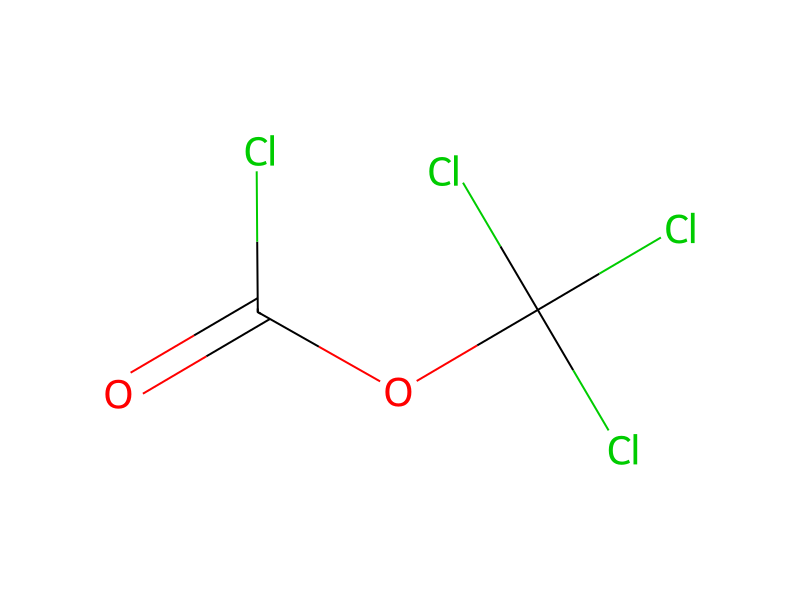
O=C(Cl)OC(Cl)(Cl)Cl
InChIKey
HCUYBXPSSCRKRF-UHFFFAOYSA-N
분자식
C2Cl4O2
평균 분자량
197.8 g/mol
단동위원소 질량
195.86524

개요

Diphosgene is a moderately persistent synthetic organic compound, formed by chlorination of methyl chloroformate, that is a respiratory irritant and lachrymator. Trichloromethyl Chloroformate has been used as a chemical warfare agent and is characterized as a colorless liquid with an odor that is like newly mown hay. Exposure occurs by inhalation, ingestion, or contact.

이름 및 식별자

우선 이름
Diphosgene
IUPAC
trichloromethyl carbonochloridate
현지명
다이포스젠
영어명
Diphosgene
분자식
C2Cl4O2
분자량
197.83

이름 및 동의어

Trichloromethyl chloroformateDIPHOSGENE503-38-8DiphosgenDifosgenPerchloromethyl formateCarbonochloridic acid, trichloromethyl esterMethanol, trichloro-, chloroformateCarbonochloridic acid trichloromethyl esterFormic acid, chloro-, trichloromethyl esterPO4Q4R80LVTrichlormethylester kyseliny chlormravenci
이름 더 보기
다이포스젠디포스겐DPASP-PROPerstoffDisphosgeneDiphosgene,99%perchloromethylformate
DTXSID60862065RefChem:134712DTXCID80810886207-965-9trichloromethyl carbonochloridatechloroformic acid trichloromethyl estertrichloromethylchloroformateMFCD00015553

데이터베이스 식별자

CAS
503-38-8
PubChem CID
10426
DTXSID
DTXSID60862065
UNII
PO4Q4R80LV
EC Number
207-965-9
Nikkaji
J12.981J

물성

구조 계산 물성보충 중

XLogP
3.1
극성 표면적
26.3 Ų
수소 결합 공여자 수
0
수소 결합 수용자 수
2
회전 가능 결합 수
1
무거운 원자 수
8
형식 전하
0
복잡도
94.7

실험 및 물리화학적 성질

Chemical ClassesToxic Gases & Vapors -> Acid Halides
SpringerMaterials PropertiesNuclear quadrupole resonance spectroscopy
LogP1.49
OdorODOR SIMILAR TO PHOSGENE (NEWMOWN HAY)
Density · 3건

1.6525 @ 14 °C

1.6 g/cm³

Relative density of the vapour/air-mixture at 20 °C (air = 1): 1.08

Color/FormCOLORLESS LIQUID
Solubility · 3건

INSOL IN WATER; SOL IN ETHANOL, VERY SOL IN ETHER

SOL IN BENZENE, ALCOHOL, AND ETHER

Solubility in water: reaction

Boiling Point · 3건

128 °C @ 760 MM HG

Suffocating liquid; Boiling point = 49 °C at 50 mm Hg; Stable at room temp, decomposes to phosgene at approximately 300 °C

at 101.3 kPa: 128 °C

DecompositionHighly dangerous; when heated to decomp ... will react to produce toxic and corrosive fumes. /phosgene/

안전 및 규제

안전 정보는 참고용이며, 공급업체의 물질안전보건자료(SDS), 관련 법규 및 전문가 평가를 대체하지 않습니다.

GHS 분류

GHS Classification · 4건

Danger

H300 (87%): Fatal if swallowed [Danger Acute toxicity, oral]

P260, P264, P270, P271, P280, P284, P301+P316, P301+P330+P331, P302+P361+P354, P304+P340, P305+P354+P338, P316, P320, P321, P330, P363, P403+P233, P405, and P501 (click each P-code to see the statement)

Aggregated GHS information provided per 46 reports by companies from 4 notifications to the ECHA C&L Inventory. Each notification may be associated with multiple companies.

유해성 정보

Regulatory Information · 2건

Chemical: Carbonochloridic acid, trichloromethyl ester

Trichloromethyl chloroformate: Does not have an individual approval but may be used under an appropriate group standard

Other Safety InformationEvaluation - Chemicals that are unlikely to require further regulation to manage risks to human health
Fire HazardsNot combustible.
Hazards SummarySimilar to phosgene in reactivity; Decomposes slowly in water or moisture to release hydrochloric acid and carbon monoxide; Skin contact may cause burns or frostbite; [CAMEO] Causes lachrymation; [ICSC] See Phosgene.
Chemical DangersDecomposes on heating. This produces toxic and corrosive fumes including chlorine and phosgene. Reacts with water. This produces toxic and corrosive fumes.
Physical DangersThe vapour is heavier than air.
DOT Emergency Guidelines · 5건

If ... THERE IS NO FIRE, go directly to the Table of Initial Isolation and Protective Action Distances /(see table below)/ ... to obtain initial isolation and protective action distances. IF THERE IS A FIRE, or IF A FIRE IS INVOLVED, go directly to the appropriate guide /(see guide(s) below)/ and use the evacuation information shown under PUBLIC SAFETY.

화학 및 산업

용도 및 제조

Uses · 3건

Used as a chemical intermediate and miltary weapon; [CAMEO]

ORGANIC SYNTHESIS; MILITARY POISON GAS

Used in synthesis of isocyanides

ImpuritiesCarbon dioxide, hydrogen chloride, phosgene, and alkyl chlorides; main impurities are corresponding carbonates /Chloroformic esters/
Methods of Manufacturing · 1건

Prepared by photochlorination of methyl formate: W Hentschel, J Prakt Chem 36: 209 (1887); F Grignard et al, CR Acad Sci 169: 1074 (1919); eidem, ibid 1143; by photochlorination of methyl chloroformate: A Kling et al, ibid 1046; K Kurita, Y Iwakura, Org Syn 59: 195 (1980).

Formulations/Preparations · 4건

GRADE: TECHNICAL.

99% purity

Typical specifications of commercial chloroformates: purity, 98%; phosgene, <0.1%, iron, <10 ppm; acidity as HCl, <0.1%; alcohol or phenol, <2% /Chloroformic esters/

Commercial products have concentrations of 97-99 wt% /Chloroformic esters/

General Manufacturing Information · 3건

Carbonochloridic acid, trichloromethyl ester: ACTIVE

Most chloroformate production is used captively and production figures are not available /Chloroformic esters/

On a laboratory scale, trichloromethyl chloroformate (diphosgene) ... can be used as substitute for phosgene to synthesize isocyanates from amines

응용 분야 · 3건

개요Diphosgene (DP), trichloromethyl chloroformate, is a clear, colorless liquid with an odor similar to phosgene. It is noncombustible, a strong irritant to the eyes and tissues, and is toxic by inhalation and ingestion. DP has a boiling point of 127°C–128°C (263°F) and a vapor pressure of 4.2 at 68°F (20°C). The liquid density is 1.65, which is heavier than water, and a melting/freezing point of 314°F (157°C). Inhalation LC50 is 3600 mg/m3 for 10 min. Effects of exposure are quite similar to phosgene gas. Its molecular formula is ClCOOCCl3, and the structure and molecular formula are shown in Figure 8.38. The DOT lists diphosgene as a 6.1 poison liquid. The NFPA 704 designation for CG is estimated to be health 4, flammability 0, reactivity 1, and special 0. It has a four-digit UN identification number of 2972.

관련 반응

993건
반응 기록 만들기
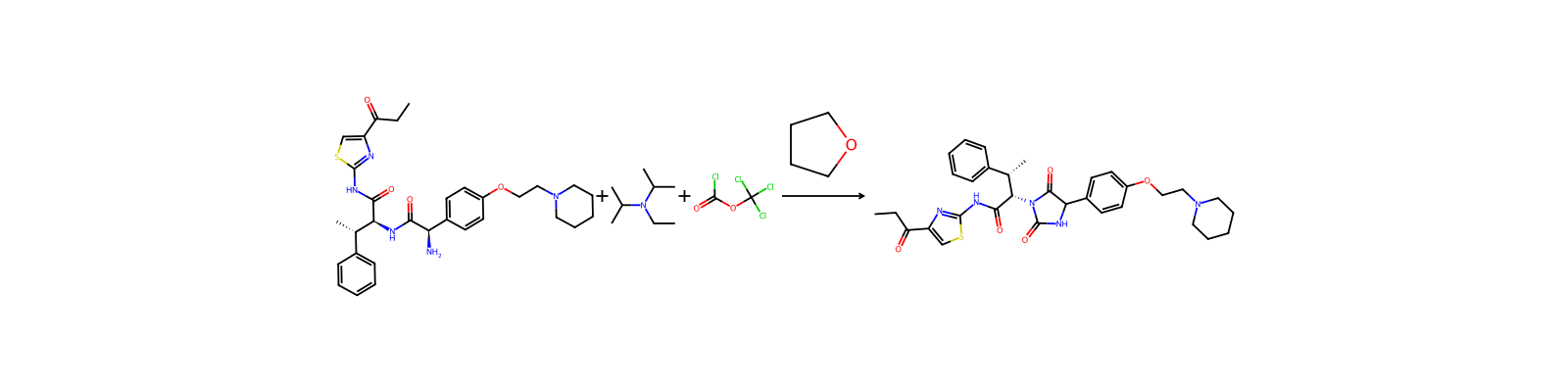
HRID 6822 반응식
HRID 6822반응물로uspto-grants-2006_08
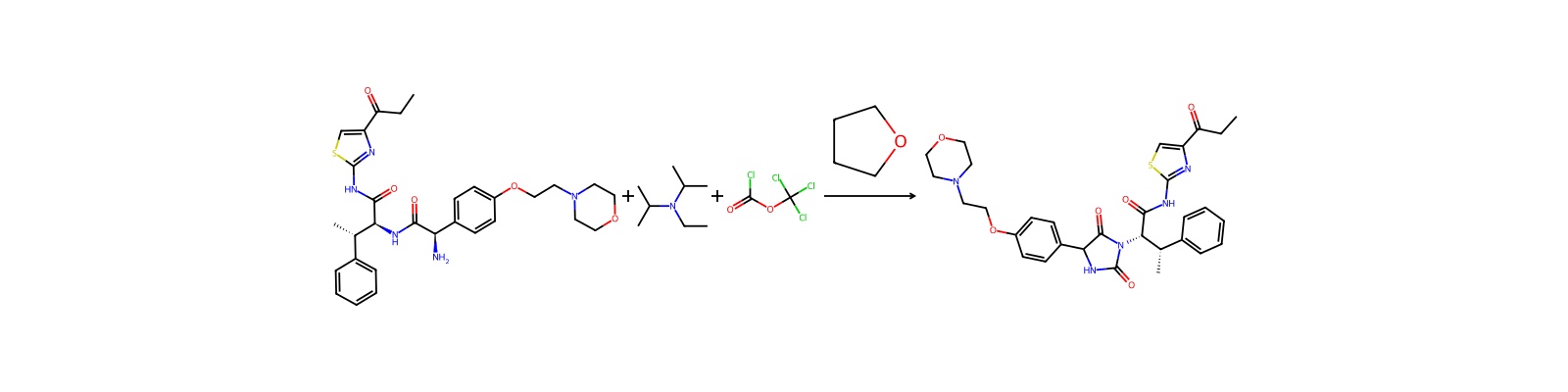
HRID 15490 반응식
HRID 15490반응물로uspto-grants-2010_06
HRID 22476 반응식
HRID 22476반응물로uspto-grants-1995_06
HRID 25542 반응식
HRID 25542반응물로uspto-grants-2005_02
HRID 25553 반응식
HRID 25553반응물로uspto-grants-2005_02
HRID 32809 반응식
HRID 32809반응물로uspto-grants-2008_09
HRID 32820 반응식
HRID 32820반응물로uspto-grants-2008_09
HRID 32823 반응식
HRID 32823반응물로uspto-grants-2008_09
1 / 125 페이지

화합물 노트

불러오는 중…

이 페이지에서기본 정보개요이름 및 식별자물성안전 및 규제화학 및 산업관련 반응화합물 노트
더보기
새 노트새 반응견적 요청하기
Melting Point · 2건

-57 °C

-57 °C

Vapor DensityRelative vapor density (air = 1): 6.83
Vapor Pressure · 2건

10 MM HG @ 20 °C

Vapor pressure, kPa at 20 °C: 1.3

물리화학적 성질

녹는점
-57 °C · -57 °C
끓는 점
20 °C10 · 20 °C10 mm Hg(lit.)
밀도
1.64 · 1.64
증기압
13 hPa · 13 hPa ( 20 °C)
굴절률
20 · n20/D 1.458
인화점
110 °C · >110°C
저장 조건
2 · 2-8°C
용해도
클로로포름(에 용해), 에틸아세테이트(약간 용해됨)
물리적 상태
액체
색상
무색의
수용성
분해될 수 있음
Merck
14 · 14,3334
BRN
970225 · 970225
안정성
흡습성, 수분 민감성
InChI
1S/C2Cl4O2/c3-1(7)8-2(4,5)6
InChIKey
HCUYBXPSSCRKRF-UHFFFAOYSA-N
SMILES
ClC(=O)OC(Cl)(Cl)Cl
NIST
Trichloromethyl chloroformate(503-38-8)
EPA
Carbonochloridic acid, trichloromethyl ester (503-38-8)

화학적 성질

clear colorless liquid

If ... THERE IS NO FIRE, go directly to the Table of Initial Isolation and Protective Action Distances /(see table below)/ ... to obtain initial isolation and protective action distances. IF THERE IS A FIRE, or IF A FIRE IS INVOLVED, go directly to the appropriate guide /(see guide(s) below)/ and use the evacuation information shown under PUBLIC SAFETY.

If ... THERE IS NO FIRE, go directly to the Table of Initial Isolation and Protective Action Distances /(see table below)/ ... to obtain initial isolation and protective action distances. IF THERE IS A FIRE, or IF A FIRE IS INVOLVED, go directly to the appropriate guide /(see guide(s) below)/ and use the evacuation information shown under PUBLIC SAFETY.

If ... THERE IS NO FIRE, go directly to the Table of Initial Isolation and Protective Action Distances /(see table below)/ ... to obtain initial isolation and protective action distances. IF THERE IS A FIRE, or IF A FIRE IS INVOLVED, go directly to the appropriate guide /(see guide(s) below)/ and use the evacuation information shown under PUBLIC SAFETY.

For more DOT Emergency Guidelines (Complete) data for DIPHOSGENE (12 total), please visit the HSDB record page.

Hazard Classes and CategoriesAcute Tox. 2 (87%)
Hazardous Reactivities and IncompatibilitiesWILL REACT WITH WATER OR STEAM TO PRODUCE TOXIC & CORROSIVE FUMES.

안전 및 보호

Fire FightingIn case of fire in the surroundings, use appropriate extinguishing media.
First Aid Measures · 4건

Fresh air, rest. Half-upright position. Artificial respiration may be needed. Refer for medical attention.

Rinse and then wash skin with water and soap.

First rinse with plenty of water for several minutes (remove contact lenses if easily possible), then refer for medical attention.

Rinse mouth.

Safe StorageDry. Well closed. Keep in a well-ventilated room.
Exposure Control and Personal Protection · 1건

TIH (Toxic Inhalation Hazard) - Term used to describe gases and volatile liquids that are toxic when inhaled. Some are TIH materials themselves, e.g., chlorine, and some release TIH gases when spilled in water, e.g., chlorosilanes. [ERG 2016].

Storage Conditions... THESE CMPD DECOMPOSE EASILY, STORAGE CONTAINERS SHOULD BE VENTED. /CHLOROFORMATES/
Cleanup MethodsTO DECONTAMINATE IN ENCLOSED SPACES, USE AMMONIA OR STEAM.
Spillage Disposal · 1건

Personal protection: chemical protection suit including self-contained breathing apparatus. Collect leaking and spilled liquid in sealable containers as far as possible. Absorb remaining liquid in sand or inert absorbent. Then store and dispose of according to local regulations.

Preventive MeasuresALL MATERIALS SHOULD BE HANDLED SO AS TO PREVENT ALL CONTACT. ... EYEWASH FOUNTAINS SHOULD BE PROVIDED. ALSO, SPECIAL ATTENTION SHOULD BE GIVEN TO EYE & RESPIRATORY TRACT MEDICAL EXAMINATIONS. /CHLOROFORMATES/
Eye PreventionWear safety goggles.
Inhalation RiskA harmful contamination of the air can be reached very quickly on evaporation of this substance at 20 °C.
Skin PreventionProtective gloves.
Exposure PreventionSTRICT HYGIENE!

독성 정보

Adverse EffectsDermatotoxin - Skin burns.
Exposure RoutesThe substance can be absorbed into the body in hazardous amounts by inhalation.
Signs and Symptoms · 4건

Burning sensation. Chest tightness. Sore throat. Cough. Laboured breathing. Shortness of breath. Symptoms may be delayed.

Redness.

Watering of the eyes. Redness.

Sore throat.

Human Toxicity Excerpts · 3건

EYE IRRITATION, IRRITATION OF UPPER RESPIRATORY TRACT, & SURFACE BURNS HAVE BEEN PRINCIPAL FINDINGS IN EXPOSED HUMANS. PULMONARY EDEMA WOULD UNDOUBTEDLY OCCUR WITH HIGHER LEVELS OF EXPOSURE. EYE IRRITATION MAY PERSIST SOME TIME AFTER EXPOSURE CEASES. SKIN SENSITIZATION MAY OCCUR. /CHLOROFORMATES/

INSIDIOUS POISON AS IT IS NOT IRRITATING IMMEDIATELY, EVEN WHEN FATAL CONCN ARE INHALED. MAY CAUSE SEVERE PULMONARY EDEMA (MAY BE QUICKLY FATAL) OR PNEUMONIA. INHALATION OF HIGH CONCN CAUSES CHOKING, CONSTRICTED FEELING IN CHEST, COUGHING, PAINFUL BREATHING, BLOODY SPUTUM. VAPORS STRONGLY IRRITATING TO THE EYES. /PHOSGENE/

HIGHLY TOXIC BY INHALATION & INGESTION. STRONG IRRITANT TO TISSUE.

Non-Human Toxicity Excerpts · 3건

NO EVIDENCE EXISTS FOR A SYSTEMIC ACTION OF INHALED PHOSGENE, BUT VASOCONSTRICTION OF PULMONARY VASCULATURE HAS BEEN DESCRIBED IN RABBITS. SEQUELAE INCLUDE PULMONARY SCARRING, LOBULAR EMPHYSEMA, SMALL IRREGULAR AREAS OF ATELECTASIS & BRONCHITIS. /PHOSGENE/

SOME POSSIBLE MECHANISMS OF REDUCED ACTIVITY OF LUNG SURFACTANT IN ACUTE PULMONARY EDEMA WERE STUDIED IN ALBINO RATS & RABBITS. MOST OF THE EDEMOGENIC SUBSTANCES DID NOT CHANGE SURFACTANT ACTIVITY WHILE DIPHOSGENE REDUCED IT.

The purpose of this study was to examine the changes of pulmonary hemodynamics, cardiac impedance parameters and the number of pulmonary microembolus, and leukocyte after diphosgene inhalation in rabbits. Fifty-three rabbits were randomized into two sets, one set was used to monitor the pulmonary hemodynamics, the other set was used to determine the cardiac impedance parameters, microemboli and leukocytes were obtained directly from the pulmonary microcirculation by use of the retrograde perfusion method. As compared with control group, lt was found that pulmonary artery pressure rose and pulmonary vascular resistance increased (p < 0.05), but did not correlate with lung water parameters (p > 0.05). At 1, 6 hr after diphosgene inhalation cardiac Impedance parameters did not change (p > 0.05~, as compared with before inhalation. Microemboli (21.8 increased (p< 0.05), as compared with the control group (106/L, 430e pulmonary hemodynamics, but could not effectively reduce the degree of pulmonary edema.

Probable Routes of Human ExposureNO EFFECTS ON GENERAL HEALTH NOR IN LABORATORY FINDINGS (BLOOD STUDIES & LIVER FUNCTION TESTS) OF PERSONS MANUFACTURING CHLOROFORMATES WERE NOTED. /CHLOROFORMATES/
Toxicity DataLCLo (rabbits) = 900 mg/m3/15 min

안전 데이터

wgk
3
tsca
TSCA listed
rtecs
LQ7350000
ridadr
UN 3277 6.1/PG 2
독성
LC100 in rabbits (10-20 minutes exposure to vapor): 0.9 mg/l air (Klika, Mysliveckova)
HS 번호
29159000
risk_code
26/28-34-26/27/28-36/37/38
hazard_code
T+,Xi
safety_code
26-28-36/37/39-45-28A-36
포장분류
II
위험 등급
6.1
F 고인화성물질
8-10-19
Hazard Classifications
Acute Tox. 2 InhalationAcute Tox. 4 OralSkin Corr. 1B
스토리지 클래스
6.1B - Non-combustible acute toxic Cat. 1 and 2very toxic hazardous materials
유해 물질 데이터
503-38-8(Hazardous Substances Data)

용도In organic synthesis; as war gas.

일반 설명Colorless liquid, odorless to fruity.

상·하류 제품 정보

하류 제품

메티다티온Tribenuron methyl4-FLUOROBENZYL ISOCYANATE벤질 클로로탄소산4-N-Boc-2-메틸-피페라진파라-토릴 아이소사이아네이트Diphenylcarbamyl chlorideMethyl chlorosulfonate1-클로로에틸시클로헥실카보네이트헵틸 아이소사이안산2-NITROPHENYL ISOCYANATEETHYL 3-ISOCYANATOPROPIONATE1-클로로카보닐-4-피페리디노피페리딘DIALLYLCARBAMYL CHLORIDE4,4-디메틸-2-옥사졸리디논2-메톡시이소부틸이소시아나이드메틸4-이소시아나토벤조에이트98DIISOPROPYLCARBAMOYL CHLORIDE

추가 설명

정의diphosgene: A colourless liquid,ClCO.O.CCl3, originally used in 1916by Germany in World War I as achemical warfare agent. It is nowused as a reagent in organic synthesis.See also carbonyl chloride.