
피리독신
Pyridoxine
데이터를 보충하는 중입니다. 잠시 후 페이지를 새로 고치면 최신 내용을 볼 수 있습니다

기본 정보
- CAS
65-23-6- 표준 SMILES
Cc1ncc(CO)c(CO)c1O- InChIKey
LXNHXLLTXMVWPM-UHFFFAOYSA-N- 분자식
- C8H11NO3
- 평균 분자량
- 169.18 g/mol
- 단동위원소 질량
- 169.07389321
개요
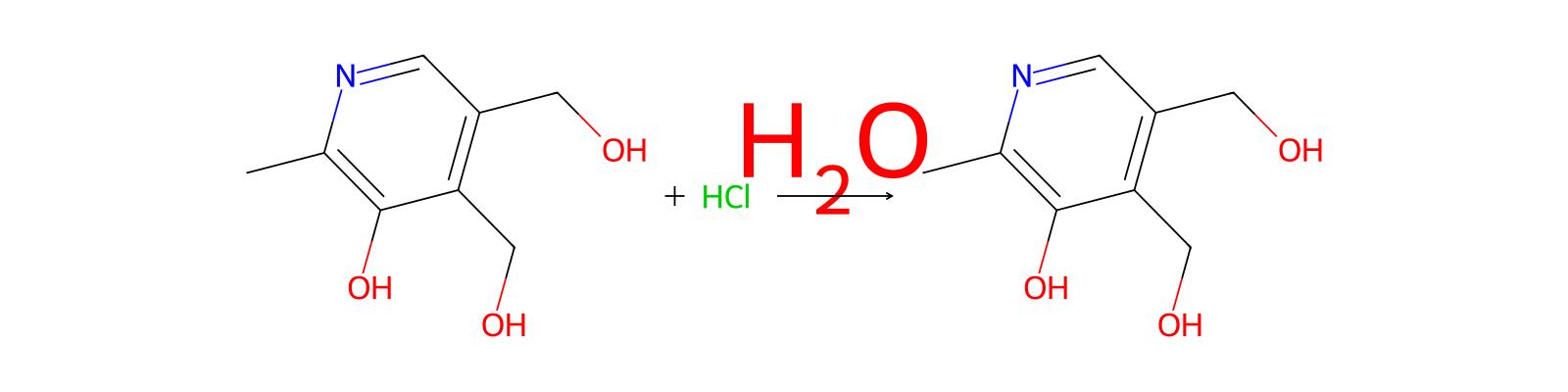
Pyridoxine is a hydroxymethylpyridine with hydroxymethyl groups at positions 4 and 5, a hydroxy group at position 3 and a methyl group at position 2. The 4-methanol form of vitamin B6, it is converted intoto pyridoxal phosphate which is a coenzyme for synthesis of amino acids, neurotransmitters, sphingolipids and aminolevulinic acid. It has a role as a cofactor, a mouse metabolite, a Saccharomyces cerevisiae metabolite, an Escherichia coli metabolite and a human metabolite. It is a member of methylpyridines, a vitamin B6, a monohydroxypyridine and a hydroxymethylpyridine.
이름 및 식별자
- 우선 이름
- Pyridoxine
- IUPAC
- 4,5-bis(hydroxymethyl)-2-methylpyridin-3-ol
- 현지명
- 피리독신
- 영어명
- Pyridoxine
- 분자식
- C8H11NO3
- 분자량
- 169.18
이름 및 동의어
pyridoxine65-23-6PyridoxolPyridoxin3-hydroxy-4,5-bis(hydroxymethyl)-2-methylpyridineAdermineGravidoxHydoxinPyridoxolum4,5-bis(hydroxymethyl)-2-methylpyridin-3-ol3,4-Pyridinedimethanol, 5-hydroxy-6-methyl-5-Hydroxy-6-methyl-3,4-pyridinedimethanol
이름 더 보기
비타민B6피리독신PYRIDOXINE HCLPyridoxine (Vitamin B6)(5-hydroxy-6-Methylpyridine-3,4-diyl)diMethanolPYRIDOXIN HYDROCHLORIDE5-HYDROXY-6-METHYL-3,4-PYRIDINEDIMETHANOL HYDROCHLORIDEB6-HCLPridoxineADEMINE HCL
PiridoxinaPyridoxinumPiridossina3-Hydroxy-4,5-dimethylol-alpha-picolineHexabione2-Methyl-3-hydroxy-4,5-bis(hydroxymethyl)pyridine2-Methyl-3-hydroxy-4,5-di(hydroxymethyl)pyridineVitamin V6
데이터베이스 식별자
- CAS
물성
구조 계산 물성보충 중
- XLogP
- -0.8
- 극성 표면적
- 73.6 Ų
- 수소 결합 공여자 수
- 3
- 수소 결합 수용자 수
- 4
- 회전 가능 결합 수
- 2
- 무거운 원자 수
- 12
- 형식 전하
- 0
- 복잡도
- 142
실험 및 물리화학적 성질
Chemical ClassesBiological Agents -> Vitamins and Derivatives
Drugs
Pharmaceuticals -> Listed in ZINC15
Pharmaceuticals
CosmeticsHair conditioning; Antistatic; Skin conditioning
LogP-0.77
Food AdditivesUse unspecified -> FDA Substance added to food
Solubility79 mg/mL
Human Drugs
Breast Feeding; Lactation; Milk, Human; Vitamins
FDA approved drugs -> Active ingredient
FDA approved drugs -> Active ingredient
FDA approved drugs -> Active ingredient
Vitamins and minerals
Melting Point
159-162 °C
159 - 162 °C
Vapor Pressure0.00000028 [mmHg]
Physical Description
Dry Powder
White powder; [Alfa Aesar MSDS]
안전 및 규제
안전 정보는 참고용이며, 공급업체의 물질안전보건자료(SDS), 관련 법규 및 전문가 평가를 대체하지 않습니다.
GHS 분류
GHS Classification
This chemical does not meet GHS hazard criteria for 3.8% (2 of 52) of reports.
Warning
H315 (96.2%): Causes skin irritation [Warning Skin corrosion/irritation]
P261, P264, P264+P265, P271, P280, P302+P352, P304+P340, P305+P351+P338, P319, P321, P332+P317, P337+P317, P362+P364, P403+P233, P405, and P501 (click each P-code to see the statement)
Aggregated GHS information provided per 52 reports by companies from 8 notifications to the ECHA C&L Inventory. Each notification may be associated with multiple companies.
유해성 정보
Regulatory Information
Chemical: 3,4-Pyridinedimethanol, 5-hydroxy-6-methyl-
3,4-Pyridinedimethanol, 5-hydroxy-6-methyl- is listed on the EPA's Chemical Data Reporting (CDR) system. Manufacturers and importers of 3,4-Pyridinedimethanol, 5-hydroxy-6-methyl- are required to report information about their production and use of this chemical to the EPA under the Toxic Substances Control Act (TSCA). (40 eCFR Part 711)
Status: Active Update: 28-05-2018 https://echa.europa.eu/registration-dossier/-/registered-dossier/25773
Pyridoxine: Does not have an individual approval but may be used under an appropriate group standard
Other Safety InformationEvaluation - Chemicals that are unlikely to require further regulation to manage risks to environment
Hazards Summary
Has been tested in humans to relieve nausea and vomiting during pregnancy; Chronic ingestion of gram quantities can cause ataxia and sensory neuropathy; Has demonstrated testicular toxicity in rats; [REPROTOX] An irritant; May have cumulative adverse effects; [Alfa Aesar MSDS] See Pyridoxine hydrochloride.
Hazard Classes and CategoriesSkin Irrit. 2 (96.2%)
독성 정보
화학 및 산업
약리 정보
ATC Code
A11HA02
A - Alimentary tract and metabolism
QA - Alimentary tract and metabolism
A11HA02
Protein BindingPyridoxine main active metabolite, pyridoxal 5’-phosphate, is released into the circulation (accounting for at least 60% of circulating vitamin B6) and is highly protein bound, primarily to albumin.
Pharmacodynamics
Vitamin B6 (pyridoxine) is a water-soluble vitamin used in the prophylaxis and treatment of vitamin B6 deficiency and peripheral neuropathy in those receiving isoniazid (isonicotinic acid hydrazide, INH). Vitamin B6 has been found to lower systolic and diastolic blood pressure in a small group of subjects with essential hypertension. Hypertension is another risk factor for atherosclerosis and coronary heart disease. Another study showed pyridoxine hydrochloride to inhibit ADP- or epinephrine-induced platelet aggregation and to lower total cholesterol levels and increase HDL-cholesterol levels, again in a small group of subjects. Vitamin B6, in the form of pyridoxal 5'-phosphate, was found to protect vascular endothelial cells in culture from injury by activated platelets. Endothelial injury and dysfunction are critical initiating events in the pathogenesis of atherosclerosis. Human studies have demonstrated that vitamin B6 deficiency affects cellular and humoral responses of the immune system. Vitamin B6 deficiency results in altered lymphocyte differentiation and maturation, reduced delayed-type hypersensitivity (DTH) responses, impaired antibody production, decreased lymphocyte proliferation and decreased interleukin (IL)-2 production, among other immunologic activities.
Mechanism of Action
Vitamin B6 is the collective term for a group of three related compounds, pyridoxine (PN), pyridoxal (PL) and pyridoxamine (PM), and their phosphorylated derivatives, pyridoxine 5'-phosphate (PNP), pyridoxal 5'-phosphate (PLP) and pyridoxamine 5'-phosphate (PMP). Although all six of these compounds should technically be referred to as vitamin B6, the term vitamin B6 is commonly used interchangeably with just one of them, pyridoxine. Vitamin B6, principally in its biologically active coenzyme form pyridoxal 5'-phosphate, is involved in a wide range of biochemical reactions, including the metabolism of amino acids and glycogen, the synthesis of nucleic acids, hemogloblin, sphingomyelin and other sphingolipids, and the synthesis of the neurotransmitters serotonin, dopamine, norepinephrine and gamma-aminobutyric acid (GABA).
관련 반응
5건



화합물 노트
불러오는 중…