
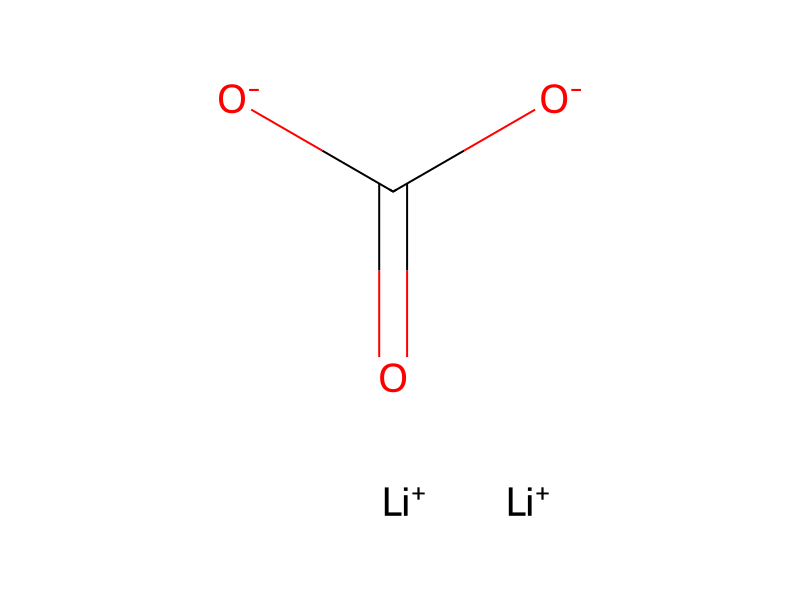
기본 정보
- 표준 SMILES
O=C([O-])[O-].[Li+].[Li+]- InChIKey
XGZVUEUWXADBQD-UHFFFAOYSA-L- 분자식
- CLi2O3
- 평균 분자량
- 73.9 g/mol
- 단동위원소 질량
- 74.01675296
개요
Lithium Carbonate can cause developmental toxicity according to state or federal government labeling requirements.
이름 및 식별자
- 우선 이름
- Lithium Carbonate
- IUPAC
- dilithium;carbonate
이름 및 동의어
LITHIUM CARBONATE554-13-2Dilithium carbonateLithobidLithaneCarbonic acid, dilithium saltEskalithLithotabsCarbonic acid lithium saltCamcolitLiskonumLithizine
이름 더 보기
LimasEskalith CRNeurolepsinPriadelQuilonum retardLithium carbonicumCandamideCarbolith
데이터베이스 식별자
- CAS
554-13-2- PubChem CID
- 11125
- DTXSID
DTXSID1023784- ChEMBL
CHEMBL1200826- ChEBI
CHEBI:6504- UNII
- 2BMD2GNA4V
- EC Number
- 209-062-5
- Nikkaji
- J425A
물성
구조 계산 물성
- 극성 표면적
- 63.2 Ų
- 수소 결합 공여자 수
- 0
- 수소 결합 수용자 수
- 3
- 회전 가능 결합 수
- 0
- 무거운 원자 수
- 6
- 형식 전하
- 0
- 복잡도
- 18.8
실험 및 물리화학적 성질
Chemical Classes
Other Classes -> Salts, Basic
Teratogens
SpringerMaterials Propertiesdielectric constant
Density
2.11 g/cu cm
2.1 g/cm³
2.11 @25 °C
Color/Form
White, light, alkaline powder
White monoclinic crystals
Solubility
100mM
Solubility in water (wt%): 1.52 at 0 °C; 1.31 at 20 °C; 1.16 at 40 °C; 1.00 at 60 °C; 0.84 at 80 °C; 0.71 at 100 °C
Insoluble in alcohol; soluble in dilute acid
Insoluble in acetone, ammonia
Solubility in water, g/100ml: 1.3 (poor)
Human Drugs
Breast Feeding; Lactation; Milk, Human; Lithium
FDA approved drugs -> Active ingredient
FDA approved drugs -> Active ingredient
Medicines for bipolar disorders
Boiling PointDecomposes at 1300 °C
Decomposition1310 °C
Melting Point
723 °C
723 °C
732 °C
Refractive IndexINDEX OF REFRACTION: 1.428, 1.567, 1.572
Physical Description
Lithium carbonate appears as a white powder. Strong irritant when dissolved in water.
Large Crystals; Dry Powder
White powder slightly soluble in water; [CAMEO]
WHITE POWDER.
안전 및 규제
GHS 분류
GHS Classification
This chemical does not meet GHS hazard criteria for 0.2% (2 of 1238) of reports.
Danger
H302 (99.8%): Harmful if swallowed [Warning Acute toxicity, oral]
P203, P260, P261, P264, P264+P265, P270, P271, P280, P301+P317, P302+P352, P304+P340, P305+P351+P338, P305+P354+P338, P317, P318, P319, P321, P330, P332+P317, P337+P317, P362+P364, P403+P233, P405, and P501 (click each P-code to see the statement)
Aggregated GHS information provided per 1238 reports by companies from 16 notifications to the ECHA C&L Inventory. Each notification may be associated with multiple companies.
Danger
유해성 정보
Regulatory Information
Chemical: Carbonic acid, dilithium salt
Hazard Traits - Developmental Toxicity
Carbonic acid, lithium salt (1:2) is listed on the EPA's Chemical Data Reporting (CDR) system. Manufacturers and importers of Carbonic acid, lithium salt (1:2) are required to report information about their production and use of this chemical to the EPA under the Toxic Substances Control Act (TSCA). (40 eCFR Part 711)
Status: Active Update: 12-04-2023 https://echa.europa.eu/registration-dossier/-/registered-dossier/15034
Lithium carbonate: Does not have an individual approval but may be used under an appropriate group standard
The New Jersey Worker and Community Right to Know Act requires public and private employers to provide information about hazardous substances at their workplaces. (N.J.S.A. 34:5A-1 et. seq.)
Other Safety InformationIMAP assessments - Carbonic acid, dilithium salt: Human health tier II assessment
Fire HazardsNot combustible.
Hazards Summary
When dissolved in water, it is a strong irritant. [CAMEO] A 1% solution is an irritant with a pH of 11.2. It is poorly absorbed through the skin and has a vapor pressure of approximately zero. When used therapeutically, doses higher than 500-1800 mg/day may cause GI symptoms, thyroid dysfunction, muscle cramps, kidney injury, tremors, and convulsions. Persistent neurological symptoms have occurred after accidental or suicidal overdoses. Lithium salts cause developmental toxicity in humans at therapeutic doses (not in the occupational setting) with increased risk for major malformations, particularly cardiac, in the developing fetus. The minimum dietary requirement for lithium is probably less than 25 ug/day, and the average intake is about 100-2600 ug/day. [CHEMINFO]
FDA Requirements
The Approved Drug Products with Therapeutic Equivalence Evaluations List identifies currently marketed prescription drug products, incl lithium carbonate, approved on the basis of safety and effectiveness by FDA under sections 505 of the Federal Food, Drug, and Cosmetic Act.
The Approved Drug Products with Therapeutic Equivalence Evaluations List identifies currently marketed prescription drug products, incl lithium citrate, approved on the basis of safety and effectiveness by FDA under sections 505 of the Federal Food, Drug, and Cosmetic Act. /Lithium Citrate/
Reactive GroupCarbonate Salts
Special Reports
WHO; Environmental Health Criteria 119: Principles and Methods for the Assessment of Nephrotoxicity Associated with Exposure to Chemicals (1991)
Harvey NS, Merriman S; Drug Safety 10 (6): 455-63 (1994). Review of clinically important drug interactions with lithium.
The reproductive and developmental effects of exposure to lithium were evaluated, and toxicologic info related to several specific lithium salts incl lithium-carbonate, lithium-chloride, lithium-citrate, and lithium-hypochlorite was presented. The Institute for Evaluating Health Risks (IEHR) evaluative process was used for this evaluation. Human environmental, medical and occupational exposures were described.[Moore, JA; Repro Tox 9 (2): 175-210 (1995)]
European Chemicals Bureau; IUCLID Dataset, Lithium Carbonate (CAS # 554-13-2) p.18. Available from the Database Query page at: http://ecb.jrc.it/esis/esis.php as of February 7, 2007.
Nordic Council of Ministers/Arbetslivsinstitutet/The Nordic Expert Group for Criteria Documentation of Health Risks from Chemicals; 131 Lithium and Lithium Compounds NR 2002:16. Available at http://ebib.arbetslivsinstitutet.se/ah/2002/ah2002_16.pdf as of February 9, 2007
Reactivity ProfileLithium carbonate is a carbonates salt. It is decomposed by acids with the evolution of carbon dioxide. Fluorine burns fiercely on contact with lithium carbonate.
Chemical DangersThe solution in water is a weak base. Reacts violently with fluorine.
Packaging and LabellingDo not transport with food and feedstuffs.
Air and Water ReactionsSlightly soluble in water.
Other Hazardous Reactions... /Lithium carbonate/ in contact with fluorine is decomp at ordinary temp with incandescence.
안전 및 보호
Fire FightingIn case of fire in the surroundings, use appropriate extinguishing media.
First Aid Measures
Fresh air, rest. Refer for medical attention.
Remove contaminated clothes. Rinse skin with plenty of water or shower. Refer for medical attention .
First rinse with plenty of water for several minutes (remove contact lenses if easily possible), then refer for medical attention.
Rinse mouth. Give one or two glasses of water to drink. Refer for medical attention .
Safe StorageSeparated from food and feedstuffs and fluorine. Well closed.
Exposure Control and Personal Protection0.2 [mg/m3], inhalable fraction, as Li[German Research Foundation (DFG)]
Fire Fighting Procedures
This chemical is a combustible solid. Use dry chemical, carbon dioxide, water spray, or alcohol foam extinguishers. Poisonous gases are produced in fire. If material or contaminated runoff enters waterways, notify downstream users of potentially contaminated waters. Notify local health and fire officials and pollution control agencies. From a secure, explosion-proof location, use water spray to cool exposed containers. If cooling streams are ineffective (venting sound increases in volume and pitch, tank discolors, or shows any signs of deforming), withdraw immediately to a secure position. If employees are expected to fight fires, they must be trained and equipped in OSHA 1910.156.
Storage ConditionsStore in tightly closed containers in a cool, well-ventilated area away from moisture, fluorine, oxidizers, acids. Where possible, automatically transfer from drums or other storage containers to process containers.
Cleanup Methods
Evacuate persons not wearing protective equipment from area of spill or leak until clean-up is complete. Remove all ignition sources. Collect powdered material in the most convenient and safe manner and deposit in sealed containers. Ventilate area after clean-up is complete. It may be necessary to contain and dispose of this chemical as a hazardous waste. If material or contaminated runoff enters waterways, notify downstream users of potentially contaminated waters. Contact your Department of Environmental Protection or your regional office of the federal EPA for specific recommendations. If employees are required to clean-up spills, they must be properly trained and equipped. OSHA 1910.120(q) may be applicable.
Disposal Methods
SRP: At the time of review, criteria for land treatment or burial (sanitary landfill) disposal practices are subject to significant revision. Prior to implementing land disposal of waste residue (including waste sludge), consult with environmental regulatory agencies for guidance on acceptable disposal practices.
Spillage Disposal
Personal protection: particulate filter respirator adapted to the airborne concentration of the substance. Sweep spilled substance into covered containers. If appropriate, moisten first to prevent dusting. Wash away remainder with plenty of water.
Preventive Measures
SRP: The scientific literature for the use of contact lenses in industry is conflicting. The benefit or detrimental effects of wearing contact lenses depend not only upon the substance, but also on factors including the form of the substance, characteristics and duration of the exposure, the uses of other eye protection equipment, and the hygiene of the lenses. However, there may be individual substances whose irritating or corrosive properties are such that the wearing of contact lenses would be harmful to the eye. In those specific cases, contact lenses should not be worn. In any event, the usual eye protection equipment should be worn even when contact lenses are in place.
Personnel protection: Avoid breathing vapors or dusts. Avoid bodily contact with the material. ... Do not handle broken packages unless wearing appropriate personal protective equipment. If contact with the material anticipated, wear appropriate chemical protective clothing. Wash away any material which may have contacted the body with copious amounts of water or soap and water. Avoid breathing dusts, and fumes from burning material. ...
Personal Protective Methods: Wear protective gloves and clothing to prevent any reasonable probability of skin contact. Safety equipment suppliers/manufacturers can provide recommendations on the most protective glove/clothing material for your operation. All protective clothing (suits, gloves, footwear, headgear) should be clean, available each day, and put on before work. Contact lenses should not be worn when working with this chemical. Wear dust-proof chemical goggles and face shield unless full facepiece respiratory protection is worn. Employees should wash immediately with soap when skin is wet or contaminated. Provide emergency showers and eyewash. Specific engineering controls are required for drug manufacture by the Food and Drug Administration. Refer to FDA regulation for Good Manufacturing Practices 21CFR210.
First Aid: If this chemical gets into the eyes, remove any contact lenses at once and irrigate immediately for at least 15 minutes, occasionally lifting upper and lower lids. Seek medical attention immediately. If this chemical contacts the skin, remove contaminated clothing and wash immediately with soap and water. Seek medical attention immediately. If this chemical has been inhaled, remove from exposure, begin rescue breathing (using universal precautions) if breathing has stopped and CPR if heart action has stopped. Transfer promptly to a medical facility. When this chemical has been swallowed, get medical attention. Give large quantities of water and induce vomiting. Do not make an unconscious person vomit. Medical observation is recommended for 24 to 48 hours after breathing overexposure, as pulmonary edema may be delayed. As first aid for pulmonary edema, a doctor or authorized paramedic may consider administering a corticosteroid spray.
Eye PreventionWear safety spectacles or eye protection in combination with breathing protection.
Inhalation RiskEvaporation at 20 °C is negligible; a harmful concentration of airborne particles can, however, be reached quickly when dispersed, especially if powdered.
독성 정보
Interactions
Concurrent administration of lithium carbonate and potassium iodide or other iodine-containing compounds may enhance hypothyroid and goitrogenic effects of either drug.
In normal volunteers whose conditions were stabilized with lithium carbonate there were no significant changes in serum lithium levels during a 2 week period while they received 40 mg/day of furosemide during another 2 week period, a 50 mg/kg dosage of hydrochlorothiazide increased the serum lithium levels.
Concurrent use /of amphetamines/ with lithium /carbonate or citrate/ may antagonize the CNS stimulating effects of amphetamines.
Reversible increase in serum lithium concentrations and toxicity have been reported during concurrent use /of lithium carbonate or citrate/ with ACE inhibitors; frequent monitoring of serum lithium concentrations is recommended during concurrent use.
For more Interactions (Complete) data for LITHIUM CARBONATE (33 total), please visit the HSDB record page.
Adverse EffectsNeurotoxin - Other CNS neurotoxin
Exposure RoutesThe substance can be absorbed into the body by inhalation of its aerosol and by ingestion.
Signs and Symptoms
Cough. Headache. Nausea. Sore throat.
Redness. Pain.
Redness. Pain.
Abdominal cramps. Diarrhoea. Drowsiness. Unconsciousness. Vomiting.
Medical SurveillanceMedical Surveillance: Blood tests for lithium level. Kidney function tests. Thyroid function tests. Consider chest x-ray following acute overexposure. Evaluation by a qualified allergist.
Human Toxicity Excerpts
/SIGNS AND SYMPTOMS/ The therapeutic use of lithium carbonate may produce unusual toxic responses. These include neuromuscular changes (tremor, muscle hyperirritability, and ataxia), central nervous system changes (blackout spells, epileptic seizures, slurred speech, coma, psychosomatic retardation, and increased thirst), cardiovascular changes (cardiac arrhythmia, hypertension, and circulatory collapse), GI changes (anorexia, nausea, and vomiting) and renal damage (albuminuria and glycosuria). The last is believed to be due to temporary hypokalemic nephritis. Long-term sequelae from acute lithium poisoning include cognitive losses such as impaired memory, attention and executive functions and visuospatial deficits.[Klaassen, C.D. (ed). Casarett and Doull's Toxicology. The Basic Science of Poisons. 6th ed. New York, NY: McGraw-Hill, 2001., p. 852]
/SIGNS AND SYMPTOMS/ Examination of renal biopsies from patients exposed to lithium carbonate for periods ranging from less than 1 to several years has revealed degenerative changes and inflammatory responses in the kidney. These incl swelling, deformation, and apparent destruction of the nephron.[Gilman, A. G., L. S. Goodman, and A. Gilman. (eds.). Goodman and Gilman's The Pharmacological Basis of Therapeutics. 6th ed. New York: Macmillan Publishing Co., Inc. 1980., p. 434]
/SIGNS AND SYMPTOMS/ The following clinical manifestations are useful guidelines for evaluating most patients, and serum lithium /lithium carbonate/ levels alone should not be substituted for clinical observation: Transient mild to moderate side effects occur in most patients at serum levels of 1.5 to 2 mEq/L but may be observed at lower levels, depending on the patient's tolerance. The most common reactions include nausea, diarrhea, malaise, and fine hand tremor. Other common untoward effects are thirst, polyuria, polydipsia, weight gain, and fatigue, which may persist throughout treatment but are reversible when the drug is discontinued. Hand tremor occasionally can be modified by the elimination of caffeine or treated with propranolol if it is necessary to maintain the dosage for antimanic effectiveness.[American Medical Association, Council on Drugs. AMA Drug Evaluations Annual 1994. Chicago, IL: American Medical Association, 1994., p. 312]
/SIGNS AND SYMPTOMS/ Drowsiness, vomiting, muscle weakness, ataxia, dryness of the mouth, abdominal pain, lethargy, dizziness, slurred speech, and nystagmus are early symptoms of intoxication. These reactions may occur at concentrations above 1.5 mEq/L and are common at concentrations of 2 mEq/L. Moderate to severe adverse reactions may occur at serum concentrations above 2 mEq/L. At levels of 2 to 2.5 mEq/L, symptoms include anorexia, persistent nausea and vomiting, blurred vision, fasciculations, clonic movements of whole limbs, hyperactive deep tendon reflexes, choreoathetoid movements, epileptiform convulsions, toxic psychosis, syncope, electroencephalographic changes, acute circulatory failure, stupor, and coma. At serum levels above 2.5 mEq/L, symptoms may progress rapidly to generalized convulsions, oliguria, and death. When the serum lithium /lithium carbonate/ level exceeds 1.5 mEq/L or adverse reactions become bothersome regardless of the serum level, the drug generally should be discontinued for 24 hours and therapy then resumed at a lower dose. The patient and those living in the household should be cautioned to notify the physician immediately if untoward symptoms or unexplained illnesses occur.[American Medical Association, Council on Drugs. AMA Drug Evaluations Annual 1994. Chicago, IL: American Medical Association, 1994., p. 312]
For more Human Toxicity Excerpts (Complete) data for LITHIUM CARBONATE (49 total), please visit the HSDB record page.
Non-Human Toxicity Excerpts
/LABORATORY ANIMALS: Acute Exposure/ ... Rats were exposed for 4 hours to aerosols containing 80% lithium carbonate and 20% lithium hydroxide or lithium oxide (aerosol concentration: 620, 1400, 2300, or 2600 mg/cu m), primarily lithium hydroxide and approximately 23% lithium carbonate (aerosol concentration: 570, 840, 1200 or 1500 mg/cu m) or primarily lithium monoxide with some lithium hydroxide and 12% lithium carbonate (aerosol concentration: 500, 750, 1000 or 1500 mg/cu m). The most prominent histopathological changes were ulcerative or necrotic laryngitis, erosive to ulcerative rhinitis often accompanied by areas of squamous metaplasia and in some cases pulmonary lesions, suggested to be secondary to the upper respiratory tract lesions. The lesions were seen mainly in the two highest exposure groups (for all three aerosols), indicating that there was some dose-response pattern. However, lithium carbonate produced both fewer and less severe lesions than the other two exposure regimens at similar concentrations. None of the animals (0/16) exposed to 620 mg/m3 of the aerosol containing 80% lithium carbonate suffered from rhinitis, laryngitis or alveolitis, whereas these lesions were seen in a few animals exposed to the other two aerosols, at the two lowest concentrations.[Nordic Council of Ministers/Arbetslivsinstitutet/The Nordic Expert Group for Criteria Documentation of Health Risks from Chemicals; 131 Lithium and Lithium Compounds p. 17 NR 2002:16. Available from, as of February 9, 2007: http://ebib.arbetslivsinstitutet.se/ah/2002/ah2002_16.pdf]
/LABORATORY ANIMALS: Acute Exposure/ Lithium carbonate was found to be slightly irritating and irritating, respectively, in the rabbit skin and eye Draize test.[European Chemicals Bureau; IUCLID Dataset, Lithium Carbonate (CAS # 554-13-2) p.18. Available from, as of February 7, 2007: http://esis.jrc.ec.europa.eu/]
/LABORATORY ANIMALS: Acute Exposure/ Lithium carbonate was found to be not sensitizing in guinea pig using the Buehler test under OECD guideline 406.[European Chemicals Bureau; IUCLID Dataset, Lithium Carbonate (CAS # 554-13-2) p.19. Available from, as of February 7, 2007: http://esis.jrc.ec.europa.eu/]
/LABORATORY ANIMALS: Subchronic or Prechronic Exposure/ Male Sprague Dawley rats receive an average of 106, 478, 1067 or 2083 ppm lithium carbonate through continuous feeding. Six rats per group received diet containing 0.87 (control), 12, 34, 129 and 319 ppm lithium for 12 weeks followed by a diet containing 0.87, 28, 154, 276, and 450 ppm lithium ion for 9 days. A dose-response was observed in the two top dose groups with respect to the body weight gain and food consumption while the other groups were similar to control. Decreases in absolute organ weights were observed in the liver, kidney, spleen and heart, but not in the thyroid or adrenal glands in the high dose group. Relative organ weights (to body weights) were also altered. Brain and heart weight increased and liver and spleen weight were decreased as dosage increased.[European Chemicals Bureau; IUCLID Dataset, Lithium Carbonate (CAS # 554-13-2) p.20. Available from, as of February 7, 2007: http://esis.jrc.ec.europa.eu/]
For more Non-Human Toxicity Excerpts (Complete) data for LITHIUM CARBONATE (36 total), please visit the HSDB record page.
Populations at Special Risk
Lithium should be used cautiously in patients with preexisting cardiovascular or thyroid disease. Patients with underlying cardiovascular disease should be observed carefully for signs and symptoms of arrhythmia (including periodic ECG determinations), and serum lithium concentrations should be kept within the therapeutic range since nodal arrhythmias may occur. Patients with underlying hypothyroidism should have thyroid function (T3, T4, and TSH concentrations) evaluated yearly and be given supplemental thyroid therapy when needed.
Probable Routes of Human Exposure
NIOSH (NOES Survey 1981-1983) has statistically estimated that 198 workers (151 of these are female) (Hazard Code X6906) and 39,147 workers (17,568 of these are female) (Hazard Code 84414) are potentially exposed to lithium carbonate in the US(1).
Antidote and Emergency Treatment
Emergency and Supportive Measures: In obtunded patients, maintain an open airway and assist ventilation if necessary. Administer supplemental oxygen. Treat coma, seizures, and hyperthermia if they occur. In dehydrated patients, replace fluid deficits with intravenous crystalloid solutions. Initial treatment should include repletion of sodium and water ... . Once fluid deficits are replaced, give hypotonic (eg, half-normal saline) solutions because continued administration of normal saline often leads to hypernatremia, especially in patients with lithium-induced nephrogenic diabetes insipidus. /Lithium,NOS/
Specific Drugs and Antidotes: There is no specific antidote. Thiazides and indomethacin have been used for treatment of /lithium induced/ nephrogenic diabetes insipidus. /Lithium,NOS/
Decontamination measures are appropriate after acute ingestion but not chronic intoxication. consider gastric lavage for a large recent ingestion. Activated charcoal does not absorb lithium but may be useful if other drug ingestion is suspected. Whole-bowl irrigation may enhance gut decontamination, especially in cases involving sustained-release preparations that are not likely to dissolve readily during the lavage procedure. Oral administration of sodium polystyrene sulfonate has been advocated for attempts to reduce lithium absorption, but there is insufficient evidence of safety or effectiveness./Lithium,NOS/
Enhanced Elimination: Lithium is excreted exclusively by the kidneys. The clearance is about 25% of the glomerular filtration rate and is reduced by sodium depletion or dehydration. Hemodialysis removes lithium effectively and is indicated for intoxicated patients with seizures or severely abnormal mental status and for patients unable to excrete lithium renally (ie, anephric and anuric patients). Repeated and prolonged dialysis may be necessary because of slow movement of lithium out of the CNS. There is not consensus on the level of lithium at which one must dialyze for lithium toxicity. /Lithium,NOS/
For more Antidote and Emergency Treatment (Complete) data for LITHIUM CARBONATE (13 total), please visit the HSDB record page.
National Toxicology Program Studies
Lithium Carbonate was selected for /immunotoxicity/ evaluation because there are data in the literature showing that this drug produces consistent effects on the bone marrow. There is a minimal amount of data on the effects of Lithium Carbonate on the immune system. The doses of Lithium Carbonate were initially established based on probe studies and then modified based on the dose response data that became available. The first doses were 50, 200 and 400 mg/kg; the period of exposure was 14 days and the route of exposure was gavage. Doses were modified to 100, 300 and 400 mg/kg in repeat and later studies because of a lack of effect at 50 and 200 mg/kg. Lithium Carbonate at doses up to 400 mg/kg produced a slight decrease in weight gain, a major diuresis, mild hepatitis and spleen hyperplasia (specifically an increase in the number of germinal centers). There was a dose dependent decrease in liver and thymus weight. There was a dose dependent increase in leukocyte and erythrocyte number and a concommitant increase in hemoglobin and hematocrit. These changes can be accounted for by an increase in bone marrow activity, as seen in an increase in cell number and stem cells; the increase in stem cells is based on the number of stem cells per femur. No increase was noted in the stem cells based on 105 cells. A dose dependent increase in total protein and albumin occurred, which may be a function of the mild chemically induced hepatitis. However, no increase in SGPT was seen. summary of the immune studies is outlined in Table S-2. Lithium Carbonate produced a dose dependent shift in the ratio of T cells to B cells. B cell number increased, with an associated increase in response to the B cell mitogen, lipopolysaccharide. No changes were seen in the ability of the mice to produce specific IgM or IgG antibody to the T dependent antigen sheep erythrocytes. The decrease in the number of T cells was not associated with changes in the response to the T cell mitogens, Concanavalin A and Phytohemagglutinin, and allogeneic cells (MLR) or in the ability of the mice to develop a delayed hypersensitivity response to keyhole limpet hemocyanin or dinitrofluorobenzene. NK cell activity and serum complement levels were unaffected by exposure to Lithium Carbonate. Macrophages were a target for Lithium Carbonate. The phagocytic activity of the fixed macrophages of the liver and mobile macrophages derived from the peritoneal cavity was mildly suppressed. An increase in 5'nucleotidase was seen and is congruent with a more immature cell. However, an increase in beta-glucuronidase was seen and could explain the increased resistance to Listeria monocytogenes. Two pathogens were used to evaluate host resistance in mice exposed to Lithium Carbonate. Plasmodium yoelii was used because it represents a model in which antibody and, thus, B lymphocytes play an important role in host resistance. Mice exposed to Lithium Carbonate showed no change in resistance to Plasmodium yeolii. Listeria monocytogenes was selected as the second pathogen because host resistance is primarily mediated by T cells and macrophages. Mice exposed to Lithium Carbonate and challenged to Listeria monocytogenes were slightly more resistant than either the vehicle or the comparative controls. The increased resistance may be due to increased lysosomal activity of macrophages. Results from the host resistance studies support the data from the immunological assays. Lithium Carbonate up to maximum tolerated doses administered daily for 14 days produced minimal effects on the immune system. Although there was a change in the ratio of B and T cells, differentiated function of these cells was not altered. Macrophages were a target, with a slight to mild decrease in phagocytic activity and an increase in the activity of beta-glucuronidase.
Effects During Pregnancy and Lactation◉ Summary of Use during Lactation
규제 정보
FDA Requirements
The Approved Drug Products with Therapeutic Equivalence Evaluations List identifies currently marketed prescription drug products, incl lithium carbonate, approved on the basis of safety and effectiveness by FDA under sections 505 of the Federal Food, Drug, and Cosmetic Act.
The Approved Drug Products with Therapeutic Equivalence Evaluations List identifies currently marketed prescription drug products, incl lithium citrate, approved on the basis of safety and effectiveness by FDA under sections 505 of the Federal Food, Drug, and Cosmetic Act. /Lithium Citrate/
화학 및 산업
약리 정보
ATC CodeN05AN01
BionecessityTraces of the /Li/ ion occur normally in animal tissues, but it has no known physiological role.
Protein BindingLithium carbonate is not significantly protein bound.
Pharmacodynamics
Lithium's mechanism of action is still unknown. Lithium's therapeutic action may be due to a number of effects, ranging from inhibition of enzymes such as glycogen synthase kinase 3, inositol phosphatases, or modulation of glutamate receptors.
Mechanism of Action
Lithium's mechanism of action is still unknown. However, the “inositol depletion theory” suggests 3 main potential targets. These targets are inositol monophosphatase, inositol polyphosphatase, and glycogen synthase kinase 3(GSK-3). The “Inositol depletion theory” suggests lithium behaves as an uncompetitive inhibitor of inositol monophosphatase in a manner inversely proportional to the degree of stimulus. This inhibition lowers levels of inositol triphosphate. However, stronger inhibitors of inositol monophosphatase are not as clinically effective and low levels of inositol triphosphate are associated with memory impairment. Lithium acts on inositol polyphosphatase as an uncompetitive inhibitor. This inhibition is thought to have multiple downstream effects that have yet to be clarified. Lithium regulates phosphorylation of GSK-3 which regulates other enzymes through phosphorylation. Lithium can also inhibit GSK-3 through interfering with the magnesium ion in the active site.
Although its antimanic mechanism of action has not been fully determined, lithium is known to affect a variety of neurohumoral signal transduction mechanisms. ... Lithium /lithium carbonate/ counteracts mood changes and is considered the most specific antimanic drug for the prophylaxis and treatment of bipolar disorder.
In animal brain tissue, Li+ at concn of 1 to 10 mEq/L inhibits the depolarization-provoked and Ca+2-dependent release of norepinephrine and dopamine, but not serotonin, from nerve terminals. Li+ may even enhance the release of serotonin, especially in the limbic system, at least transiently. The ion has little effect on catecholamine-sensitive adenylyl cyclase activity or on the binding of ligands to monoamine receptors in brain tissue, although there is some evidence that Li+ can inhibit the effects of receptor-blocking agents that cause supersensitivity in such systems. Li+ can modify some hormonal responses mediated by adenylyl cyclase or phospholipase C in other tissues, including the actions of antidiuretic and thyroid-stimulating hormones on the actions of antidiuretic and thyroid-stimulating hormones on their peripheral target tissues. In part, the actions of Li+ may reflect its ability to interfere with the activity of both stimulatory and inhibitory GTP-binding proteins (Gs and Gi) by keeping them in their less active alpha-beta-gamma trimer state. /Li+/
Lithium inhibits the phosphatase that liberates inositol (I) from inositol phosphate (IP) ... Li+ ... can modify the abundance or function of G proteins and effectors, as well as protein kinases and several cell and nuclear regulatory factors. /Li+, from figure/
Mechanistically, the Li effect results from its substitution for body cations, eg, sodium and potassium, resulting in multisystemic actions. A partial substitution for normal cations causes changes in ion exchange and transfer in cellular processes. Incorporation of Li into membrane structures may alter responses to hormones and the coupling of energy processes ... Among the factors that may modify Li toxicity and kinetics are the type of the poisoning, the presence of the underlying disease, and renal impairment. /Li+/
For more Mechanism of Action (Complete) data for LITHIUM CARBONATE (22 total), please visit the HSDB record page.
Biological Half-Life
The half life of lithium carbonate is 18 to 36 hours. Other sources say it may be 7 to 20 hours.
The plasma half-life is 17 to 36 hours.
The plasma half-life (in healthy volunteers) shows a considerable variability: from 5 to 40 hr, with most values between 15 and 30 hr, it depends on the duration of treatment as well as on kidney function and age. /Li+/
The usual elimination half-life is 12 to 27 hr, but it may rise to nearly 60 hr if renal excretion is compromised. /Li+/
... The elimination half-life averages 20 to 24 hr. /Li+/
For more Biological Half-Life (Complete) data for LITHIUM CARBONATE (9 total), please visit the HSDB record page.
Metabolism/MetabolitesLithium carbonate is not metabolized before excretion.
FDA Pharmacological Classification
LITHIUM CARBONATE
Mood Stabilizer [EPC]
LITHIUM CARBONICUM
Mood Stabilizer [EPC]
MeSH Pharmacological Classification
Mood-stimulating drugs used primarily in the treatment of affective disorders and related conditions. Several MONOAMINE OXIDASE INHIBITORS are useful as antidepressants apparently as a long-term consequence of their modulation of catecholamine levels. The tricyclic compounds useful as antidepressive agents (ANTIDEPRESSIVE AGENTS, TRICYCLIC) also appear to act through brain catecholamine systems. A third group (ANTIDEPRESSIVE AGENTS, SECOND-GENERATION) is a diverse group of drugs including some that act specifically on serotonergic systems.
Compounds or agents that combine with an enzyme in such a manner as to prevent the normal substrate-enzyme combination and the catalytic reaction.
Agents that are used to treat bipolar disorders or mania associated with other affective disorders.
Absorption, Distribution and Excretion
Lithium absorption is rapid and oral bioavailability is close to 100%.
Lithium is primarily eliminated through the kidneys and elimination in the feces is insignificant.
Apparent volume of distribution is 0.7 to 1.0L/kg.
Clearance is generally between 10 and 40mL/min but may be as low as 15mL/min in elderly patients and those with renal impairment.
... Lithium /carbonate/ crosses placenta and is present in mother and fetus in same concentration.
Lithium /carbonate/ is completely absorbed six to eight hours after oral administration. Since the onset of action is slow (five to ten days), parenteral administration is of no advantage. The plasma half-life is 17 to 36 hours, and this drug is eliminated almost entirely by the kidneys. Lithium clearance averages approximately 20% of creatinine clearance, but significant variability exists among patients.
용도 및 제조
Uses
A lithium salt, classified as a mood-stabilizing agent. Lithium ion alters the metabolism of biogenic monoamines in the central nervous system, and affects multiple neurotransmission systems. [ChemIDplus] Used in medicine for the treatment of bipolar depression and in manufacturing as a flux (glasses, enamels, and ceramics), additive (control cement setting times and produce aluminum, luminescent paints, vanishes, and dyes), coating (arc-welding electrodes), and catalyst; [CHEMINFO]
Aluminum Producing [Category: Industry]
MEDICATION
THERAPCAT: Antimanic
In the production of glazes on ceramic and electrical porcelain.
Catalyst; mfr other lithium compd, coating of arcwelding electrodes; nucleonics; luminescent paints; varnishes & dyes; glass ceramics; aluminum production; ceramics and porcelin glazes; pharmaceuticals.
U.S. Production2023: 40,000,000 - <55,000,000 lb
Consumer UsesProcessing aids not otherwise specified
Industry UsesFlux agent
Methods of Manufacturing
Finely ground ore is roasted with sulfuric acid at 250 dec C, lithium sulfate is leached and converted to the carbonate by precip with soda ash; reaction of lithium oxide with carbon dioxide or ammonium carbonate solution.
Lithium-bearing ores + sulfuric acid + sodium carbonate + calcium hydroxide (acid extraction process); lithium-bearing ores + sodium carbonate (carbonate extraction process); brine, residual + calcium oxide/dolomite, calcined (precipitation; byproduct of magnesium hydroxide production).
Lithium carbonate is produced in industrial processes from the reaction of sodium carbonate and lithium sulfate or lithium chloride solutions.
Lithium carbonate is produced entirely from minerals or naturally occurring brines. The solution of lithium salts initially obtained (lithium sulfate, lithium chloride) is reacted with sodium carbonate solution and lithium carbonate is precipitated, or lithium hydrogen carbonate is formed first and then decomposed thermally.
Formulations/PreparationsGrade: Technical, CP
Household ProductsInformation on 14 consumer products that contain Lithium carbonate in the following categories is provided:
General Manufacturing Information
Electrical Equipment, Appliance, and Component Manufacturing
Carbonic acid, lithium salt (1:2): ACTIVE
Chemical intermediate for the synthesis of lithium bromide, lithium chloride, lithium hydroxide, lithium silicate
관련 반응
299건



연결된 노트
불러오는 중…