
아연 시아니드
Zinc cyanide (Zn(CN)2)
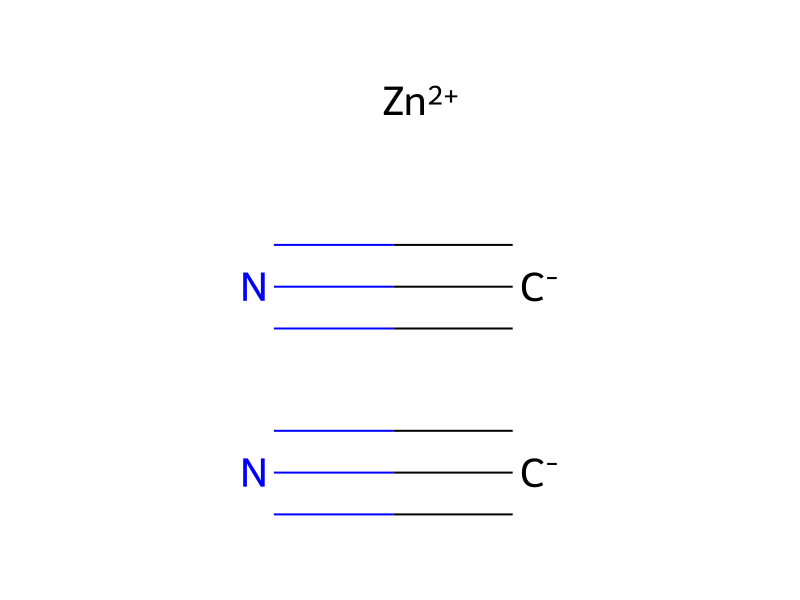
기본 정보
- CAS
557-21-1- 표준 SMILES
[C-]#N.[C-]#N.[Zn+2]- InChIKey
GTLDTDOJJJZVBW-UHFFFAOYSA-N- 분자식
- C2N2Zn
- 평균 분자량
- 117.4 g/mol
- 단동위원소 질량
- 115.93529
개요
Zinc cyanide is a chemical compound of zinc and cyanide. It is used in organic synthesis. Zinc is a metallic element with the atomic number 30. It is found in nature most often as the mineral sphalerite. Though excess zinc in harmful, in smaller amounts it is an essential element for life, as it is a cofactor for over 300 enzymes and is found in just as many transcription factors. (L48, L49, L65)
이름 및 식별자
- 우선 이름
- Zinc cyanide (Zn(CN)2)
- IUPAC
- zinc dicyanide
- 현지명
- 아연 시아니드
- 영어명
- ZINC CYANIDE
- 분자식
- C2N2Zn
- 분자량
- 117.43
이름 및 동의어
zinc;dicyanideZinc cyanide (Zn(CN)2)dicyanozincZinc cyanide Zn(CN)2Cyanure de zinc [French]RCRA waste no. P121RCRA waste number P121dicyano zincCyanure de zincHSDB 1051EINECS 209-162-9UN1713
이름 더 보기
시안화아연*:아연디시아니드아연시아니드아연시아니드(Zn(CN)2)청화아연시안화아연아연시안화물아연시아니드시안화 아연시안화 아연(II)이시안화 아연Zn(Cn)2ZinkcyanidZINC CYANIDEcyanuredezinczincdicyanideZinc cyanide, purercrawastenumberp121zinccyanide(zn(cn)2)
Zinc cyanide, 98%BRN 4124366AI3-28752SCHEMBL360531UNII-04392RL5SRVJHHEOJUJAQMPF-UHFFFAOYSA-NZinc cyanide [UN1713] [Poison]BP-21167
데이터베이스 식별자
- CAS
557-21-1- PubChem CID
- 11186
- Nikkaji
- J44.262C
물성
구조 계산 물성
- 극성 표면적
- 47.6 Ų
- 수소 결합 공여자 수
- 0
- 수소 결합 수용자 수
- 4
- 회전 가능 결합 수
- 0
- 무거운 원자 수
- 5
- 형식 전하
- 0
- 복잡도
- 31.6
물리화학적 성질
- 녹는점
- 800 °C · 800 °C
- 밀도
- 1 · 1,85 g/cm3
- 증기압
- 0 Pa · 0Pa at 25℃
- 용해도
- 알칼리성 용액(아껴서)
- 물리적 상태
- 가루
- 색상
- 흰색에서 황백색까지
- 수용성
- 알칼리, 시안화칼륨, 암모니아에 용해됩니다. 물과 대부분의 용매에 불용성입니다.
- Merck
- 14 · 14,10135
- BRN
- 4124366 · 4124366
- 안정성
- 수분에 민감한
- InChI
- 1S/2CN.Zn/c2*1-2;
- InChIKey
- VJHHEOJUJAQMPF-UHFFFAOYSA-N
- SMILES
- N#C[Zn]C#N
- LogP
- -2.31 at · -2.31 at 25℃
- EPA
- Zinc cyanide (557-21-1)
화학적 성질
Colorless crystalline solid or white powder. Slight, bitter almond odor. Sinks in water; insoluble.
안전 및 규제
안전 정보는 참고용이며, 공급업체의 물질안전보건자료(SDS), 관련 법규 및 전문가 평가를 대체하지 않습니다.
유해성 정보
CSL Reaction Information
CSL00046
N,N-DIMETHYLFORMAMIDE + 2-CHLORO-5-FLUOROPYRIMIDINE + ZINC CYANIDE
Violent thermal exotherm at >100oC
Harmful,Toxic
Heteroaryl chloride
Cyanation
안전 및 보호
Minimum Risk LevelIntermediate Oral: 0.3 mg/kg/day (L134)
Chronic Oral: 0.3 mg/kg/day (L134)
독성 정보
Treatment
Zinc poisoning is treated symptomatically, often by administering fluids such as water or milk, or with gastric lavage. Antidotes to cyanide poisoning include hydroxocobalamin and sodium nitrite, which release the cyanide from the cytochrome system, and rhodanase, which is an enzyme occurring naturally in mammals that combines serum cyanide with thiosulfate, producing comparatively harmless thiocyanate. Oxygen therapy can also be administered. (L49, L97)
Health Effects
Chronic exposure to zinc causes anemia, atazia, lethargy, and decreases the level of good cholesterol in the body. It is also believed to cause pancreatic and reproductive damage. Exposure to high levels of cyanide for a short time harms the brain and heart and can even cause coma, seizures, apnea, cardiac arrest and death. Chronic inhalation of cyanide causes breathing difficulties, chest pain, vomiting, blood changes, headaches, and enlargement of the thyroid gland. Skin contact with cyanide salts can irritate and produce sores. (L49, L96, L97)
Exposure RoutesInhalation (L96) ; oral (L96) ; dermal (L96)
Toxicity Summary
Anaemia results from the excessive absorption of zinc suppressing copper and iron absorption, most likely through competitive binding of intestinal mucosal cells. Unbalanced levels of copper and zinc binding to Cu,Zn-superoxide dismutase has been linked to amyotrophic lateral sclerosis (ALS). Stomach acid dissolves metallic zinc to give corrosive zinc chloride, which can cause damage to the stomach lining. Metal fume fever is thought to be an immune response to inhaled zinc. Organic nitriles decompose into cyanide ions both in vivo and in vitro. Consequently the primary mechanism of toxicity for organic nitriles is their production of toxic cyanide ions or hydrogen cyanide. Cyanide is an inhibitor of cytochrome c oxidase in the fourth complex of the electron transport chain (found in the membrane of the mitochondria of eukaryotic cells). It complexes with the ferric iron atom in this enzyme. The binding of cyanide to this cytochrome prevents transport of electrons from cytochrome c oxidase to oxygen. As a result, the electron transport chain is disrupted and the cell can no longer aerobically produce ATP for energy. Tissues that mainly depend on aerobic respiration, such as the central nervous system and the heart, are particularly affected. Cyanide is also known produce some of its toxic effects by binding to catalase, glutathione peroxidase, methemoglobin, hydroxocobalamin, phosphatase, tyrosinase, ascorbic acid oxidase, xanthine oxidase, succinic dehydrogenase, and Cu/Zn superoxide dismutase. Cyanide binds to the ferric ion of methemoglobin to form inactive cyanmethemoglobin. (L48, L49, A49, L97)
화학 및 산업
약리 정보
Metabolism/Metabolites
Zinc can enter the body through the lungs, skin, and gastrointestinal tract. Intestinal absorption of zinc is controlled by zinc carrier protein CRIP. Zinc also binds to metallothioneins, which help prevent absorption of excess zinc. Zinc is widely distributed and found in all tissues and tissues fluids, concentrating in the liver, gastrointestinal tract, kidney, skin, lung, brain, heart, and pancreas. In the bloodstream zinc is found bound to carbonic anhydrase in erythrocytes, as well as bound to albumin, _2-macroglobulin, and amino acids in the the plasma. Albumin and amino acid bound zinc can diffuse across tissue membranes. Zinc is excreted in the urine and faeces. Organic nitriles are converted into cyanide ions through the action of cytochrome P450 enzymes in the liver. Cyanide is rapidly absorbed and distributed throughout the body. Cyanide is mainly metabolized into thiocyanate by either rhodanese or 3-mercaptopyruvate sulfur transferase. Cyanide metabolites are excreted in the urine. (L49, L96)
용도 및 제조
UsesZinc cyanide is used in organic synthesis. (L65)
응용 분야
용도Zinc cyanide is used in electroplating; as an insecticide; and for separating ammonia from producer gas.
일반 설명A white powder. insoluble in water (about 5mg/L at 20°C); soluble in alkalies, potassium cyanide and ammonia solutions; insoluble in alcohol. Toxic by inhalation (dust and the hydrogen cyanide from slight decomposition) and by ingestion. Produces toxic oxides of nitrogen in fires. Used in medicine, in metal plating, and in chemical analysis.
상·하류 제품 정보
상류 원료
관련 반응
1,898건


화합물 노트
불러오는 중…