홈MCP워크벤치Skills
홈워크벤치알림마이페이지
llms.txt · MCP 가이드개인정보처리방침 · 이용약관 · 지원v1.8.0
  1. 홈
  2. /화합물

1,1-디브로모에탄

1,1-Dibromoethane

HCID 11201
새 노트새 반응견적 요청하기
인쇄 미리보기
기본 정보개요이름 및 식별자물성안전 및 규제화학 및 산업관련 반응화합물 노트
부분 구조 검색유사 구조 찾기

기본 정보

CAS
25620-62-6
표준 SMILES
CC(Br)Br
InChIKey
APQIUTYORBAGEZ-UHFFFAOYSA-N
분자식
C2H4Br2
평균 분자량
187.86 g/mol
단동위원소 질량
185.86797433

개요

1,1-Dibromoethane is an organobromide compound. Bromine is a halogen element with the symbol Br and atomic number 35. Diatomic bromine does not occur naturally, but bromine salts can be found in crustal rock. (L625)

이름 및 식별자

우선 이름
1,1-Dibromoethane
IUPAC
1,1-dibromoethane
현지명
1,1-디브로모에탄
영어명
1,1-Dibromoethane
분자식
C2H4Br2
분자량
187.86

이름 및 동의어

1,1-DIBROMOETHANE557-91-5DIBROMOETHANEEthylidene bromideEthylidene dibromideEthane, 1,1-dibromo-HSDB 7382KJ8ZJY72QQEINECS 209-184-9CCRIS 8552CH3CHBr2DIBROMOETHANE, 1,1-
이름 더 보기
1,1-디브로모에탄1,1-EDB1,1-Dibromethan1,1-dibromo-ethanEthane,1,1-dibromo-ethylidenedibromide1,1-DIBROMOETHANE STABILIZED 99%
DTXSID30603241,1-DIBROMOETHANE [HSDB]Ethane, 1,1dibromoRefChem:409764DTXCID9041944DTXCID301516055DTXSID801031002209-184-9

데이터베이스 식별자

CAS
25620-62-6、557-91-5
PubChem CID
11201
DTXSID
DTXSID3060324
UNII
KJ8ZJY72QQ
EC Number
209-184-9
Nikkaji
J2.663H

물성

구조 계산 물성

XLogP
2.3
극성 표면적
0 Ų
수소 결합 공여자 수
0
수소 결합 수용자 수
0
회전 가능 결합 수
0
무거운 원자 수
4
형식 전하
0
복잡도
11.5

실험 및 물리화학적 성질

Chemical ClassesOther Classes -> Halogenated Aliphatics, Saturated
SpringerMaterials PropertiesBoiling point
Density2.0555 g/cu cm at 20 °C
Color/FormLiquid
SolubilitySoluble in ethanol, acetone, and benzene; slightly soluble in chloroform; very soluble in ether.
Boiling Point108.0 °C
DecompositionWhen heated to decomposition it emits toxic fumes of /hydrogen bromide/.
Melting Point-63 °C
Vapor Pressure · 2건

25.6 [mmHg]

2.56X10+1 mm Hg at 25 °C

Refractive IndexIndex of refraction = 1.5128 at 20 °C
Physical DescriptionLiquid; [HSDB] Clear, slightly brown liquid; Stabilized with potassium carbonate; [MSDSonline]

안전 및 규제

안전 정보는 참고용이며, 공급업체의 물질안전보건자료(SDS), 관련 법규 및 전문가 평가를 대체하지 않습니다.

GHS 분류

GHS Classification · 4건

Danger

H301 (66.7%): Toxic if swallowed [Danger Acute toxicity, oral]

P203, P261, P262, P264, P264+P265, P270, P271, P280, P301+P316, P301+P317, P302+P352, P304+P340, P305+P351+P338, P316, P317, P318, P319, P321, P330, P332+P317, P337+P317, P361+P364, P362+P364, P403+P233, P405, and P501 (click each P-code to see the statement)

Aggregated GHS information provided per 3 reports by companies from 3 notifications to the ECHA C&L Inventory. Each notification may be associated with multiple companies.

유해성 정보

Hazards Summary · 1건

A mutagen; [RTECS] Not mutagenic to Salmonella typhimurium (TA 102 and TA 2638) or two strains of Escherichia coli; Highly genotoxic and cytotoxic to Salmonella typhimurium tester strain NM5004, but not to original host strain TA 1535; Emergency medical treatment: see 1-Bromopropane. [HSDB] May cause irritation; [MSDSonline]

Hazard Classes and CategoriesAcute Tox. 3 (66.7%)
Hazardous Reactivities and IncompatibilitiesViolent reaction with magnisium.

독성 정보

Treatment · 1건

EYES: irrigate opened eyes for several minutes under running water. INGESTION: do not induce vomiting. Rinse mouth with water (never give anything by mouth to an unconscious person). Seek immediate medical advice. SKIN: should be treated immediately by rinsing the affected parts in cold running water for at least 15 minutes, followed by thorough washing with soap and water. If necessary, the person should shower and change contaminated clothing and shoes, and then must seek medical attention. INHALATION: supply fresh air. If required provide artificial respiration.

화학 및 산업

약리 정보

Metabolism/Metabolites · 1건

Bromine is mainly absorbed via inhalation, but may also enter the body through dermal contact. Bromine salts can be ingested. Due to its reactivity, bromine quickly forms bromide and may be deposited in the tissues, displacing other halogens. (L626)

용도 및 제조

Uses · 2건

Used as a research chemical; [HSDB]

Research chemical

General Manufacturing InformationEthane, 1,1-dibromo-: ACTIVE

상·하류 제품 정보

상류 원료

2-브로모프로피온아미드에틸브로마이드메틸렌디브로마이드요오드 메탄아세틸렌

하류 제품

4-플루오로-2-메틸벤조산1,1,2-Tribromoethane브로민화 바이닐(브롬화 비닐)1,1-디클로로에탄

관련 반응

463건
반응 기록 만들기
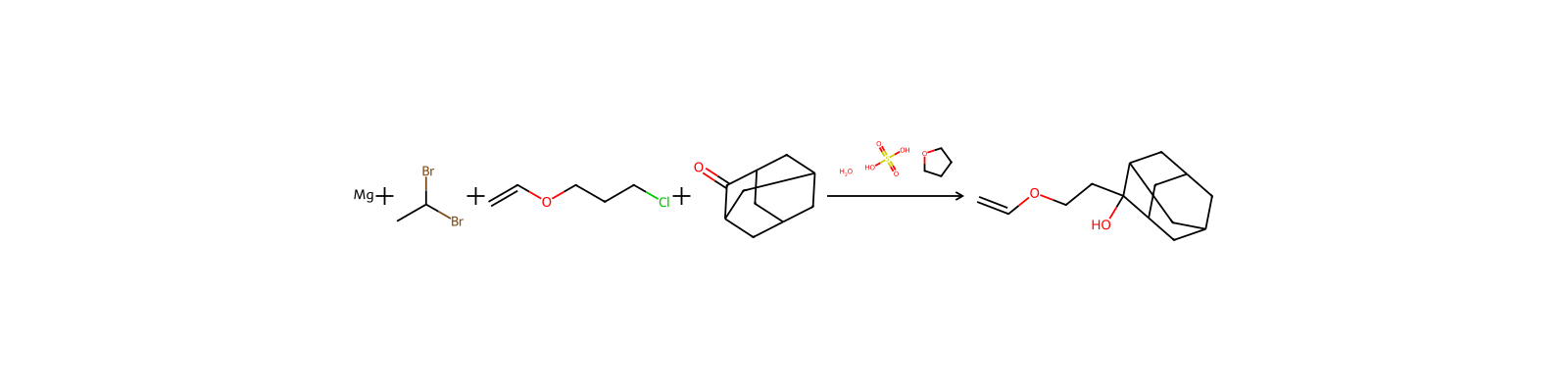
HRID 5325 반응식
HRID 5325반응물로uspto-grants-1993_09
HRID 5327 반응식
HRID 5327반응물로uspto-grants-1993_09
HRID 8528 반응식
HRID 8528반응물로uspto-grants-2006_08
HRID 15074 반응식
HRID 15074반응물로uspto-grants-2010_06
HRID 22039 반응식
HRID 22039반응물로uspto-grants-1995_06
HRID 22041 반응식
HRID 22041반응물로uspto-grants-1995_06
HRID 22134 반응식
HRID 22134촉매로uspto-grants-1995_06
HRID 22623 반응식
HRID 22623반응물로uspto-grants-2005_02
1 / 58 페이지

화합물 노트

불러오는 중…

이 페이지에서기본 정보개요이름 및 식별자물성안전 및 규제화학 및 산업관련 반응화합물 노트
더보기
새 노트새 반응견적 요청하기
Other Experimental Properties
Hydroxyl radical reaction rate constant = 2.50X10⁻¹³ cu cm/molecule-sec at 25 °C

물리화학적 성질

녹는점
-63 °C · -63°C
끓는 점
107 °C · 107 °C
밀도
2.06 · 2.06
굴절률
1.509 · 1.509-1.512
수용성
물에 불용성
용해도
아세토니트릴(약간 용해됨), 클로로포름(수용성)
물리적 상태
액체
색상
무색투명~갈색
Specific Gravity
2.1 · 2.1
비열
0.43 J/ · Cp(gas): 0.43 J/(g·K), at 25℃
Henry's Law Constant
7.6 · 7.6×10-3 mol/(m3Pa) at 25℃, HSDB (2015)
EPA
Ethylidene bromide (557-91-5)

화학적 성질

clear colourless to brownish liquid

Health Effects · 1건

Bromine vapour causes irritation and direct damage to the mucous membranes. Elemental bromine also burns the skin. The bromide ion is a central nervous system depressant and chronic exposure produces neuronal effects. This is called bromism and can result in central reactions reaching from somnolence to coma, cachexia, exicosis, loss of reflexes or pathologic reflexes, clonic seizures, tremor, ataxia, loss of neural sensitivity, paresis, papillar edema of the eyes, abnormal speech, cerebral edema, delirium, aggressiveness, and psychoses. (L625, L626, L627)

Environmental Fate · 3건

TERRESTRIAL FATE: Based on a classification scheme(1), an estimated Koc value of 35(SRC), determined from a structure estimation method(2), indicates that 1,1-dibromoethane is expected to have very high mobility in soil(SRC). Volatilization of 1,1-dibromoethane from moist soil surfaces is expected to be an important fate process(SRC) given an estimated Henry's Law constant of 1.3X10⁻³ atm-cu m/mole(SRC), using a fragment constant estimation method(3). 1,1-Dibromoethane is expected to volatilize from dry soil surfaces(SRC) based upon a vapor pressure of 25.6 mm Hg(4). Biodegradation data are not available for 1,1-dibromoethane(SRC, 2005).

AQUATIC FATE: Based on a classification scheme(1), an estimated Koc value of 35(SRC), determined from a structure estimation method(2), indicates that 1,1-dibromoethane is not expected to adsorb to suspended solids and sediment(SRC). Volatilization from water surfaces is expected(3) based upon an estimated Henry's Law constant of 1.3X10⁻³ atm-cu m/mole(SRC), developed using a fragment constant estimation method(4). Using this Henry's Law constant and an estimation method(3), volatilization half-lives for a model river and model lake are 2 hours and 6 days, respectively(SRC). According to a classification scheme(5), an estimated BCF of 6(SRC), from an estimated log Kow of 1.9(6), suggests the potential for bioconcentration in aquatic organisms is low(SRC). The rate constant measured for the neutral hydrolysis reaction of 1,1-dibromoethane is 2.4X10⁻⁷ per minute at 25 °C which corresponds to a half-life of 5.5 years(7). Biodegradation data are not available for 1,1-dibromoethane(SRC, 2005).

ATMOSPHERIC FATE: According to a model of gas/particle partitioning of semivolatile organic compounds in the atmosphere(1), 1,1-dibromoethane, which has a vapor pressure of 25.6 mm Hg at 25 °C(2), is expected to exist solely as a vapor in the ambient atmosphere. Vapor-phase 1,1-dibromoethane is degraded in the atmosphere by reaction with photochemically-produced hydroxyl radicals(SRC); the half-life for this reaction in air is estimated to be 64 days(SRC), calculated from its rate constant of 2.50X10⁻¹³ cu cm/molecule-sec at 25 °C(3). 1,1-Dibromoethane does not contain chromophores that absorb at wavelengths >290 nm and therefore is not expected to be susceptible to direct photolysis by sunlight(SRC).

Adverse EffectsNeurotoxin - Acute solvent syndrome
Exposure RoutesOral (L626) ; inhalation (L626) ; dermal (L626)
Toxicity Summary · 1건

Bromine is a powerful oxidizing agent and is able to release oxygen free radicals from the water in mucous membranes. These free radicals are also potent oxidizers and produce tissue damage. In additon, the formation of hydrobromic and bromic acids will result in secondary irritation. The bromide ion is also known to affect the central nervous system, causing bromism. This is believed to be a result of bromide ions substituting for chloride ions in the in actions of neurotransmitters and transport systems, thus affecting numerous synaptic processes. (L626, L627, A543)

Signs and Symptoms · 1건

Bromine vapour causes irritation and direct damage to the mucous membranes. Symptoms include lacrimation, rhinorrhoea, eye irritation with mucous secretions from the oropharyngeal and upper airways, coughing, dyspnoea, choking, wheezing, epistaxis, and headache. The bromide ion is a central nervous system depressant producing ataxia, slurred speech, tremor, nausea, vomiting, lethargy, dizziness, visual disturbances, unsteadiness, headaches, impaired memory and concentration, disorientation and hallucinations. This is called bromism. (L626, L627)

Effluent Concentrations1,1-Dibromoethane was detected (concentration <10 ug/L) in industrial effluent samples from only 1 out of 63 locations sampled across the United States(1).
Soil Adsorption/Mobility · 1건

Using a structure estimation method based on molecular connectivity indices(1), the Koc of 1,1-dibromoethane can be estimated to be 35(SRC). According to a classification scheme(2), this estimated Koc value suggests that 1,1-dibromoethane is expected to have very high mobility in soil.

Artificial Pollution Sources1,1-Dibromoethane's production and use as a research chemical(1) may result in its release to the environment through various waste streams(SRC).
Carcinogen ClassificationNo indication of carcinogenicity to humans (not listed by IARC).
Environmental Bioconcentration · 1건

An estimated BCF of 6 was calculated for 1,1-dibromoethane(SRC), using an estimated log Kow of 35(1) and a regression-derived equation(2). According to a classification scheme(3), this BCF suggests the potential for bioconcentration in aquatic organisms is low(SRC).

안전 데이터

tsca
TSCA listed
rtecs
KH9000000
ridadr
2810
HS 번호
29033990
risk_code
40-20/21/22
hazard_code
Xn
safety_code
45-36/37
포장분류
III
위험 등급
6.1(b)
유해 물질 데이터
557-91-5(Hazardous Substances Data)