홈MCP워크벤치Skills
홈워크벤치알림마이페이지
llms.txt · MCP 가이드개인정보처리방침 · 이용약관 · 지원v1.8.0
  1. 홈
  2. /화합물

3-아미노페놀

3-Aminophenol
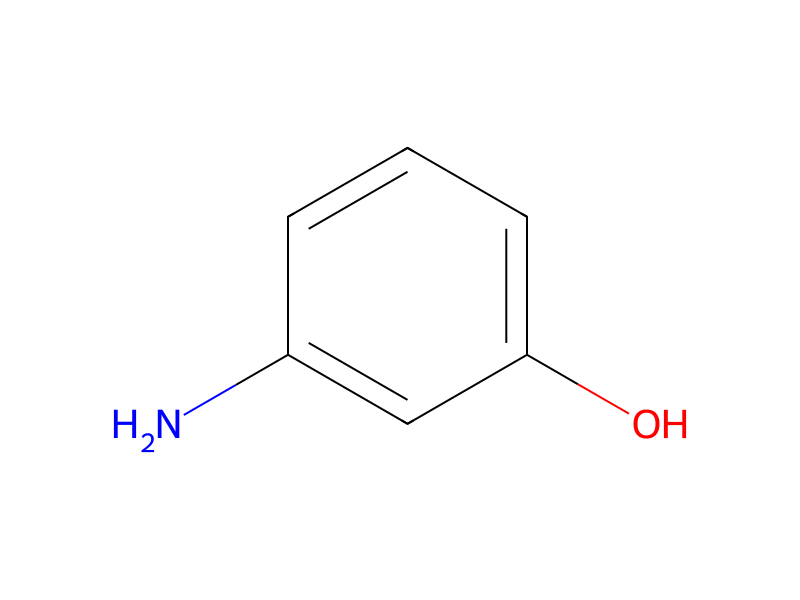
HCID 11568
새 노트새 반응견적 요청하기
인쇄 미리보기
기본 정보개요이름 및 식별자물성안전 및 규제화학 및 산업관련 반응화합물 노트
부분 구조 검색유사 구조 찾기

기본 정보

CAS
591-27-5
표준 SMILES
Nc1cccc(O)c1
InChIKey
CWLKGDAVCFYWJK-UHFFFAOYSA-N
분자식
C6H7NO
평균 분자량
109.13 g/mol
단동위원소 질량
109.05276385

개요

M-aminophenol appears as white crystals or off-white flakes. (NTP, 1992)

이름 및 식별자

우선 이름
3-Aminophenol
IUPAC
3-aminophenol
현지명
3-아미노페놀
영어명
3-Aminophenol
분자식
C6H7NO
분자량
109.13

이름 및 동의어

3-Aminophenol591-27-5M-AMINOPHENOL3-Hydroxyanilinem-HydroxyanilinePhenol, 3-amino-1-Amino-3-hydroxybenzeneFouramine EGFutramine EGFourrine EGm-HydroxyaminobenzenePelagol EG
이름 더 보기
3-아미노-1-히드록시벤젠3-아미노페놀M-아미노페놀META AMINO PHENOLm-Aminofenolfurroegnakotegrenalegursoleg
Tertral EGFurro EGRenal EGUrsol EG3-Amino-1-hydroxybenzeneFourrine 65Zoba EGNako TEG

데이터베이스 식별자

CAS
591-27-5
PubChem CID
11568
DTXSID
DTXSID3024497
ChEMBL
CHEMBL269755
ChEBI
CHEBI:28924
UNII
L3WTS6QT82
EC Number
209-711-2
Nikkaji
J1.644F

물성

구조 계산 물성

XLogP
0.2
극성 표면적
46.3 Ų
수소 결합 공여자 수
2
수소 결합 수용자 수
2
회전 가능 결합 수
0
무거운 원자 수
8
형식 전하
0
복잡도
74.9

실험 및 물리화학적 성질

Chemical ClassesNitrogen Compounds -> Amino Phenols
Cosmetics · 2건

Cosmetic ingredients (m-Aminophenol) -> CIR (Cosmetic Ingredient Review)

Hair dyeing

SpringerMaterials Properties13C nuclear magnetic resonance spectrum
PesticidesEnvironmental transformation -> Pesticide transformation products (metabolite, successor)
LogP · 2건

log Kow = 0.21 at pH 5.6

0.28

Density1.195 g/cu cm
Color/Form · 2건

White prisms from toluene or water

White crystals

Solubility · 6건

1 to 10 mg/mL at 75 °F (NTP, 1992)

Freely soluble in amyl alcohol and hot water; soluble in 40 parts cold water; very slightly soluble in petroleum ether

Soluble in toluene; very soluble in ethanol, ethyl ether; slightly soluble in benzene, dimethyl sulfoxide

Soluble in alkalies; slightly soluble in ligroin

Slightly soluble in benzene, toluene, chloroform; soluble in cold water; very soluble in acetonitrile, diethyl ether, ethyl acetate, acetone, ethanol, dimethyl sulfoxide, hot water

안전 및 규제

안전 정보는 참고용이며, 공급업체의 물질안전보건자료(SDS), 관련 법규 및 전문가 평가를 대체하지 않습니다.

GHS 분류

GHS Classification · 6건

Warning

H302: Harmful if swallowed [Warning Acute toxicity, oral]

P261, P264, P270, P271, P273, P301+P317, P304+P340, P317, P330, P391, and P501 (click each P-code to see the statement)

Warning

H302+H332 (24.5%): Harmful if swallowed or if inhaled [Warning Acute toxicity, oral; acute toxicity, inhalation]

P261, P264, P270, P271, P272, P273, P280, P301+P317, P302+P352, P304+P340, P317, P321, P330, P333+P317, P362+P364, P391, and P501 (click each P-code to see the statement)

유해성 정보

Regulatory Information · 5건

Chemical: Phenol, 3-amino-

Commission Regulation No 844/2012

Phenol, 3-amino- is listed on the EPA's Chemical Data Reporting (CDR) system. Manufacturers and importers of Phenol, 3-amino- are required to report information about their production and use of this chemical to the EPA under the Toxic Substances Control Act (TSCA). (40 eCFR Part 711)

REACH registered substance: 3-aminophenol (EC: 209-711-2)

3-Aminophenol: Does not have an individual approval but may be used under an appropriate group standard

Other Safety InformationIMAP assessments - Phenol, 3-amino-: Human health tier II assessment
DOT LabelPoison
Fire HazardsFlash point data for this chemical are not available. It is probably combustible. (NTP, 1992)
Health HazardsSYMPTOMS: Symptoms of exposure to this compound may include irritation of the skin, eyes and mucous membranes.
Hazards Summary · 2건

A mutagen, reproductive effector, and moderate eye irritant; Causes spastic paralysis in lethal-dose feeding studies of rats; [RTECS] Emergency treatment: Methemoglobinemia; Irritating to skin and eyes; [HSDB] A skin, eye, and mucous membrane irritant; [CAMEO] Danger of skin sensitization; [MAK]

화학 및 산업

약리 정보

Metabolism/Metabolites · 3건

Yields m-acetamidophenol in Cordyceps. Yields 4-aminocatechol in rabbit. /From table/

Yields m-aminophenyl-beta-d-glucoside in housefly & in locust. Yields m-aminophenyl-beta-d-glucuronide in rabbit. /From table/

Yields m-aminophenyl sulfate in rat, in hen, in tick, in housefly. /From table/

용도 및 제조

Uses · 6건

CIR ingredient: m-Aminophenol

Used as an intermediate for the synthesis of pharmaceuticals; Also used as a stabilizer of chlorine-containing thermoplastics; a hair colorant; a fur dye; and an ingredient in chelating resins for removing heavy metal ions from industrial waste water (Japan); [HSDB] Used as a dye intermediate; [Merck Index]

Sewer and Wastewater Treatment [Category: Industry]

Dye intermediate; manufacture of p-aminosalicylic acid

3-Aminophenol has been used as a stabilizer of chlorine-containing thermoplastics, although its principal use is as an intermediate in the production of 4-amino-2-hydroxybenzoic acid...This isomer is also employed as a hair colorant and as a coupler molecule in hair dyes.

Used as a chemical intermediate for the synthesis of: 7-amino-3-phenylcoumarin; p-aminosalicylic acid; desmedipham; flutolanil; formetanate hydrochloride; karbutilate; mepronil; phenmedipham

U.S. Imports · 2건

(1972) 3.23X10+8 GRAMS (PRINCPL CUSTMS DISTS)

(1975) 1.39X10+8 GRAMS (PRINCPL CUSTMS DISTS)

U.S. Production · 4건

2023: <75,000 lb

Production figures for the aminophenols are scarce, the compounds usually being classified along with many other aniline derivatives. Most production of the technical grade materials (95% purity) occurs on-site as they are chiefly used as intermediate reactants in continuous chemical syntheses. World production of the fine chemicals (99% purity) is probably no more than a few hundred metric tons yearly... /Aminophenols/

Production volumes for non-confidential chemicals reported under the Inventory Update Rule. [Table#4068]

Production volume for non-confidential chemicals reported under the 2006 Inventory Update Rule. Chemical: Phenol, 3-amino-. Aggregated National Production Volume: < 500,000 pounds.

관련 반응

1,450건
반응 기록 만들기
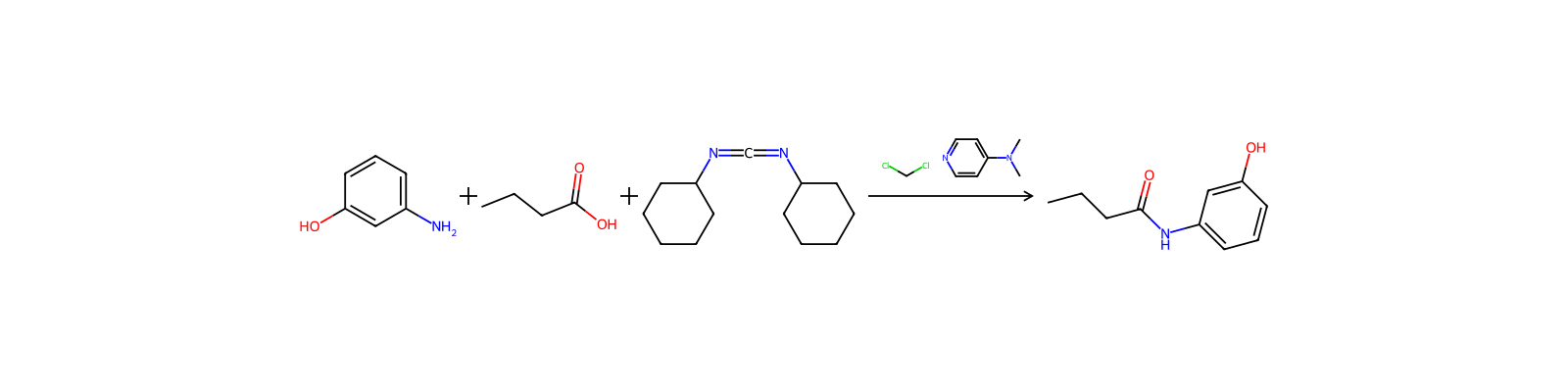
HRID 5752 반응식
HRID 5752반응물로uspto-grants-1993_09
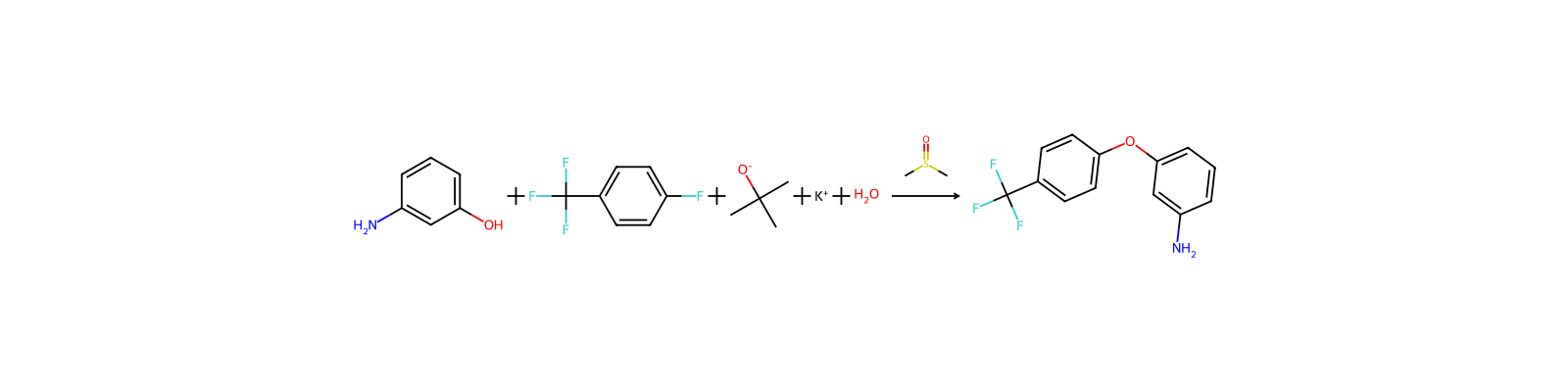
HRID 27654 반응식
HRID 27654반응물로uspto-grants-1980_09
HRID 30542 반응식
HRID 30542반응물로uspto-grants-2008_09
HRID 35418 반응식
HRID 35418반응물로uspto-grants-1988_08
HRID 38518 반응식
HRID 38518반응물로uspto-grants-2013_09
HRID 48072 반응식
HRID 48072반응물로uspto-grants-2004_03
HRID 49434 반응식
HRID 49434반응물로uspto-grants-2004_03
HRID 49868 반응식
HRID 49868반응물로uspto-grants-2004_03
1 / 182 페이지

화합물 노트

불러오는 중…

이 페이지에서기본 정보개요이름 및 식별자물성안전 및 규제화학 및 산업관련 반응화합물 노트
더보기
새 노트새 반응견적 요청하기

In water, 26.3 g/L (2.63x10+4 mg/L) at 20 °C

Boiling Point · 3건

327 °F at 11 mmHg (NTP, 1992)

164 °C at 11 mm Hg

284 °C @760 [mm Hg]

DecompositionWhen heated to decomposition it emits toxic fumes of /nitrogen oxides/.
Melting Point · 3건

253 to 259 °F (NTP, 1992)

123 °C

122 °C

Vapor Pressure0.00955 [mmHg]

물리화학적 성질

녹는점
120 · 120-124 °C (lit.)
끓는 점
164 °C/11 · 164 °C/11 mmHg (lit.)
밀도
0.99 · 0.99
증기압
0.019 Pa · 0.019Pa at 20℃
굴절률
1.5444 · 1.5444 (estimate)
인화점
155 °C · 155 °C
저장 조건
2 · 2-8°C
용해도
26 g/L · 26g/L
물리적 상태
결정성 분말
산도 계수 (pKa)
4.37 · 4.37, 9.82(at 20℃)
색상
흰색에서 분홍빛이 도는 밝은 회색
수소이온지수(pH)
6.8 · 6.8 (10g/l, H2O, 20℃)
냄새
냄새 없는
수용성
35 g/L · 35g/L(20℃)
Merck
14 · 14,460
BRN
636059 · 636059
Henry's Law Constant
3.7 · 3.7×104 mol/(m3Pa) at 25℃, HSDB (2015)
안정성
안정적인. 타기 쉬운. 강한 산화제, 염기, 무기산과 호환되지 않습니다. 가볍거나 공기에 민감할 수 있습니다.
주요 응용
농업환경
화장품 원료 기능
머리 염색
InChI
1S/C6H7NO/c7-5-2-1-3-6(8)4-5/h1-4,8H,7H2
InChIKey
CWLKGDAVCFYWJK-UHFFFAOYSA-N
SMILES
Nc1cccc(O)c1
LogP
0.183 at · 0.183 at 20℃
NIST
3 · Phenol, 3-amino-(591-27-5)
EPA
3 · 3-Aminophenol (591-27-5)

화학적 성질

Light grey crystal powder

The major hazards encountered in the use and handling of 3-aminophenol stem from its toxicologic properties. Exposure to this white crystalline substance may occur through dermal contact or inhalation at sites where it is used in the synthesis of dyes. Effects from exposure can include burns to the skin and eyes, dermatitis, headache, vertigo, cardiac arrhythmias, shock, and possibly even death. In case of contact, immediately flush skin or eyes with running water for at least 15 minutes. Contaminated clothing and shoes should be removed and isolated at the site. When engaged in emergency activities involving 3-aminophenol, wear a self-contained breathing apparatus and chemical protective clothing specifically recommended by the shipper or producer. 3-Aminophenol does not ignite easily, however it may burn, producing irritating and poisonous gases. Also, containers may explode in the heat of a fire. For small fires involving 3-aminophenol, extinguish with dry chemical, CO2, Halon, water spray, or standard foam. Dike runoff from fire control water because it may give off poisonous gases and cause pollution. Small spills of 3-aminophenol should be taken up with sand or other noncombustible absorbent and placed into containers for later disposal. Prior to implementing land disposal of waste residue (including waste sludge), consult with environmental regulatory agencies for guidance.

Reactive GroupPhenols and Cresols
Special Reports · 4건

J Am Coll Toxicol 7 (3): 279-333 (1988). Studies on the effects of p-Aminophenol (PAP), m-Aminophenol (MAP), & o-Aminophenol (OAP) used in permanent (oxidative) hair dyes.

Elder RL; J Am Coll Toxicol 7 (3): 279-334 (1988). Final report on the safety assessment of p-Aminophenol, m-Aminophenol, and o-Aminophenol.

Mavournin KH et al; Mutat Res 239 (1): 29-80 (1990). The in-vivo micronucleus assay in mammalian bone marrow and peripheral blood a report of the USA EPA Gene-Tox program.

Rickert DE; Drug Metab Rev 18 (1): 23-54 (1987). Metablolism of nitroaromatic compounds.

Reactivity ProfileM-AMINOPHENOL may react with strong oxidizers and mineral acids or bases. (NTP, 1992)
DOT Emergency Guidelines · 5건

/GUIDE 152: SUBSTANCES - TOXIC (COMBUSTIBLE)/ Health: Highly toxic, may be fatal if inhaled, swallowed or absorbed through skin. Contact with molten substance may cause severe burns to skin and eyes. Avoid any skin contact. Effects of contact or inhalation may be delayed. Fire may produce irritating, corrosive and/or toxic gases. Runoff from fire control or dilution water may be corrosive and/or toxic and cause pollution. /Aminophenols/

/GUIDE 152: SUBSTANCES - TOXIC (COMBUSTIBLE)/ Fire or Explosion: Combustible material: may burn but does not ignite readily. Containers may explode when heated. Runoff may pollute waterways. Substance may be transported in a molten form. /Aminophenols/

/GUIDE 152: SUBSTANCES - TOXIC (COMBUSTIBLE)/ Public Safety: CALL Emergency Response Telephone Number ... As an immediate precautionary measure, isolate spill or leak area in all directions for at least 50 meters (150 feet) for liquids and at least 25 meters (75 feet) for solids. Keep unauthorized personnel away. Stay upwind. Keep out of low areas. /Aminophenols/

/GUIDE 152: SUBSTANCES - TOXIC (COMBUSTIBLE)/ Protective Clothing: Wear positive pressure self-contained breathing apparatus (SCBA). Wear chemical protective clothing that is specifically recommended by the manufacturer. It may provide little or no thermal protection. Structural firefighters' protective clothing provides limited protection in fire situations ONLY; it is not effective in spill situations where direct contact with the substance is possible. /Aminophenols/

For more DOT Emergency Guidelines (Complete) data for 3-Aminophenol (8 total), please visit the HSDB record page.

Air and Water ReactionsThis compound may be sensitive to prolonged exposure to air and light. Slightly soluble in water.
NFPA Hazard Classification · 3건

2 - Materials that, under emergency conditions, can cause temporary incapacitation or residual injury.

0 - Materials that will not burn under typical fire conditions, including intrinsically noncombustible materials such as concrete, stone, and sand.

0 - Materials that in themselves are normally stable, even under fire conditions.

안전 및 보호

Fire FightingFires involving this chemical can be controlled with a dry chemical, carbon dioxide or Halon extinguisher. (NTP, 1992)
First Aid · 1건

EYES: First check the victim for contact lenses and remove if present. Flush victim's eyes with water or normal saline solution for 20 to 30 minutes while simultaneously calling a hospital or poison control center. Do not put any ointments, oils, or medication in the victim's eyes without specific instructions from a physician. IMMEDIATELY transport the victim after flushing eyes to a hospital even if no symptoms (such as redness or irritation) develop.

Fire Fighting Procedures · 2건

Use dry chemical, carbon dioxide, water spray, or alcohol foam extinguishers ... If material or contaminated runoff enters waterways, notify downstream users of potentially contaminated waters. Notify local health and fire officials and pollution control agencies. From a secure, explosion-proof location, use water spray to cool exposed containers. If cooling streams are ineffective (venting sound increases in volume and pitch, tank discolors or shows any signs of deforming), withdraw immediately to a secure position ... The only respirators recommended for fire fighting are self-contained breathing apparatuses that have full facepieces and are operated in a pressure-demand or other positive-pressure mode. /Aminophenols/

If material on fire or involved in fire: Extinguish fire using agent suitable for type of surrounding fire. (Material itself does not burn or burns with difficulty.) Use water in flooding quantities as fog. Use foam, dry chemical, or carbon dioxide. Keep run-off water out of sewers and water sources. /Aminophenols/

Storage ConditionsStore in tightly closed containers in a cool, well-ventilated area. Aminophenols must be stored to avoid contact with strong oxidizers (such as chlorine, bromine, and fluorine), since violent reactions occur. /Aminophenols/
Cleanup Methods · 1건

Spill handling: keep dust under control. Use a vacuum or wet method to reduce dust during clean-up. Do not sweep. Evacuate persons not wearing protective equipment from area of spill or leak until clean-up is complete. Remove all ignition sources. Collect powdered material in the most convenient and safe manner and deposit in sealed containers. Ventilate area after clean-up is complete. It may be necessary to contain and dispose of this chemical as a hazardous waste. If material or contaminated runoff enters waterways, notify downstream users of potentially contaminated waters. Contact your Department of Environmental Protection of your regional office of the federal EPA for specific recommendations. /Aminophenols/

Nonfire Spill Response · 1건

SMALL SPILLS AND LEAKAGE: Should a spill occur while you are handling this chemical, FIRST REMOVE ALL SOURCES OF IGNITION, then you should dampen the solid spill material with ethanol and transfer the dampened material to a suitable container. Use absorbent paper dampened with ethanol to pick up any remaining material. Seal the absorbent paper, and any of your clothes, which may be contaminated, in a vapor-tight plastic bag for eventual disposal. Solvent wash all contaminated surfaces with ethanol followed by washing with a soap and water solution. Do not reenter the contaminated area until the Safety Officer (or other responsible person) has verified that the area has been properly cleaned.

Disposal Methods · 2건

SRP: The most favorable course of action is to use an alternative chemical product with less inherent propensity for occupational harm/injury/toxicity or environmental contamination. Recycle any unused portion of the material for its approved use or return it to the manufacturer or supplier. Ultimate disposal of the chemical must consider: the material's impact on air quality; potential migration in soil or water; effects on animal and plant life; and conformance with environmental and public health regulations.

Incineration. /Aminophenols/

Preventive Measures · 4건

... Disposable natural rubber latex gloves and disposable PVC gloves should not be used repeatedly for handling the hair dye products /p-aminophenol, m-aminophenol, o-aminophenol, and p-phenylenediamine/.

If material not on fire and not involved in fire: Keep sparks, flames, and other sources of ignition away. Keep material out of water sources and sewers. /Aminophenols/

Personnel protection: Avoid breathing dusts, and fumes from burning material. Keep upwind ... Avoid bodily contact with the material ... Do not handle broken packages unless wearing appropriate personal protective equipment. /Aminophenols/

SRP: The scientific literature for the use of contact lenses by industrial workers is inconsistent. The benefits or detrimental effects of wearing contact lenses depend not only upon the substance, but also on factors including the form of the substance, characteristics and duration of the exposure, the uses of other eye protection equipment, and the hygiene of the lenses. However, there may be individual substances whose irritating or corrosive properties are such that the wearing of contact lenses would be harmful to the eye. In those specific cases, contact lenses should not be worn. In any event, the usual eye protection equipment should be worn even when contact lenses are in place.

Isolation and EvacuationExcerpt from ERG Guide 152 [Substances - Toxic (Combustible)]:
Protective Action Criteria (PAC) · 3건

3 [mg/m3]

31 [mg/m3]

180 [mg/m3]

Personal Protective Equipment (PPE) · 2건

RECOMMENDED RESPIRATOR: Where the neat test chemical is weighed and diluted, wear a NIOSH-approved half face respirator equipped with an organic vapor/acid gas cartridge (specific for organic vapors, HCl, acid gas and SO2) with a dust/mist filter. (NTP, 1992)

Wear protective gloves and clothing to prevent any reasonable probability of skin contact ... Wear dust-proof chemical goggles and face shield unless full facepiece respiratory protection is worn. /Aminophenols/

독성 정보

Treatment · 1건

Methemoglobinemia can be treated with supplemental oxygen and methylene blue 1% solution administered intravenously slowly over five minutes followed by IV flush with normal saline. Methylene blue restores the iron in hemoglobin to its normal (reduced) oxygen-carrying state. (L1613)

Interactions · 1건

An investigation was carried out of the effects of ortho-aminophenol (95556) (o-AP), meta-aminophenol (591275) (m-AP), para-aminophenol (123308) (p-AP) & acetaminophen (103902) (AAP) on the induction of preneoplastic lesions in the liver & kidney of male Fischer-344-rats by N-ethyl-N-hydroxyethylnitrosamine (13147256) (EHEN). The rats in this 52 wk investigation included those give 0.1% EHEN in their drinking water for 2 wk & then, beginning 1 wk later, given 0.8% of either o-AP, m-AP, p-AP or AAP in the basal diet for 49 wk; those given EHEN & thereafter only the basal diet; & those given one of the test cmpds without prior EHEN admin. Body, liver & kidney weights were determined for sacrificed rats, & liver sections were subjected to immunohistochemical exam of glutathione-S-transferase placental type (GSTP) positive foci. The numbers of GSTP positive foci in the liver were significantly decreased in rats given o-AP, m-AP, p-AP or AAP after EHEN as compared to values for rats given EHEN alone. However, lowered incidences of GSTP positive foci were observed only in rats given o-AP or AAP after EHEN. Only p-AP & AAP gave significantly higher incidences of microadenoma & adenoma in the kidney.

Health Effects3-Aminophenol may act as a skin sensitizer and cause contact dermatitis. In addition, inhalation of large amounts can cause methemoglobinemia and bronchial asthma. (T21)
Ecotoxicity Values · 4건

LD50 Quail oral 750 mg/kg

EC50; Species: Tetrahymena thermophila (ciliate protozoa, B-III); Conditions: freshwater; Concentration: 2.55 mg/L (2550 ug/L) for 48 hr; Effect: Population growth rate

EC50; Species: Tetrahymena thermophila (ciliate protozoa, B-III); Conditions: freshwater; Concentration: 2.9 mg/L (2900 ug/L) for 48 hr; Effect: Population growth rate

LC50; Species: Danio rerio (zebra danio, eggs); Conditions: freshwater, static, 26 °C, dissolved oxygen >7 mg/L; Concentration: 22.34 mg/L (22.13-22.55 mg/L) (22340 ug/L (22130-22550 ug/L)) for 72 hr /formulated product, 99% pure/

Environmental Fate · 3건

TERRESTRIAL FATE: Based on a classification scheme(1), an estimated Koc value of 90(SRC), determined from a structure estimation method(2), indicates that 3-aminophenol is expected to have high mobility in soil(SRC). However, anilines are expected to bind strongly to humus or organic matter in soils due to the high reactivity of the aromatic amino group(3,4), suggesting that mobility may be much lower in some soils(SRC). Measured pKa values are 4.37 and 9.815(5) for the amine and hydroxy functional groups, respectively(6). 3-Aminophenol is amphoteric and behaves either as a weak acid or weak base; the basic character usually predominates(7). Volatilization of 3-aminophenol from moist soil surfaces is not expected to be an important fate process(SRC) given an estimated Henry's Law constant of 2.7X10⁻¹⁰ atm-cu m/mole(SRC), using a fragment constant estimation method(8). 3-Aminophenol is not expected to volatilize from dry soil surfaces(SRC) based upon an estimated vapor pressure of 1.86X10⁻³ mm Hg at 25 °C(SRC), determined from a fragment constant method(9). A 0% of theoretical BOD using activated sludge in the Japanese MITI test(10) suggests that biodegradation may not be an important environmental fate process in soil(SRC). Under aerobic conditions, 3-aminophenol, added to aquifer solids from an uncontaminated aquifer, was slowly mineralized from 0.04 to 0.07% per day(11). 3-Aminophenol was degraded by 37% in 16 days in a soil grab study(12). Under denitrifying conditions in sediment, 3-aminophenol was mineralized following a long lag phase at a rate of 10.0 umol/L/day(13). 3-Aminophenol was not mineralized under methanogenic conditions in a 26-week sediment grab sample study(12).

AQUATIC FATE: Based on a classification scheme(1), an estimated Koc value of 90(SRC), determined from a structure estimation method(2), indicates that 3-aminophenol may adsorb to suspended solids and sediment(SRC). Volatilization from water surfaces is not expected(3) based upon an estimated Henry's Law constant of 2.7X10⁻¹⁰ atm-cu m/mole(SRC), developed using a fragment constant estimation method(4). Reported pKa values of 4.37 and 9.815(5) indicate 3-aminophenol will exist almost entirely as the neutral species at pH values of 5 to 9(6). According to a classification scheme(7), BCFs of <4 and <40 in carp (Cyprinus carpio)(8), suggest bioconcentration in aquatic organisms is low(SRC). 3-Aminophenol is not expected to undergo hydrolysis in the environment due to the lack of functional groups that hydrolyze under environmental conditions(3). Based on two grab studies, 3-aminophenol appears to be slowly mineralized, from 0.4 to 0.7% per day(9), in aquifer solids and degraded by 37% in 16 days in soil(10). Under denitrifying conditions in sediment, 3-aminophenol was mineralized following a long lag phase at a rate of 10.0 umol/L/day(11). 3-Aminophenol was not mineralized under methanogenic conditions in a 26-week sediment grab sample study(11).

ATMOSPHERIC FATE: According to a model of gas/particle partitioning of semivolatile organic compounds in the atmosphere(1), 3-aminophenol, which has an estimated vapor pressure of 2X10⁻³ mm Hg at 25 °C(SRC), determined from a fragment constant method(2), is expected to exist solely as a vapor in the ambient atmosphere. Vapor-phase 3-aminophenol is degraded in the atmosphere by reaction with photochemically-produced hydroxyl radicals(SRC); the half-life for this reaction in air is estimated to be 2 hours(SRC), calculated from its rate constant of 2X10⁻¹⁰ cu cm/molecule-sec at 25 °C(SRC) that was derived using a structure estimation method(3). 3-Aminophenol absorbs light at wavelengths of 270 nm (in 0.1 M HCl)(4) and therefore is not expected to be susceptible to direct photolysis by sunlight(SRC).

Adverse EffectsMethemoglobinemia - The presence of increased methemoglobin in the blood; the compound is classified as secondary toxic effect
Exposure RoutesOral (L138) ; inhalation (L138)
Toxicity Summary · 2건

Safe in the present practices of use and concentration. Ingredient, concentration, and use information are available in documents discoverable at https://cir-reports.cir-safety.org

3-Aminophenol interacts with both adult and fetal hemoglobin, forming methemoglobin. In comparison to its isomers, 2-aminophenol and 4-aminophenol, 3-aminophenol is the least effective in forming methemoglobin. Since methemoglobin cannot bind oxygen like hemoglobin can, elevated levels of methemoglobin cause a condition called methemoglobinemia, which can result in tissue hypoxia. (L1613, A2862)

Signs and Symptoms · 1건

3-Aminophenol may cause contact dermatitis. Signs and symptoms of methemoglobinemia may include shortness of breath, cyanosis, mental status changes, headache, fatigue, exercise intolerance, dizziness and loss of consciousness. Severe methemoglobinemia can result in dysrhythmias, seizures, coma, and death. (T21, L1613)

Soil Adsorption/Mobility · 1건

Using a structure estimation method based on molecular connectivity indices(1), the Koc of 3-aminophenol can be estimated to be 90(SRC). According to a classification scheme(2), this estimated Koc value suggests that 3-aminophenol is expected to have high mobility in soil. However, anilines are expected to bind strongly to humus or organic matter in soils due to the high reactivity of the aromatic amino group(3,4), suggesting that mobility may be much lower in some soils(SRC). Measured pKa values are 4.37 and 9.815(5) for the amine and hydroxy functional groups, respectively(6). 3-Aminophenol is amphoteric and behaves either as a weak acid or weak base; the basic character usually predominates(7). At pH 7.7, 12% of added 3-aminophenol was sorbed by an organoclay(8).

Human Toxicity Excerpts · 5건

/HUMAN EXPOSURE STUDIES/ Aqueous solutions of 1.0% 3-aminopheol (MAP) and 0.5% 4-aminophenol (PAP) were tested for depigmentation and discoloration after repeated topical application to the skin on one of the forearms of 26 volunteers (20 black and 6 white). The subjects were separated into 2 groups of 13; 1 group received 0.1 5 mL applications of the PAP solution, and the other group received 0.1 5 mL of the MAP solution. Sites were washed by the subjects 1 hr after application of the solutions. The solutions were applied to the same sites for 3 consecutive days the first week and for 4 consecutive days the second and third weeks. Three days after the 11th application, the subjects' arms were evaluated for "circumscribed areas on either forearm in which the skin color appeared different from that of the surrounding area." Subjects were asked to comment on the test procedure or any adverse effects experienced during the study. There was no evidence of skin color changes, lightening or darkening, in any of the 6 white subjects. No lightening of skin color was observed in any of the black subjects. A slight darkening of the skin of 2 black subjects treated with the PAP solution was noted. Slight to moderate primary skin irritation was found in I subject after three to seven applications of the PAP solution.

/HUMAN EXPOSURE STUDIES/ A semiocclusive (open) repeated insult patch test was conducted with 3-aminophenol (MAP) in a 3% solution (aqueous alcohol and surfactants/suspending agents similar to Schultz vehicle II) using 115 normal volunteer subjects, 99 of whom completed the study. Reasons for withdrawal from the study were not treatment related. One subject had a + reaction after the fifth induction patch. Reactions scoring +* (definite erythema and minimal or doubtful edema) and + were observed in a subject after the first and fourth induction patches. This subject (female, Caucasian) also had +* reactions 48 and 72 hr after challenge patch application, indicative of presensitization. A rechallenge patch test was performed on this subject using MAP and a hair-coloring shampoo formulation that were applied directly to the skin of the antecubital fossae and left uncovered. A + reaction after 24 hr and +* reactions after 48 and 72 hr were observed at sites challenged with MAP. A +* reaction after 24 hr and + reactions after 48 and 72 hr were observed at sites challenged with the formulation, indicating the subject's sensitization to both MAP and the formulation. The investigators noted that the subject's regular use of another hair-coloring shampoo formulation, with which she experienced transient itching, indicated the "likelihood of low level sensitization which is probably not clinically significant." Another subject (male, Hispanic) had a +* reaction 72 hr after application of the challenge patch. When this subject was rechallenged at other sites, he developed + reactions 72 hr after patch application to the back and 48 and 72 hr after patch application to the forearm. A low level of sensitization was found in this subject.

Artificial Pollution Sources3-Aminophenol's production and use as a hair dye and chemical intermediate(1,2), particularly in the production of pharmaceuticals(3) may result in its release to the environment through various waste streams(SRC).

안전 데이터

wgk
2
tsca
TSCA listed
rtecs
SJ4900000
ridadr
UN 2512 (AMINOPHENOLS (o-, m-, p-))
독성
LD50 i.p. in mice: 4.5 mg/20g (Koelzer, Giesen)
HS 번호
29222900
risk_code
20/22-51/53
hazard_code
Xn,N
safety_code
28-61-28A
포장분류
III
위험 등급
6.1
기존화학 물질
KE-01528
자연 발화 온도
>600°C
Hazard Classifications
Acute Tox. 4 InhalationAcute Tox. 4 OralAquatic Chronic 2Eye Irrit. 2
스토리지 클래스
6.1C - Combustible acute toxic Cat.3toxic compounds or compounds which causing chronic effects
유해 물질 데이터
591-27-5(Hazardous Substances Data)
Consumer UsesNot Known or Reasonably Ascertainable
Industry UsesMonomers
Methods of Manufacturing · 3건

... 3-Aminophenol cannot be obtained easily by reduction. It is made mainly by the reaction of 3-aminobenzenesulfonic acid with sodium hydroxide or by the reaction of resorcinol with ammonia. Substitution of the sulfonic acid group in 3-aminobenzenesulfonic acid is accomplished by caustic soda fusion (5 - 6 hr; 240 - 245 °C). The product is purified by vacuum distillation. Alternatively, resorcinol reacts with ammonia, for example, in the presence of diammonium phosphate and arsenic pentoxide or ammonium sulfite to form 3-aminophenol. The compound also may be made by hydrolysis of 3-aminoaniline

Manufactured by redn of m-nitrophenol

Fusion of m-sulfanilic acid with caustic soda and subsequent extraction of the melt with ether.

Household ProductsInformation on 315 consumer products that contain 3-Aminophenol in the following categories is provided:
Use Classification · 2건

Cosmetics -> Hair dyeing

Environmental transformation -> Pesticide transformation products (metabolite, successor)

General Manufacturing Information · 4건

Adhesive Manufacturing

Phenol, 3-amino-: ACTIVE

AMINOPHENOL EXISTS IN 3 ISOMERIC FORMS.

IN JAPAN, M-AMINOPHENOL IS INGREDIENT IN CHELATING RESIN USEFUL FOR REMOVING HEAVY METAL IONS FROM INDUST WASTE WATER.

응용 분야

용도3-Aminophenol is an aromatic compound used in the preparation of inhibitors of mammalian carbonic anhydrase isoforms. Also used in the preparation of quinoline tethered fluorescent carbon dots for regulated anticancer discovery.

일반 설명White crystals or off-white flakes.

상·하류 제품 정보

상류 원료

발연황산Industrial hydrochloric acid수산화칼륨아황산나트륨Benzenesulfonic acid sodium salt물Metanilic acid sodium salt메타닐산염산나이트로벤젠수산화나트륨황산

하류 제품

에리트로신 B로다민 1233-이소프로폭시아닐린Coumarin 314Tfluorescent whitening agent SWNGLY-7-아미노-4-메틸쿠마린쿠마린151Coumarin 1203-에톡시아닐린레조시놀흑색 168 염료아미노살리실레이트소듐무수물;소듐4-아미노살리실레이트로다민 560 염화물메프로닐10-(2-Benzothiazolyl)-2,3,6,7-tetrahydro-1,1,7,7-tetramethyl-1H,5H,11H-(1)benzopyropyrano(6,7-8-I,j)quinolizin-11-oneEthyl (3-hydroxyphenyl)carbamate9-포르밀-8-히드록시-1,1,7,7-테트라메틸줄로리딘7-HydroxyquinolinePhenmediphamNedocromil3-디메틸아미노페놀4-아미노살리실 산3-브로모페놀3-디메틸아미노페닐디메틸카르바메이트

추가 설명

정의ChEBI: An aminophenol that is one of three amino derivatives of phenol which has the single amino substituent located meta to the phenolic -OH group.

/HUMAN EXPOSURE STUDIES/ A semiocciusive (open) repeated insult patch test was conducted with a 3% preparation of 3-aminophenol (MAP) in Schultz vehicle II (aqueous solution of isopropanol, a cellulose polymer, polysorbate 80, and sodium sulfite). MAP was described as a yellow gel. One hundred fourteen normal volunteers enrolled in the 6-week study; 98 subjects completed it (completion entailed having had </= 6 applications and scoring during induction and at least one challenge reading). Reasons for withdrawal from the study were not treatment related. Each patch contained 0.1 mL of the MAP solution and was applied to the intrascapular area of the subjects' backs. Ten 48-72-hr consecutive induction patch applications were made, and reactions were scored after removal of each patch. After an 11-day nontreatment period, an identical type of patch was applied for 48 hr as a challenge to a previously unexposed site on the subjects' backs. Reactions were scored after removal of the patch and 24 hr later. There were 24 doubtful reactions (barely perceptible erythema, only slightly different from surrounding skin) during the induction phase. Three subjects had + reactions (definite erythema and no edema) during the first half of the induction phase; one subject had + reactions after the 9th and 10th induction patches. No reaction scoring greater than + was observed during the induction phase (max reaction possible was + + +). There were no reactions to challenge patches.

/HUMAN EXPOSURE STUDIES/ In 80 patients, positive to at least one hapten of the para group (para-phenylenediamine, diaminodiphenylmethane, benzocaine, PPD mix), patch tests were carried out with freshly prepared solutions of para-phenylenediamine (PPD) and of 3 selected aromatic compounds related structurally to PPD (para-aminophenol, ortho-aminophenol, hydroquinone). The number of positive reactions correlated with the rate of decomposition of the substances as evaluated by high-pressure liquid chromatography. PPD, which was almost decomposed after 24 hr, gave the highest number of positive reactions, followed by ortho-aminophenol and by para-aminophenol, while hydroquinone, which was oxidized to the extent of 35%, did not give any reactions ... The results suggest that the rate of decomposition and therefore the amount of quinone(s) generated, might be the key to eliciting patch test responses to oxidizable aromatic haptens.

For more Human Toxicity Excerpts (Complete) data for 3-Aminophenol (7 total), please visit the HSDB record page.