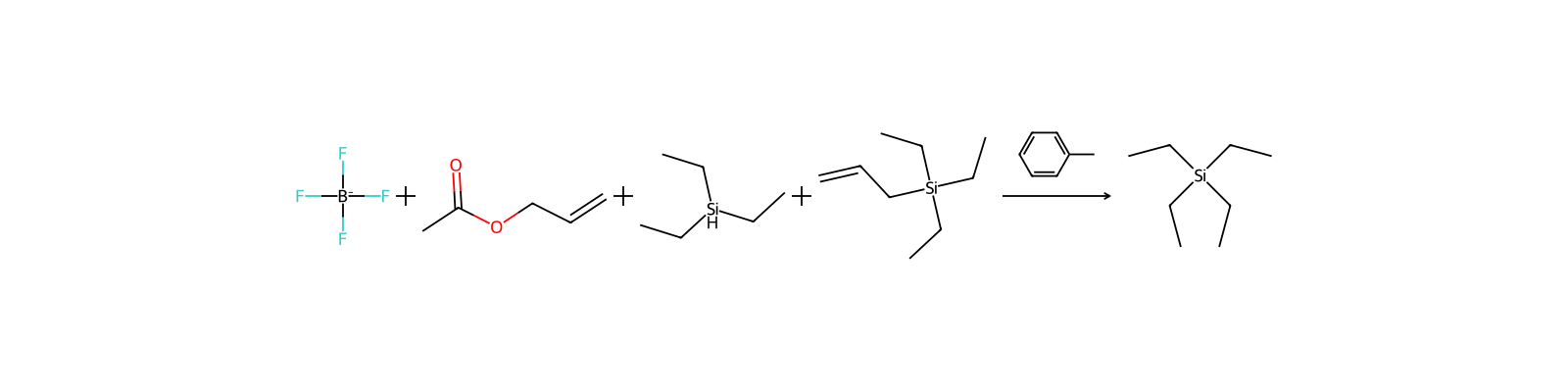

기본 정보
- 표준 SMILES
C=CCOC(C)=O- InChIKey
FWZUNOYOVVKUNF-UHFFFAOYSA-N- 분자식
- C5H8O2
- 평균 분자량
- 100.12 g/mol
- 단동위원소 질량
- 100.0524295
개요
Allyl acetate appears as a liquid. Insoluble in water and slightly less dense than water. Hence floats on water. Poisonous by ingestion and moderately toxic by inhalation and skin contact. Irritating to skin and eyes.
이름 및 식별자
- 우선 이름
- Allyl acetate
- IUPAC
- prop-2-enyl acetate
- 현지명
- 아세트산알릴
- 영어명
- Allyl acetate
- 분자식
- C5H8O2
- 분자량
- 100.12
이름 및 동의어
Allyl acetate591-87-73-AcetoxypropeneAcetic acid, 2-propenyl ester3-Acetoxy-1-propeneACETIC ACID, ALLYL ESTER2-Propenyl methanoateDTXSID9024437E4U5E5990INSC-7612DTXCID904437RefChem:554845
이름 더 보기
아세트산,알릴에스터아세트산알릴알릴아세트산알릴아세트산(ALLYLACETATE)아세트산, 알릴 에스터3-아세틸프로펜2-Propenyl acetateACETIC ACID ALLYL ESTERacetated’allyleAllylAcetate99%PROPENYL ACETATEAllyl acetate 99%Allyl Acetate >
209-734-8prop-2-enyl acetate2-Propenyl ethanoateprop-2-en-1-yl acetateNSC 7612MFCD00008721Allyl acetate, 99%Acetic acid, 2-propen-1-yl ester
데이터베이스 식별자
- CAS
591-87-7- PubChem CID
- 11584
- DTXSID
DTXSID9024437- ChEMBL
CHEMBL1890774- UNII
- E4U5E5990I
- EC Number
- 209-734-8
- Nikkaji
- J35.906H
물성
구조 계산 물성
- XLogP
- 1
- 극성 표면적
- 26.3 Ų
- 수소 결합 공여자 수
- 0
- 수소 결합 수용자 수
- 2
- 회전 가능 결합 수
- 3
- 무거운 원자 수
- 7
- 형식 전하
- 0
- 복잡도
- 76.1
실험 및 물리화학적 성질
Chemical Classes
Other Classes -> Esters, Other
Flammable agents - 3rd degree
SpringerMaterials PropertiesDensity
LogPlog Kow = 0.97
OdorACRID AT HIGH LEVELS
TasteSOUR, CARAMELLIC, WITH SWEET AFTERTASTE, ACRID AT HIGH LEVELS
Density
0.9275 g/cu cm at 20 °C
0.928 @ 20°C
Viscosity0.52 cP at 20 °C
Color/FormCOLORLESS LIQUID
Solubility
Soluble in acetone; miscible in ethanol and ethyl ether.
2.8% in water at 20 °C
Flash Point
72 °F (NFPA, 2010)
22 °C
Boiling Point
103.5 °C
103 °C @760 [mm Hg]
DecompositionWhen heated to decomposition it emits acrid smoke and irritating fumes.
물리화학적 성질
- 녹는점
- 6 °C · 6°C
- 끓는 점
- 103 · 103-104 °C (lit.)
- 밀도
- 0.928 g/mL · 0.928 g/mL at 25 °C (lit.)
- 증기압
- 27.2 hPa · 27.2 hPa (20 °C)
- 굴절률
- 20 · n20/D 1.404(lit.)
- 인화점
- 44 °F · 44 °F
- 저장 조건
- 2 · 2-8°C
- 용해도
- 28 g/L · 28g/L
- 물리적 상태
- 액체
- 색상
- 무색의
- Specific Gravity
- 0.928 · 0.928
- 폭발한계
- 2.1 · 2.1-13.0%(V)
- 수용성
- 약간 용해됨
- 비열
- 1.84 J/ · Cp(liquid): 1.84 J/(g·K), at 25℃
- Merck
- 14 · 14,285
- BRN
- 1742050 · 1742050
- Henry's Law Constant
- 7.6 · 7.6×10-2 mol/(m3Pa) at 25℃, HSDB (2015)
- InChI
- 1S/C5H8O2/c1-3-4-7-5(2)6/h3H,1,4H2,2H3
- InChIKey
- FWZUNOYOVVKUNF-UHFFFAOYSA-N
- SMILES
- CC(=O)OCC=C
- LogP
- 0.97 · 0.970
- NIST
- 2 · Acetic acid, 2-propenyl ester(591-87-7)
- EPA
- 2 · Acetic acid, 2-propen-1-yl ester (591-87-7)
화학적 성질
Allyl acetate is a flammable, colorless liquid with an acrid odor.
안전 및 규제
GHS 분류
GHS Classification
Danger
H225 (100%): Highly Flammable liquid and vapor [Danger Flammable liquids]
P210, P233, P240, P241, P242, P243, P260, P264, P264+P265, P270, P271, P280, P284, P301+P316, P302+P352, P303+P361+P353, P304+P340, P305+P351+P338, P316, P317, P320, P321, P330, P337+P317, P362+P364, P370+P378, P403+P233, P403+P235, P405, and P501 (click each P-code to see the statement)
Aggregated GHS information provided per 47 reports by companies from 4 notifications to the ECHA C&L Inventory. Each notification may be associated with multiple companies.
Danger
H225: Highly Flammable liquid and vapor [Danger Flammable liquids]
유해성 정보
Regulatory Information
Chemical: Acetic acid, 2-propenyl ester
Acetic acid, 2-propenyl ester: HSNO Approval: HSR001241 Approved with controls
The New Jersey Worker and Community Right to Know Act requires public and private employers to provide information about hazardous substances at their workplaces. (N.J.S.A. 34:5A-1 et. seq.)
Other Safety InformationIMAP assessments - Aliphatic allyl esters: Human health tier II assessment
DOT LabelFlammable Liquid Poison
Fire Hazards
Excerpt from ERG Guide 131 [Flammable Liquids - Toxic]:
· HIGHLY FLAMMABLE: Will be easily ignited by heat, sparks or flames.
Fire Potential
...EVOLVE FLAMMABLE...VAPORS.
Dangerous fire hazard.
Health Hazards
Excerpt from ERG Guide 131 [Flammable Liquids - Toxic]:
· TOXIC; may be fatal if inhaled, ingested or absorbed through skin.
Hazards Summary
A tumorigen and moderate eye irritant; Causes gastritis, hepatitis, and weight loss in feeding studies of rats; [RTECS] A strong irritant; Irritation and lacrimation observed in animal studies; Enzymatic hydrolysis required for hepatotoxic activation in rat feeding studies; Emergency medical treatment: lacrimators; [HSDB] May irritate or burn skin and eyes; [CAMEO] Effects in gavage study with rats at 100 mg/kg include decreases in hematocrit, increases in ALT and other liver enzymes, necrosis and hemorrhage of the forestomach, and changes in bone marrow, lymph nodes, and thymus; [NTP]
DOT ID and Guide2333 131
Reactive GroupEsters, Sulfate Esters, Phosphate Esters, Thiophosphate Esters, and Borate Esters
Special ReportsCometto-Muniz JE, Cain Ws; Pharmacol Biochem Behav 39 (4): 983-990. Nasal pungency, odor, and eye irritation thresholds for homologous acetates.
Reactivity AlertsHighly Flammable
Reactivity Profile
ALLYL ACETATE is an ester. Reacts with acids to liberate heat along with alcohols and acids. Generates heat with strong oxidizing acids. The reaction may be sufficiently exothermic to ignite the reaction products. Also generates heat with basic solutions. Generates flammable hydrogen with alkali metals and hydrides. Emits acrid smoke and irritating fumes when heated to decomposition.
안전 및 보호
Fire FightingExcerpt from ERG Guide 131 [Flammable Liquids - Toxic]:
Accidental Release Measures
· CALL 911. Then call emergency response telephone number on shipping paper. If shipping paper not available or no answer, refer to appropriate telephone number listed on the inside back cover.
· ELIMINATE all ignition sources (no smoking, flares, sparks or flames) from immediate area.
First Aid
Excerpt from ERG Guide 131 [Flammable Liquids - Toxic]:
General First Aid:
Exposure Control and Personal Protection· Wear positive pressure self-contained breathing apparatus (SCBA).
Storage Conditions
STORAGE TANKS OUTSIDE BUILDING SHOULD BE BUNDED /SRP: DIKED/ TO PREVENT SPREAD OF ACCIDENTALLY ESCAPING LIQUID, & A RAMPED SILL SHOULD BE CONSTRUCTED AT DOORWAYS OF STOREROOMS TO RETAIN FLAMMABLE LIQUID THAT MAY ESCAPE FROM STORAGE VESSELS INSIDE. /ALLYL ALCOHOL/
Nonfire Spill ResponseExcerpt from ERG Guide 131 [Flammable Liquids - Toxic]:
Disposal Methods
SRP: At the time of review, criteria for land treatment or burial (sanitary landfill) disposal practices are subject to significant revision. Prior to implementing land disposal of waste residue (including waste sludge), consult with environmental regulatory agencies for guidance on acceptable disposal practices.
Preventive Measures
SRP: The scientific literature for the use of contact lenses in industry is conflicting. The benefit or detrimental effects of wearing contact lenses depend not only upon the substance, but also on factors including the form of the substance, characteristics and duration of the exposure, the uses of other eye protection equipment, and the hygiene of the lenses. However, there may be individual substances whose irritating or corrosive properties are such that the wearing of contact lenses would be harmful to the eye. In those specific cases, contact lenses should not be worn. In any event, the usual eye protection equipment should be worn even when contact lenses are in place.
...VAPOR SHOULD BE PREVENTED FROM ESCAPING...INTO WORKROOM BY...EXHAUST VENTILATION. WHEN PROCESSES CANNOT BE ENCLOSED, EXHAUST...HOODS SHOULD BE FITTED TO TRAP & EXTRACT ESCAPING VAPOR BEFORE IT CAN DIFFUSE INTO WORKROOM ATMOSPHERE. /ALLYL ALCOHOL/
PRECAUTIONS MUST BE ADOPTED...TO EXCLUDE OPEN LIGHTS OR ANY AGENCIES CAPABLE OF IGNITING VAPOR WHEN LIQUID IS BEING HANDLED IN A WARM WORKROOM. /ALLYL ALCOHOL/
TO PREVENT THE LIQUID OR VAPOR FROM COMING INTO CONTACT WITH THE WORKERS, PROCESSES IN WHICH ALLYL ALCOHOL IS PRESENT SHOULD...BE CONDUCTED IN ENCLOSED PLANT. /ALLYL ALCOHOL/
For more Preventive Measures (Complete) data for ACETIC ACID, ALLYL ESTER (6 total), please visit the HSDB record page.
Isolation and Evacuation
Excerpt from ERG Guide 131 [Flammable Liquids - Toxic]:
Immediate precautionary measure
Protective Action Criteria (PAC)
0.42 [ppm]
4.6 [ppm]
28 [ppm]
Personal Protective Equipment (PPE)
Excerpt from ERG Guide 131 [Flammable Liquids - Toxic]:
WORKERS WHO...HANDLE ALLYL ALCOHOL, OR WHO MAY BE LIABLE TO...EXPOSURE...SHOULD WEAR...PROTECTIVE EQUIPMENT APPROPRIATE TO EXTENT OF... EXPOSURE. ...EYE PROTECTION SHOULD BE PROVIDED /WHEN NECESSARY/. /ALLYL ALCOHOL/
Emergency Response Planning GuidelinesCAUTION: The majority of these products have a very low flash point. Use of water spray when fighting fire may be inefficient.
독성 정보
Body Burden
Allyl acetate was identified in approx 40% of the expired air samples collected from an urban population of 28 normal, healthy, non-smoking human subjects(1). It was detected in 36.9% of 387 expired air samples collected from 54 normal, healthy, non-smoking human subjects at a geometric mean concentration of 0.296 ng/l(2).
Interactions
125 MG/KG TRIORTHOTOLYL PHOSPHATE PRETREATMENT SIGNIFICANTLY INHIBITED RISE IN PLASMA ALANINE-ALPHA-KETOGLUTARATE TRANSAMINASE ACTIVITY & PREVENTED CHANGES IN LIVER MORPHOLOGY PRODUCED BY 60-150 MG/KG ALLYL ACETATE ADMIN ORALLY TO RATS 18 HR AFTER PRETREATMENT.
O.5 TO 10 MG/KG PRETREATMENT WITH THE DEFOLIANT, S,S,S-TRIBUTYLPHOSPHOROTRITHIOATE (DEF) PROTECTED AGAINST HEPATOTOXICITY OF 60 MG/KG ALLYL ACETATE ADMIN ORALLY TO RATS 18 HR LATER.
PRETREATMENT OF RATS WITH 375 MG/KG PYRAZOLE, AN INHIBITOR OF ALCOHOL DEHYDROGENASE, COMPLETELY PREVENTED THE ELEVATION OF PLASMA ALANINE-ALPHA-KETOGLUTARATE TRANSAMINASE (AKT) ACTIVITY AFTER 90 MG/KG ALLYL ACETATE ADMIN.
Environmental Fate
TERRESTRIAL FATE: Based on a classification scheme(1), an estimated Koc value of 80(SRC), determined from a log Kow of 0.97(2) and a regression-derived equation(3), indicates that allyl acetate is expected to have high mobility in soil(SRC). Volatilization of allyl acetate from moist soil surfaces may be important(SRC) given an estimated Henry's Law constant of 1.3X10⁻⁴ atm-cu m/mole(SRC) derived from its vapor pressure, 27.2 mm Hg(4), and water solubility, 2.8X10+4 mg/l(5). The potential for volatilization of allyl acetate from dry soil surfaces may exist(SRC) based on this compound's vapor pressure(4). In general, acetates are expected to be readily biodegradable(SRC).
AQUATIC FATE: Based on a classification scheme(1), an estimated Koc value of 80(SRC), determined from a log Kow of 0.97(2) and a regression-derived equation(3), indicates that allyl acetate is not expected to adsorb to suspended solids and sediment in water(SRC). Volatilization from water surfaces is expected(3) based on an estimated Henry's Law constant of 1.3X10⁻⁴ atm-cu m/mole(SRC), derived from its vapor pressure, 27.2 mm Hg(4), and water solubility, 2.8X10+4 mg/l(5). Estimated volatilization half-lives for a model river and model lake are 9.8 hours and 6.0 days, respectively(3). According to a classification scheme(5), an estimated BCF of 3.2(3,SRC), from a log Kow(2), suggests the potential for bioconcentration in aquatic organisms is low(SRC). Estimated hydrolysis half-lives of 1.1 years and 41 days at pH values of 7 and 8, respectively(7), indicate hydrolysis is expected to be a slow process(SRC). In general, acetates are expected to be readily biodegradable(SRC).
ATMOSPHERIC FATE: According to a model of gas/particle partitioning of semivolatile organic compounds in the atmosphere(1), allyl acetate, which has a vapor pressure of 27.2 mm Hg at 20 °C(2), is expected to exist solely as a vapor in the ambient atmosphere. Vapor-phase allyl acetate is degraded in the atmosphere by reaction with photochemically-produced hydroxyl radicals(SRC); the half-life for this reaction in air is estimated to be 14 hours(SRC) from the estimated rate constant(3).
Adverse EffectsOccupational hepatotoxin - Secondary hepatotoxins: the potential for toxic effect in the occupational setting is based on cases of poisoning by human ingestion or animal experimentation.
Ongoing Test Status
The following link will take the user to the National Toxicology Program (NTP) Test Agent Search Results page, which tabulates all of the "Standard Toxicology & Carcinogenesis Studies", "Developmental Studies", and "Genetic Toxicity Studies" performed with this chemical. Clicking on the "Testing Status" link will take the user to the status (i.e., in review, in progress, in preparation, on test, completed, etc.) and results of all the studies that the NTP has done on this chemical. [http://ntp-apps.niehs.nih.gov/ntp_tox/index.cfm?fuseaction=ntpsearch.searchresults&searchterm=591-87-7]
Soil Adsorption/Mobility
The Koc of allyl acetate is estimated as approximately 80(SRC), using a log Kow of 0.97(1) and a regression-derived equation(2). According to a classification scheme(3), this estimated Koc value suggests that allyl acetate is expected to have high mobility in soil.
Atmospheric ConcentrationsSOURCE DOMINATED: Allyl acetate was identified in ambient air samples collected near the Kin-Buc chemical waste disposal site in Edison, NJ in 1976 at an estimated concentration of 31 ug/cu m(1).
Human Toxicity Excerpts
VAPOR & LIQ...IRRITATING TO SKIN & MUCOUS MEMBRANE. PRODUCES LACRIMATION & CORNEAL BURNS. LIQ MAY PRODUCE FIRST OR SECOND DEGREE BURNS WITH BLISTERING & SUPERFICIAL NECROSIS. ... INHALED VAPOR MAY LEAD TO PULMONARY EDEMA... /ALLYL ALCOHOL/
ALLYL ACETATE...IS HIGHLY IRRITANT & TOXIC BY INHALATION, INGESTION, EYE, & DERMAL CONTACT.
Artificial Pollution SourcesAllyl acetate's use in the production of allyl alcohol(1) may result in its release to the environment through various waste streams(SRC).
Environmental Bioconcentration
An estimated BCF of 3.2 was calculated for allyl acetate(SRC), using a log Kow of 0.97(1) and a regression-derived equation(2). According to a classification scheme(3), this BCF suggests the potential for bioconcentration in aquatic organisms is low.
Volatilization from Water/Soil
The Henry's Law constant for allyl acetate is estimated as 1.3X10⁻⁴ atm-cu m/mole at 20 °C(SRC) from its vapor pressure, 27.2 mm Hg(1), and water solubility, 2.8X10+4 mg/l(2). This Henry's Law constant indicates that allyl acetate is expected to volatilize from water surfaces(3). Based on this Henry's Law constant, the estimated volatilization half-life from a model river (1 m deep, flowing 1 m/sec, wind velocity of 3 m/sec)(3) is approximately 9.8 hours(SRC). The estimated volatilization half-life from a model lake (1 m deep, flowing 0.05 m/sec, wind velocity of 0.5 m/sec)(3) is approximately 6.0 days(SRC). Allyl acetate's Henry's Law constant(1,2) indicates that volatilization from moist soil surfaces may occur(SRC). The potential for volatilization of allyl acetate from dry soil surfaces may exist(SRC) based on a vapor pressure of 27.2 mm Hg(1).
Non-Human Toxicity Excerpts
IT HAS BEEN OBSERVED THAT UNSATURATED ALIPHATIC ESTERS /WHICH INCLUDE THE ALLYL ESTER OF ACETIC ACID/ EXHIBIT IRRITANT AND LACRIMATORY PROPERTIES...
ALLYL ACETATE CAUSES SLIGHT SKIN IRRITATION AND MODERATE EYE EFFECT IN RABBITS. /FROM TABLE/
ENZYMATIC HYDROLYSIS IS A NECESSARY STEP IN ACTIVATION OF ALLYL ACETATE TO HEPATOTOXINS FROM ORAL ADMIN OF 60-150 MG/KG TO RATS.
안전 데이터
- wgk
- 3
- tsca
- TSCA listed
- rtecs
- AF1750000
- ridadr
- UN 2333
- 독성
- LD50: 0.13 g/kg orally in rats; 1.1 ml/kg dermally in rabbits (Smyth); LD50 in rats, mice (mg/kg): 142, 170 orally (Jenner)
- HS 번호
- 29153990
- risk_code
- 11-21-23/25-36-25
- hazard_code
- F,T
- safety_code
- 16-26-36-45-27
- 포장분류
- II
- 위험 등급
- 3
- 기존화학 물질
- KE-00850
- 자연 발화 온도
- 705 °F
- Hazard Classifications
- Acute Tox. 2 InhalationAcute Tox. 3 OralAcute Tox. 4 DermalEye Irrit. 2Flam. Liq. 2
- 스토리지 클래스
- 3 - Flammable liquids
- 유해 물질 데이터
- 591-87-7(Hazardous Substances Data)
화학 및 산업
약리 정보
Metabolism/Metabolites
A MERCAPTURIC ACID WAS ISOLATED FROM URINE OF RATS TREATED SC WITH ALLYL ACETATE & IDENTIFIED AS 3-HYDROXYPROPYLMERCAPTURIC ACID N-ACETYL-S-3-HYDROXYPROPYL-L-CYSTEINE.
MERCAPTURIC ACIDS WERE DETECTED IN URINE OF RATS FOLLOWING ADMIN OF VARIOUS ALLYL ESTERS WHICH COULD BE METAB BY ACYL-OXYGEN FISSION OR ALKYL-OXYGEN FISSION TO YIELD 3-HYDROXYMERCAPTURIC ACID OR ALLYLMERCAPTURIC ACID. LATTER OCCURRED ONLY WHEN THE ESTER WAS FORMED FROM A STRONG ACID.
Absorption, Distribution and ExcretionIT IS...ABSORBED THROUGH INTACT SKIN.
용도 및 제조
Uses
Used to make allyl alcohol and as a synthetic flavoring agent; [HSDB]
SYNTHETIC FLAVOR USEFUL IN CHEESE, BUTTER, FRUIT
Allyl acetate is produced mostly for manufacturing allyl alcohol.
Methods of Manufacturing
BY DECARBOXYLATION BY HEATING ALLYLMALONIC ACID; OR FROM THE CORRESPONDING ETHYL ESTER PREPARED BY BOILING ETHYL 4-CHLORO-N-VALERATE IN QUINOLINE.
By acetoxylation of propylene.
Household ProductsInformation on 1 consumer products that contain Acetic acid, allyl ester in the following categories is provided:
General Manufacturing Information
Acetic acid, 2-propen-1-yl ester: ACTIVE
IT IS USED IN NON-ALCOHOLIC BEVERAGES AT 1.0 PPM; ICE CREAM, ICES AT 2.0 PPM; CANDY AT 5.0 PPM; BAKED GOODS AT 5.0 PPM; MARGARINE AT 2.0 PPM.
FEMA NUMBER 2843
ACYLOXY, SUBSTITUTED OR UNSUBSTITUTED ALKENYL ARE EFFECTIVE COCKROACH REPELLENTS.
응용 분야
용도Ally acetate is used in nonalcoholic beverages at 1 ppm, ice cream and ices at 2 ppm, candy at 5 ppm, baked goods at 5 ppm, and margarine at 2 ppm.
일반 설명A liquid. Insoluble in water and slightly less dense than water. Hence floats on water. Flash point below 75°F. Poisonous by ingestion and moderately toxic by inhalation and skin contact. Irritating to skin and eyes.
제조 방법
생산 방법Allyl acetate is produced by the following methods: decarboxylation of allylmalonic acid with heat, boiling ethyl 4- chloro-N-valerate in quinoline, and acetoxylation of propylene. Allyl acetate is produced primarily for manufacturing allyl alcohol. It is also used as a synthetic flavoring for cheese, butter, and fruit.
상·하류 제품 정보
상류 원료
하류 제품
공급사50 곳
国药集团化学试剂有限公司86-21-63210123 · [email protected]
梯希爱(上海)化成工业发展有限公司021-67121386 · [email protected]
上海阿拉丁生化科技股份有限公司400-6206333 13167063860 · [email protected]
广州纳珑化工有限公司13192879270; 13192879270 · [email protected]
武汉欣扬瑞和化学科技有限公司13720274133 · [email protected]
合肥翰刚医药科技有限公司+8618062405514 · [email protected]
武汉欣扬瑞和化学科技有限公司153-07155313 15307155313 · [email protected]
爱斯特(成都)生物制药股份有限公司+86-28-85122536 85324413 · [email protected]
山东前元高分子材料有限公司18678041314 18765609661 · [email protected]
Dayang Chem (Hangzhou) Co.,Ltd.+86-0571-88938639 17705817739 · [email protected]
Hebei Yanxi Chemical Co., Ltd.+86-17531190177 · [email protected]
武汉绿景丰华生物科技有限公司19972070065 · [email protected]
科瑞迪化学400-821-5857 021-64326257 · [email protected]
上海迈瑞尔生化科技有限公司4006356688 18621169109 · [email protected]
江苏普乐司生物科技有限公司0513-66017706 18551496367 · [email protected]
武汉市聚舜化工有限公司027-02783261126 18971318572 · [email protected]
阿法埃莎(中国)化学有限公司400-6106006 · [email protected]
安耐吉化学&3A(安徽泽升科技股份有限公司)400-0056266 · [email protected]
广东云星生物技术有限公司0751-18902340975/189023400307 18902340307 · [email protected]
上海瀚鸿科技股份有限公司021-54306202 13764082696 · [email protected]
上海景颜化工科技有限公司13817811078 · [email protected]
嘉兴市艾森化工有限公司0573-85285100 18627885956 · [email protected]
山东西亚化学有限公司13355009207 13355009207 · [email protected]
玛雅试剂+86 (573) 82222445 (0)18006601000 452520369 · [email protected]
HONG KONG IPURE BIOLOGY CO.,LIMITED86 18062405514 18062405514 · [email protected]
四川库利南科技有限公司400-1166-196 18981987031 · [email protected]
天津希恩思生化科技有限公司400 638 7771 · [email protected]
Xiamen AmoyChem Co., Ltd+86-86-5926051114 · [email protected]
艾科试剂4008-755-333 18080918076 · [email protected]
上海思域化工科技有限公司86-21-34053660 · [email protected]
赛默飞世尔科技(中国)有限公司800-810-5118 · [email protected]
北京伊诺凯科技有限公司400-810-7969 010-59572699 · [email protected]
TCI AMERICA800-4238616 · [email protected]
TOKYO CHEMICAL INDUSTRY CO., LTD.03-36680489 · [email protected]
TCI Europe320-37350700 · [email protected]
上海贤鼎生物科技有限公司4009209199 · [email protected]
武汉卡诺斯科技有限公司153-37111468 15337111468 · [email protected]
上海湄水化工科技有限公司021-60549325 18616193163
上海将来实业股份有限公司021-61552785 · [email protected]
HBCChem, Inc.+1-510-219-6317 · [email protected]
成都零六生物科技有限公司400-1166-196 13458535857 · [email protected]
雷丁试剂0510-85629785 18013409632 · [email protected]
天津普西唐生物医药科技有限公司010-60605840 · [email protected]
上海御略医药科技有限公司021-60345187 13671753212 · [email protected]
上海麦克林生化科技股份有限公司15221275939 15221275939 · [email protected]
杭州杰恒化工有限公司0571-87396432 · [email protected]
康迪斯化工(湖北)有限公司13125172151 · [email protected]
上海嵩爰化工科技有限公司010-1234567 18521000990 · [email protected]
成都润泽本土化工有限公司13096311329 028-88469284 616445927 · [email protected]
Sigma-Aldrich西格玛奥德里奇(上海)贸易有限公司021-61415566 800-8193336 · [email protected]
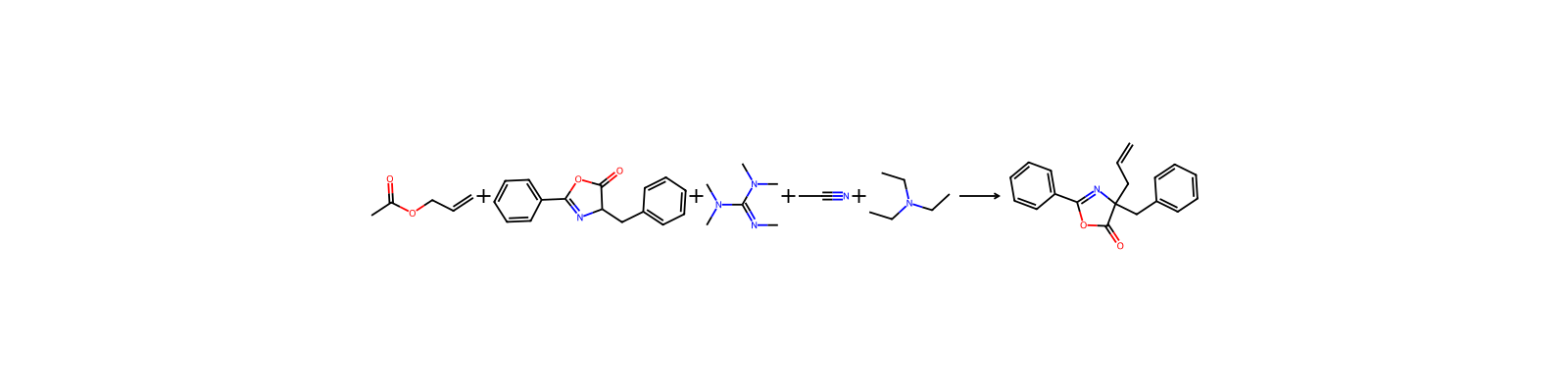
관련 반응
60건


연결된 노트
불러오는 중…