홈MCP워크벤치Skills
홈워크벤치알림마이페이지
llms.txt · MCP 가이드개인정보처리방침 · 이용약관 · 지원v1.8.3
  1. 홈
  2. /화합물

Dimethylmercury

HCID 11645
새 반응
인쇄

데이터를 보충하는 중입니다. 잠시 후 페이지를 새로 고치면 최신 내용을 볼 수 있습니다
기본 정보개요이름 및 식별자물성안전 및 규제화학 및 산업관련 반응화합물 노트
부분 구조 검색유사 구조 찾기

기본 정보

CAS
593-74-8
표준 SMILES
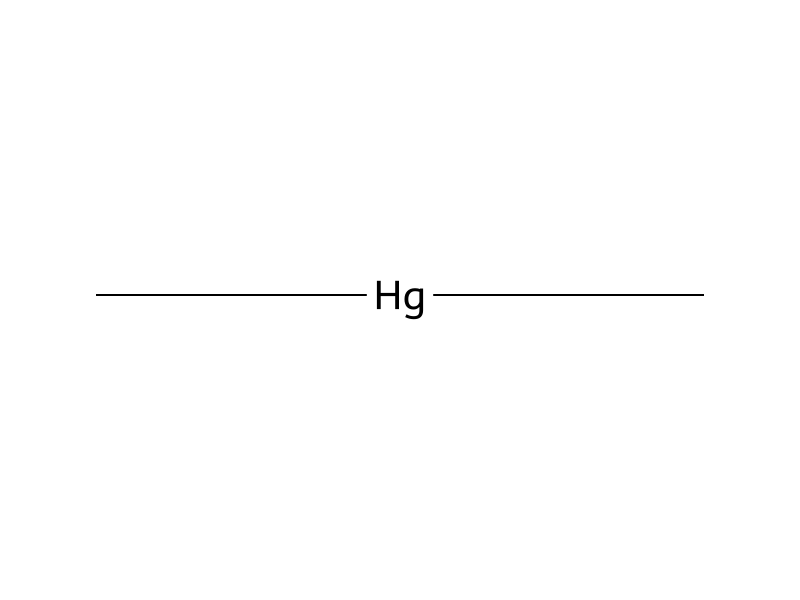
[CH3][Hg][CH3]
InChIKey
ATZBPOVXVPIOMR-UHFFFAOYSA-N
분자식
C2H6Hg
평균 분자량
230.66 g/mol
단동위원소 질량
232.01759319

개요

Dimethylmercury is a methylmercury compound. It has a role as a NMR chemical shift reference compound.

이름 및 식별자

우선 이름
Dimethylmercury
IUPAC
dimethylmercury
영어명
Dimethylmercury
분자식
C2H6Hg
분자량
0

이름 및 동의어

DimethylmercuryMercury, dimethyl-593-74-8DIMETHYL MERCURYMercury, dimethylC60TQU15XYDTXSID5047742MERCURIUS METHYLENUSCHEBI:30786(HgMe2)[HgMe2]RefChem:588573
이름 더 보기
DTXCID5027726209-805-3CCRIS 7176EINECS 209-805-3UNII-C60TQU15XYBRN 3600205QuecksilbercarbidDimethylmercury, 95%

데이터베이스 식별자

CAS
593-74-8
PubChem CID
11645
DTXSID
DTXSID5047742
ChEBI
CHEBI:30786
UNII
C60TQU15XY
EC Number
209-805-3
Nikkaji
J458H

물성

구조 계산 물성보충 중

극성 표면적
0 Ų
수소 결합 공여자 수
0
수소 결합 수용자 수
0
회전 가능 결합 수
0
무거운 원자 수
3
형식 전하
0
복잡도
2.8

실험 및 물리화학적 성질

Chemical Classes · 2건

Metals -> Metals, Organic Compounds

Carcinogens

LogP2.59
Density · 3건

Density (at 20 °C): 3.05 g/cm³

Relative density of the vapour/air-mixture at 20 °C (air = 1): 1.5

3.17 @25 °C

SolubilitySolubility in water: none
Flash Point5 °C
Boiling Point · 2건

92 °C

93 °C @760 [mm Hg]

Melting Point-42 °C
Vapor DensityRelative vapor density (air = 1): 7.96
Vapor Pressure · 3건

62.3 [mmHg]

Vapor pressure, kPa at 20 °C: 8.8

75 [mm Hg] @29 °C

Physical Description · 2건

Clear liquid with a mild sweet odor; [Olson, p. 622] Flammable liquid, insoluble in water; [Sullivan, p. 979]

COLOURLESS LIQUID.

안전 및 규제

안전 정보는 참고용이며, 공급업체의 물질안전보건자료(SDS), 관련 법규 및 전문가 평가를 대체하지 않습니다.

GHS 분류

GHS Classification · 6건

Danger

H300: Fatal if swallowed [Danger Acute toxicity, oral]

P260, P262, P264, P270, P271, P273, P280, P284, P301+P316, P302+P352, P304+P340, P316, P319, P320, P321, P330, P361+P364, P391, P403+P233, P405, and P501 (click each P-code to see the statement)

Danger

H300 (100%): Fatal if swallowed [Danger Acute toxicity, oral]

P260, P262, P264, P270, P271, P273, P280, P284, P301+P316, P302+P352, P304+P340, P316, P319, P320, P321, P330, P361+P364, P391, P403+P233, P405, and P501 (click each P-code to see the statement)

유해성 정보

Regulatory Information · 2건

Chemical: Mercury, dimethyl-

The New Jersey Worker and Community Right to Know Act requires public and private employers to provide information about hazardous substances at their workplaces. (N.J.S.A. 34:5A-1 et. seq.)

Other Safety InformationIMAP assessments - Mercury, dimethyl-: Human health tier I assessment
Fire HazardsHighly flammable. Gives off irritating or toxic fumes (or gases) in a fire. Vapour/air mixtures are explosive. Heating will cause rise in pressure with risk of bursting.
Hazards Summary · 1건

1-2 drops on a latex glove caused CNS damage (ataxia, dysarthria, auditory and visual effects) and death of a research chemist; [Olson, p. 701] A skin, eye, and respiratory tract irritant; May cause severe effects on the CNS; A reproductive toxin; [ICSC] The methyl mercury ion (CH3Hg+) is conjugated with thiol-containing molecules in the body and is not found free and unbound. [Nordberg, p. 1046] Symptoms of chronic methylmercury poisoning (Minamata disease) include incoordination, paralysis, and abnormal reflexes. [Sullivan, p. 980] See Mercury, alkyl compounds and linked occupational diseases.

EC Classification

화학 및 산업

약리 정보

Metabolism/Metabolites · 1건

Organic mercury is absorbed mainly by the gastrointestinal tract, then distributed throughout the body via the bloodstream. Organic mercury complexes with free cysteine and the cysteine and sulfhydryl groups on proteins such as haemoglobin. These complexes are able to mimic methionine and thus be transported throughout the body, including through the blood-brain barrier and placenta. Organic mercury is metabolized into inorganic mercury, which is eventually excreted in the urine and faeces. (T11)

용도 및 제조

Uses · 2건

Used as a chemical reagent; Along with monomethyl mercury, it is found as an environmental contaminant in birds and fish. [Merck Index]

Dimethylmercury is most often used in toxicology experiments as a fixed point of reference due to its extreme toxicity. It has also been used to calibrate NMR instruments for detection of mercury. (L261)

General Manufacturing InformationMercury, dimethyl-: ACTIVE

관련 반응

0건
반응 기록 만들기
아직 관련 반응이 없습니다

화합물 노트

이 페이지에서기본 정보개요이름 및 식별자물성안전 및 규제화학 및 산업관련 반응화합물 노트

물리화학적 성질

녹는점
-43 °C · -43 °C
끓는 점
93 · 93-94 °C
밀도
2.961 g/cm3 · 2.961 g/cm3
Symbol: T+, N; R: 26/27/28-33-50/53; S: (1/2)-13-28-36-45-60-61; Note: 1 for preparations
UN ClassificationUN Hazard Class: 6.1; UN Pack Group: I; UN Subsidiary Risks: 3
Chemical DangersDecomposes on burning. This produces toxic gases including mercury oxides. Reacts with halogens and oxidants. This generates fire hazard.
Physical DangersThe vapour is heavier than air and may travel along the ground; distant ignition possible.
Packaging and LabellingPut breakable packaging into closed unbreakable container. Do not transport with food and feedstuffs. Severe marine pollutant.
Hazard Classes and Categories · 6건

Acute Tox. 2 (100%)

Specific target organ toxicity (repeated exposure) - category 2

Flammable liquids - Category 2

Flammable liquids - Category 2

Carcinogens, Flammable agents - 3rd degree

Acute Tox. 1

안전 및 보호

Fire FightingUse powder, foam, carbon dioxide. In case of fire: keep drums, etc., cool by spraying with water.
First Aid Measures · 4건

Fresh air, rest. Refer immediately for medical attention.

Wear protective gloves when administering first aid. Rinse contaminated clothes (fire hazard) with plenty of water. Remove contaminated clothes. Rinse and then wash skin with water and soap. Refer immediately for medical attention .

First rinse with plenty of water for several minutes (remove contact lenses if easily possible), then refer for medical attention.

Rinse mouth. Do NOT induce vomiting. Give a slurry of activated charcoal in water to drink. Refer immediately for medical attention.

Safe StorageFireproof. Separated from food and feedstuffs, halogens and oxidants. Well closed. Provision to contain effluent from fire extinguishing. Store in an area without drain or sewer access.
Exposure Control and Personal Protection · 1건

TIH (Toxic Inhalation Hazard) - Term used to describe gases and volatile liquids that are toxic when inhaled. Some are TIH materials themselves, e.g., chlorine, and some release TIH gases when spilled in water, e.g., chlorosilanes. [ERG 2016].

Spillage Disposal · 1건

Evacuate danger area! Remove all ignition sources. Personal protection: chemical protection suit including self-contained breathing apparatus. Do NOT let this chemical enter the environment. Collect leaking liquid in covered containers. Absorb remaining liquid in sand or inert absorbent. Then store and dispose of according to local regulations. Do NOT wash away into sewer.

Eye PreventionWear safety goggles or eye protection in combination with breathing protection.
Fire PreventionNO open flames, NO sparks and NO smoking. Closed system, ventilation, explosion-proof electrical equipment and lighting.
Inhalation RiskA harmful contamination of the air can be reached very quickly on evaporation of this substance at 20 °C.
Skin PreventionProtective gloves. Protective clothing.
Minimum Risk LevelChronic Inhalation: 0.0002 mg/m3 (L134)
Exposure PreventionPREVENT GENERATION OF MISTS! AVOID ALL CONTACT! FIRST AID: USE PERSONAL PROTECTION. IN ALL CASES CONSULT A DOCTOR!
Ingestion PreventionDo not eat, drink, or smoke during work. Wash hands before eating.

독성 정보

TreatmentMercury poisoning is treated by immediate decontamination and chelation therapy using DMSA, DMPS, DPCN, or dimercaprol. (A7)
Health Effects · 1건

Mercury mainly affects the nervous system. Exposure to high levels of metallic, inorganic, or organic mercury can permanently damage the brain, kidneys, and developing fetus. Effects on brain functioning may result in irritability, shyness, tremors, changes in vision or hearing, and memory problems. Acrodynia, a type of mercury poisoning in children, is characterized by pain and pink discoloration of the hands and feet. Mercury poisoning can also cause Hunter-Russell syndrome and Minamata disease. (L7)

Adverse EffectsNeurotoxin - Other CNS neurotoxin
Exposure Routes · 2건

The substance can be absorbed into the body by inhalation of its vapour, through the skin and by ingestion.

Oral (L7) ; inhalation (L7); dermal (L7)

Toxicity Summary · 1건

High-affinity binding of the divalent mercuric ion to thiol or sulfhydryl groups of proteins is believed to be the major mechanism for the activity of mercury. Through alterations in intracellular thiol status, mercury can promote oxidative stress, lipid peroxidation, mitochondrial dysfunction, and changes in heme metabolism. Mercury is known to bind to microsomal and mitochondrial enzymes, resulting in cell injury and death. For example, mercury is known to inhibit aquaporins, halting water flow across the cell membrane. It also inhibits the protein LCK, which causes decreased T-cell signalling and immune system depression. Mercury is also believed to inhibit neuronal excitability by acting on the postsynaptic neuronal membrane. It also affects the nervous system by inhibiting protein kinase C and alkaline phosphatase, which impairs brain microvascular formation and function, as well as alters the blood-brain barrier. Organic mercury exerts developmental effects by binding to tubulin, preventing microtubule assembly and causing mitotic inhibition. Mercury also produces an autoimmune response, likely by modification of major histocompatibility complex (MHC) class II molecules, self peptides, T-cell receptors, or cell-surface adhesion molecules. (L7, A8, A25, A26)

Signs and Symptoms · 5건

Cough. Incoordination. Tremor. Slurred speech. Confusion. Symptoms may be delayed.

EASILY ABSORBED! Redness. Further see Inhalation.

Redness. Pain.

Abdominal pain. Nausea. Vomiting. Diarrhoea. Shock or collapse. Further see Inhalation.

Common symptoms include peripheral neuropathy (presenting as paresthesia or itching, burning or pain), skin discoloration (pink cheeks, fingertips and toes), edema (swelling), and desquamation (dead skin peels off in layers). (A5)

ICSC Environmental DataThe substance is very toxic to aquatic organisms. Bioaccumulation of this chemical may occur along the food chain, for example in seafood. The substance may cause long-term effects in the aquatic environment.
Carcinogen Classification2B, possibly carcinogenic to humans. (L135)
EPA Provisional Peer-Reviewed Toxicity Values · 3건

Dimethylmercury

PDF Document

2004