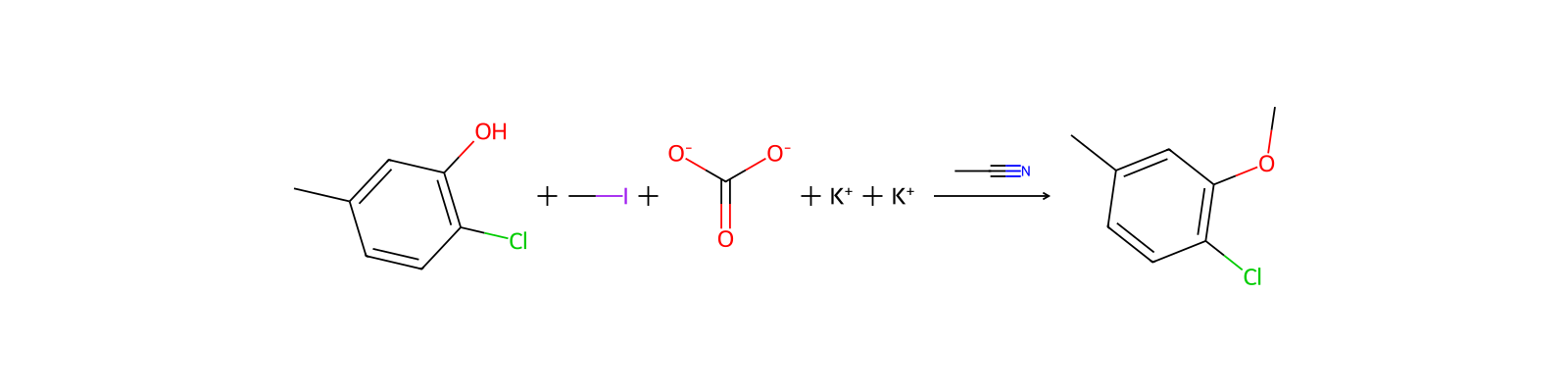
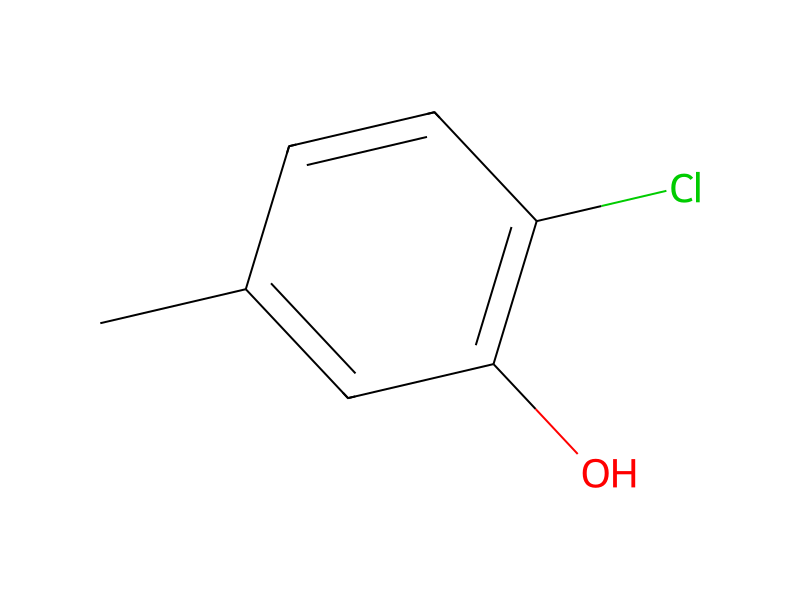
기본 정보
- 표준 SMILES
Cc1ccc(Cl)c(O)c1- InChIKey
SMFHPCZZAAMJJO-UHFFFAOYSA-N- 분자식
- C7H7ClO
- 평균 분자량
- 142.58 g/mol
- 단동위원소 질량
- 142.01854252
이름 및 식별자
- 우선 이름
- 2-Chloro-5-methylphenol
- IUPAC
- 2-chloro-5-methylphenol
- 현지명
- 2-클로로-5-메탄올
- 영어명
- 2-Chloro-5-methylphenol
- 분자식
- C7H7ClO
- 분자량
- 142.58
이름 및 동의어
2-CHLORO-5-METHYLPHENOL615-74-76-Chloro-m-cresolPhenol, 2-chloro-5-methyl-3-Methyl-6-chlorophenol4-Chloro-3-hydroxytoluenem-Cresol, 6-chloro-5-Methyl-2-chlorophenol6-Chloro-3-methylphenolDTXSID10465582-chloro-5-methyl phenolBRN 2041487
이름 더 보기
2-클로로-5-메탄올2-Chloro-5-methylphenol,99%oro-5-methyL6-Chloro-3-Cresol2-Chloro-5-cresol6-chloro-m-kresol6-CHLORO-META-CRESOL6-Chloro-m-cresol >6-Chloro-3-methylphenol
16Z94994Z4DTXCID9026558RefChem:469406210-444-9MFCD000021752-chloro-5-methyl-phenolNCGC00166212-01CAS-615-74-7
데이터베이스 식별자
- CAS
54548-50-4、615-74-7- PubChem CID
- 12008
- DTXSID
DTXSID1046558- ChEMBL
CHEMBL3186024- UNII
- 16Z94994Z4
- EC Number
- 210-444-9
- Nikkaji
- J95.420I
물성
구조 계산 물성
- XLogP
- 2.4
- 극성 표면적
- 20.2 Ų
- 수소 결합 공여자 수
- 1
- 수소 결합 수용자 수
- 1
- 회전 가능 결합 수
- 0
- 무거운 원자 수
- 9
- 형식 전하
- 0
- 복잡도
- 94.9
실험 및 물리화학적 성질
Chemical ClassesOther Classes -> Chlorophenols
SpringerMaterials PropertiesNuclear quadrupole resonance spectroscopy
LogPlog Kow = 2.90
Density1.215 g/cu cm
Color/FormPrisms from petroleum ether
Solubility
Very soluble in ethanol
Greater than 1.00 mg/l in water
Boiling Point196 °C
DecompositionWhen heated to decomposition it emits toxic vapors of /hydrogen chloride/.
Melting Point45.5 °C
Vapor Pressure0.04 [mmHg]
Physical DescriptionSolid; [HSDB] Off-white solid; [MSDSonline]
물리화학적 성질
- 녹는점
- 46 · 46-48 °C(lit.)
- 끓는 점
- 196 °C · 196 °C(lit.)
- 밀도
- 1.215 g/mL · 1.215 g/mL at 25 °C(lit.)
- 굴절률
- 1.52 · 1.5200 (estimate)
- 인화점
- 178 °F · 178 °F
- 용해도
- 약간 용해됨(1.2g/L)(25°C).
- 산도 계수 (pKa)
- 8.6 · 8.60±0.10(Predicted)
- 물리적 상태
- 결정성 분말
- 색상
- 베이지색
- BRN
- 2041487 · 2041487
- Henry's Law Constant
- 2.1 · 2.1×101 mol/(m3Pa) at 25℃, HSDB (2015)
- InChI
- 1S/C7H7ClO/c1-5-2-3-6(8)7(9)4-5/h2-4,9H,1H3
- InChIKey
- SMFHPCZZAAMJJO-UHFFFAOYSA-N
- SMILES
- Cc1ccc(Cl)c(O)c1
- EPA
- 2 · Phenol, 2-chloro-5-methyl- (615-74-7)
화학적 성질
BEIGE CRYSTALLINE POWDER
안전 및 규제
GHS 분류
GHS Classification
Danger
H302 (51.2%): Harmful if swallowed [Warning Acute toxicity, oral]
P261, P264, P264+P265, P270, P271, P272, P273, P280, P301+P317, P302+P352, P304+P340, P305+P351+P338, P305+P354+P338, P317, P319, P321, P330, P332+P317, P333+P317, P337+P317, P362+P364, P391, P403+P233, P405, and P501 (click each P-code to see the statement)
Aggregated GHS information provided per 84 reports by companies from 6 notifications to the ECHA C&L Inventory. Each notification may be associated with multiple companies.
유해성 정보
Regulatory Information
Chemical: Phenol, 2-chloro-5-methyl-
2-Chloro-5-methylphenol: Does not have an individual approval but may be used under an appropriate group standard
Hazards SummaryAn irritant; [MSDSonline] See CHLOROPHENOLS.
Clean Water Act RequirementsToxic pollutant designated pursuant to section 307(a)(1) of the Federal Water Pollution Control Act and is subject to effluent limitations. Chlorinated phenols (includes trichlorophenols and chlorinated cresols)/
Hazard Classes and CategoriesAcute Tox. 4 (51.2%)
안전 및 보호
Disposal Methods
SRP: At the time of review, criteria for land treatment or burial (sanitary landfill) disposal practices are subject to significant revision. Prior to implementing land disposal of waste residue (including waste sludge), consult with environmental regulatory agencies for guidance on acceptable disposal practices.
독성 정보
Ecotoxicity ValuesLD50 Quail oral 562 mg/kg
Environmental Fate
TERRESTRIAL FATE: According to a classification scheme(1), the measured Koc values of structurally similar compounds, 490 for 3-methyl-4-chlorophenol(2) and 124 to 645 for 4-chloro-2-methylphenol(3), indicate that 3-methyl-6-chlorophenol is expected to have moderate mobility in soil(SRC). Volatilization of 3-methyl-6-chlorophenol from moist soil surfaces is expected to be a slow environmental fate process(SRC) given an estimated Henry's Law constant of 4.6X10⁻⁷ atm-cu m/mole(SRC), using a fragment constant estimation method(4). 3-Methyl-6-chlorophenol is not expected to volatilize from dry soil surfaces(SRC) based upon an estimated vapor pressure of 4.1X10⁻² mm Hg(SRC), determined from a fragment constant method(5). The half-life of 3-methyl-6-chlorophenol was 2.1 days in basic sandy silt loam and 12.5 days in acidic sandy loam(6), suggesting that biodegradation may be an important environmental fate process in soil.
AQUATIC FATE: According to a classification scheme(1), the measured Koc values of structurally similar compounds, 490 for 3-methyl-4-chlorophenol(2) and 124 to 645 for 4-chloro-2-methylphenol(3), indicate that 3-methyl-6-chlorophenol is expected to adsorb very little to suspended solids and sediment(SRC). Slow volatilization from water surfaces is expected(4) based upon an estimated Henry's Law constant of 4.6X10⁻⁷ atm-cu m/mole(SRC), developed using a fragment constant estimation method(5). Using this Henry's Law constant and an estimation method(4), volatilization half-lives for a model river and model lake are 96 days and 700 days, respectively(SRC). According to a classification scheme(6), BCF values ranging from 1.2-4.7(7) suggest the potential for bioconcentration in aquatic organisms is low(SRC). Chlorinated phenols will undergo photolysis in aqueous solutions as a result of ultraviolet irradiation, and that photodegradation leads to the substitution of hydroxyl groups in place of the chlorine atoms with subsequent polymer formation(8). 3-Methyl-6-chlorophenol, at an initial concentration of 12.0 mg/l, was not biodegraded in a repetative die-away single addition closed bottle test with an activated sludge concentration of 30 mg/l after 28 days(9).
ATMOSPHERIC FATE: According to a model of gas/particle partitioning of semivolatile organic compounds in the atmosphere(1), 3-methyl-6-chlorophenol, which has an estimated vapor pressure of 4.1X10⁻² mm Hg at 25 °C(SRC), determined from a fragment constant method(2), is expected to exist solely as a vapor in the ambient atmosphere. Vapor-phase 3-methyl-6-chlorophenol is degraded in the atmosphere by reaction with photochemically-produced hydroxyl radicals(SRC); the half-life for this reaction in air is estimated to be 15 hours(SRC), calculated from its estimated rate constant of 2.6X10⁻¹¹ cu cm/molecule-sec at 25 °C that was derived using a structure estimation method(3). The UV absorption spectrum of the structurally similar compounds 3-methyl-4-chlorophenol and 4-chloro-2-methylphenol both exhibit absorption above 290 nm(4,5). Based on these compounds, 3-methyl-6-chlorophenol is expected to show absorption above 290 nm which suggests potential for direct photolysis.
Adverse EffectsNeurotoxin - Other CNS neurotoxin
Soil Adsorption/Mobility
3-Methyl-4-chlorophenol and 4-chloro-2-methylphenol, which are structurally related to 3-methyl-6-chlorophenol, have measured Koc values of 490(1) and 124-645(2), respectively. According to a classification scheme(3), these Koc values generally suggest that 3-methyl-6-chlorophenol is expected to have moderate mobility in soil(SRC).
Artificial Pollution Sources
Although production and use data for 3-methyl-6-chlorophenol have not been found, it is expected that this chemical will be generated as an impurity during the production of 3-methyl-4-chlorophenol since 3-methyl-4-chlorophenol is produced by the chlorination of m-cresol(1). In addition, 3-methyl-6-chlorophenol is formed in chlorinated waters from the reaction of hypochlorite with phenolic impurities(2). The inadvertent production of 3-methyl-6-chlorophenol through these pathways may result in its release to the environment through various waste streams.
Environmental Biodegradation
AEROBIC: No carbon dioxide was produced after 28 days in a carbon dioxide determination biodegradability screening test with an initial 3-methyl-6-chlorophenol concentration of 16.6-17.2 mg/l(1). 3-Methyl-6-chlorophenol, present at 100 mg/l, reached 0-11 percent of its theoretical BOD in 4 weeks using an activated sludge inoculum at 30 mg/l and the Japanese MITI test(2). 3-Methyl-6-chlorophenol was shown to biodegrade to 29, 98, and 18 percent of its initial concentrations of 8.5 mg/l, 17.0 mg/l, and 34.0 mg/l, respectively, in modified screening tests with 15 mg/l preconditioned activated sludge(3). 3-Methyl-6-chlorophenol, at an initial concentration of 12.0 mg/l, was not biodegraded in a repetative die-away single addition closed bottle test with an activated sludge concentration of 30 mg/l after 28 days(3). The half-life of 3-methyl-6-chlorophenol was 2.1 days in basic sandy silt loam and 12.5 days in acidic sandy loam(4).
Environmental Bioconcentration
Bioconcentration tests on carp with an average lipid content of 4.9 percent were conducted in a continuous flow system with six weeks exposure(1). BCF values measured in carp at initial 3-methyl-6-chlorophenol concentrations of 2 ug/l and 20 ug/l ranged from less than 2.7 to 4.0 and from 1.2 to 4.0, respectively(1). According to a classification scheme(2), these BCF ranges suggest the potential for bioconcentration in aquatic organisms is low(SRC).
Volatilization from Water/Soil
The Henry's Law constant for 3-methyl-6-chlorophenol is estimated as 4.6X10⁻⁷ atm-cu m/mole(SRC) using a fragment constant estimation method(1). This Henry's Law constant indicates that 3-methyl-6-chlorophenol is expected to volatilize slowly from water surfaces(2). Based on this Henry's Law constant, the volatilization half-life from a model river (1 m deep, flowing 1 m/sec, wind velocity of 3 m/sec)(2) is estimated as 96 days(SRC). The volatilization half-life from a model lake (1 m deep, flowing 0.05 m/sec, wind velocity of 0.5 m/sec)(2) is estimated as 700 days(SRC). 3-Methyl-6-chlorophenol is not expected to volatilize from dry soil surfaces(SRC) based upon an estimated vapor pressure of 4.1X10⁻² mm Hg(SRC), determined from a fragment constant method(3).
Environmental Abiotic Degradation
The rate constant for the vapor-phase reaction of 3-methyl-6-chlorophenol with photochemically-produced hydroxyl radicals has been estimated as 2.6X10⁻¹¹ cu cm/molecule-sec at 25 °C(SRC) using a structure estimation method(1). This corresponds to an atmospheric half-life of about 15 hours at an atmospheric concentration of 5X10+5 hydroxyl radicals per cu cm(1). 3-Methyl-6-chlorophenol is not expected to undergo hydrolysis in the environment since phenols are generally resistant to hydrolysis(2,3). The UV absorption spectrum of the structurally similar compounds 3-methyl-4-chlorophenol and 4-chloro-2-methylphenol both exhibit absorption above 290 nm(3,4). Other similar compounds (chlorophenol, dichlorophenol) have been shown to photodegrade in sunlight or UV light (above 290 nm), but the rate at which photolysis may occur in the environment has not been determined(3,5). Chlorinated phenols will undergo photolysis in aqueous solutions as a result of ultraviolet irradiation, and that photodegradation leads to the substitution of hydroxyl groups in place of the chlorine atoms with subsequent polymer formation(5). Based on the behavior of structurally similar compounds, 3-methyl-6-chlorophenol is expected to show absorption above 290 nm which suggests potential for direct photolysis.
Probable Routes of Human ExposureOccupational exposure to 3-methyl-6-chlorophenol may occur through inhalation and dermal contact with this compound at workplaces where 3-methyl-6-chlorophenol is produced or used. (SRC)
Environmental Fate/Exposure Summary
Although production and use data for 3-methyl-6-chlorophenol have not been found, it is expected that this chemical will be generated as an impurity during the production of 3-methyl-4-chlorophenol since 3-methyl-4-chlorophenol is produced by the chlorination of m-cresol. In addition, 3-methyl-6-chlorophenol is formed in chlorinated waters from the reaction of hypochlorite with phenolic impurities. The inadvertent production of 3-methyl-6-chlorophenol through these pathways may result in its release to the environment through various waste streams. If released to air, an estimated vapor pressure of 4.1X10⁻² mm Hg at 25 °C indicates 3-methyl-6-chlorophenol will exist solely as a vapor in the ambient atmosphere. Vapor-phase 3-methyl-6-chlorophenol will be degraded in the atmosphere by reaction with photochemically-produced hydroxyl radicals; the half-life for this reaction in air is estimated to be 15 hours. The UV absorption spectrum of the structurally similar compounds 3-methyl-4-chlorophenol and 4-chloro-2-methylphenol both exhibit absorption above 290 nm. Based on the absorption of these compounds, 3-methyl-6-chlorophenol is expected to show absorption above 290 nm which suggests potential for direct photolysis. If released to soil, 3-methyl-6-chlorophenol is expected to have moderate mobility based upon the measured Koc values of structurally similar compounds ranging from 124 to 645, with most of these values falling within the Koc range for moderate mobility. Volatilization from moist soil surfaces is expected to be a slow environmental fate process based upon an estimated Henry's Law constant of 4.6X10⁻⁷ atm-cu m/mole. 3-Methyl-6-chlorophenol is not expected to volatilize from dry soil surfaces based upon its vapor pressure. 3-Methyl-6-chlorophenol is expected to biodegrade in soil based on a half life of 2.1 days in basic sandy silt loam. If released into water, 3-methyl-6-chlorophenol is expected to adsorb very little to suspended solids and sediment based upon the measured Koc values of structurally similar compounds. 3-Methyl-6-chlorophenol is not expected to biodegrade in the aquatic environment based on a repetitive die-away closed bottle test using activated sludge that showed no biodegradation after 28 days. Volatilization from water surfaces is expected to be an important fate process based upon this compound's estimated Henry's Law constant. Estimated volatilization half-lives for a model river and model lake are 96 days and 700 days, respectively. Measured BCF values in carp ranging from 1.2 to 4.7 suggest bioconcentration in aquatic organisms is low. 3-Methyl-6-chlorophenol is not expected to undergo hydrolysis in the environment since phenols are generally resistant to hydrolysis. Occupational exposure to 3-methyl-6-chlorophenol may occur through inhalation and dermal contact with this compound at workplaces where chemical precursors to 3-methyl-6-chlorophenol are produced or used. (SRC)
Antidote and Emergency Treatment
Basic treatment: Establish a patent airway. Suction if necessary. Watch for signs of respiratory insufficiency and assist ventilation if necessary. Administer oxygen by nonrebreather mask at 10 to 15 L/min. Monitor for pulmonary edema and treat if necessary ... . Monitor for shock and treat if necessary ... . Anticipate seizures and treat if necessary ... . For eye contamination, flush eyes immediately with water. Irrigate each eye continuously with normal saline during transport ... . Administer activated charcoal ... . Do not use emetics. Cover skin burns with dry, sterile dressings after decontamination ... . Maintain body temperature. /Phenols and related compounds/
Advanced treatment: Consider orotracheal or nasotracheal intubation for airway control in the patient who is unconscious or in respiratory arrest. Positive pressure ventilation techniques with a bag valve mask device may be beneficial. Monitor cardiac rhythm and treat arrhythmias if necessary... . Start an IV with D5W /SRP: "To keep open", minimal flow rate/. Use lactated Ringer's if signs of hypovolemia are present. Watch for signs of fluid overload. Consider drug therapy for pulmonary edema... . For hypotension with signs of hypovolemia, administer fluid cautiously. Consider vasopressors for hypotension with a normal fluid volume. Watch for signs of fluid overload... . Administer 1% solution methylene blue if patient is symptomatic with severe hypoxia, cyanosis, and cardiac compromise not responding to oxygen. ... .Treat seizures with diazepam (Valium). ...Use proparacaine hydrochloride to assist eye irrigation... . /Phenols and related compounds/
규제 정보
Clean Water Act RequirementsToxic pollutant designated pursuant to section 307(a)(1) of the Federal Water Pollution Control Act and is subject to effluent limitations. Chlorinated phenols (includes trichlorophenols and chlorinated cresols)/
안전 데이터
- wgk
- 3
- tsca
- TSCA listed
- rtecs
- SK4930000
- ridadr
- UN 3437 6.1/PG 2
- HS 번호
- 29081000
- risk_code
- 36/37/38-38-21/22
- hazard_code
- Xi,Xn
- safety_code
- 26-36/37/39-28
- 포장분류
- II
- 위험 등급
- 6.1
- 기존화학 물질
- KE-05762
- Hazard Classifications
- Acute Tox. 4 OralAquatic Acute 1Aquatic Chronic 3Eye Dam. 1Skin Corr. 1CSkin Sens. 1BSTOT SE 3
- 스토리지 클래스
- 6.1A - Combustible acute toxic Cat. 1 and 2very toxic hazardous materials
- 유해 물질 데이터
- 615-74-7(Hazardous Substances Data)
화학 및 산업
용도 및 제조
General Manufacturing InformationPhenol, 2-chloro-5-methyl-: ACTIVE
응용 분야
용도2-Chloro-5-methylphenol, is used as a pharmaceutical intermediate. It is also used to make other chemicals.
일반 설명Sonochemical degradation of 2-chloro-5methyl phenol in aqueous solution in the presence of TiO2 and H2O2 has been reported.
상·하류 제품 정보
상류 원료
하류 제품
공급사50 곳
梯希爱(上海)化成工业发展有限公司021-67121386 · [email protected]
Changzhou Anxuan Chemical Co., Ltd+86-0519-89882563 +86-18961279162 · [email protected]
温州共赢化学有限公司+86-0086-577-64498589 +86-15355981851 · [email protected]
Dayang Chem (Hangzhou) Co.,Ltd.+86-0571-88938639 17705817739 · [email protected]
Syntechem Co.,Ltd[email protected]
上海迈瑞尔生化科技有限公司4006356688 18621169109 · [email protected]
江苏普乐司生物科技有限公司0513-66017706 18551496367 · [email protected]
阿法埃莎(中国)化学有限公司400-6106006 · [email protected]
安耐吉化学&3A(安徽泽升科技股份有限公司)400-0056266 · [email protected]
梯希爱(上海)化工贸易有限公司021-61109150 · [email protected]
上海毕楷科技有限公司18516304666
广东大小化工有限公司1866-171603 18666171603 · [email protected]
天津希恩思生化科技有限公司400 638 7771 · [email protected]
斯百全化学(上海)有限公司021-021-021-67601398-809-809-809 15221380277 · [email protected]
赛默飞世尔科技(中国)有限公司800-810-5118 · [email protected]
上海遐瑞医药科技有限公司+86 21 61551611
TCI AMERICA800-4238616 · [email protected]
TOKYO CHEMICAL INDUSTRY CO., LTD.03-36680489 · [email protected]
TCI Europe320-37350700 · [email protected]
越林试剂021-62960152 · [email protected]
PT CHEM GROUP LIMITED+86-85511178; +86-85511178 · [email protected]
台州川旭医药科技有限公司[email protected] · [email protected]
Sigma-Aldrich西格玛奥德里奇(上海)贸易有限公司021-61415566 800-8193336 · [email protected]
九鼎化学(上海)科技有限公司4009209199 · [email protected]
HANGZHOU LEAP CHEM CO., LTD.+86-571-87711850 +86-15355479329 · [email protected]
艾吉析科技(上海)有限公司17721401538;17717235263 17721401538 · [email protected]
上海阿拉丁生化科技股份有限公司6206333 13167063860 · [email protected]
陕西缔都医药化工有限公司029-029-81120477 17792793610 · [email protected]
上海源叶生物科技有限公司13636370518 · [email protected]
广州市金华大化学试剂有限公司020-84383047 · [email protected]
上海贤鼎生物科技有限公司021-021-52271985 17721149837 · [email protected]
盼得(上海)国际贸易有限公司80159919 18662931292 · [email protected]
巴师傅(上海)生物医药科技有限公司60662071 18117346937 · [email protected]
上海泰坦科技股份有限公司18616708014 · [email protected]
杭州洁汉化工有限公司+86-571-86217390; +8618058761490 · [email protected]
Capot Chemical Co.,Ltd.+86-(0)57185586718 +86-13336195806 · [email protected]
上海易恩化学技术有限公司400-400-1332688 18019345275 · [email protected]
厦门盈融达化工有限公司+86-0592-6210733 · [email protected]
career henan chemical co+86-0371-86658258 · [email protected]
艾览(上海)化工科技有限公司400-668-9898 · [email protected]
Zjartspharm Co., Ltd15068876005 · [email protected]
TCI Chemicals (India) Pvt. Ltd.[email protected]
Aladdin Scientific[email protected]
Aromsyn Co., Ltd.+86-0571-85585865 +86-13336024896 · [email protected]
XIAMEN AMITY INDUSTRY AND TRADE CO., LTD.+8618950047208 · [email protected]
武汉吉鑫益邦生物科技有限公司59768661 13297943853 · [email protected]
上海宝杨宝欣生物科技有限公司021-56698539 19921169802 · [email protected]
上海安谱实验科技股份有限公司18502138905 · [email protected]
Capot Chemical Co., Ltd+86 (0) 571 85 58 67 18
重庆卡兰医药有限公司[email protected]
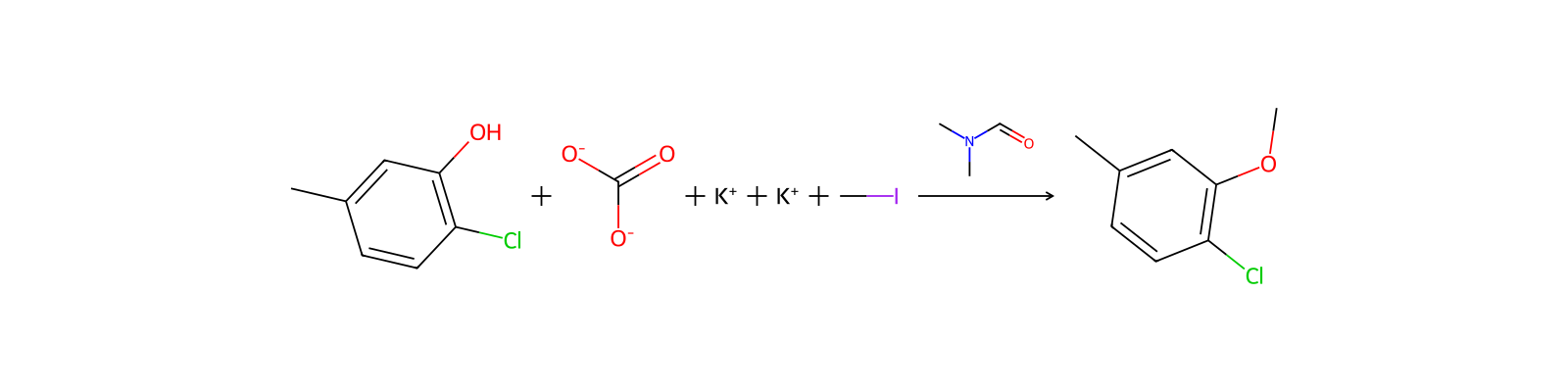
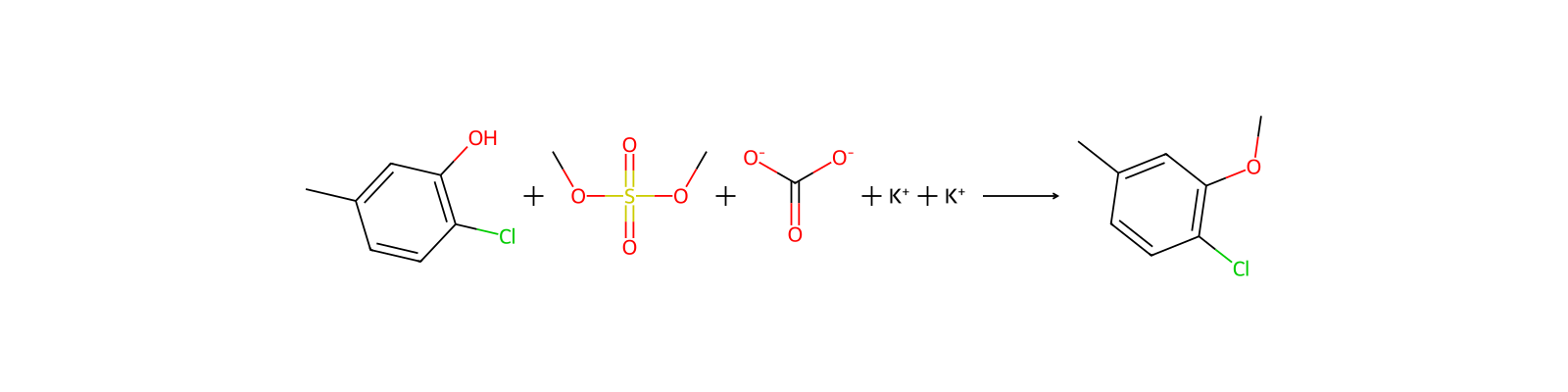
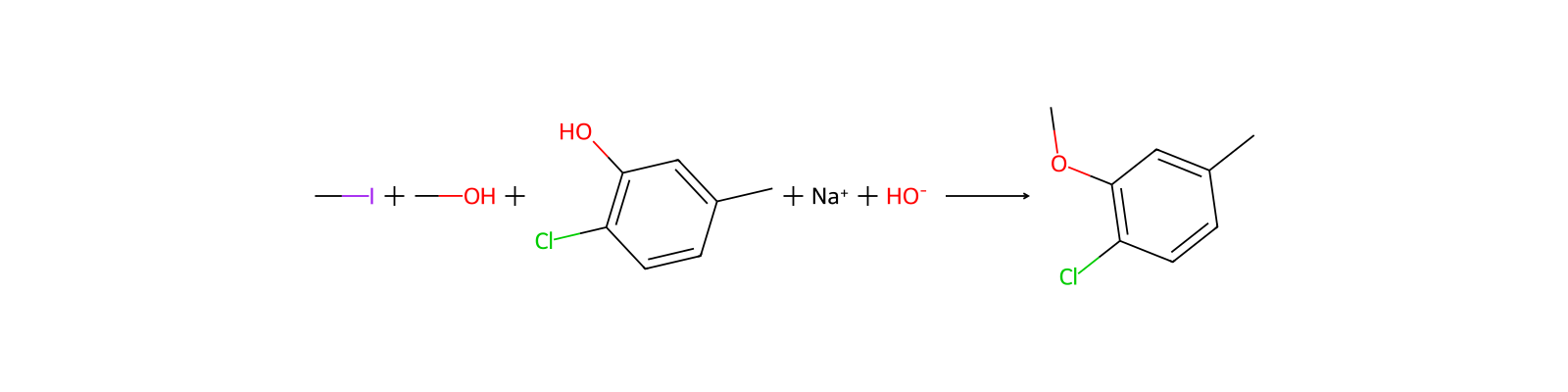
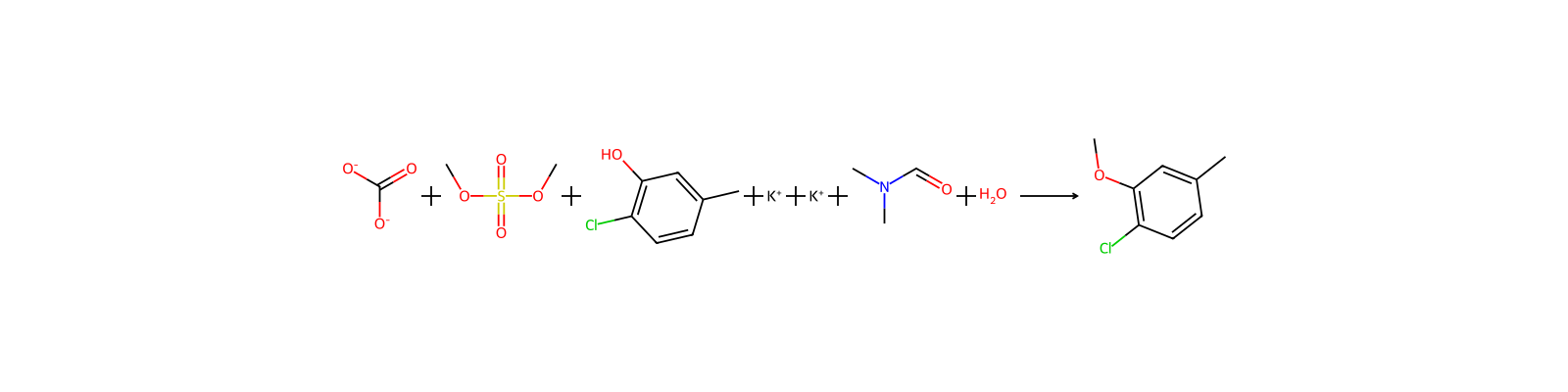
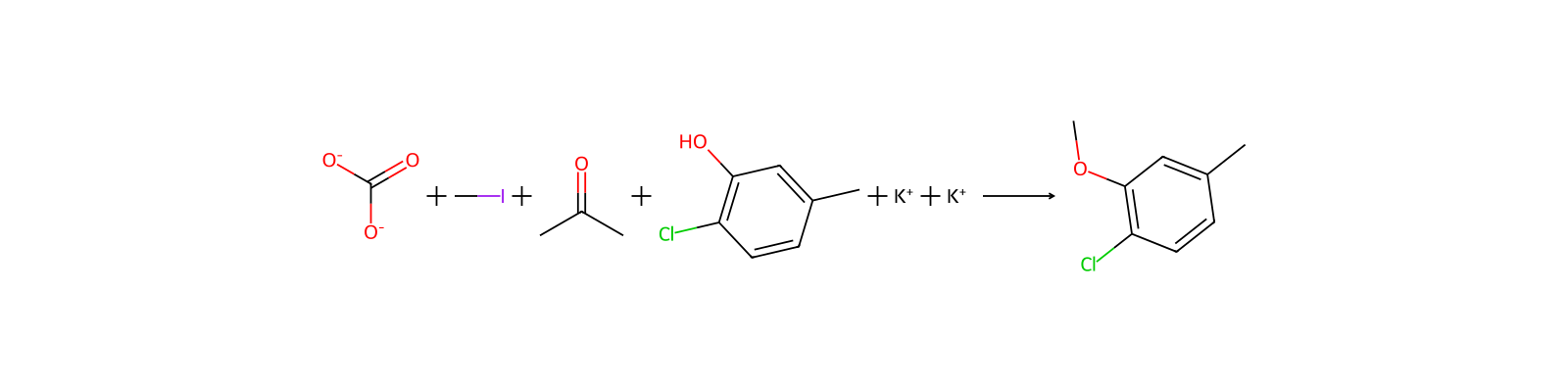
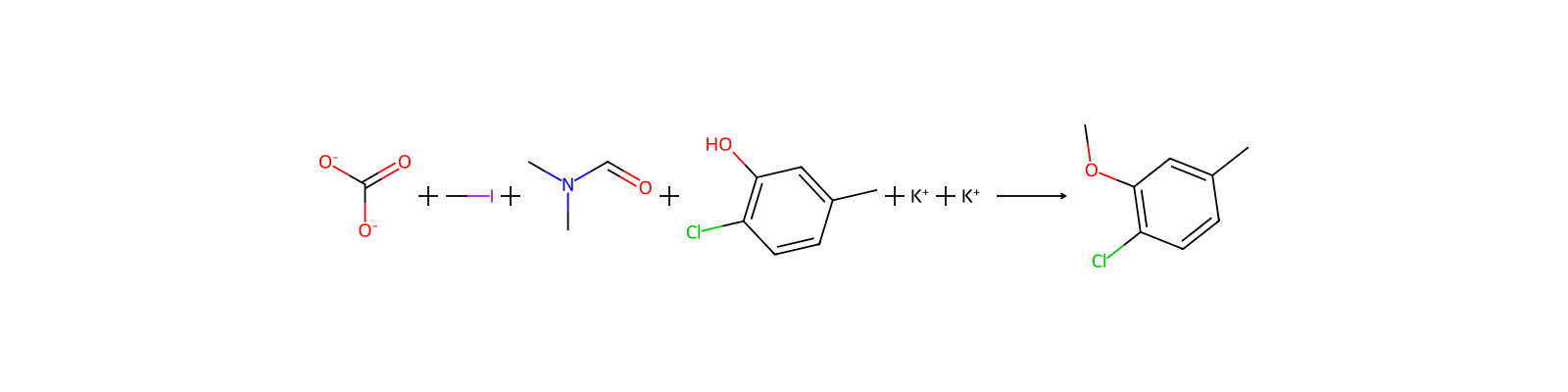
관련 반응
70건

연결된 노트
불러오는 중…