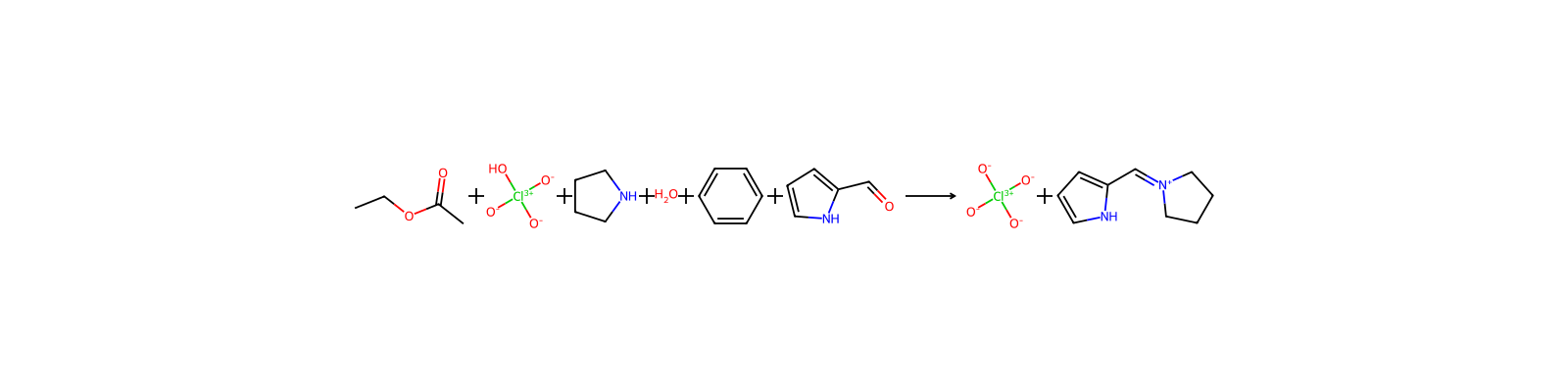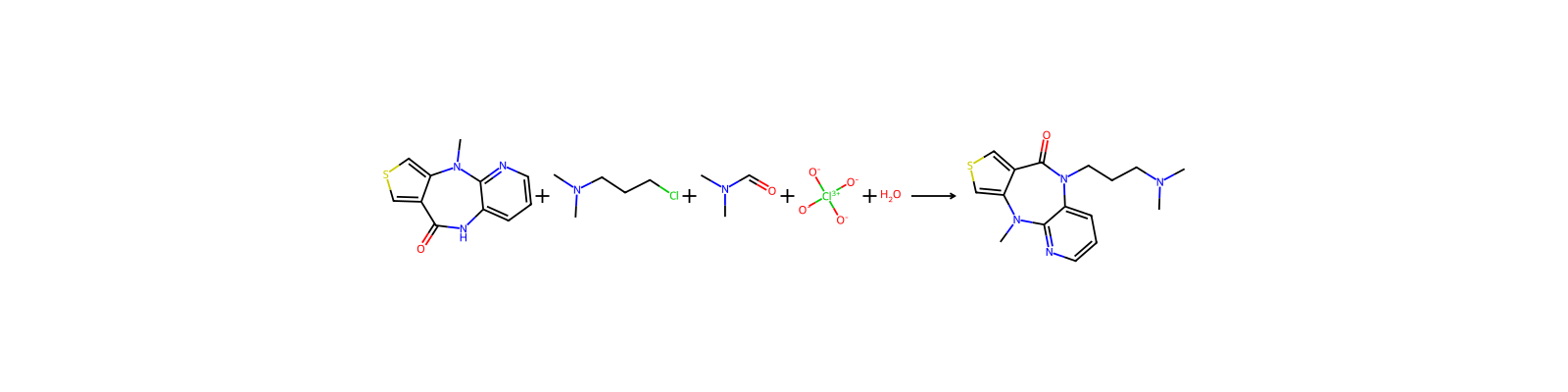
HRID 89131반응물로
Perchlorate

14797-73-0[O-][Cl+3]([O-])([O-])[O-]VLTRZXGMWDSKGL-UHFFFAOYSA-MPerchlorate, n.o.s. appears as crystalline or powdered solids. May explode under exposure to heat or fire. If available, obtain the technical name from the shipping papers and contact CHEMTREC, 800-424-9300 for specific response information.
14797-73-0DTXSID6024252CHEMBL1161634CHEBI:49706Perchlorate, n.o.s. appears as crystalline or powdered solids. May explode under exposure to heat or fire. If available, obtain the technical name from the shipping papers and contact CHEMTREC, 800-424-9300 for specific response information.
안전 정보는 참고용이며, 공급업체의 물질안전보건자료(SDS), 관련 법규 및 전문가 평가를 대체하지 않습니다.
Danger
H271 (100%): May cause fire or explosion; strong Oxidizer [Danger Oxidizing liquids; Oxidizing solids]
P210, P220, P264, P270, P280, P283, P301+P317, P306+P360, P330, P370+P378, P371+P380+P375, P420, and P501 (click each P-code to see the statement)
Aggregated GHS information provided per 39 reports by companies from 1 notifications to the ECHA C&L Inventory. Each notification may be associated with multiple companies.
Hazard Traits - Endocrine Toxicity; Immunotoxicity
Regulation (EC) No 178/2002 (amended)
PERCHLORATE, N.O.S. is a member of a class of strong oxidizing agents. May be self-reactive (e.g., ammonium perchlorate, glycol perchlorate) and liable to violent decomposition. The violence of decomposition of some perchlorates exceeds that of nitroglycerine. Noncombustible but able to accelerate the burning of combustible materials. If large quantities are involved in a fire or the combustible material is finely divided, then an explosion may result.
CSL00207
Hydrazides + Acetylides + Peroxides + Fulminic acid, ion(1-) + Perchlorate
"Every chemical research laboratory probably contains some form of explosion hazard. Clearly defining the molecular structure of energetic materials, especially those with trivial names, helps spot danger. Depiction of critical chemical functionality is useful for beginning preparative chemistry students and helpful in stimulating laboratory safety discussions. Here, common classes of hazardous substances (and physical explosions) are illustrated and briefly discussed: nitro, hydrazido, and azido groups, perchlorate ion, peroxides, and metal acetylides and fulminates. Emphasis is on conciseness involving clear examples of chemical structure and documentation of recent explosion incidents, where possible." (abstract of article)
Explosive
Azide,Nitro,other: Hydrazido
Not Available
0.0007
IRIS Current
Perchlorate
63790
Major ion
Not available; existing RfD and interim LHA were not used to generate an HBSL because USEPA is in the process of determining a new proposed MCL by 2025 (exception to the standard HBSL methodology). For more information, see https://www.epa.gov/sdwa/perchlorate-drinking-water
Smith, C.D. and Nowell, L.H., 2024. Health-Based Screening Levels for evaluating water-quality data (3rd ed.). DOI:10.5066/F71C1TWP
5.50e+01
8.20e+02
1.40e+01
1.5E+01(G)
7.00e-04
Volatile
1.60e+02
2.50e+03
4.20e+01
1.5E+01 (G)
7.00e-04
Volatile
개요Concern about environmental perchlorate exposure centers on its inhibition of iodide uptake into the thyroid. Decreased iodine intake may decrease thyroid hormone production. In the last few years, perchlorate has become a major inorganic contaminant in drinking water and has been detected in a number of public drinking water systems throughout the Unites States. In 1998, the US EPA added perchlorate to the Drinking Water Candidate Contaminant List.
용도Perchlorate is a soluble oxychloro anion most commonly used as a solid salt in the form of ammonium perchlorate, potassium perchlorate, lithium perchlorate, or sodium per- chlorate, all of which are highly soluble. Ammonium perchlorate is the most widely used perchlorate compound. In their pure forms, these salts are white or colorless crystals or powders. Perchlorate salts dissolve in water and readily move from surface to groundwater. Perchlorate is known to originate from both natural and man-made sources. The most common uses for ammonium perchlorate are in explosives, military munitions, and rocket propellants. In addition, perchlorate salts are used in a wide range of nonmilitary applications, including pyrotechnics and fireworks, blasting agents, solid rocket fuel, matches, lubricating oils, nuclear reactors, air bags, and certain types of fertilizers. Improper storage and disposal related to these uses is the most typical route for perchlorate to enter into the environment. Monitoring data show that more than 4% of public water systems, serving between 5 million and 17 million people, have detected perchlorate in their finished water.
일반 설명Crystalline or powdered solids. May explode under exposure to heat or fire. If available, obtain the technical name from the shipping papers and contact CHEMTREC, 800-424-9300 for specific response information.