
플루오린화 사이안유릭(플루오르화 시안유릭)
Cyanuric fluoride
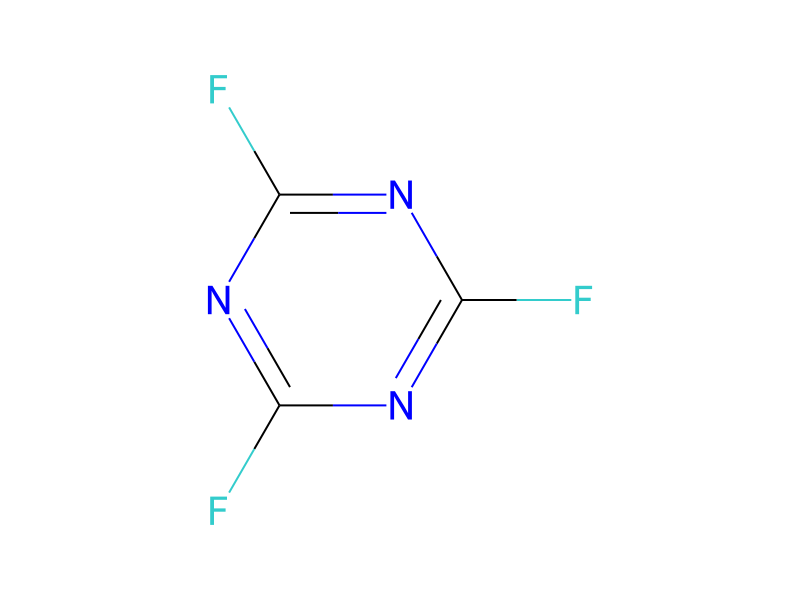
기본 정보
- CAS
675-14-9- 표준 SMILES
Fc1nc(F)nc(F)n1- InChIKey
VMKJWLXVLHBJNK-UHFFFAOYSA-N- 분자식
- C3F3N3
- 평균 분자량
- 135.05 g/mol
- 단동위원소 질량
- 135.00443166
개요
Cyanuric fluoride is a liquid. (EPA, 1998)
이름 및 식별자
- 우선 이름
- Cyanuric fluoride
- IUPAC
- 2,4,6-trifluoro-1,3,5-triazine
- 현지명
- 플루오린화 사이안유릭(플루오르화 시안유릭)
- 영어명
- Cyanuric fluoride
- 분자식
- C3F3N3
- 분자량
- 135.05
이름 및 동의어
CYANURIC FLUORIDE2,4,6-Trifluoro-1,3,5-triazine675-14-9TrifluorotriazineTrifluoro-s-triazineCyanuric trifluoride2,4,6-Trifluoro-s-triazines-Triazine, 2,4,6-trifluoro-1,3,5-Triazine, 2,4,6-trifluoro-Trifluoro-1,3,5-triazine2,4,6-Trifluoro-sym-triazines-Triazine, 2,4,6-trifluro-
이름 더 보기
시아누르풀르오르화물플루오린화사이안유릭(플루오르화시안유릭)플루오린화사이안유릭(플루오르화시안유릭)(CYANURICFLUORIDE)Cyanuric FlourideNSC 168386Cyanuricfluoride,98%Cyanuric fluoride 98%
2,4,6-Trifluorotriazine31KW4S5FBBNSC-168386DTXSID60609751,3,5-TRIFLUORO-2,4,6-TRIAZINERefChem:129129DTXCID2044896211-620-8
데이터베이스 식별자
- CAS
675-14-9- PubChem CID
- 12664
- DTXSID
DTXSID6060975- UNII
- 31KW4S5FBB
- EC Number
- 211-620-8
- Nikkaji
- J14.172K
물성
구조 계산 물성
- XLogP
- 1.3
- 극성 표면적
- 38.7 Ų
- 수소 결합 공여자 수
- 0
- 수소 결합 수용자 수
- 6
- 회전 가능 결합 수
- 0
- 무거운 원자 수
- 9
- 형식 전하
- 0
- 복잡도
- 69.3
실험 및 물리화학적 성질
Chemical ClassesOther Classes -> Other Organic Compounds
SpringerMaterials Properties15N nuclear magnetic resonance spectrum
Density
1.60 at 25 °C/4 °C
1.60 @25 °C
Color/FormColorless
Boiling Point
72.8 °C
72.4 °C @760 [mm Hg]
Melting Point
-38 °C
-38 °C
Refractive IndexIndex of refraction: 1.3844 at 24 °C/D
Physical Description
Cyanuric fluoride is a liquid. (EPA, 1998)
Colorless liquid; [HSDB]
물리화학적 성질
- 녹는점
- -38 °C · -38°C
- 끓는 점
- 73 · 73-74°C
- 밀도
- 1 · 1,6 g/cm3
- 굴절률
- 1.348 · 1.348
- 인화점
- 73 · 73-74°C
- 저장 조건
- Hygroscopic, Refrigerator, under inert atmosphere
- 용해도
- 에 용해됨클로로포름, 사염화탄소, 에테르, 디옥산 및 케톤과 혼합 가능.
- 산도 계수 (pKa)
- -2.62 · -2.62±0.10(Predicted)
- 물리적 상태
- 기름
- 색상
- 투명 무색
- BRN
- 124237 · 124237
- NIST
- 1 · 1,3,5-Triazine, 2,4,6-trifluoro-(675-14-9)
- EPA
- Cyanuric fluoride (675-14-9)
화학적 성질
Colorless liquid. Decompose violently with water and alcohol.
안전 및 규제
안전 정보는 참고용이며, 공급업체의 물질안전보건자료(SDS), 관련 법규 및 전문가 평가를 대체하지 않습니다.
GHS 분류
GHS Classification
Danger
H310+H330 (16.7%): Fatal in contact with skin or if inhaled [Danger Acute toxicity, dermal; acute toxicity, inhalation]
P260, P262, P264, P264+P265, P270, P271, P280, P284, P301+P330+P331, P302+P352, P302+P361+P354, P304+P340, P305+P354+P338, P316, P317, P320, P321, P361+P364, P363, P403+P233, P405, and P501 (click each P-code to see the statement)
Aggregated GHS information provided per 6 reports by companies from 3 notifications to the ECHA C&L Inventory. Each notification may be associated with multiple companies.
유해성 정보
Regulatory InformationThe New Jersey Worker and Community Right to Know Act requires public and private employers to provide information about hazardous substances at their workplaces. (N.J.S.A. 34:5A-1 et. seq.)
DOT LabelPoison Inhalation Hazard Corrosive
Fire HazardsWhen heated to decomposition, it emits very toxic fumes of fluorides and nitrogen oxides. Avoid decomposing heat. (EPA, 1998)
Health HazardsThis material is highly toxic by skin contact and inhalation. (EPA, 1998)
Hazards Summary
Cyanuric fluoride is irritating to the skin, eyes, and respiratory tract. Information is limited, but it is not known to cause cyanide poisoning. It is absorbed through the skin. When heated to decomposition, fumes of fluorides and oxides of nitrogen are formed. [HSDB] In high-dose inhalation studies, animals develop pulmonary edema. [ChemIDplus]
Reactive GroupAmines, Phosphines, and Pyridines
Reactivity AlertsWater-Reactive
Reactivity ProfileCyanuric fluoride is used as a mild fluorinating agent for organic chemicals, and it reacts with water in a manner similar to an acyl halide, forming hydrofluoric acid and cyanuric acid.
Air and Water ReactionsNo rapid reaction with air. No rapid reaction with water.
Highly Hazardous SubstanceChemical: Cyanuric Fluoride
CERCLA Reportable Quantities
Releases of CERCLA hazardous substances are subject to the release reporting requirement of CERCLA section 103, codified at 40 CFR part 302, in addition to the requirements of 40 CFR part 355. Cyanuric fluoride is an extremely hazardous substance (EHS) subject to reporting requirements when stored in amounts in excess of its threshold planning quantity (TPQ) of 100 lbs.
Hazard Classes and CategoriesAcute Tox. 2 (100%)
안전 및 보호
Fire FightingExcerpt from ERG Guide 154 [Substances - Toxic and/or Corrosive (Non-Combustible)]:
First Aid
Signs and Symptoms of Cyanuric Fluoride Exposure: Signs and symptoms of acute exposure to cyanuric fluoride may include irritation or burns of the mucous membranes, lungs, gastrointestinal tract, eyes, and skin. Exposure to cyanuric fluoride may result in pulmonary edema.
Nonfire Spill ResponseAvoid inhalation and skin contact. (EPA, 1998)
Disposal Methods
SRP: At the time of review, criteria for land treatment or burial (sanitary landfill) disposal practices are subject to significant revision. Prior to implementing land disposal of waste residue (including waste sludge), consult with environmental regulatory agencies for guidance on acceptable disposal practices.
Isolation and EvacuationExcerpt from ERG Guide 154 [Substances - Toxic and/or Corrosive (Non-Combustible)]:
Protective Action Criteria (PAC)
0.0021 [ppm]
0.023 [ppm]
0.14 [ppm]
Personal Protective Equipment (PPE)
For emergency situations, wear a positive pressure, pressure-demand, full facepiece self-contained breathing apparatus (SCBA) or pressure- demand supplied air respirator with escape SCBA and a fully-encapsulating, chemical resistant suit. (EPA, 1998)
독성 정보
Adverse EffectsToxic Pneumonitis - Inflammation of the lungs induced by inhalation of metal fumes or toxic gases and vapors.
Environmental Abiotic DegradationCyanuric fluoride is readily hydrolyzed to 2,4,6-trihydroxy-1,3,5-triazine. Cyanuric fluoride reacts faster with nucleophilic agents such as ammonia and amines than cyanuric chloride
Antidote and Emergency Treatment
Basic treatment: Establish a patent airway (oropharyngeal or nasopharyngeal airway, if needed). Suction if necessary. Watch for signs of respiratory insufficiency and assist ventilations if necessary. Administer oxygen by nonrebreather mask at 10 to 15 L/min. Monitor for pulmonary edema and treat if necessary ... . Monitor for shock and treat if necessary ... . For eye contamination, flush eyes immediately with water. Irrigate each eye continuously with 0.9% saline (NS) during transport ... . Do not use emetics. For ingestion, rinse mouth and administer 5 mL/kg up to 200 mL of water if the patient can swallow, has a strong gag reflex, and does not drool. Do not attempt to neutralize because of exothermic reaction. Cover skin burns with dry, sterile dressings after decontamination ... . /Hydrofluoric Acid (HF) and Related Compounds/
Advanced treatment: Consider orotracheal or nasotracheal intubation for airway control in the patient who is unconscious, has severe pulmonary edema, or is in severe respiratory distress. Consider drug therapy for pulmonary edema ... . Early intubation at the first sign of upper airway obstruction may be necessary. Positive-pressure ventilation with a bag valve mask device may be beneficial. Consider drug therapy for pulmonary edema ... . Monitor cardiac rhythm and treat arrhythmias as necessary. Development of QT interval prolongation may signal hypocalcemia and need for IV calcium gluconate administration ... . Start IV administration of D5W /SRP: "To keep open", minimal flow rate/. Use 0.9% saline (NS) or lactated Ringer's (LR) if signs of hypovolemia are present. For hypotension with signs of hypovolemia, administer fluid cautiously. Consider vasopressors if patient is hypotensive with a normal fluid volume. Watch for signs of fluid overload ... . Use 2.5% calcium gluconate gel for skin burns over painful areas after thorough decontamination ... . Iced 0.13% benzalkonium chloride (Zephiran chloride) solution soak or compresses may be used with careful monitoring of body temperature. Compresses should be changed every 2 min. Use proparacaine hydrochloride to assist eye irrigation ... . /Hydrofluoric Acid (HF) and Related Compounds/
Toxicity DataLC50 (rat) = 3.1 ppm/4H
규제 정보
CERCLA Reportable Quantities
Releases of CERCLA hazardous substances are subject to the release reporting requirement of CERCLA section 103, codified at 40 CFR part 302, in addition to the requirements of 40 CFR part 355. Cyanuric fluoride is an extremely hazardous substance (EHS) subject to reporting requirements when stored in amounts in excess of its threshold planning quantity (TPQ) of 100 lbs.
안전 데이터
- wgk
- 3
- tsca
- TSCA listed
- rtecs
- XZ1750000
- ridadr
- UN 3389 6.1/PG 1
- risk_code
- 24-26-35
- hazard_code
- T+,C,T
- safety_code
- 26-28-36/37/39-45
- 포장분류
- I
- 위험 등급
- 6.1
- 기존화학 물질
- KE-05-1315
- F 고인화성물질
- 10
- 위험 참고 사항
- Corrosive/Toxic
- 유해 물질 데이터
- 675-14-9(Hazardous Substances Data)
화학 및 산업
용도 및 제조
Uses
Used to produce fiber-reactive dyes; [HSDB]
... Used to manufacture reactive dyes.
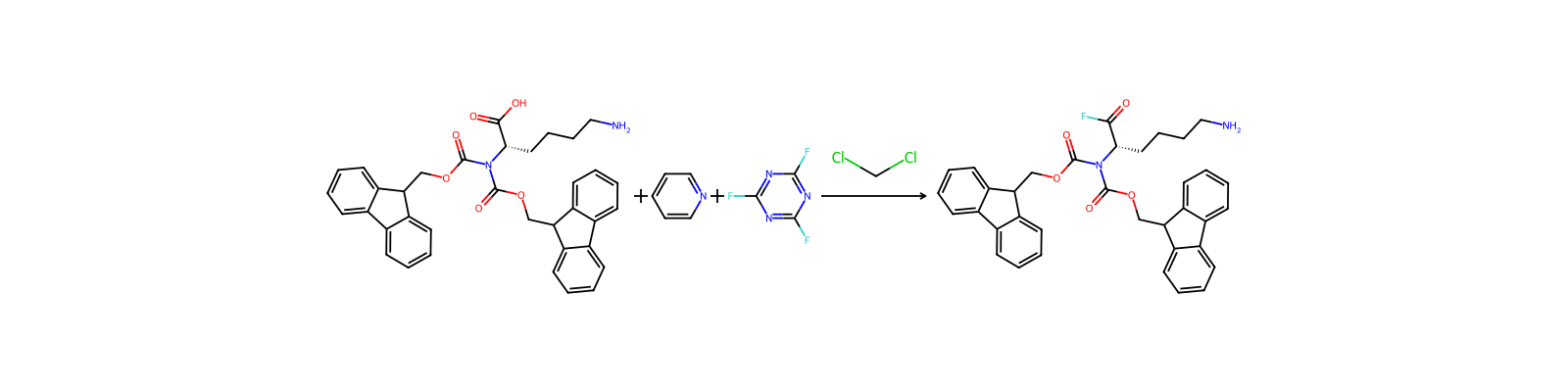
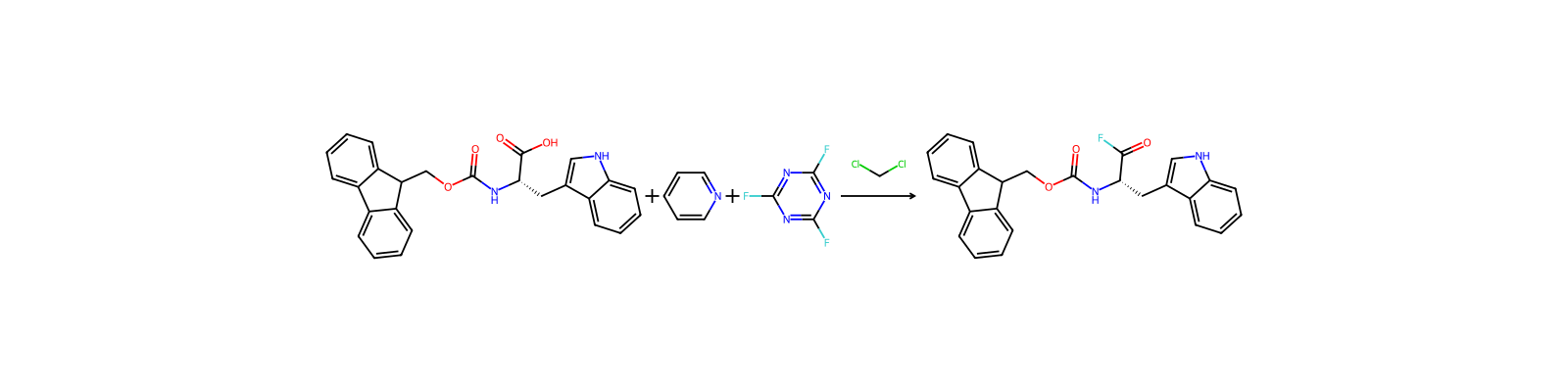
Specific reagent for tyrosine residues in enzymes ... can also serve as a fluorinating agent in fluorodehydroxylation reactions ... preparation of acid fluorides from the corresponding carboxylic acid ... application in peptide syntheis from amino acids through the corresponding acid fluoride.
Used to manufacture reactive dyes by reaction between one or two fluorine substituents with amino groups of chromophores; the remaining fluorine binds to the fiber
Methods of Manufacturing
Can be prepared from cyanuric chloride with numerous fluorinating agents, eg, pentavalent antimony chlorofluoride, silver monofluoride, potassium fluoride, sodium fluoride, potassium fluorosulfinate, and sulfur tetrafluoride ... .
2,4,6-Trifluoro-1,3,5-triazine ... is produced commercially from 2,4,6-trichloro-1,3,5-triazine (cyanuric chloride) with either anhydrous hydrogen fluoride or sodium fluoride in sulfolane.
General Manufacturing Information
1,3,5-Triazine, 2,4,6-trifluoro-: ACTIVE
Cyanuric fluoride has been offered commercially for biochemical applications, eg, as a specific reagent for tyrosine.
응용 분야
용도Cyanuric fluoride acts as a fluorinating agent used in the conversion of carboxylic acids into acyl fluorides. It is used as a precursor for fibre-reactive dyes. It is a specific reagent for tyrosine residues in enzyme. Further, it is involved in the preparation of cyanuric acid by hydrolysis
일반 설명Liquid.
제조 방법
In a dry three-necked flask equipped with stirrer, thermometer and reflux condenser, add 0.2mol (36.9g) of cyanuric chloride, 0.63mol (36.5g) of finely ground anhydrous potassium fluoride, 60mL of xylene and 2.0g of polyethylene glycol-600, heat and stir at 110℃, reflux for 16h and distill after a little cooling, collect the fraction at 72℃~75℃, and get liquid of cyanuric trioxide.
상·하류 제품 정보
상류 원료
하류 제품
관련 반응
137건



화합물 노트
불러오는 중…