홈MCP워크벤치Skills
홈워크벤치알림마이페이지
llms.txt · MCP 가이드개인정보처리방침 · 이용약관 · 지원v1.8.0
  1. 홈
  2. /화합물

2,6-디-tert-부틸벤조퀴논

2,6-Di-t-butyl-p-benzoquinone

HCID 12867
새 노트새 반응견적 요청하기
인쇄 미리보기

데이터를 보충하는 중입니다. 잠시 후 페이지를 새로 고치면 최신 내용을 볼 수 있습니다

기본 정보개요이름 및 식별자물성안전 및 규제화학 및 산업관련 반응화합물 노트
부분 구조 검색유사 구조 찾기

기본 정보

CAS
719-22-2
표준 SMILES
CC(C)(C)C1=CC(=O)C=C(C(C)(C)C)C1=O
InChIKey
RDQSIADLBQFVMY-UHFFFAOYSA-N
분자식
C14H20O2
평균 분자량
220.31 g/mol
단동위원소 질량
220.14632988

개요

2,6-Di-tert-butylbenzoquinone is a member of 1,4-benzoquinones.

이름 및 식별자

우선 이름
2,6-Di-t-butyl-p-benzoquinone
IUPAC
2,6-ditert-butylcyclohexa-2,5-diene-1,4-dione
현지명
2,6-디-tert-부틸벤조퀴논
영어명
2,6-Di-tert-butyl-p-benzoquinone
분자식
C14H20O2
분자량
220.31

이름 및 동의어

719-22-22,6-Di-tert-butyl-P-benzoquinone2,6-Di-tert-butylcyclohexa-2,5-diene-1,4-dione2,6-Di-tert-butyl-1,4-benzoquinone2,6-Di-tert-butylbenzoquinone2,6-DI-T-BUTYL-P-BENZOQUINONE2,5-Cyclohexadiene-1,4-dione, 2,6-bis(1,1-dimethylethyl)-2,6-Bis(1,1-dimethylethyl)-2,5-cyclohexadiene-1,4-dionep-Benzoquinone, 2,6-di-tert-butyl-2,6-Di-t-butyl-1,4-benzoquinoneNSC 14448CCRIS 7070
이름 더 보기
2,6-디-tert-부틸벤조퀴논DBQBHT-QBHT-quinone2,6-Di-tert-butylquinoneDibutylpbenzoquinone
HSDB 27753,5-di-tert-butylquinoneEINECS 211-946-0NSC-144484C9D8L0Y0TAI3-610492,6-di-tert-butylbenzo-1,4-quinone3,5-DI-TERT-BUTYL-P-BENZOQUINONE

데이터베이스 식별자

CAS
719-22-2
PubChem CID
12867
DTXSID
DTXSID7021493
ChEMBL
CHEMBL3185121
ChEBI
CHEBI:89187
UNII
4C9D8L0Y0T
EC Number
211-946-0
Nikkaji
J65.911H

물성

구조 계산 물성보충 중

XLogP
3.4
극성 표면적
34.1 Ų
수소 결합 공여자 수
0
수소 결합 수용자 수
2
회전 가능 결합 수
2
무거운 원자 수
16
형식 전하
0
복잡도
359

실험 및 물리화학적 성질

Chemical Classes · 2건

Other Classes -> Aromatic Ketones

Antioxidant

SpringerMaterials PropertiesChemical shift
LogP · 2건

log Kow = 4.42

4.42

Color/FormYellow crystals
Melting Point · 2건

65-67 °C

65-67 °C

Vapor Pressure0.000411 [mmHg]
Physical Description · 2건

Yellow solid; [HSDB] Orange crystalline powder; [MSDSonline]

Solid

물리화학적 성질

녹는점
65 · 65-67 °C(lit.)
끓는 점
75 · 75-80 °C (0.7 mmHg)
밀도
1.0106 · 1.0106 (rough estimate)
굴절률
1.497 · 1.4970 (estimate)
인화점
110 ° · >110°(230°F)

안전 및 규제

안전 정보는 참고용이며, 공급업체의 물질안전보건자료(SDS), 관련 법규 및 전문가 평가를 대체하지 않습니다.

GHS 분류

GHS Classification · 4건

Warning

H315 (100%): Causes skin irritation [Warning Skin corrosion/irritation]

P261, P264, P264+P265, P271, P280, P302+P352, P304+P340, P305+P351+P338, P319, P321, P332+P317, P337+P317, P362+P364, P403+P233, P405, and P501 (click each P-code to see the statement)

Aggregated GHS information provided per 47 reports by companies from 5 notifications to the ECHA C&L Inventory. Each notification may be associated with multiple companies.

유해성 정보

Hazards SummaryAn irritant; Effects in high-dose animal studies include ulceration of the nasal septum and hemorrhage; [MSDSonline] See Quinone.
Hazard Classes and CategoriesSkin Irrit. 2 (100%)

안전 및 보호

Disposal Methods · 1건

SRP: At the time of review, criteria for land treatment or burial (sanitary landfill) disposal practices are subject to significant revision. Prior to implementing land disposal of waste residue (including waste sludge), consult with environmental regulatory agencies for guidance on acceptable disposal practices.

독성 정보

Environmental Fate · 3건

TERRESTRIAL FATE: Based on a recommended classification scheme(3), an estimated Koc value of 6000(SRC), determined from a measured log Kow(2) and a recommended regression-derived equation(1), indicates that suggests that 2,6-di-t-butyl-p-benzoquinone will be essentially immobile in soil(3). In an unconfined aquifer, however, 2,6-di-t-butyl-p-benzoquinone was transported an estimated 2710 meters over a 43 year period(2,4). 2,6-Di-t-butyl-p-benzoquinone is not expected to volatilize from moist soil surfaces based on an estimated Henry's Law constant of 1.6X10⁻⁸ atm-cu m/mole(5,SRC). It may, however, volatilize from the surface of dry soils given an estimated vapor pressure of 4.1X10⁻⁴ mm Hg(6,SRC). Incomplete information is available regarding the biodegradation potential of 2,6-di-t-butyl-p-benzoquinone; Rhine River water which was subjected to bank filtration had lower concentrations of 2,6-di-t-butyl-p-benzoquinone than the original water(7). Adsorption to soil however, was not measured(7,SRC)).

화학 및 산업

약리 정보

Metabolism/Metabolites · 2건

THE URINARY & FECAL EXCRETION OF 3 NEW METABOLITES OF BUTYLATED HYDROXYTOLUENE (BHT, 3,5-DI-TERT-BUTYL-4-HYDROXYTOLUENE) WERE REVEALED BY GAS CHROMATOGRAPHY AFTER IP ADMIN TO MALE WISTAR RATS. THE STRUCTURES OF THESE METABOLITES, 2,6-DI-TERT-BUTYL-P-BENZOQUINONE, 2,6-DI-TERT-BUTYLHYDROQUINONE, & 2,6-DI-TERT-BUTYL-4-((METHYLTHIO)METHYL)PHENOL WERE IDENTIFIED BY COMPARISON OF GAS CHROMATOGRAPHIC & MASS SPECTRAL DATA WITH THOSE OF AUTHENTIC SAMPLES.

Quinones (ie, 6,12-dione) have been shown to undergo oxidation-reduction cycles involving quinone, hydroquinone, and molecular oxygen, resulting in the formation of oxygen radicals and semiquinone radicals. /Quinones/

Cellular LocationsMembrane

용도 및 제조

Uses · 2건

Used as an oxidant and polymerization catalyst; [HSDB]

Oxidant, polymerization catalyst

General Manufacturing Information2,5-Cyclohexadiene-1,4-dione, 2,6-bis(1,1-dimethylethyl)-: ACTIVE

응용 분야

용도2.6-Di-tert-butyl-p-benzoquinone was used as a treatment agent to improve germination, plant health and yield.

상·하류 제품 정보

상류 원료

2,6-DI-TERT-BUTYL-4-METHOXYPHENOL2,3-디클로로-5,6-디시아노-1,4-벤조퀴논1,4-Benzenediol, 2,6-bis(1,1-dimethylethyl)-, 4-acetate

관련 반응

47건
반응 기록 만들기
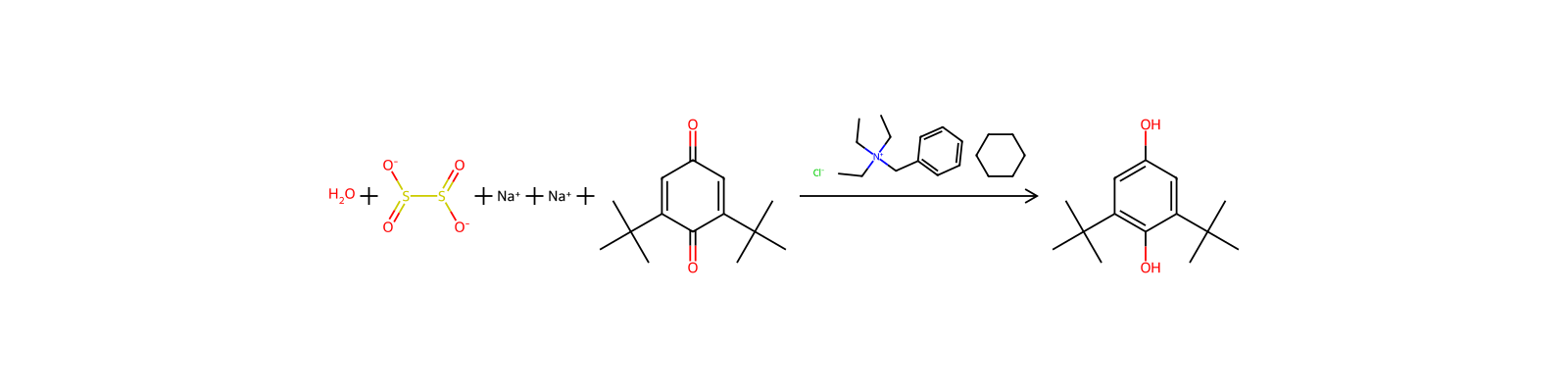
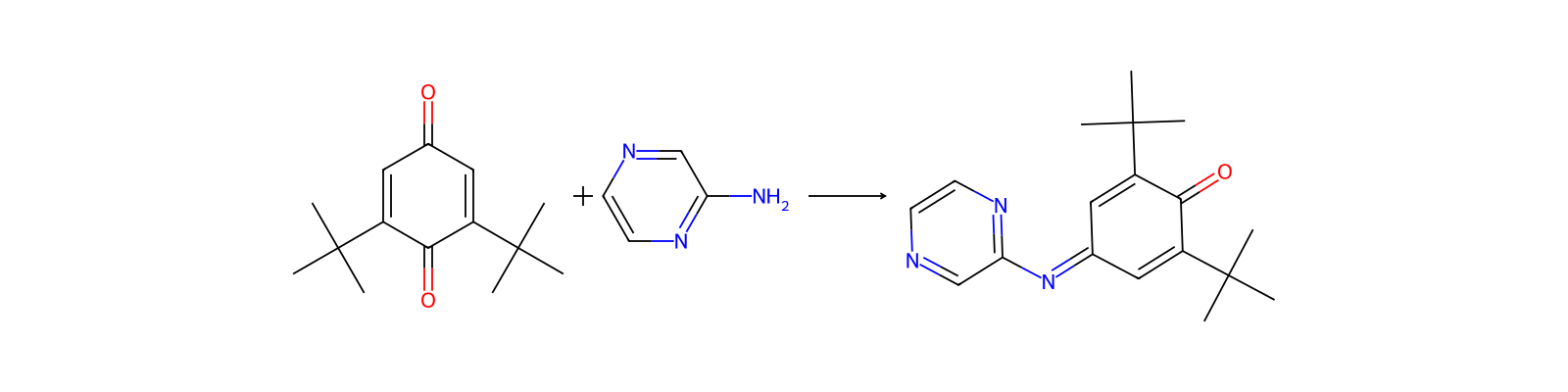
HRID 23804 반응식
HRID 23804반응물로uspto-grants-2005_02
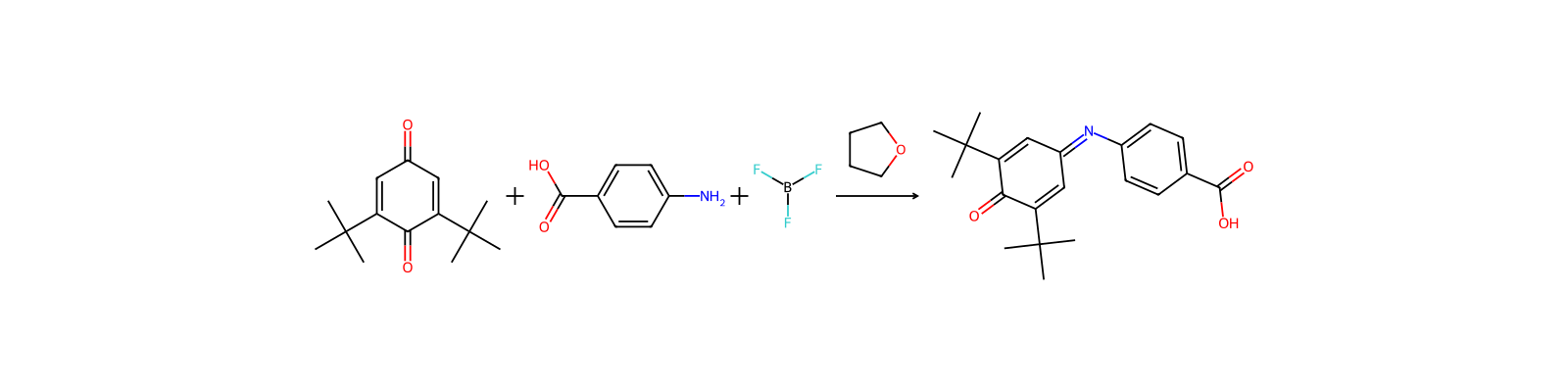
HRID 23809 반응식
HRID 23809반응물로uspto-grants-2005_02
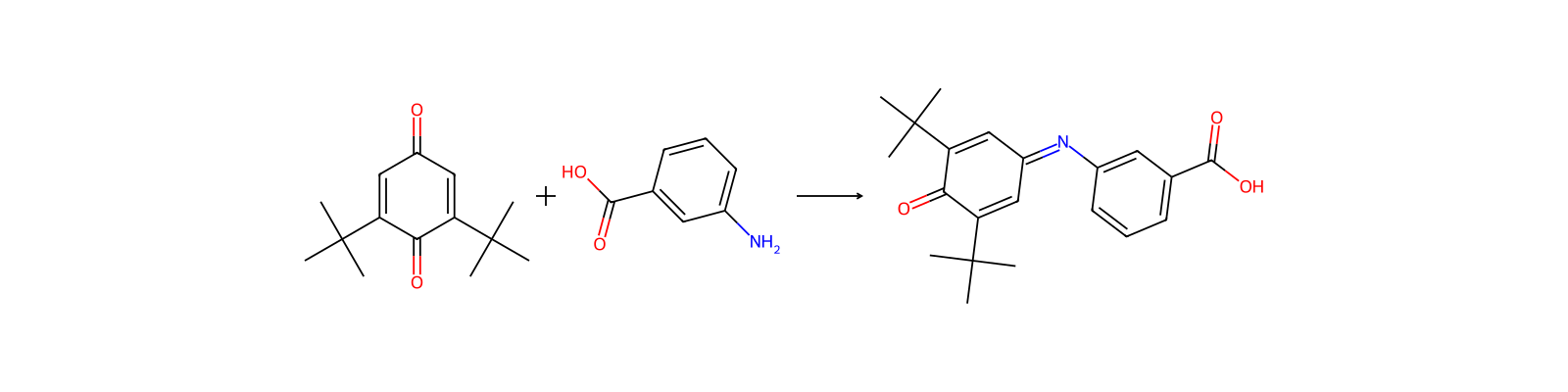
HRID 36723 반응식
HRID 36723반응물로uspto-grants-1995_05
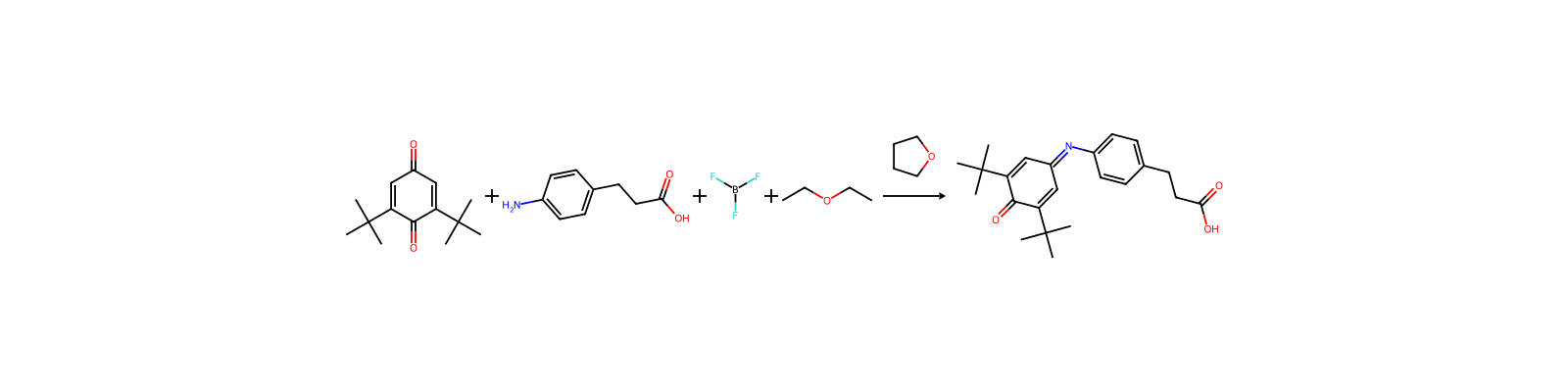
HRID 36725 반응식
HRID 36725반응물로uspto-grants-1995_05
HRID 36731 반응식
HRID 36731반응물로uspto-grants-1995_05
HRID 36733 반응식
HRID 36733반응물로uspto-grants-1995_05
HRID 124673 반응식
HRID 124673반응물로Training data from https://doi.org/10.1039/C8SC04228D (2/10)
HRID 260367 반응식
HRID 260367반응물로uspto-grants-1996_06
1 / 6 페이지

화합물 노트

불러오는 중…

이 페이지에서기본 정보개요이름 및 식별자물성안전 및 규제화학 및 산업관련 반응화합물 노트
더보기
새 노트새 반응견적 요청하기
저장 조건
-20 °C · Amber Vial, -20°C Freezer, Under inert atmosphere
용해도
클로로포름(약간 용해됨), 메탄올(약간 용해됨)
물리적 상태
결정 또는 결정성 분말
색상
주황색에서 갈색으로
수용성
물에 불용성.
BRN
1911512 · 1911512
Henry's Law Constant
6.2 · 6.2×102 mol/(m3Pa) at 25℃, HSDB (2015)
안정성
감광성
InChI
1S/C14H20O2/c1-13(2,3)10-7-9(15)8-11(12(10)16)14(4,5)6/h7-8H,1-6H3
InChIKey
RDQSIADLBQFVMY-UHFFFAOYSA-N
SMILES
CC(C)(C)C1=CC(=O)C=C(C1=O)C(C)(C)C
NIST
2 · 2,5-Cyclohexadiene-1,4-dione, 2,6-bis(1,1-dimethylethyl)-(719-22-2)
EPA
2 · 2,6-Di-tert-butylbenzoquinone (719-22-2)

화학적 성질

ORANGE TO BROWN CRYSTALS OR CRYSTALLINE POWDER

AQUATIC FATE: 2,6-Di-t-butyl-p-benzoquinone should adsorb to suspended solids and organic matter in the water column based on an estimated Koc of 6100(1,SRC) from an experimental log Kow(2) and a suggested classification scheme(3). 2,6-Di-t-butyl-p-benzoquinone (at 0.3 ug/L) had a half-life in Rhine River water of 3.4 days; measurements were made at Lobith and 24.5 hours later at Gorinchem(4). Loss of this compound during this stretch of river may have been due to adsorption to particulates or to biodegradation(4,SRC). An estimated BCF value of 1400(1,SRC), from an experimental log Kow(2), suggests that 2,6-di-t-butyl-p-benzoquinone will bioconcentrate in aquatic organisms. This compound has been detected in fish from the Great Lakes(5). 2,6-Di-t-butyl-p-benzoquinone is not expected to volatilize from water surfaces based on an estimated Henry's Law constant of 1.6X10⁻⁸ atm-cu m/mole(SRC) using a fragment constant estimation method(6).

ATMOSPHERIC FATE: Based on an estimated vapor pressure of 4.1X10⁻⁴ mm Hg at 25 °C(1,SRC), 2,6-di-t-butyl-p-benzoquinone should exist in both the vapor phase and particulate phase in the ambient atmosphere(2,SRC). 2,6-Di-t-butyl-p-benzoquinone should degrade in the vapor phase by reaction with photochemically produced hydroxyl radicals with an estimated half-life of about 17 hours(3,SRC). Particulate-phase 2,6-di-t-butyl-p-benzoquinone may be physically removed from the air by wet and dry deposition(SRC).

Effluent Concentrations1 of 21 samples of wastewater from the photographic industry contained unreported concentrations of 2,6-di-t-butyl-p-benzoquinone(1). 1 of 10 POTW plants sampled contained 2,6-di-t-butyl-p-benzoquinone in the final effluent(2).
Soil Adsorption/Mobility · 1건

Based on an experimental log Kow of 4.42(1), the Koc of 2,6-di-t-butyl-p-benzoquinone is estimated as approximately 6100 using a regression-derived equation(2,SRC). According to a suggested classification scheme(3), this estimated Koc value suggests that 2,6-di-t-butyl-p-benzoquinone will be immobile in soil(SRC). Sewage which had been through secondary treatment was subjected to rapid infiltration; the concentration of 2,6-di-t-butyl-p-benzoquinone in the initial sewage was from 0.022-0.037 ug/L and ranged from barely detected to 0.005 ug/L in the groundwater below the rapid infiltration beds(4). It was believed that the loss of this compound was due to adsorption as the sewage had already been through secondary treatment(4). In an unconfined aquifer, however, 2,6-di-t-butyl-p-benzoquinone was shown to have been transported for a considerable distance(between 1940-1983, estimated 2710 m)(1,5).

Atmospheric ConcentrationsURBAN/SUBURBAN: 2,6-Di-t-butyl-p-benzoquinone was detected in the personal air (1 of 8 samples total) of 12 people located either in New Jersey or North Carolina(1).
Human Toxicity ExcerptsChronic neurotoxic effects include vision disturbances. /From table/ /Quinones/
Fish/Seafood ConcentrationsComposite fish samples (lake trout, walleye) were found to contain 2,6-di-t-butyl-p-benzoquinone in 3 of 8 locations in the Great Lakes (two sites in Lake Erie, one site in Lake Michigan)(1).
Artificial Pollution Sources · 2건

VOLATILE POLLUTANTS, INCLUDING 2,6-DI-T-BUTYL-P-BENZOQUINONE, WERE PRODUCED FROM SEVERAL RUBBER GOODS MANUFACTURING PROCESSES & ANALYZED BY GAS CHROMATOGRAPHY/MASS SPECTROMETRY. THEIR CUMULATIVE CONCN RANGED FROM 25-27,000 UG/CU M.

2,6-Di-t-butyl-p-benzoquinone's production and subsequent use as an oxidant and polymerization catalyst(1), may result in its release to the environment through various waste streams(SRC). 2,6-Di-t-butyl-p-benzoquinone is also an environmental product of the oxidation of 2,6-di-t-butyl phenol, a common antioxidant additive(2,3).

Environmental Biodegradation · 1건

2,6-Di-t-butyl-p-benzoquinone (at 0.3 ug/l) had a half-life in Rhine River water of 3.4 days; measurements were made at Lobith and 24.5 hours later at Gorinchem(1). Degradation of this compound was believed due to aerobic and anaerobic biodegradation(1); however, adsorption to suspended solids and organic matter in the water column was not measured(1,SRC). 2,6-di-t-butyl-p-benzoquinone (at 2 ug/L) initially present in Rhine River water was not detected once the water was passed through a bank filtration process(2). It was not specified whether the loss of this compound was due to biodegradation or adsorption(2,SRC).

Sediment/Soil Concentrations · 1건

2,6-Di-t-butyl-p-benzoquinone was present in Pawtuxet River sediment located downstream of a plant which produced antioxidants (at concentrations of 1 ppm to 80 ppm(1). 2,6-Di-t-butyl-p-benzoquinone was present in sediment (0.1-40 ppm) located downstream from a specialty chemicals manufacturing plant(2).

Environmental Bioconcentration · 1건

An estimated BCF value of 1400 was calculated for 2,6-di-t-butyl-p-benzoquinone, using a measured log Kow of 4.42(1) and a recommended regression-derived equation(2,SRC). This BCF value suggests that 2,6-di-t-butyl-p-benzoquinone will bioconcentrate in aquatic organisms(2,SRC).This compound was detected in fish in the Great Lakes(3) suggesting that bioconcentration may occur(SRC).

Volatilization from Water/Soil · 1건

The Henry's Law constant for 2,6-di-t-butyl-p-benzoquinone is estimated as 1.6X10⁻⁸ atm-cu m/mole(SRC) using a fragment constant estimation method(1). This indicates that 2,6-di-t-butyl-p-benzoquinone will essentially not volatilize from water surfaces(2,SRC).

Non-Human Toxicity ExcerptsAcute neurotoxic effects reported in animals include convulsions; medullary paralysis. /From table/ /Quinones/

안전 데이터

wgk
3
tsca
TSCA listed
rtecs
DK3970000
HS 번호
29146990
risk_code
36/37/38
hazard_code
Xi
safety_code
26-36-36/37/39-22
Hazard Classifications
Eye Irrit. 2Skin Irrit. 2STOT SE 3
스토리지 클래스
11 - Combustible Solids
유해 물질 데이터
719-22-2(Hazardous Substances Data)
2,4,6-트리-터셔리-부틸페놀
3,3',5,5'-테트라-tert-부틸디페노퀴논
2,6-디-t-b부틸페놀

하류 제품

3,3',5,5'-테트라(TERT-BUTYL)[1,1'-바이페닐]-4,4'-DIOL2,6-디-tert-부틸히드로퀴논