
HRID 115709반응물로
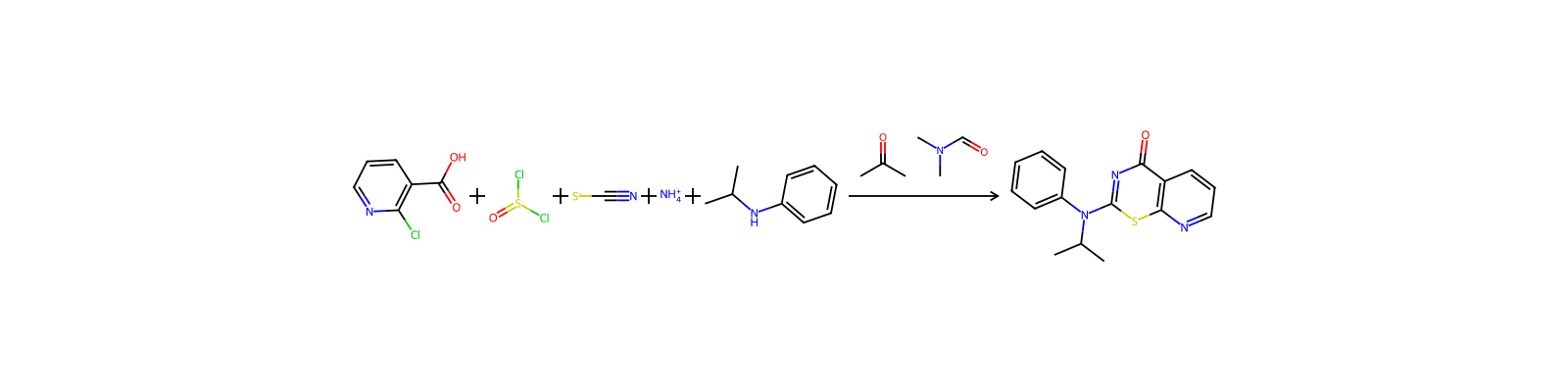
N-Isopropylaniline
데이터를 보충하는 중입니다. 잠시 후 페이지를 새로 고치면 최신 내용을 볼 수 있습니다

768-52-5CC(C)Nc1ccccc1FRCFWPVMFJMNDP-UHFFFAOYSA-NN-isopropylaniline is a clear brown liquid. (NTP, 1992)
768-52-5DTXSID7025479CHEMBL1529910Nitrogen Compounds -> Amines, Aromatic
Flammable agents - 2nd degree
0.93 at 60 °F (NIOSH, 2024) - Less dense than water; will float
0.9526 g/cu cm
Density (at 25 °C): 0.93 g/cm³
0.93 at 60 °F
(60 °F): 0.93
Yellowish liquid
Clear, yellowish liquid.
less than 0.1 mg/mL at 70 °F (NTP, 1992)
Sol in alcohol, ether, acetone, benzene
Solubility in water: insoluble
190 °F (NTP, 1992)
87 °C
190 °F (87.7 °C) (Cleveland Open Cup)
82 °C c.c.
190 °F (open cup)
(oc) 190 °F
397 to 399 °F at 760 mmHg (NTP, 1992)
203 °C @ 760 mm Hg
안전 정보는 참고용이며, 공급업체의 물질안전보건자료(SDS), 관련 법규 및 전문가 평가를 대체하지 않습니다.
Danger
H302 (100%): Harmful if swallowed [Warning Acute toxicity, oral]
P260, P261, P264, P264+P265, P270, P271, P280, P284, P301+P317, P302+P352, P304+P340, P305+P351+P338, P316, P319, P320, P321, P330, P332+P317, P337+P317, P362+P364, P403+P233, P405, and P501 (click each P-code to see the statement)
Aggregated GHS information provided per 82 reports by companies from 6 notifications to the ECHA C&L Inventory. Each notification may be associated with multiple companies.
Warning
H227: Combustible liquid [Warning Flammable liquids]
Chemical: Benzenamine, N-(1-methylethyl)-
The New Jersey Worker and Community Right to Know Act requires public and private employers to provide information about hazardous substances at their workplaces. (N.J.S.A. 34:5A-1 et. seq.)
This chemical is combustible. (NTP, 1992)
Combustible. Gives off irritating or toxic fumes (or gases) in a fire. Above 82 °C explosive vapour/air mixtures may be formed.
THE N-ISOPROPYLANILINE METABOLITES AFTER IP INJECTION OF (14)C-LABELED N-ISOPROPYLANILINE-HCL WERE ANALYZED CHROMATOGRAPHICALLY IN COMBINED URINE SAMPLES FROM FOUR RATS EVERY 24 HR FOR A TOTAL OF 96 HR. 24 HR URINE SAMPLES CONTAINED NO METABOLITES. 4-HYDROXY-N-ISOPROPYLANILINE & P-AMINOPHENOL CONSTITUTING THE MAJOR & MINOR METABOLITE WITH 61 & 8, RESPECTIVELY. N-PHENYL-2-AMINOPROPIONIC ACID, A TRACE METABOLITE, REPRESENTED LESS THAN 1 OF THE TOTAL RADIOACTIVITY.
Used in synthesis of dyes for acrylic fibers and other chemicals; [ACGIH]
Dyeing acrylic fibers; chem intermediate
Benzenamine, N-(1-methylethyl)-: ACTIVE
N-Isopropylaniline is also a metabolite of the microbial degradation of the herbicide propachlor.
용도N-Isopropylaniline is a microbial metabolite of Propachlor (P757300), an acylanilide herbicide that is used to maintain crop protection from weeds. Propachlor is also known to induce Glutathione (G597951)-dependent cytotoxicity and sister chromatid exchanges in human cells.
일반 설명N-isopropylaniline is a clear brown liquid. (NTP, 1992)




203-204 °C
397 °F
397 °F
-58 °F (NIOSH, 2024)
-32 °C
-58 °F
-58 °F
0.03 mmHg at 77 °F (NIOSH, 2024)
0.03 [mmHg]
Vapor pressure, Pa at 25 °C: 4
0.03 mmHg at 77 °F
(77 °F): 0.03 mmHg
Clear light yellow liquid
Section 8(a) of TSCA requires manufacturers of this chemical substance to report preliminary assessment information concerned with production, use, and exposure to EPA as cited in the preamble in 51 FR 41329.
Pursuant to section 8(d) of TSCA, EPA promulgated a model Health and Safety Data Reporting Rule. The section 8(d) model rule requires manufacturers, importers, and processors of listed chemical substances and mixtures to submit to EPA copies and lists of unpublished health and safety studies. N-Isopropylaniline is included on this list.
N-ISOPROPYLANILINE neutralizes acids in exothermic reactions to form salts plus water. May be incompatible with isocyanates, halogenated organics, peroxides, phenols (acidic), epoxides, anhydrides, and acid halides. Flammable gaseous hydrogen may be generated in combination with strong reducing agents, such as hydrides.
Fires involving this compound should be controlled with a dry chemical, carbon dioxide or halon extinguisher. (NTP, 1992)
Use powder, foam, carbon dioxide.
Fresh air, rest. Administration of oxygen may be needed. Refer immediately for medical attention.
Remove contaminated clothes. Rinse and then wash skin with water and soap. Refer immediately for medical attention.
First rinse with plenty of water for several minutes (remove contact lenses if easily possible), then refer for medical attention.
Rinse mouth. Do NOT induce vomiting. Refer immediately for medical attention.
EYES: First check the victim for contact lenses and remove if present. Flush victim's eyes with water or normal saline solution for 20 to 30 minutes while simultaneously calling a hospital or poison control center. Do not put any ointments, oils, or medication in the victim's eyes without specific instructions from a physician. IMMEDIATELY transport the victim after flushing eyes to a hospital even if no symptoms (such as redness or irritation) develop.
(General first aid procedures)
SMALL SPILLS AND LEAKAGE: If you spill this chemical, FIRST REMOVE ALL SOURCES OF IGNITION. Then, use absorbent paper to pick up all liquid spill material. Your contaminated clothing and absorbent paper should be sealed in a vapor-tight plastic bag for eventual disposal. Solvent wash all contaminated surfaces with 60-70% ethanol followed by washing with a soap and water solution. Do not reenter the contaminated area until the Safety Officer (or other responsible person) has verified that the area has been properly cleaned.
SRP: At the time of review, criteria for land treatment or burial (sanitary landfill) disposal practices are subject to significant revision. Prior to implementing land disposal of waste residue (including waste sludge), consult with environmental regulatory agencies for guidance on acceptable disposal practices.
Personal protection: complete protective clothing including self-contained breathing apparatus. Collect leaking liquid in sealable containers. Absorb remaining liquid in sand or inert absorbent. Then store and dispose of according to local regulations.
SRP: The scientific literature for the use of contact lenses in industry is conflicting. The benefit or detrimental effects of wearing contact lenses depend not only upon the substance, but also on factors including the form of the substance, characteristics and duration of the exposure, the uses of other eye protection equipment, and the hygiene of the lenses. However, there may be individual substances whose irritating or corrosive properties are such that the wearing of contact lenses would be harmful to the eye. In those specific cases, contact lenses should not be worn. In any event, the usual eye protection equipment should be worn even when contact lenses are in place.
The worker should immediately wash the skin when it becomes contaminated.
Work clothing that becomes wet or significantly contaminated should be removed and replaced.
TERRESTRIAL FATE: Based on a classification scheme(1), an estimated Koc value of 566(SRC), determined from an estimated log Kow of 2.53(2) and a regression-derived equation(3), indicates that N-isopropylaniline is expected to have low mobility in soil(SRC). A pKa value of 5.3(4) suggests that N-isopropylaniline will partially exist in the protonated form in moist soils and the protonated form of N-isopropylaniline is expected to bind strongly to soil surfaces(SRC). Volatilization of N-isopropylaniline from moist soil surfaces is expected to be an important fate process for the neutral species(SRC) given an estimated Henry's Law constant of 7.4X10⁻⁶ atm-cu m/mole(SRC), using a fragment constant estimation method(5). N-Isopropylaniline is not expected to volatilize from dry soil surfaces(SRC) based upon an estimated vapor pressure of 0.44 mm Hg(SRC), determined from a fragment constant method(6).
AQUATIC FATE: Based on a classification scheme(1), an estimated Koc value of 566(SRC), determined from an estimated log Kow of 2.53(2) and a regression-derived equation(3), indicates that N-isopropylaniline is expected to adsorb to suspended solids and sediment in water(SRC). Volatilization from water surfaces is expected(3) based upon an estimated Henry's Law constant of 7.4X10⁻⁶ atm-cu m/mole(SRC), developed using a fragment constant estimation method(4). Using this Henry's Law constant and an estimation method(3), volatilization half-lives for a model river and model lake are 4 and 47 days, respectively(SRC). A pKa of 5.3(5) suggests that N-isopropylaniline will partially exist in the protonated form in aqueous environments and the protonated form of N-isopropylaniline is not expected to volatilize from water. According to a classification scheme(6), an estimated BCF of 17(SRC), from an estimated log Kow(2) and a regression-derived equation(7), suggests the potential for bioconcentration in aquatic organisms is low.
ATMOSPHERIC FATE: According to a model of gas/particle partitioning of semivolatile organic compounds in the atmosphere(1), N-isopropylaniline, which has an estimated vapor pressure of 0.44 mm Hg at 25 °C(2), is expected to exist solely as a vapor in the ambient atmosphere. Vapor-phase N-isopropylaniline is degraded in the atmosphere by reaction with photochemically-produced hydroxyl radicals(SRC); the half-life for this reaction in air is estimated to be 6 hours(SRC), calculated from its estimated rate constant of 6.1X10⁻¹¹ cu cm/molecule-sec at 25 °C(3) determined using a structure estimation method(3).
The substance can be absorbed into the body by inhalation of its aerosol, through the skin and by ingestion.
inhalation, skin absorption, ingestion, skin and/or eye contact
Blue lips, fingernails and skin. Dizziness. Headache. Laboured breathing.
MAY BE ABSORBED! See Inhalation.
Redness. Pain.
Nausea. Further see Inhalation.
irritation eyes, skin; headache, lassitude (weakness, exhaustion), dizziness; cyanosis; ataxia; dyspnea (breathing difficulty) on effort; tachycardia; methemoglobinemia
The Koc of N-isopropylaniline is estimated as 566(SRC), using an estimated log Kow of 2.53(1) and a regression-derived equation(2). According to a classification scheme(3), this estimated Koc value suggests that N-isopropylaniline is expected to have low mobility in soil. A pKa value of 5.3(4) suggests that N-isopropylaniline will partially exist in the protonated form in moist soils and the protonated form of N-isopropylaniline is expected to bind strongly to soil surfaces(SRC).
N-isopropylaniline (CAS # 768-52-5) was evaluated for acute inhalation toxicity in groups of Sprague-Dawley rats (5/sex/group) exposed for 4 hours in an inhalation chamber to mean analytical concentrations of 1.4, 1.4, 1.3, 1.0 mg/L vapor/aerosol in air. Mortality associated with treatment was consistent with an LC50 (probit) of 1.2 mg/L in air. Rats of a 1.0 mg/L exposure showed neither overt signs of toxicity nor diminished weight gain, while all other treated groups exhibited a transient decrease in mean bodyweights on Day 2 following exposures. Hypoactivity and respiratory distress or irritation were the most oft reported clinical irregularities during 14-day post-exposure observation. Necropsy of both surviving and decedent rats revealed no treatment-related pathology.
N-isopropylaniline (CAS # 768-52-5) was evaluated for subchronic dermal toxicity in Sprague-Dawley rats (10/sex/group) exposed by non-occluded dermal applications upon shaved skin (approximately 10% of total body surface area) to target doses of 0 (negative control), 25, 100, and 400 mg/kg/day, 5 days/week x 4 weeks. A study simulation established 30% loss of test material to volatilization by this method. Treatment was associated with statistically significant reduction in cumulative bodyweight gain and reduced 1st week feed consumption in high dose males relative to controls, but no mortality. Primarily middle and high dose females exhibited dryness, redness, abrasions, and/or scabbing at the treatment sites, although dermal irritation was evident at all exposure levels in both sexes. Dose-related occurrences of anemia and methemoglobinemia were statistically significant (Dunnett's T, p < 0.05) in high and mid-dose rats of both sexes, as splenic changes (increased relative and absolute weight, hematopoiesis, and hemosiderin accumulation) were in high dose animals. Acanthosis (epidermal thickening) was also observed in all treated males and females of the two highest doses. Enlargement of the submaxillary lymph node with hyperplasia on histopathologic examination was regarded as secondary to treatment-induced skin lesions. The authors concluded that treatment-related elevations of reticulocyte counts and increased hemosiderin pigment in the spleen suggests toxic anemia by increased red blood cell destruction with compensating activity in both the spleen and bone marrow, rather than reduced production by the bone marrow.
N-isopropylaniline (CAS # 768-52-5) was evaluated for subchronic inhalation toxicity in Sprague-Dawley rats (15/sex/group) exposed in an inhalation chamber to mean analytical concentrations of 0, 5.3, 20, and 100 mg/cu m, 6 hours/day, 5 days/week x approximately 14 weeks. Following gross necropsy, only liver and kidneys of high dose animals and spleens of all treated and control animals were submitted for microscopic examination. Throughout study, no deaths or clinical toxicity were attributable to treatment, while weight gains were reduced from second week of treatment to terminal necropsy. Males and females of all exposure levels also exhibited statistically significant (Dunnett's T, p < 0.05) dose-related methemoglobinemia, with elevated methemoglobin levels ranging from 56 to 344% over those in controls; slight (6% or less) but statistically significant anemia was noted in high-dose animals of both sexes. Gross pathology included slight increases in relative kidney and spleen weights on terminal necropsy. Microscopically, all high exposure animals exhibited increased splenic hemosiderin levels. Universal methemoglobinemia in treated rats precluded calculation of a NOEL in this study.
N-Isopropylaniline's production and use as a dye and chemical intermediate(1) may result in its release to the environment through various waste streams(SRC). N-Isopropylaniline is also a metabolite of the microbial degradation of the herbicide propachlor(2).
An estimated BCF of 18 was calculated for N-isopropylaniline(SRC), using an estimated log Kow of 2.53(1) and a regression-derived equation(2). According to a classification scheme(3), this BCF suggests the potential for bioconcentration in aquatic organisms is low.
Section 8(a) of TSCA requires manufacturers of this chemical substance to report preliminary assessment information concerned with production, use, and exposure to EPA as cited in the preamble in 51 FR 41329.
Pursuant to section 8(d) of TSCA, EPA promulgated a model Health and Safety Data Reporting Rule. The section 8(d) model rule requires manufacturers, importers, and processors of listed chemical substances and mixtures to submit to EPA copies and lists of unpublished health and safety studies. N-Isopropylaniline is included on this list.
N-isopropylaniline (CAS # 768-52-5) was evaluated for subchronic inhalation toxicity in Sprague-Dawley rats (15/sex/group) exposed in inhalation chambers to mean analytical concentrations of 0, 0.055, 0.16, and 0.49 mg/L of air, 6 hours/day, on 21 days over a 4-week period. No treatment-related mortality occurred throughout 21-day study. During exposure, high dose animals of both sexes exhibited hypoactivity and lacrimation, while observations of oral and nasal drainage and encrustation, salivation, and lacrimation were dose-related. High dose animals of both sexes weighed less throughout the study. Dose-related methemoglobinemia at all exposure levels and anemia of high dose males and females were statistically significant (two-tailed Dunnett's T, p < 0.05) by both Coulter and CO-oximeter, the methemoglobinemia levels increasing 3.5% between interim and terminal determinations with continued high level exposures. Red blood cell counts and hematocrit values were significantly (p < 0.01) diminished in high dose males and mid and high dose females. Study authors interpreted these findings, with significantly elevated bilirubin levels (0.49 mg/L) in the absence of detectable liver disease, as indicative of mild hemolytic activity. Mild to moderate reticulocytosis was also significant (p < 0.05 in mid dose males, p < 0.01 in all others) in mid and high dose males and females. Upon terminal necropsy, both absolute and relative spleen weights were significantly elevated in high- and mid-level exposed males and females. Congestion and increased hematopoiesis characterized the splenic lesions in these groups and 4 females of 0.055 mg/L N-isopropylaniline exposures. Additionally, females of mid and high exposures consistently exhibited nephrosis with regeneration in the para recta, while males of all exposure levels showed random renal cortical lesions ranging in severity from nephrosis with regenesis to nephropathy. A NOEL for N-isopropylaniline was not identified in this study.
For more TSCA Test Submissions (Complete) data for N-ISOPROPYLANILINE (8 total), please visit the HSDB record page.