

기본 정보
- 표준 SMILES
CCCCCCCCCCCCN- InChIKey
JRBPAEWTRLWTQC-UHFFFAOYSA-N- 분자식
- C12H27N
- 평균 분자량
- 185.35 g/mol
개요
Dodecanamine appears as a yellow liquid with an ammonia-like odor. Insoluble in water and less dense than water. Hence floats on water. Contact may irritate skin, eyes and mucous membranes. May be toxic by ingestion, inhalation or skin absorption. Used to make other chemicals.
이름 및 식별자
- 우선 이름
- Dodecylamine
- IUPAC
- dodecan-1-amine
- 현지명
- 도데킬아민
- 영어명
- Dodecylamine
- 분자식
- C12H27N
- 분자량
- 185.35
이름 및 동의어
DODECYLAMINE124-22-11-DodecanamineLaurylamine1-Aminododecanen-DodecylamineLauramineNissan amine BBAlamine 4Monododecylaminen-LaurylamineLaurinamine
이름 더 보기
도데킬아민라우라민도데실아민dodecan-1-aMineDodecanamine1-DODECYLAMINEN-DODECYLANILINE1-Dideanamine
Armeen 12DKemamine P690Amine BBFarmin 20DLauryl amineDTXSID3021984YWY9OD6A2KDTXCID901984
데이터베이스 식별자
- CAS
124-22-1、68155-27-1- PubChem CID
- 13583
- DTXSID
DTXSID3021984- ChEMBL
CHEMBL109904- ChEBI
CHEBI:193593- UNII
- YWY9OD6A2K
- EC Number
- 204-690-6
- Nikkaji
- J43.184B
물성
구조 계산 물성
- XLogP
- 5.3
- 극성 표면적
- 26 Ų
- 수소 결합 공여자 수
- 1
- 수소 결합 수용자 수
- 1
- 회전 가능 결합 수
- 10
- 무거운 원자 수
- 13
- 형식 전하
- 0
- 복잡도
- 81.2
실험 및 물리화학적 성질
Chemical ClassesNitrogen Compounds -> Amines, Aliphatic
Cosmetics
Cosmetic ingredients (Lauramine) -> CIR (Cosmetic Ingredient Review)
Personal care product
Antistatic
SpringerMaterials PropertiesBoiling point
LogP4.76
OdorAMINE ODOR
Density
0.8015 g/cu cm @ 20 °C/4 °C
0.81 g/cm³
Color/FormOIL
Solubility
Miscible in ethanol, ethyl ether, and benzene.
In water, 0.078 g/l at 25 °C and pH 11.8.
Solubility in water: poor
Flash Point352 °F (COC)
Endocrine DisruptorsPotential endocrine disrupting compound
Boiling Point
259 °C
259 °C
DecompositionWhen heated to decomposition it emits acrid smoke and irritating fumes.
물리화학적 성질
- 녹는점
- 27 · 27-29 °C(lit.)
- 끓는 점
- 247 · 247-249 °C(lit.)
- 밀도
- 0.806 g/mL · 0.806 g/mL at 25 °C(lit.)
- 증기압
- 64 mm · 64 mm Hg ( 170 °C)
- 굴절률
- 1.4421 · 1.4421
- 인화점
- 230 °F · >230 °F
- 저장 조건
- 30 °C · Store below +30°C.
- 용해도
- 25 °C에서 · 물: 25°C에서 용해성3.5g/L
- 산도 계수 (pKa)
- 10.63 · 10.63(at 25℃)
- 물리적 상태
- 결정질 저융점 고체
- Specific Gravity
- 0.806 · 0.806
- 색상
- 하얀색
- 수용성
- 78 mg/L · 78mg/L(25℃)
- BRN
- 1633576 · 1633576
- Henry's Law Constant
- 3.7 · 3.7×10-2 mol/(m3Pa) at 25℃, HSDB (2015)
- 안정성
- 안정적인. 타기 쉬운. 산 염화물, 산, 산 무수물, 산화제와 호환되지 않습니다.
- 화장품 원료 기능
- 대전방지제
- InChI
- 1S/C12H27N/c1-2-3-4-5-6-7-8-9-10-11-12-13/h2-13H2,1H3
- InChIKey
- JRBPAEWTRLWTQC-UHFFFAOYSA-N
- SMILES
- CCCCCCCCCCCCN
- LogP
- 4.33 at · 4.33 at 25℃
- NIST
- 1 · 1-Dodecanamine(124-22-1)
- EPA
- Dodecylamine (124-22-1)
화학적 성질
Dodecylamine is a solid white odor ammoniacal melting at a temperature between 27 and 31°C.In liquid state, dodecylamine has a yellow color and an oily appearance, dodecylamin's boiling point being 259° C.
안전 및 규제
GHS 분류
GHS Classification
This chemical does not meet GHS hazard criteria for 3.7% (32 of 855) of reports.
Danger
H290 (52.4%): May be corrosive to metals [Warning Corrosive to Metals]
P234, P260, P261, P264, P264+P265, P270, P271, P273, P280, P301+P316, P301+P317, P301+P330+P331, P302+P361+P354, P304+P340, P305+P354+P338, P316, P317, P319, P321, P330, P331, P363, P390, P391, P403+P233, P405, P406, and P501 (click each P-code to see the statement)
Aggregated GHS information provided per 855 reports by companies from 26 notifications to the ECHA C&L Inventory. Each notification may be associated with multiple companies.
Danger
유해성 정보
Regulatory Information
Chemical: 1-Dodecanamine
1-Dodecanamine is listed on the EPA's Chemical Data Reporting (CDR) system. Manufacturers and importers of 1-Dodecanamine are required to report information about their production and use of this chemical to the EPA under the Toxic Substances Control Act (TSCA). (40 eCFR Part 711)
Status: Active Update: 31-07-2018 https://echa.europa.eu/registration-dossier/-/registered-dossier/15915
Dodecylamine: Does not have an individual approval but may be used under an appropriate group standard
Other Safety InformationIMAP assessments - Primary aliphatic (C12-22) and fatty amines: Human health tier II assessment
DOT LabelCorrosive
Fire Hazards
Excerpt from ERG Guide 153 [Substances - Toxic and/or Corrosive (Combustible)]:
Combustible. Gives off irritating or toxic fumes (or gases) in a fire.
Fire PotentialCombustible when exposed to heat or flame ...
Health HazardsExcerpt from ERG Guide 153 [Substances - Toxic and/or Corrosive (Combustible)]:
Hazards Summary
A corrosive substance that can cause injury to the skin, eyes, and respiratory tract; Inhalation may cause pulmonary edema; [ICSC] Severe skin irritation and necrosis observed in animals; Emergency treatment: Corrosives-alkaline; [HSDB] No deaths observed in rats dosed by gavage at 2000 mg/kg; Non-hydroxylated fatty nitrogen derived amines: Low acute oral and dermal toxicity in animals; [EPA ChAMPS] A severe skin and eye irritant; [RTECS]
Reactive GroupAmines, Phosphines, and Pyridines
Reactivity Profile
DODECANAMINE neutralizes acids in exothermic reactions to form salts plus water. May be incompatible with isocyanates, halogenated organics, peroxides, phenols (acidic), epoxides, anhydrides, and acid halides. Flammable gaseous hydrogen may be generated in combination with strong reducing agents, such as hydrides.
Chemical DangersDecomposes on burning. This produces toxic fumes including nitrogen oxides. The solution in water is a weak base. Reacts with acids, acid anhydrides, acid chlorides and oxidants.
DOT Hazard Classification
1-Dodecylamine
Marine pollutant
Air and Water ReactionsInsoluble in water.
안전 및 보호
Fire Fighting
Excerpt from ERG Guide 153 [Substances - Toxic and/or Corrosive (Combustible)]:
Use water spray, powder, foam, carbon dioxide.
First Aid Measures
Fresh air, rest. Half-upright position. Artificial respiration may be needed. Refer for medical attention.
Remove contaminated clothes. Rinse skin with plenty of water or shower. Refer for medical attention .
First rinse with plenty of water for several minutes (remove contact lenses if easily possible), then refer for medical attention.
Rinse mouth. Do NOT induce vomiting. Give one or two glasses of water to drink. Refer for medical attention .
First AidExcerpt from ERG Guide 153 [Substances - Toxic and/or Corrosive (Combustible)]:
Safe StorageSeparated from acids, acid anhydrides, acid chlorides and oxidants. Store in an area without drain or sewer access. Provision to contain effluent from fire extinguishing.
Fire Fighting ProceduresTo fight fire, use foam, carbon dioxide, dry chemical.
Nonfire Spill ResponseExcerpt from ERG Guide 153 [Substances - Toxic and/or Corrosive (Combustible)]:
Disposal Methods
SRP: At the time of review, criteria for land treatment or burial (sanitary landfill) disposal practices are subject to significant revision. Prior to implementing land disposal of waste residue (including waste sludge), consult with environmental regulatory agencies for guidance on acceptable disposal practices.
Spillage Disposal
Personal protection: chemical protection suit including self-contained breathing apparatus. Do NOT let this chemical enter the environment. Sweep spilled substance into covered sealable containers. Carefully collect remainder. Then store and dispose of according to local regulations.
Isolation and EvacuationExcerpt from ERG Guide 153 [Substances - Toxic and/or Corrosive (Combustible)]:
Eye PreventionWear face shield or eye protection in combination with breathing protection.
Fire PreventionNO open flames.
Inhalation RiskNo indication can be given about the rate at which a harmful concentration of this substance in the air is reached on evaporation at 20 °C.
독성 정보
Environmental Fate
TERRESTRIAL FATE: Based on a classification scheme(1), an estimated Koc value of 9,300(SRC) determined from an estimated log Kow of 4.8(2,SRC) and a regression-derived equation(3) indicates that dodecylamine is expected to be immobile in soil(SRC). A pKa of 10.63(4) indicates dodecylamine will exist predominately in the protonated form at environmental pHs and as a result, volatilization from moist soil surfaces is not expected to be an important fate process(SRC). Dodecylamine is not expected to volatilize from dry soil surfaces(SRC) based upon a vapor pressure of 8.05X10⁻³ mm Hg(5). A 60% of theoretical BOD in an activated sludge inoculum over a 12 day incubation period suggests that dodecylamine may biodegrade in soil(6).
AQUATIC FATE: Based on a classification scheme(1), an estimated Koc value of 9,300(SRC) determined from an estimated log Kow of 4.8(2,SRC) and a regression-derived equation(3) indicates that dodecylamine is expected to adsorb to suspended solids and sediment in the water column(SRC). A pKa of 10.63(4) indicates that volatilization from water surfaces is not expected to be an important fate process since this compound will exist predominately in the protonated form at environmental pHs(SRC). According to a classification scheme(5), an estimated BCF of 2,400(3,SRC), from an estimated log Kow(2,SRC), suggests the potential for bioconcentration in aquatic organisms is very high(SRC). A 60% of theoretical BOD in an activated sludge inoculum over a 12 day incubation period, suggests that dodecylamine may biodegrade in water(6).
ATMOSPHERIC FATE: According to a model of gas/particle partitioning of semivolatile organic compounds in the atmosphere(1), dodecylamine, which has a vapor pressure of 8.05X10⁻³ mm Hg at 25 °C(2), is expected to exist solely as a vapor in the ambient atmosphere. Vapor-phase dodecylamine is degraded in the atmosphere by reaction with photochemically-produced hydroxyl radicals(SRC); the half-life for this reaction in air is estimated to be 8.4 hours(SRC) from its rate constant of 4.6X10⁻¹¹ cu cm/molecule-sec estimated using a structure estimation method(3).
Food Survey Values
Dodecylamine was detected in the following samples of mixed pickles, mg/kg: cucumber in aromatic vinegar, 2.7; cucumber in aromatic vinegar brine, 1.9 mg/l; pepperoni, 6.4; pepperoni brine, 0.7 mg/l; pickled onions, 3.6; pickled onions brine, 0.1 mg/l(1).
Adverse EffectsDermatotoxin - Skin burns.
Exposure RoutesThe substance can be absorbed into the body by ingestion.
Toxicity Summary
The safety of Lauramine and Stearamine has not been documented and substantiated. The CIR Expert Panel cannot conclude whether these ingredients are safe for use in cosmetic products until the appropriate safety data have been obtained and evaluated.
The available data are insufficient to support safety
Signs and Symptoms
Burning sensation. Cough. Sore throat. Laboured breathing. Shortness of breath. Symptoms may be delayed.
Redness. Pain. Skin burns.
Redness. Pain. Severe deep burns.
Abdominal pain. Burning sensation. Shock or collapse.
ICSC Environmental DataThe substance is very toxic to aquatic organisms. The substance may cause long-term effects in the aquatic environment.
Soil Adsorption/Mobility
The Koc of dodecylamine is estimated as 9,300(SRC), using an estimated log Kow of 4.8(1,SRC) and a regression-derived equation(2). According to a classification scheme(3), this estimated Koc value suggests that dodecylamine is expected to be immobile in soil. An H-Type isotherm was observed for the sorption of dodecylamine to sodium montmorillonite in aqueous solution; this type of isotherm indicates that the solute is preferentially sorbed to such an extent that no measurable amount remains in solution(4).
Artificial Pollution SourcesDodecylamine's production and use as a cationic surface-active agent(1) may result in its release to the environment through various waste streams(SRC).
Environmental Biodegradation
A 60% of theoretical BOD (30 ppm dodecylamine) in an activated sludge inoculum over a 12 day incubation period, suggests that dodecylamine may biodegrade in the environment(1). No biodegradation was observed for 100 ppm dodecylamine in an activated sludge over a 12 day incubation period(1).
Environmental Bioconcentration
An estimated BCF of 2,400 was calculated for dodecylamine(SRC), using an estimated log Kow of 4.8(1,SRC) and a regression-derived equation(2). According to a classification scheme(3), this BCF suggests the potential for bioconcentration in aquatic organisms is very high.
Volatilization from Water/Soil
The Henry's Law constant for dodecylamine is estimated as 2.7X10⁻⁴ atm-cu m/mole(SRC), using a fragment constant estimation method(1). This Henry's Law constant indicates that the neutral form of dodecylamine is expected to volatilize from water surfaces(2). Based on this Henry's Law constant, the volatilization half-life from a model river (1 m deep, flowing 1 m/sec, wind velocity of 3 m/sec)(2) is estimated as approximately 14 days(SRC). The volatilization half-life from a model lake (1 m deep, flowing 0.05 m/sec, wind velocity of 0.5 m/sec)(2) is estimated as 110 days(SRC). A pKa of 10.63(3) indicates dodecylamine will exist predominately in the protonated form at environmental pHs and therefore volatilization from water and moist soil surfaces is not expected to be an important fate process(SRC). Dodecylamine is not expected to volatilize from dry soil surfaces(SRC) based upon a vapor pressure of 8.05X10⁻³ mm Hg(4).
안전 데이터
- wgk
- 2
- tsca
- TSCA listed
- rtecs
- JR6475000
- ridadr
- UN 3259 8/PG 3
- 독성
- LD50 orally in Rabbit: 1020 mg/kg
- HS 번호
- 29211980
- risk_code
- 22-34-50/53-20/21/22-65-48/22-37-35
- hazard_code
- C,N
- safety_code
- 26-36/37/39-45-60-61-62
- 포장분류
- II
- 위험 등급
- 8
- 기존화학 물질
- KE-12825
- F 고인화성물질
- 10-34
- Hazard Classifications
- Aquatic Acute 1Aquatic Chronic 1Asp. Tox. 1Eye Dam. 1Skin Corr. 1BSTOT RE 2 OralSTOT SE 3
- 스토리지 클래스
- 8A - Combustible corrosive hazardous materials
- 유해 물질 데이터
- 124-22-1(Hazardous Substances Data)
화학 및 산업
약리 정보
Metabolism/Metabolites
MONOAMINE...& DIAMINE OXIDASE...OCCUR WIDELY...MOST CONCN IN LIVER, KIDNEY, & INTESTINAL MUCOSA. ...ASSUMED THAT THEY PLAY AN IMPORTANT ROLE IN "DETOXICATION" OF AMINES...AMMONIA FORMED IS CONVERTED TO UREA. HYDROGEN PEROXIDE IS ACTED ON BY CATALASE...ALDEHYDE FORMED /GIVES A/...CARBOXYLIC ACID. /AMINES/
MeSH Pharmacological Classification
Agents that modify interfacial tension of water; usually substances that have one lipophilic and one hydrophilic group in the molecule; includes soaps, detergents, emulsifiers, dispersing and wetting agents, and several groups of antiseptics.
Absorption, Distribution and ExcretionAMINES ARE WELL ABSORBED FROM GUT & RESPIRATORY TRACT. /AMINES/
용도 및 제조
Uses
CIR ingredient: Lauramine
Used in cationic surfactants and to make dodecylguanidine acetate (fungicide); [HSDB] Used in dye and pigment production and as a surfactant for non-metallic mineral mining and quarrying; [EPA ChAMPS]
Metal Extraction and Refining [Category: Industry]
CHEM INT FOR THE FUNGICIDE, DODECYLGUANIDINE ACETATE; CHEM INT FOR CATIONIC SURFACTANTS
Cationic surface-active agent.
U.S. Production
2023: 100,000 - <250,000 lb
(1971) 3.1X10+8 GRAMS
Consumption PatternsPRIMARILY AS A CHEMICAL INTERMEDIATE FOR THE FUNGICIDE, DODECYLGUANIDINE ACETATE (1976)
Industry UsesIntermediate
Methods of Manufacturing
REACTION OF DODECANOIC ACID WITH AMMONIA TO FORM LAURONITRILE, FOLLOWED BY CATALYTIC HYDROGENATION TO FORM DODECYLAMINE
Lauric acid, broad cut/lauric acid, narrow cut + ammonia (nitrile formation/hydrogenation).
Use ClassificationCosmetics -> Antistatic
General Manufacturing Information
All Other Basic Organic Chemical Manufacturing
1-Dodecanamine: ACTIVE
WASTEWATER CONTAINING 1 G UO2/L WAS TREATED WITH DODECYLAMINE ACETATE (50 MG) & 20 MG TAKASA FROTH. UO2 RECOVERY IN FROTH WAS 98%.
EVALUATED FOR INHIBITORY ACTIVITY AGAINST S MUTANS 6715, DODECYLAMINE SHOWED GOOD ACTIVITY. FURTHER IN VITRO STUDIES AGAINST OTHER PLAQUE-FORMING BACTERIA ARE NEEDED TO DETERMINE BEST CLINICAL AGENT.
응용 분야
일반 설명Dodecylamine is a yellow liquid with an ammonia-like odor. Insoluble in water and less dense than water. Hence floats on water. Contact may irritate skin, eyes and mucous membranes. May be toxic by ingestion, inhalation or skin absorption. Used to make other chemicals.
상·하류 제품 정보
상류 원료
하류 제품
공급사50 곳
国药集团化学试剂有限公司86-21-63210123 · [email protected]
梯希爱(上海)化成工业发展有限公司021-67121386 · [email protected]
上海阿拉丁生化科技股份有限公司400-6206333 13167063860 · [email protected]
山东隆汇化工有限公司531-88613858 15562516958 · [email protected]
山东安米化工科技有限公司0533-0533-2115911 13396436781 · [email protected]
T&W GROUP021-61551611 13296011611 · [email protected]
Syntechem Co.,Ltd[email protected]
上海迈瑞尔生化科技有限公司4006356688 18621169109 · [email protected]
阿法埃莎(中国)化学有限公司400-6106006 · [email protected]
安耐吉化学&3A(安徽泽升科技股份有限公司)400-0056266 · [email protected]
上海瀚鸿科技股份有限公司021-54306202 13764082696 · [email protected]
上海比阳实业有限公司+86-15021878111 · [email protected]
山东西亚化学有限公司13355009207 13355009207 · [email protected]
玛雅试剂+86 (573) 82222445 (0)18006601000 452520369 · [email protected]
四川库利南科技有限公司400-1166-196 18981987031 · [email protected]
河南多贝化工有限公司0370-2785118 17550508557 · [email protected]
斯百全化学(上海)有限公司021-021-021-67601398-809-809-809 15221380277 · [email protected]
北京泰亚杰科技有限公司021-33690831-8001 13552411790;18616022633 · [email protected]
艾科试剂4008-755-333 18080918076 · [email protected]
上海思域化工科技有限公司86-21-34053660 · [email protected]
赛默飞世尔科技(中国)有限公司800-810-5118 · [email protected]
北京伊诺凯科技有限公司400-810-7969 010-59572699 · [email protected]
TCI AMERICA800-4238616 · [email protected]
TOKYO CHEMICAL INDUSTRY CO., LTD.03-36680489 · [email protected]
TCI Europe320-37350700 · [email protected]
越林试剂021-62960152 · [email protected]
上海将来实业股份有限公司021-61552785 · [email protected]
安徽科迪达化工有限公司0554-2106669 · [email protected]
成都零六生物科技有限公司400-1166-196 13458535857 · [email protected]
湖南华腾制药有限公司400-8592883 · [email protected]
上海创赛科技有限公司400-6087598 15021221957 · [email protected]
杭州宇昊化工科技有限公司0571-82693216 · [email protected]
上海德榜化工有限公司021-61531158 · [email protected]
上海麦克林生化科技股份有限公司15221275939 15221275939 · [email protected]
杭州杰恒化工有限公司0571-87396432 · [email protected]
上海青航化工有限公司021-50840321, 18601625411 · [email protected]
上海有朋化工有限公司021-69005955 13701776567 · [email protected]
北京海力扬化学科技有限公司13718199399 · [email protected]
四川海诺威科技有限公司13708085536 13708085536 · [email protected]
江苏艾康生物医药研发有限公司025-66028182 17714375163 · [email protected]
上海凯赛化工有限公司021-33516722 13701817765 · [email protected]
上海彤源化工有限公司021-021-69182866 13701855675 · [email protected]
上海孚一生物科技有限公司+86 (21) 61124340
成都润泽本土化工有限公司13096311329 028-88469284 616445927 · [email protected]
北京华扬致成科技有限公司13716033033 · [email protected]
上海蓝润化学有限公司021-69515658 ; 69515628 13701998368 · [email protected]
上海容立化学科技有限公司021-69992220 13701886816 · [email protected]
上海康拓化工有限公司021-69185552 13701777608 · [email protected]
湖北巨胜科技有限公司027-59599241 18871490274 · [email protected]
池州凯隆进出口贸易有限公司[email protected]
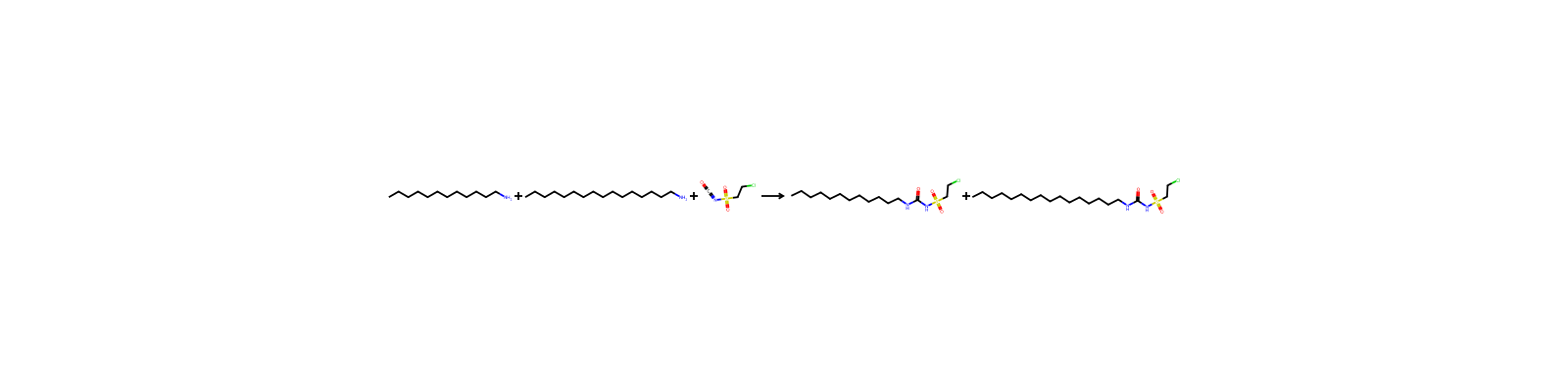
관련 반응
312건




연결된 노트
불러오는 중…