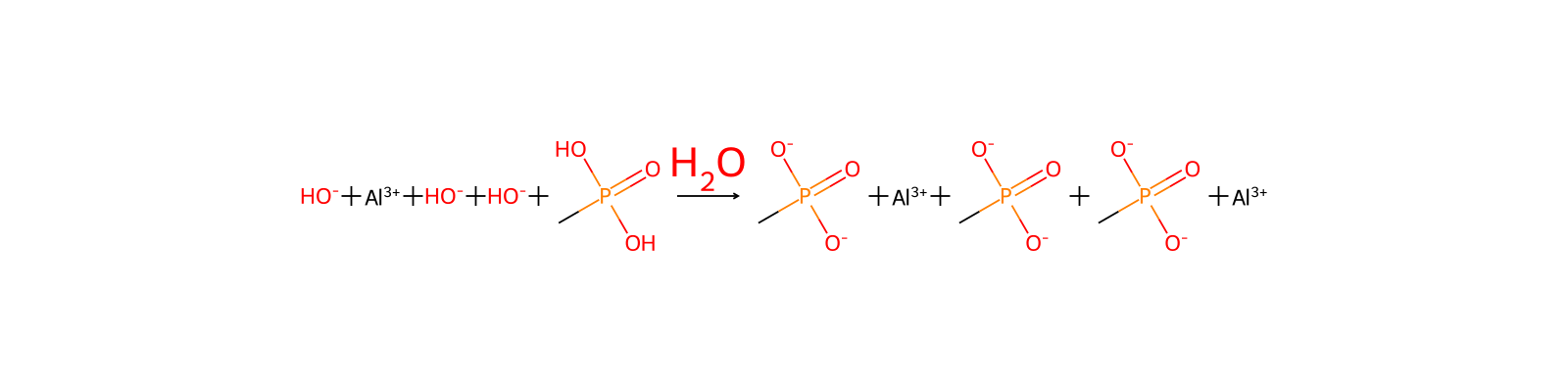
HRID 234593반응물로
Methylphosphonic acid

993-13-5CP(=O)(O)OYACKEPLHDIMKIO-UHFFFAOYSA-NMethylphosphonic acid is a one-carbon compound that is phosphonic acid in which the hydrogen attached to the phosphorus is substituted by a methyl group. It is a member of phosphonic acids and a one-carbon compound. It is functionally related to a phosphonic acid. It is a conjugate acid of a methylphosphonate(1-).
993-13-5DTXSID5047748CHEMBL122938CHEBI:45129Soluble in ethanol and ethyl ether; insoluble in benzene
In water, >20,000 mg/l (no temperature reported)
Liquid
White solid; [HSDB] White flakes or crystalline solid; [MSDSonline]
안전 정보는 참고용이며, 공급업체의 물질안전보건자료(SDS), 관련 법규 및 전문가 평가를 대체하지 않습니다.
Danger
H302 (91.9%): Harmful if swallowed [Warning Acute toxicity, oral]
P260, P264, P264+P265, P270, P280, P301+P317, P301+P330+P331, P302+P361+P354, P304+P340, P305+P354+P338, P316, P317, P321, P330, P363, P405, and P501 (click each P-code to see the statement)
Aggregated GHS information provided per 86 reports by companies from 6 notifications to the ECHA C&L Inventory. Each notification may be associated with multiple companies.
Chemical: Phosphonic acid, methyl-
Phosphonic acid, P-methyl- is listed on the EPA's Chemical Data Reporting (CDR) system. Manufacturers and importers of Phosphonic acid, P-methyl- are required to report information about their production and use of this chemical to the EPA under the Toxic Substances Control Act (TSCA). (40 eCFR Part 711)
PMN - indicates a commenced PMN (Pre-Manufacture Notices) substance.
REACH registered substance: Methylphosphonic acid (EC: 213-607-2)
Phosphonic acid, methyl-: Does not have an individual approval but may be used as a component in a product covered by a group standard. It is not approved for use as a chemical in its own right.
WHO; Diseases Caused by Phosphorus and Its Toxic Compounds; Early Detection of Occupational Diseases pg 53-62 (1986). Review of diseases and health related effects resulting from exposure to phosphorus or phosphorus cmpd. /Phosphorus or phosphorus cmpd/
For the verification of the use of chemical warfare agents (CWA), sarin, soman and VX, a simple rapid and accurate method which allows us to simultaneously determine their degradation products, isopropyl methylphosphonic acid (IPMPA), pinacolyl methylphosphonic acid (PMPA), ethyl methylphosphonic acid (EMPA) and methylphosphonic acid (MPA), in human serum, was explored by indirect photometric detection ion chromatography (IPD-IC) which employs an anion-exchange column. IC analysis was performed after sample preparation with an Ag+-form cation-exchange resin cartridge, and the four methylphosphonic acids could be separated well. The proposed conditions are as follows: eluent, 0.5 mM phthalic acid-0.1 mM Tris (hydroxymethyl) aminomethane-5% acetonitrile; flow-rate, 1.0 ml/min; temperature, 50 degrees C; UV detector, 266 nm. All four methylphosphonic acids were eluted within 30 min with hardly any disturbance by impurities in the serum. Linear calibration curves were obtained for methylphosphonic acid, ethyl methylphosphonic acid and isopropyl methylphosphonic acid in the concentration range from 50 ng/ml to 1 ug/ml and for pinacolyl methylphosphonic acid from 100 ng/ml to 1 ug/ml. The relative standard deviation for the methylphosphonic acids ranged from 3.8 to 6.9% at 500 ng/ml and the detection limits were 40 ng/ml for methylphosphonic acid, ethyl methylphosphonic acid and isopropyl methylphosphonic acid and 80 ng/ml for pinacolyl methylphosphonic acid. The method would be suitable for analysis of human serum samples.
Breakdown product of the nerve agents sarin, soman, and VX; Used in the production of lubricant additives, to treat textiles, and to simulate chemical warfare agents; [HSDB]
Textiles (Fiber & Fabric Manufacturing) [Category: Industry]
Organic synthesis
Used in the production of lubricant additives and for treating textiles.
Chemical warfare simulant


white crystals or flakes
SRP: At the time of review, criteria for land treatment or burial (sanitary landfill) disposal practices are subject to significant revision. Prior to implementing land disposal of waste residue (including waste sludge), consult with environmental regulatory agencies for guidance on acceptable disposal practices.
5.7 [mg/m3]
62 [mg/m3]
370 [mg/m3]
Respiratory protection (supplied-air respirator with full facepiece or self-contained breathing apparatus) should be available where these compounds are manufactured or used and should be worn in case of emergency and overexposure. /Phosphorus compounds/
TERRESTRIAL FATE: Based on a classification scheme(1), an estimated Koc value of 1(SRC), determined from a structure estimation method(2), indicates that methyl phosphonic acid is expected to have very high mobility in soil(SRC). In soils with high metal content, methyl phosphonic acid may adsorb to metal oxide surfaces(3,4). Methyl phosphonic acid is expected to exist in the dissociated form in the environment based on its pKa of 2.12(5). Dissociated methyl phosphonic acid will not volatilize from moist or dry soils(SRC). Some microorganisms and bacterial cells have been shown to cleave the C-P bond producing methane gas(6-8); however, this occurs only when the C-P compound is the sole phosphorus source. Most soil environments are not characterized by a lack of phosphorus(7); therefore, biodegradation in soil may not be an important removal process(SRC).
AQUATIC FATE: Based on a classification scheme(1), an estimated Koc value of 1(SRC), determined from an estimation method(2), indicates that methylphosphonic acid is not expected to adsorb to suspended solids and sediment(SRC). A pKa of 2.12(3) indicates methyl phosphonic acid will exist almost entirely in the dissociated form at pH values of 5 to 9. Therefore volatilization from water surfaces is not expected to be an important fate process(SRC). The half-life for the OH radical reaction with methyl phosphonic acid in water can be estimated to be approximately 18 years based on an experimental rate constant of 1.2X10+8 /Mole/sec(4) and an average OH concn of 1X10-17(5). According to a classification scheme(6), an estimated BCF of 3(SRC), from an estimated log Kow of -0.70(7) and a regression-derived equation(8), suggests the potential for bioconcentration in aquatic organisms is low. Biodegradation in water to methane gas may be an important removal process if methyl phosphonic acid is the sole phosphorus source especially in marine water where there is a low phosphorus content(9).
ATMOSPHERIC FATE: A pKa of 2.12(1) indicates methyl phosphonic acid will exist almost entirely in the dissociated form in the ambient environment. Since dissociated compounds are not volatile, methyl phosphonic acid will only exist in the particulate phase in the atmosphere. Particulate phase methyl phosphonic acid will be removed from the atmosphere by wet and dry deposition(SRC). Based on its high water solubility, 2.0X10+4 mg/l(2), wet deposition will be an important atmospheric removal process(SRC).
The concn of P-CH3 bond expressed as methyl phosphonic acid was reported to be 11.0 ug/l in industrial polluted waste water in the Federal Republic of Germany(1). The concn of P-CH3 bond expressed as methyl phosphonic acid was reported to be 2.4 ug/l in drainage water from an industrial waste deposit near Davamyran (Sweden) on March 26, 1980 and treated waste water from an industrial waste deposit in Kansas City (USA)(1).
The adsorption of methylphosphonic acid onto solid silt particles in a river sample was negligible(1). Based on a classification scheme(2), an estimated Koc value of 1(SRC), determined from a structure estimation method(3), indicates that methyl phosphonic acid is expected to have very high mobility in soil(SRC). In soils with high metal content, methyl phosphonic acid may adsorb to metal oxide surfaces(4,5). Methyl phosphonic acid is expected to exist in the dissociated form in the environment based on its pKa1 of 2.12 and pKa2 of 7.29(6). Dissociated methyl phosphonic acid is expected to be highly mobile in soil environments(SRC).
Methylphosphonic acid may be released to the environment during its production and use as a chemical warfare simulant(1). Methylphosphonic acid is a degradation product of the nerve agents sarin (GB), soman(2), and VX(3). It is also a degradation product of the two pesticides, O,O-bis(2,4,5-trichlorophenyl)methylphosphonate(4) and mecarphon (no longer being produced)(2) and O-ethyl S-2 diisopropyl-aminoethylmethyl-phosphonothioate(1). Methylphosphonic acid is a degradation product of the flame retardants dimethyl methyl phosphonate, Fyrol 58 and Antiblaze 19(5). Another source of methyl phosphonic acid in the environment may be methylphospholane dichloride(5). Therefore, methyl phosphonic acid may be released to the environment in waste streams during the production and use of these compounds(1,5).
Methyl phosphonic acid is expected to be resistant to biodegradation under environmental conditions(1-3). Compounds containing the C-P bond resist cleavage during metabolism in mammals and higher plants(4). In pure culture studies, the microorganism, Pseudomonas testosteroni, has been shown to cleave the C-P bond(5) and some bacterial cells were also shown to cleave the C-P bond(6,7); however, this occurs only when the C-P compound is the sole phosphorus source. Based on a pure culture study, the predominant degradation product of Escherichia coli growth on methyl phosphonic acid is methane gas(8).
An estimated BCF of 3 was calculated for methyl phosphonic acid(SRC), using an estimated log Kow of -0.70(1) and a regression-derived equation(2). According to a classification scheme(3), this BCF suggests the potential for bioconcentration in aquatic organisms is low. Furthermore, methyl phosphonic acid will be highly dissociated under environmental conditions (pH 5-9) based on its pKa values (pKa1 of 2.12 and pKa2 of 7.29(4)) and methyl phosphonic acid in the dissociated form will not bioconcentrate in aquatic organisms(SRC).
Four genotoxic rat carcinogens, previously reported as negative in the standard hepatocyte/DNA repair assay, were studied in hepatocyte cultures derived from the livers of rats pretreated with the hepatic mixed function oxidase inducers, Aroclor and 3-methylcholanthrene. Cytembena and dimethyl hydrogen phosphite induced positive dose dependent DNA repair responses in Aroclor and 3-methylcholanthrene pretreated cultures, while 2,4-, 2,6-toluene diisocyanate, and ziram were negative for unschedule synthesis in cultures from both pretreatments. The results from this study indicate that pretreatment with hepatic mixed function oxidase inducers lowers the false negative detection rate of various genotoxic rat carcinogens and other organ specific genotopins and significantly increases the sensitivity of the in vitro rat hepatocyte/DNA repair assay.
The development of lung neoplasms following chronic dimethyl hydrogen phosphite administration was studied in rodents. Male Fischer 344 rats and B6C3F1 mice of both sexes received dimethyl hydrogen phosphite by oral gavage in doses of 0, 100, or 200 mg/kg body weight 5 days a week for 103 weeks, while female rats received dimethyl hydrogen phosphite via the same route in doses of 0, 50, or 100 mg/kg for an identical period of time. A dose related toxicity was observed in the lungs of dimethyl hydrogen phosphite treated male and female rats. Lung lesions were most prevalent among high dose male rats, which received twice the dimethyl hydrogen phosphite dose administered to high dose female rats. These pulmonary lesions included alevolar epithelial hyperplasia, chemically related pneumonia, alveolar/bronchiolar adenoma, alveolar/bronchiolar carcinoma, and squamous cell carcinoma. Dimethyl hydrogen phosphite administration also caused the development of neoplastic and non neoplastic lesions in the forestomachs of male rats, with a similar but less pronounced effect being noted in female rats. The non neoplastic lesions associated with dimethyl hydrogen phosphite administration included mineralization of the cerebellum in male rats and focal calcification of the testes in male mice. The authors conclude that evidence of dimethyl hydrogen phosphite carcinogenicity is clear in male rats and equivocal in female rats, while no evidence exists to support dimethyl hydrogen phosphite carcinogenicity in mice of either sex.
Pathological and biochemical effects induced by dimethyl hydrogen phosphite were studied in rats. Male Fischer 344 rats were administered 0 or 200 mg/kg dimethylhydrogen phosphite by oral gavage for 4, 5, or 6 wk. Some animals were treated for 4 wk and maintained for 1 or 2 wk of recovery. No overt signs of toxicity were seen in any animals. The weights of the forestomachs of treated rats were significantly increased. The other organ weights were not significantly affected by dimethyl hydrogen phosphite. Forestomach weights of rats treated for 4 wk returned to the control value after 1 wk of recovery. Epithelial hyperplasia, hyperkeratosis, subepithelial inflammation, and edema were seen in the forestomachs of rats given dimethyl hydrogen phosphite for 6 wk. No treatment related changes were seen in the glandular stomach or lungs. Serum angiotensin converting enzyme activity was increased in all treated rats. Angiotensin converting enzyme activity in rats treated for 4 wk decreased to near the control value after 2 wk recovery. The nonprotein sulfhydryl content of the forestomach was increased and carboxylesterase activity in the forestomach and lungs was reduced in rats given dimethyl hydrogen phosphite for 6 wk. In rats given a single oral or iv dose of 1000 mg/kg dimethyl hydrogen phosphite, and killed 0.5 to 8 hr later, nonprotein sulfhydryl content was significantly reduced in that dimethyl hydrogen phosphite, a known forestomach carcinogen for Fischer 344 rats, induces early and possibly preneoplastic changes in the forestomach.
The resistance of methyl phosphonic acid to hydrolysis, photolysis, and thermal decomposition has been thoroughly substantiated in the literature(1-5). Methyl phosphonic acid in the ionized form can be oxidized to phosphoric acid when treated with ozone in an aqueous medium(6-7). The half-life for the OH radical reaction with methyl phosphonic acid in water can be estimated to be approximately 18 years based on an experimental rate constant of 1.2X10+8 /Mole/sec(8) and an average OH concn of 1X10-17(9). Oxidation of methyl phosphonic acid in basic solution has been shown to occur by a photochemically initiated reaction(10). Methylphosphonic acid is not expected to undergo hydrolysis in the environment due to the lack of hydrolyzable functional groups(11) nor to directly photolyze due to the lack of absorption in the environmental UV spectrum(>290 nm).
Synthetic Dye and Pigment Manufacturing
Phosphonic acid, P-methyl-: ACTIVE
Methyl phosphonic acid is a degradation product of the nerve agents sarin, soman, and VX.
용도Methylphosphonic acid is used to produce methyl-phosphonic acid dichloride by chlorination.
Dimethyl hydrogen phosphite, an intermediate in the production of insecticides or herbicides, was administered by oral gavage for 2 yr to male Fischer 344/N rats and male and female B6C3F1 mice at doses of 0, 100, or 200 mg/kg and to female Fischer 344/N rats at doses of 0, 50 or 100 mg/kg. Dose related toxicity was seen in the lungs of treated male and female rats. The lung lesions were most prevalent in the high dose male rat group which received a dose twice that given to the high dose female rats. Lung lesions included alveolar epithelial hyperplasia, chemically related pneumonia, alveolar-bronchiolar adenoma, alveolar-bronchiolar carcinoma, and squamous cell carcinoma. Dimethyl hydrogen phosphite also caused neoplastic and nonneoplastic lesions of the forestomach in male rats; a similar but less pronounced effect was observed in female rats. Nonneoplastic lesions associated with administration of dimethyl hydrogen phosphite included mineralization of the cerebellum in male rat and focal calcification of the testis in male mice. Under the conditions of this study, there was clear evidence for carcinogenicity for male rats, equivocal evidence for carcinogenicity in female rats, and no evidence for carcinogenicity in either male or female mice. Dimethyl hydrogen phosphite caused the highest incidence of lung tumors in the male rat of all chemicals studied to date in the National Cancer Institute-National Toxicology Program Carcinogenesis Testing Program.
In a chronic study by the National Toxicology Program, dimethyl hydrogen phosphite caused neoplastic and nonneoplastic changes in the lungs and forestomach of F344/N rats following gavage administration for 2 years. The current investigation was designed to study the effect of a short term exposure on a series of biochemical systems in target and nontarget tissues which may be involved in the metabolism and/or the manifestation of dimethyl hydrogen phosphite toxicity. Rats were treated daily with a dose similar to that used in the NTP study (200 mg/kg) for 4, 5, or 6 weeks. Two groups of animals were also treated for 4 weeks and then treatment was discontinued and the rats were allowed to recover for 1 or 2 weeks. An equal number of animals was treated similarly with the vehicle and used as control. The microsomal and soluble fractions were separated from liver, lungs kidneys, forestomach, and glandular stomach from the 6 week treatment group. Another group of rats treated for 6 weeks was prepared for pathology examination of the lungs, forestomach, and glandular stomach. There was a significant increase in the weight of the forestomach of rats treated for 4, 5, or 6 weeks relative to control animals, while no significant difference was observed in the weight of liver, lungs, kidneys, and glandular stomach. The forestomach weight of rats treated for 4 weeks returned to the control value after 1 week of recovery. Microscopic examination of the forestomach of rats treated for 6 weeks revealed a thickened stratified squamous epithelium characterized by hyperplasia, hyperkeratosis, and subepithelial inflammation and edema. There were no microscopic changes in the lungs or glandular stomach of animals treated for 6 weeks. The activity of angiotensin converting enzyme in the serum of rats treated for 4, 5, or 6 weeks was significantly increased over that of control animals. The activity of this enzyme returned to near levels seen in the control animals after 1 week of recovery following 4 weeks of treatment. No treatment related effect was observed in the activities of the microsomal p-nitroanisole demethylase, soluble glutathione S-transferase, and soluble superoxide dismutase in the five tissues studied. There was a significant increase in the level of nonprotein soluble sulfhydryls in the forestomach but in no other tissue of rats treated for 6 weeks. Also the activity of soluble carboxylesterase was significantly reduced in the lungs and forestomach, but not in any other tissue of the 6 week treated rats.