
헥사메틸다이실라잔
Hexamethyldisilazane
데이터를 보충하는 중입니다. 잠시 후 페이지를 새로 고치면 최신 내용을 볼 수 있습니다

기본 정보
- CAS
4039-32-1- 표준 SMILES
C[Si](C)(C)N[Si](C)(C)C- InChIKey
FFUAGWLWBBFQJT-UHFFFAOYSA-N- 분자식
- C6H19NSi2
- 평균 분자량
- 161.39 g/mol
- 단동위원소 질량
- 161.10560267
개요
Hexamethyl disilazane appears as a liquid. May be toxic by ingestion. Irritates skin and eyes. Vapors are heavier than air. May emit highly toxic nitrogen oxide fumes when heated to decomposition. Used to make other chemicals.
이름 및 식별자
- 우선 이름
- Hexamethyldisilazane
- IUPAC
- [dimethyl-(trimethylsilylamino)silyl]methane
- 현지명
- 헥사메틸다이실라잔
- 영어명
- Hexamethyldisilazane
- 분자식
- C6H19NSi2
- 분자량
- 161.39
이름 및 동의어
Hexamethyldisilazane999-97-3HMDSBis(trimethylsilyl)amine1,1,1,3,3,3-HexamethyldisilazaneHexamethylsilazane1,1,1-Trimethyl-N-(trimethylsilyl)silanamineSilanamine, 1,1,1-trimethyl-N-(trimethylsilyl)-TSL 8802hexamethyl disilazaneDisilazane, 1,1,1,3,3,3-hexamethyl-SZ 6079
이름 더 보기
페르메틸디실란디실란,헥사메틸-헥사메틸디실라잔헥사메틸다이실라잔헥사메틸디실라젠헥사메틸다이실라잔(HEXAMETHYLDISILAZANE)HMDZHEXAMETHYLDISILYLAMINE1,1,1,3,3,3-hexamethyl-disilazan((CH3)3Si)2NHDi(trimethylsilyl)aminehexamethyldisilazane(hmds)
DTXSID2025395H36C68P1BHNSC-93895DTXCID805395CHEBI:85068RefChem:146076213-668-5sodium hexamethyldisilazide
데이터베이스 식별자
- CAS
4039-32-1、999-97-3- PubChem CID
- 13838
- DTXSID
DTXSID2025395- ChEMBL
CHEMBL3183662- ChEBI
CHEBI:85068- UNII
- H36C68P1BH
- EC Number
- 213-668-5
- Nikkaji
- J7.217F
물성
구조 계산 물성보충 중
- 극성 표면적
- 12 Ų
- 수소 결합 공여자 수
- 1
- 수소 결합 수용자 수
- 1
- 회전 가능 결합 수
- 2
- 무거운 원자 수
- 9
- 형식 전하
- 0
- 복잡도
- 76.2
실험 및 물리화학적 성질
Chemical Classes
Metals -> Metalloid Compounds (Silicon)
Corrosives
SpringerMaterials Properties15N nuclear magnetic resonance spectrum
LogPlog Kow = 2.62 /Estimated/
OdorAmmonia-like odor
Density
0.7741 g/cu cm at 25 °C
0.76 @25 °C
Viscosity0.90 centistokes
Color/FormColorless liquid
Solubility
Soluble in acetone, benzene, ethyl ether, heptane, perchloroethylene
Insol in water, reacts slowly
In water, 392 mg/l @ 25 °C /Estimated/
Flash Point
48 °F (NFPA, 2010)
27 °C
81 °F (27 °C) closed cup
14 °C (closed cup) /from table/
Boiling Point
125 °C
125 °C @760 [mm Hg]
Vapor Pressure
13.8 [mmHg]
13.8 mm Hg at 25 °C
13.8 [mm Hg] @25 °C
Food Contact SubstancesFCS -> FDA Cumulative Estimated Daily Intake (CEDI)
물리화학적 성질
- 녹는점
- -78 °C · -78 °C
- 끓는 점
- 125 °C · 125 °C (lit.)
- 밀도
- 0.774 g/mL · 0.774 g/mL at 25 °C(lit.)
- 증기 밀도
- 4.6 · 4.6 (vs air)
- 증기압
- 20 hPa · 20 hPa (20 °C)
- 굴절률
- 20 · n20/D 1.407(lit.)
- 인화점
- 57.2 °F · 57.2 °F
- 저장 조건
- 30 °C · Store below +30°C.
- 용해도
- 아세톤, 벤젠, 에틸 에테르, 헵탄 및 퍼클로로에틸렌과 혼합 가능합니다.
- 산도 계수 (pKa)
- 30 · 30(at 25℃)
- 물리적 상태
- 액체
- 색상
- 무색의
- Specific Gravity
- 0.774 · 0.774
- 냄새
- 암모니아 냄새
- 폭발한계
- 0.8 · 0.8-25.9%(V)
- 수용성
- 물과 반응
- Merck
- 14 · 14,4689
- BRN
- 635752 · 635752
- Henry's Law Constant
- 1.1 · 1.1×10-1 mol/(m3Pa) at 25℃, HSDB (2015)
- InChI
- 1S/C6H19NSi2/c1-8(2,3)7-9(4,5)6/h7H,1-6H3
- InChIKey
- FFUAGWLWBBFQJT-UHFFFAOYSA-N
- SMILES
- C[Si](C)(C)N[Si](C)(C)C
- LogP
- 0.23 · 0.23-1.19 at 20-25℃
- NIST
- 1 · Silanamine, 1,1,1-trimethyl-N-(trimethylsilyl)-(999-97-3)
- EPA
- Hexamethyldisilazane (999-97-3)
화학적 성질
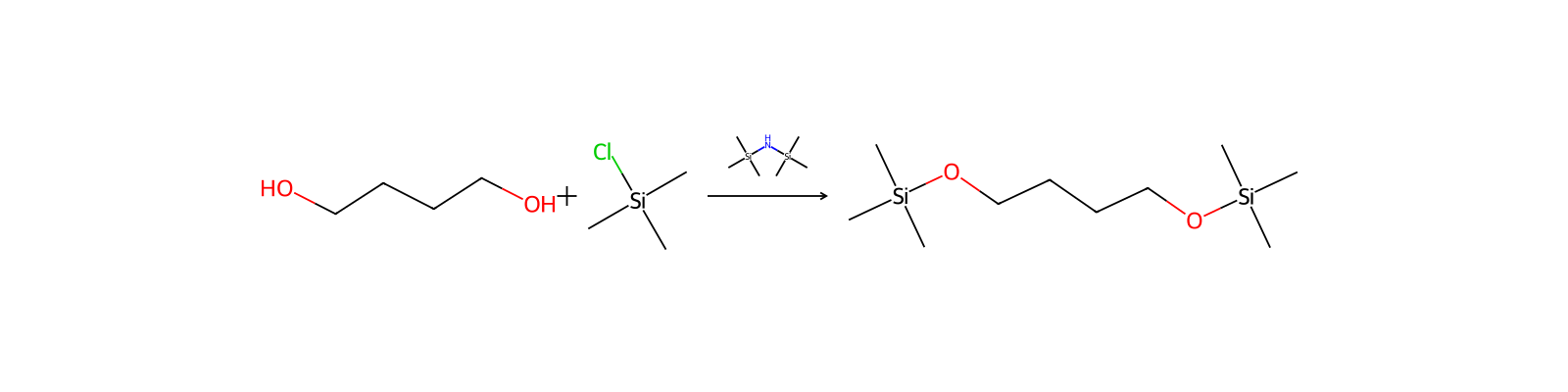
Hexamethyldisilazane, also known as HMDS, is an important organosilicon compound, a colorless and transparent liquid. It is readily hydrolyzed and gives off NH3 to produce hexamethyldisilyl ether. In the presence of a catalyst, it reacts with alcohols or phenols to produce trimethylalkoxysilane or trimethylaroxysilane. Reacts with anhydrous hydrogen chloride, releasing NH3 or NH4Cl, to produce trimethylchlorosilane.
안전 및 규제
안전 정보는 참고용이며, 공급업체의 물질안전보건자료(SDS), 관련 법규 및 전문가 평가를 대체하지 않습니다.
GHS 분류
GHS Classification
This chemical does not meet GHS hazard criteria for 5.8% (35 of 606) of reports.
Danger
H225 (93.7%): Highly Flammable liquid and vapor [Danger Flammable liquids]
P210, P233, P240, P241, P242, P243, P260, P261, P262, P264, P270, P271, P273, P280, P301+P317, P301+P330+P331, P302+P352, P302+P361+P354, P303+P361+P353, P304+P340, P305+P354+P338, P316, P317, P321, P330, P361+P364, P363, P370+P378, P403+P235, P405, and P501 (click each P-code to see the statement)
Aggregated GHS information provided per 606 reports by companies from 27 notifications to the ECHA C&L Inventory. Each notification may be associated with multiple companies.
Danger
유해성 정보
Regulatory Information
Chemical: Silanamine, 1,1,1-trimethyl-N-(trimethylsilyl)-
Regulation (EC) No 1935/2004 (amended)
Silanamine, 1,1,1-trimethyl-N-(trimethylsilyl)- is listed on the EPA's Chemical Data Reporting (CDR) system. Manufacturers and importers of Silanamine, 1,1,1-trimethyl-N-(trimethylsilyl)- are required to report information about their production and use of this chemical to the EPA under the Toxic Substances Control Act (TSCA). (40 eCFR Part 711)
Status: Active Update: 25-04-2023 https://echa.europa.eu/registration-dossier/-/registered-dossier/15274
1,1,1,3,3,3-Hexamethyldisilazane: Does not have an individual approval but may be used under an appropriate group standard
The New Jersey Worker and Community Right to Know Act requires public and private employers to provide information about hazardous substances at their workplaces. (N.J.S.A. 34:5A-1 et. seq.)
DOT LabelFlammable Liquid Corrosive
Fire HazardsExcerpt from ERG Guide 132 [Flammable Liquids - Corrosive]:
Fire Potential
Measurements of the autoignition temperatures for several series of mono-,di-, tri- and tetra-alkylsilanes showed that the ease of oxidation decrease with increasing substitution. /Hexamethylsilazane is an/ easily ignited or pyrophoric compound.
Health HazardsExcerpt from ERG Guide 132 [Flammable Liquids - Corrosive]:
Hazards SummaryCorrosive to skin; [Quick CPC] Reacts with water to release ammonia; Liquid can cause skin burns and eye damage; Vapors can cause respiratory tract irritation and lung damage; [CSH, p. 227] A skin and eye irritant; [CAMEO]
Reactive GroupReducing Agents, Strong
TSCA Requirements
Section 8(a) of TSCA requires manufacturers of this chemical substance to report preliminary assessment information concerned with production, exposure, and use to EPA as cited in the preamble in 51 FR 41329.
Pursuant to section 8(d) of TSCA, EPA promulgated a model Health and Safety Data Reporting Rule. The section 8(d) model rule requires manufacturers, importers, and processors of listed chemical substances and mixtures to submit to EPA copies and lists of unpublished health and safety studies. Hexamethyldisilazane is included on this list.
Reactivity AlertsHighly Flammable
Reactivity Profile
HEXAMETHYL DISILAZANE reacts with many carbonyl-containing organic compounds to generate gaseous ammonia. May be incompatible with isocyanates, halogenated organics, peroxides, phenols (acidic), epoxides, anhydrides, and acid halides. Flammable gaseous hydrogen may be generated in combination with stronger reducing agents, such as hydrides.
Air and Water ReactionsHighly flammable. Moisture sensitive.
Hazard Classes and Categories
Flam. Liq. 2 (93.7%)
Flammable liquids - Category 2
Corrosives, Flammable agents - 3rd degree, Reactive agents - 1st degree
안전 및 보호
Fire FightingExcerpt from ERG Guide 132 [Flammable Liquids - Corrosive]:
First AidExcerpt from ERG Guide 132 [Flammable Liquids - Corrosive]:
Nonfire Spill ResponseExcerpt from ERG Guide 132 [Flammable Liquids - Corrosive]:
Disposal Methods
SRP: The most favorable course of action is to use an alternative chemical product with less inherent propensity for occupational exposure or environmental contamination. Recycle any unused portion of the material for its approved use or return it to the manufacturer or supplier. Ultimate disposal of the chemical must consider: the material's impact on air quality; potential migration in soil or water; effects on animal, aquatic, and plant life; and conformance with environmental and public health regulations.
Preventive Measures
SRP: The scientific literature for the use of contact lenses in industry is conflicting. The benefit or detrimental effects of wearing contact lenses depend not only upon the substance, but also on factors including the form of the substance, characteristics and duration of the exposure, the uses of other eye protection equipment, and the hygiene of the lenses. However, there may be individual substances whose irritating or corrosive properties are such that the wearing of contact lenses would be harmful to the eye. In those specific cases, contact lenses should not be worn. In any event, the usual eye protection equipment should be worn even when contact lenses are in place.
Isolation and EvacuationExcerpt from ERG Guide 132 [Flammable Liquids - Corrosive]:
Protective Action Criteria (PAC)
5.8 [mg/m3]
64 [mg/m3]
380 [mg/m3]
Personal Protective Equipment (PPE)Excerpt from ERG Guide 132 [Flammable Liquids - Corrosive]:
독성 정보
Ecotoxicity Values
LC50 Pimephales promelas (Fathead minnow) 167 mg/L/96 hr; static
LC50 Daphnia magna (Waterflea) 186 mg/L/48 hr /Conditions of bioassay not specified in source examined/
Environmental Fate
TERRESTRIAL FATE: Based on a classification scheme(1), an estimated Koc value of 390(SRC), determined from a structure estimation method(2), indicates that hexamethyldisilazane is expected to have moderate mobility in soil(SRC). Volatilization of hexamethyldisilazane from moist soil surfaces is expected to be an important fate process(SRC) given an estimated Henry's Law constant of 8.7X10⁻⁵ atm-cu m/mole(SRC), using a fragment constant estimation method(3). The potential for volatilization of hexamethyldisilazane from dry soil surfaces may exist(SRC) based upon a vapor pressure of 13.8 mm Hg(4).
AQUATIC FATE: Based on a classification scheme(1), an estimated Koc value of 390(SRC), determined from a structure estimation method(2), indicates that hexamethyldisilazane may adsorb to suspended solids and sediment(SRC). Volatilization from water surfaces is expected(3) based upon an estimated Henry's Law constant of 8.7X10⁻⁵ atm-cu m/mole(SRC), developed using a fragment constant estimation method(4). Using this Henry's Law constant and an estimation method(3), volatilization half-lives for a model river and model lake are 9.9 hours and 8.9 days, respectively(SRC). The pKa of hexamethyldisilazane is 7.55(5), indicating that this compound will partially exist in cation form in the environment and cations generally adsorb more strongly to organic carbon and clay than their neutral counterparts(6). According to a classification scheme(7), an estimated BCF of 21(SRC), from an estimated log Kow of 2.6(8) and a regression-derived equation(9), suggests the potential for bioconcentration in aquatic organisms is low(SRC). Hexamethyldisilazane is expected to hydrolyze slowly in water(5,10,11), although actual rate data for this compound were not located.
ATMOSPHERIC FATE: According to a model of gas/particle partitioning of semivolatile organic compounds in the atmosphere(1), hexamethyldisilazane, which has a vapor pressure of 13.8 mm Hg at 25 °C(2), is expected to exist solely as a vapor in the ambient atmosphere. Vapor-phase hexamethyldisilazane is degraded in the atmosphere by reaction with photochemically-produced hydroxyl radicals(SRC); the half-life for this reaction in air is estimated to be 18 days(SRC), calculated from its rate constant of 9.0X10⁻¹³ cu cm/molecule-sec at 25 °C(SRC) that was derived using a structure estimation method(3).
Adverse EffectsDermatotoxin - Skin burns.
규제 정보
TSCA Requirements
Section 8(a) of TSCA requires manufacturers of this chemical substance to report preliminary assessment information concerned with production, exposure, and use to EPA as cited in the preamble in 51 FR 41329.
Pursuant to section 8(d) of TSCA, EPA promulgated a model Health and Safety Data Reporting Rule. The section 8(d) model rule requires manufacturers, importers, and processors of listed chemical substances and mixtures to submit to EPA copies and lists of unpublished health and safety studies. Hexamethyldisilazane is included on this list.
안전 데이터
- wgk
- 2
- tsca
- TSCA listed
- rtecs
- JM9230000
- ridadr
- UN 3286 3/PG 2
- 독성
- LDLO i.p. in mice: 650 mg/kg (Petrarch Systems Inc. Product Information Sheets)
- HS 번호
- 2931 90 00
- risk_code
- 11-20/21/22-34-52/53
- hazard_code
- F,C,Xn
- safety_code
- 16-26-36/37/39-45-61
- 포장분류
- II
- 위험 등급
- 3
- 기존화학 물질
- KE-34695
- F 고인화성물질
- 21
- 위험 참고 사항
- Flammable
- 자연 발화 온도
- 325 °C
- Hazard Classifications
- Acute Tox. 3 DermalAcute Tox. 4 InhalationAcute Tox. 4 OralAquatic Chronic 3Flam. Liq. 2
- 스토리지 클래스
- 3 - Flammable liquids
- 유해 물질 데이터
- 999-97-3(Hazardous Substances Data)
화학 및 산업
약리 정보
MeSH Pharmacological Classification
Agents employed in the preparation of histologic or pathologic specimens for the purpose of maintaining the existing form and structure of all of the constituent elements. Great numbers of different agents are used; some are also decalcifying and hardening agents. They must quickly kill and coagulate living tissue.
용도 및 제조
Uses
Used to deactivate chromatography support materials and to promote adhesion of photoresists in the electronics industry; [HSDB]
Semiconductor Manufacturing [Category: Industry]
Deactivation of chromatographic support materials. In electronic industry as an adhesion promoter for photoresists on silicon.
The substance is used as a chemical intermediate in the production of siloxane polymers.
U.S. Production2023: 4,000,000 - <5,500,000 lb
Consumption Patterns(1980) About 303X10+3 L of 100% active HMDS was consumed by the semiconductor industry in the United States.
Consumer UsesSolvent
Industry UsesWaterproofing agent
Formulations/Preparations1,1,1,3,3,3-Hexamethyldisilazane is available in concentrations ranging in activity from 5 to 100%. In solutions, HMDS is normally mixed with solvents such as xylene, stoddard solvent, ethylene glycol and carbon tetrafluoride.
Household ProductsInformation on 20 consumer products that contain Hexamethyldisilazane in the following categories is provided:
General Manufacturing Information
Plastics Material and Resin Manufacturing
Silanamine, 1,1,1-trimethyl-N-(trimethylsilyl)-: ACTIVE
All HMDS is sold as electronic-grade material, indicating that the level of each metal impurity is less than 1 ppm.
응용 분야
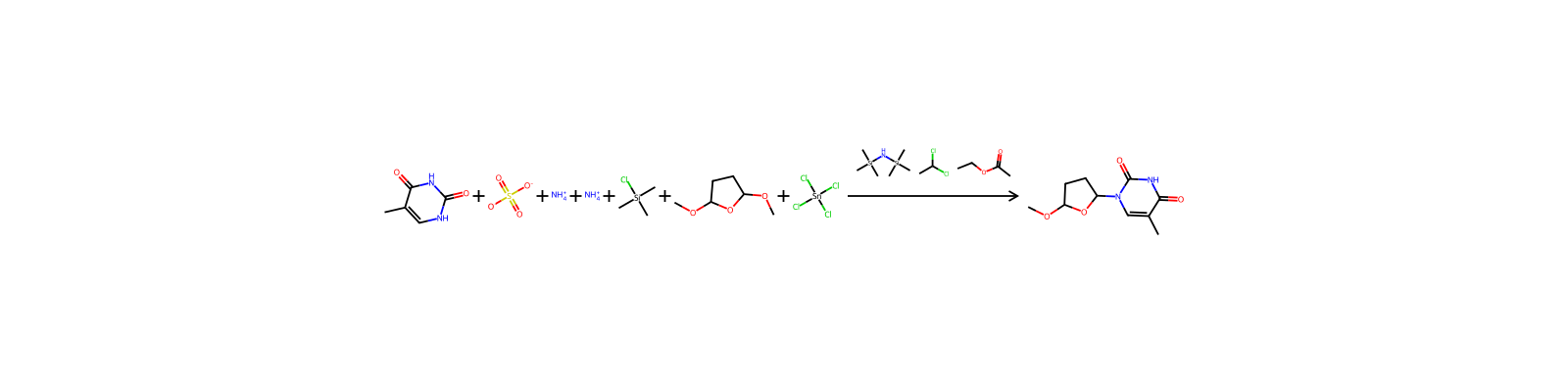
용도HMDS 헥사 메틸 디 실라 잔 은 약제 생합성 (예 : amikacin, penicillin, cephalosporins, fluorouracil 및 페니실린 유도체의 종류), 항생제의 히드 록실 보호제에서 메틸 실란 알킬화로 주로 사용됩니다. 규조토의 표면 처리제, 백색 카본 블랙, 티타늄 및 반도체 산업의 포토 레지스트의 블론드 첨가제로서 인열 저항성 및 발수성 처리제로 사용될 수 있습니다.
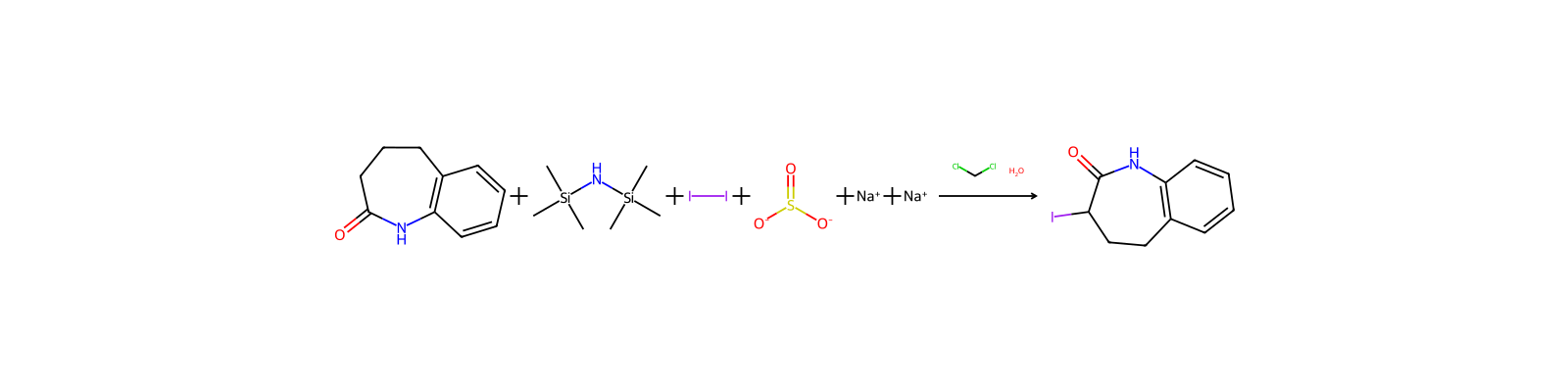
개요Hexamethyldisilazane is a bulk organo silicon compound, being a quite useful silanizing agent. It is a reagent for the preparation of trimethylsilyl derivatives. It can also be used to dehydrate cells of biomaterials for scanning electron microscopy (SEM). Moreover, it is an adhesion promoter for photoresist in photolithography, and is also useful in the pyrolysis-gas chromatography-mass spectrometry to enhance the detectability of compounds with polar functional groups.
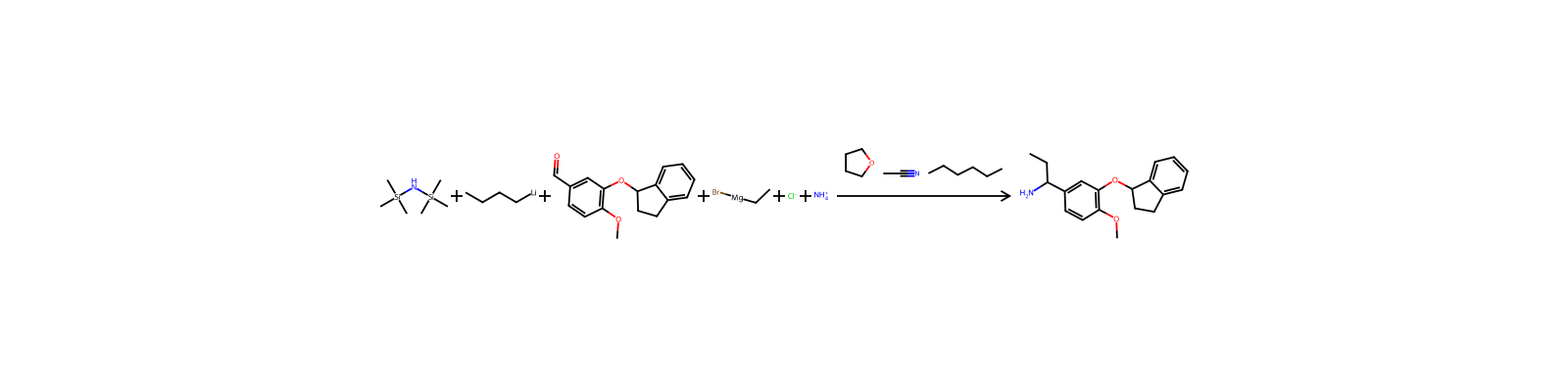
용도Hexamethyldisilazane mainly used as methyl silane alkylation (such as amikacin, penicillin, cephalosporins and kinds of penicillin derivatives), hydroxyl protectants of antibiotics. It is used as surface treatment agent of diatomite, white carbon black, titanium and blond additives of photoresist in the semiconductor industry. It is used as treatment agent of tearing strength resistance. It is used as a solvent in organic synthesis and organometallic chemistry. It is used as an adhesion promoter for photoresist in photolithography. it is used for the preparation of trimethylsilyl ethers from hydroxy compounds. It is used as an alternative to critical point drying during sample preparation in electron microscopy. It is added to analyte to get silylated diagnostic products during pyrolysis in gas chromatography- mass spectrometry.
일반 설명Hexamethyldisilazane appears as a liquid. May be toxic by ingestion. Irritates skin and eyes. Vapors are heavier than air. May emit highly toxic nitrogen oxide fumes when heated to decomposition. Used to deactivate chromatography support materials and to promote adhesion of photoresists in the electronics industry.
상·하류 제품 정보
상류 원료
하류 제품
추가 설명
정의ChEBI: Hexamethyldisilazane is an N-silyl compound obtained from ammonia by replacement of two of the hydrogens with trimethylsilyl groups. Hexamethyldisilazane is a derivatisation agent used in gas chromatography mass spectrometry applications. It has a role as a chromatographic reagent. It derives from a hydride of an ammonia.
관련 반응
822건



화합물 노트
불러오는 중…