홈MCP워크벤치Skills
홈워크벤치알림마이페이지
llms.txt · MCP 가이드개인정보처리방침 · 이용약관 · 지원v1.8.0
  1. 홈
  2. /화합물

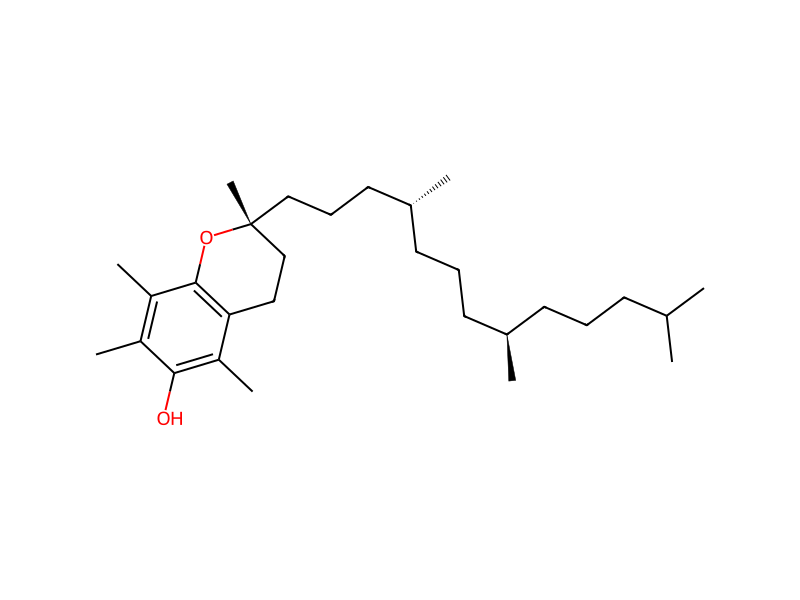
alpha-Tocopherol

HCID 14985
새 노트새 반응견적 요청하기
인쇄 미리보기

데이터를 보충하는 중입니다. 잠시 후 페이지를 새로 고치면 최신 내용을 볼 수 있습니다
기본 정보개요이름 및 식별자물성안전 및 규제화학 및 산업관련 반응화합물 노트
부분 구조 검색유사 구조 찾기

기본 정보

CAS
1406-18-4
표준 SMILES
Cc1c(C)c2c(c(C)c1O)CC[C@@](C)(CCC[C@H](C)CCC[C@H](C)CCCC(C)C)O2
InChIKey
GVJHHUAWPYXKBD-IEOSBIPESA-N
분자식
C29H50O2
평균 분자량
430.7 g/mol
단동위원소 질량
430.38108084

개요

(R,R,R)-alpha-tocopherol is an alpha-tocopherol that has R,R,R configuration. The naturally occurring stereoisomer of alpha-tocopherol, it is found particularly in sunflower and olive oils. It has a role as an antioxidant, an antiviral agent, a micronutrient, an EC 2.7.11.13 (protein kinase C) inhibitor, an anticoagulant, a nutraceutical, an immunomodulator, an antiatherogenic agent, a plant metabolite and an algal metabolite. It is an enantiomer of a (S,S,S)-alpha-tocopherol.

이름 및 식별자

우선 이름
alpha-Tocopherol
IUPAC
(2R)-2,5,7,8-tetramethyl-2-[(4R,8R)-4,8,12-trimethyltridecyl]-3,4-dihydrochromen-6-ol
영어명
Tocopherol
분자식
C29H50O2
분자량
430.71

이름 및 동의어

alpha-Tocopherol59-02-9D-alpha-Tocopherol5,7,8-Trimethyltocol(+)-alpha-Tocopherol2074-53-5PhytogermineEprolin(R,R,R)-alpha-Tocopherola-Vitamin EDenamoneViteolin
이름 더 보기
Mixed TocopherolsA-TOCOPHEROLDL-TOCOPHEROLRAC-ALPHA-TOCOPHEROLALL-RAC-ALPHA-TOCOPHEROLDL-ALPHA TOCOPHERYL ACETATE 500(2R)-2,5,7,8-tetramethyl-2-[(4R,8R)-4,8,12-trimethyltridecyl]-3,4-dihydrochromen-6-olErevit forteIRGANOX E 201DL-PROFECUNDIN
EtavitEsorb(2R,4'R,8'R)-alpha-Tocopherolalpha Tocopherolalpha-Vitamin EAquasol Ealpha-Tocopherol, D-Vitamin-E

데이터베이스 식별자

CAS
1406-18-4、2074-53-5、59-02-9

물성

구조 계산 물성보충 중

XLogP
10.7
극성 표면적
29.5 Ų
수소 결합 공여자 수
1
수소 결합 수용자 수
2
회전 가능 결합 수
12
무거운 원자 수
31
형식 전하
0
복잡도
503

실험 및 물리화학적 성질

Chemical ClassesBiological Agents -> Vitamins and Derivatives
DrugsPharmaceuticals -> Listed in ZINC15
LipidsLipids -> Prenol Lipids [PR] -> Quinones and hydroquinones [PR02] -> Vitamin E [PR0202]
SpringerMaterials PropertiesChemical diffusion
FragrancesFragrance Ingredient (2H-1-Benzopyran-6-ol, 3,4-dihydro-2,5,7,8-tetramethyl-2-[(4R,8R)-4,8,12-trimethyltridecyl]-, (2R)-) -> IFRA transparency List
Endocrine DisruptorsPotential endocrine disrupting compound
Melting Point3 °C
Vapor Pressure0.00000001 [mmHg]
Physical Description · 3건

Liquid

Transparent solid; mp = 2.5-3.5 deg C; [Merck Index] Pale yellow viscous liquid; [HSDB] Light yellow viscous liquid; [Sigma-Aldrich MSDS]

Liquid

Collision Cross Section · 2건

안전 및 규제

안전 정보는 참고용이며, 공급업체의 물질안전보건자료(SDS), 관련 법규 및 전문가 평가를 대체하지 않습니다.

GHS 분류

GHS Classification · 6건

This chemical does not meet GHS hazard criteria for 92.8% (270 of 291) of all reports.

Not Classified

Aggregated GHS information provided per 291 reports by companies from 4 notifications to the ECHA C&L Inventory.

This chemical does not meet GHS hazard criteria for 31.8% (7 of 22) of reports.

Warning

H317 (68.2%): May cause an allergic skin reaction [Warning Sensitization, Skin]

유해성 정보

Regulatory Information · 6건

Chemical: 2H-1-Benzopyran-6-ol, 3,4-dihydro-2,5,7,8-tetramethyl-2-(4,8,12-trimethyltridecyl)-, [2R-[2R*(4R*,8R*)]]-

Chemical: 2H-1-Benzopyran-6-ol, 3,4-dihydro-2,5,7,8-tetramethyl-2-(4,8,12-trimethyltridecyl)-, [2R*(4R*,8R*)]-(.+-.)-

Regulation (EC) No 1831/2003 (amended)

2H-1-Benzopyran-6-ol, 3,4-dihydro-2,5,7,8-tetramethyl-2-[(4R,8R)-4,8,12-trimethyltridecyl]-, (2R)- is listed on the EPA's Chemical Data Reporting (CDR) system. Manufacturers and importers of 2H-1-Benzopyran-6-ol, 3,4-dihydro-2,5,7,8-tetramethyl-2-[(4R,8R)-4,8,12-trimethyltridecyl]-, (2R)- are required to report information about their production and use of this chemical to the EPA under the Toxic Substances Control Act (TSCA). (40 eCFR Part 711)

Status: Active Update: 13-11-2019 https://echa.europa.eu/registration-dossier/-/registered-dossier/11202

2H-1-Benzopyran-6-ol, 3,4-dihydro-2,5,7,8-tetramethyl-2-(4R,8R)-4,8,12-trimethyltridecyl-, (2R)-rel-: Does not have an individual approval but may be used under an appropriate group standard

Other Safety Information · 2건

Evaluation - Tocopherols and their salts and esters

Evaluation - Tocopherols and their salts and esters

Hazards SummaryAcceptable daily intake (ADI) of 0.15-2 mg/kg; [JECFA] Excessive, chronic ingestion can cause nausea, headaches, and weakness. [Olson, p. 446] May cause irritation; [Sigma-Aldrich MSDS]

화학 및 산업

약리 정보

Metabolism/MetabolitesHepatic.
Tissue LocationsAdipose Tissue
Cellular LocationsCytoplasm

용도 및 제조

Uses · 3건

The bioactive natural form of vitamin E found in green vegetables, grains, and oils (especially palm, safflower, and sunflower); Used as an antioxidant in oils and as a vitamin E supplement; [Merck Index] Used as a medication and animal feed additive; [HSDB]

Farming (Feed Additives) [Category: Industry]

Vitamin E, known for its antioxidant activities, is protective against cardiovascular disease and some forms of cancer and has also demonstrated immune-enhancing effects. It may be of limited benefit in some with asthma and rheumatoid arthritis. It may be helpful in some neurological diseases including Alzheimer's, some eye disorders including cataracts, and diabetes and premenstrual syndrome. It may also help protect skin from ultraviolet irradiation although claims that it reverses skin aging, enhances male fertility and exercise performance are poorly supported. It may help relieve some muscle cramps.

U.S. Production2023: 21,006 lb
Consumer UsesFragrance
Industry UsesFragrance
Use Classification · 6건

EPA Safer Chemical Functional Use Classes -> Preservatives and Antioxidants

Safer Chemical Classes -> Green circle - The chemical has been verified to be of low concern

Fragrance Ingredients

Food Additives -> ANTIOXIDANT; NUTRIENT_SUPPLEMENT -> JECFA Functional Classes

Food Additives -> ANTIOXIDANT; NUTRIENT_SUPPLEMENT -> JECFA Functional Classes

Food Additives -> ANTIOXIDANT; NUTRIENT_SUPPLEMENT -> JECFA Functional Classes

관련 반응

60건
반응 기록 만들기
HRID 27396 반응식
HRID 27396생성물로uspto-grants-1980_09
HRID 50556 반응식
HRID 50556반응물로uspto-grants-2004_03
HRID 73884 반응식
HRID 73884반응물로uspto-grants-2014_09
HRID 232398 반응식
HRID 232398생성물로uspto-grants-1989_07
HRID 259840 반응식
HRID 259840생성물로uspto-grants-1996_06
HRID 325097 반응식
HRID 325097반응물로uspto-grants-2001_04
HRID 376499 반응식
HRID 376499생성물로uspto-grants-2000_02
HRID 376500 반응식
HRID 376500생성물로uspto-grants-2000_02
1 / 8 페이지

화합물 노트

불러오는 중…

이 페이지에서기본 정보개요이름 및 식별자물성안전 및 규제화학 및 산업관련 반응화합물 노트
더보기
새 노트새 반응견적 요청하기
PubChem CID
14985
DTXSID
DTXSID0026339
ChEMBL
CHEMBL47
ChEBI
CHEBI:18145
UNII
N9PR3490H9
EC Number
200-412-2、215-798-8、218-197-9、606-803-8
Nikkaji
J24.260H

208.52 Ų [M-H]- [CCS Type: DT; Method: single field calibrated with Agilent tune mix (Agilent)]

208.9 Ų [M-H]-

물리화학적 성질

녹는점
292 °C · 292 °C
저장 조건
0 · 0-6°C
용해도
3 · Soluble ((CH3)2CO, ethanol, CHCl3, (C2H5)2O), insoluble (water)
냄새
대표적인 식물성 기름
화장품 원료 기능
향기피부 컨디셔닝 - 밀폐제피부 컨디셔닝 - 기타항산화제
LogP
10.962 · 10.962 (est)
NIST
«alpha»-Tocopherol(1406-18-4)
EPA
Vitamin E (1406-18-4)

화학적 성질

Viscous oils. Soluble in fats; insoluble in water. Stable to heat in the absence of oxygen, to strong acids, and to visible light; unstable to UV light, alkalies, and oxidation.

EPA Safer Chemical
Chemical: alpha-Tocopherol
Hazard Classes and Categories · 2건

Skin Sens. 1B (68.2%)

Not Classified

독성 정보

Exposure RoutesOral, Topical, Intramuscular 50 to 80% absorbed from gastrointestinal tract.
Toxicity Summary · 1건

Although all forms of Vitamin E exhibit antioxidant activity, it is known that the antioxidant activity of vitamin E is not sufficient to explain the vitamin's biological activity. <br/>Vitamin E's anti-atherogenic activity involves the inhibition of the oxidation of LDL and the accumulation of oxLDL in the arterial wall. It also appears to reduce oxLDL-induced apoptosis in human endothelial cells. Oxidation of LDL is a key early step in atherogenesis as it triggers a number of events which lead to the formation of atherosclerotic plaque. In addition, vitamin E inhibits protein kinase C (PKC) activity. PKC plays a role in smooth muscle cell proliferation, and, thus, the inhibition of PKC results in inhibition of smooth muscle cell proliferation, which is involved in atherogenesis. <br/>Vitamin E's antithrombotic and anticoagulant activities involves the downregulation of the expression of intracellular cell adhesion molecule(ICAM)-1 and vascular cell adhesion molecule(VCAM)-1 which lowers the adhesion of blood components to the endothelium. In addition, vitamin E upregulates the expression of cytosolic phospholipase A2 and cyclooxygenase (COX)-1 which in turn enhances the release of prostacyclin. Prostacyclin is a vasodilating factor and inhibitor of platelet aggregation and platelet release. It is also known that platelet aggregation is mediated by a mechanism involving the binding of fibrinogen to the glycoprotein IIb/IIIa (GPIIb/IIIa) complex of platelets. GPIIb/IIIa is the major membrane receptor protein that is key to the role of the platelet aggregation response. GPIIb is the alpha-subunit of this platelet membrane protein. Alpha-tocopherol downregulates GPIIb promoter activity which results in reduction of GPIIb protein expression and decreased platelet aggregation. Vitamin E has also been found in culture to decrease plasma production of thrombin, a protein which binds to platelets and induces aggregation. A metabolite of vitamin E called vitamin E quinone or alpha-tocopheryl quinone (TQ) is a potent anticoagulant. This metabolite inhibits vitamin K-dependent carboxylase, which is a major enzyme in the coagulation cascade.<br/>The neuroprotective effects of vitamin E are explained by its antioxidant effects. Many disorders of the nervous system are caused by oxidative stress. Vitamin E protects against this stress, thereby protecting the nervouse system. <br/>The immunomodulatory effects of Vitamin E have been demonstrated in vitro, where alpha-tocopherol increases mitogenic response of T lymphocytes from aged mice. The mechanism of this response by vitamin E is not well understood, however it has been suggested that vitamin E itself may have mitogenic activity independent of its antioxidant activity. <br/>Lastly, the mechanism of action of vitamin E's antiviral effects (primarily against HIV-1) involves its antioxidant activity. Vitamin E reduces oxidative stress, which is thought to contribute to HIV-1 pathogenesis, as well as to the pathogenesis of other viral infections. Vitamin E also affects membrane integrity and fluidity and, since HIV-1 is a membraned virus, altering membrane fluidity of HIV-1 may interfere with its ability to bind to cell-receptor sites, thus decreasing its infectivity.

Carcinogen ClassificationNo indication of carcinogenicity to humans (not listed by IARC).

안전 데이터

tsca
TSCA listed
General Manufacturing Information · 2건

Soap, Cleaning Compound, and Toilet Preparation Manufacturing

2H-1-Benzopyran-6-ol, 3,4-dihydro-2,5,7,8-tetramethyl-2-[(4R,8R)-4,8,12-trimethyltridecyl]-, (2R)-: ACTIVE

응용 분야 · 1건

용도Fat-soluble vitamin E, which is a light yellow oil readily degradable by heat. As a vitamin, it is essential for normal muscle growth and prevents vitamin A destruction by deterioration. It also functions as an antioxidant. It prevents the oxidation of certain fatty acids and is stable unless the food becomes rancid. Vegetable oils contain a higher concentration of natural antioxidants, including tocopherols, than animal fats and are thus more stable. Tocopherol is obtained from vegetable oils, beans, eggs, and milk. It is also termed alpha-tocopherol.

제조 방법 · 1건

Tocopherol is synthesised in two ways. One is to extract it from natural plant sources and the other is to obtain it by chemical synthesis. The following are the chemical synthesis routes:The most important natural raw materials for production of tocopherols by extraction are deodoriser sludges, which are distillates obtained in the deodorisation of vegetable oils. Such distillates contain sterols, sterol esters and triacylglycerols, as well as tocopherols and tocotrienols. The concentration of tocopherols depends on the deodorisation parameters (temperature, vacuum, quantity of injected steam and equipment) but their amount is lower than 10%, usually 8–9 %, of unsaponifiable matter present. Separation of tocopherol from the other distilled compounds is possible by several methods: (1) by esterification with a lower alcohol, washing and vacuum distillation; (2) by saponification, or (3) by fractional liquid–liquid extraction. The concentrates obtained in this way may be purified further by molecular distillation, extraction, crystallisation, or combinations of these procedures.The tocopherol concentrates recommended as antioxidants are mixtures with relatively high contents of γ-tocopherol and δ-tocopherol (being obtained from soybean oil), but α-tocopherol is also present. The total tocopherol concentration usually lies between 30 and 80%. The rest is constituted of triacylglycerols.

상·하류 제품 정보

상류 원료

피탄트리올트리메틸하이드로퀴논
추가 설명 · 1건

정의(vitamin E). Any of a group of related substances (α-, β-, γ-, andΔ-tocopherol) that constitute vitamin E. The α-form (which occurs naturally as the d-isomer) is the most potent. Occurs naturally in plants, especially wheat germ. All are derivatives of dihydrobenzo-γ-pyran and differ from each other only in the number and position of methyl groups. Vitamin E is required by certain rodents for normal reproduction. Muscular and central nervous system depletion along with generalized edema are deficiency symptoms in all animals. It is not required as a dietary supplement for humans.