
아크릴산 t-부틸
tert-Butyl acrylate

기본 정보
- CAS
1663-39-4- 표준 SMILES
C=CC(=O)OC(C)(C)C- InChIKey
ISXSCDLOGDJUNJ-UHFFFAOYSA-N- 분자식
- C7H12O2
- 평균 분자량
- 128.17 g/mol
- 단동위원소 질량
- 128.08372962
개요
structure in first source
이름 및 식별자
- 우선 이름
- tert-Butyl acrylate
- IUPAC
- tert-butyl prop-2-enoate
- 현지명
- 아크릴산 t-부틸
- 영어명
- tert-Butyl acrylate
- 분자식
- C7H12O2
- 분자량
- 128.17
이름 및 동의어
tert-Butyl acrylate1663-39-4tert-Butyl propenoateAcrylic acid, tert-butyl ester2-PROPENOIC ACID, 1,1-DIMETHYLETHYL ESTERDTXSID802965292M2CD1O3GNSC-20950DTXCID409652RefChem:894614216-768-7tert-butyl prop-2-enoate
이름 더 보기
2-프로펜산,1,1-다이메틸에틸에스터t-부틸아크릴레이트아크릴산t-부틸터트-뷰틸아크릴산염터트-부틸아크릴산염터트-뷰틸아크릴산염(tert-BUTYLACRYLATE)2-프로펜산, 1,1-다이메틸에틸 에스터TBATERTIARY-BUTYL ACRYLATETERT-BUTYL ACRYLATE (TBA)tert-butylpropenoateAcrylic acid tert-butylTBA tert-Butyl acrylate
t-Butyl acrylateAcrylic Acid tert-Butyl Esteracrylics2-propenoic acid tert-butyl ester1,1-dimethylethyl 2-propenoatetert-Butyl 2-propenoatetert-Butyl Acrylate (stabilized with MEHQ)MFCD00008809
데이터베이스 식별자
- CAS
1663-39-4- PubChem CID
- 15458
- DTXSID
DTXSID8029652- ChEMBL
CHEMBL3560064- UNII
- 92M2CD1O3G
- EC Number
- 216-768-7
- Nikkaji
- J82.107A
물성
구조 계산 물성
- XLogP
- 1.7
- 극성 표면적
- 26.3 Ų
- 수소 결합 공여자 수
- 0
- 수소 결합 수용자 수
- 2
- 회전 가능 결합 수
- 3
- 무거운 원자 수
- 9
- 형식 전하
- 0
- 복잡도
- 119
실험 및 물리화학적 성질
PolymersPlastics & Rubber -> (Meth)acrylates
SpringerMaterials PropertiesOptical coefficient
Density0.879 AT 25 °C
Color/FormLIQUID
Flash Point66 °F OC
Boiling Point120 °C
Food Contact SubstancesFCS -> FDA Inventory of Food Contact Substances Listed in 21 CFR
Refractive IndexINDEX OF REFRACTION: 1.4080 AT 25 °C/D
Physical Description
Liquid
Liquid; [HSDB] Clear colorless liquid; Stabilized with 10-20 ppm of methyl ether of hydroquinone to prevent spontaneous polymerization; [OECD SIDS]
물리화학적 성질
- 녹는점
- -69 °C · -69°C
- 끓는 점
- 61 · 61-63 °C/60 mmHg (lit.)
안전 및 규제
안전 정보는 참고용이며, 공급업체의 물질안전보건자료(SDS), 관련 법규 및 전문가 평가를 대체하지 않습니다.
GHS 분류
GHS Classification
Danger
H225: Highly Flammable liquid and vapor [Danger Flammable liquids]
P210, P233, P240, P241, P242, P243, P261, P264, P270, P271, P272, P273, P280, P301+P317, P302+P352, P303+P361+P353, P304+P340, P317, P319, P321, P330, P332+P317, P333+P317, P362+P364, P370+P378, P391, P403+P233, P403+P235, P405, and P501 (click each P-code to see the statement)
This chemical does not meet GHS hazard criteria for 0.2% (1 of 556) of reports.
Danger
H225 (99.8%): Highly Flammable liquid and vapor [Danger Flammable liquids]
유해성 정보
Regulatory Information
Chemical: 2-Propenoic acid, 1,1-dimethylethyl ester
2-Propenoic acid, 1,1-dimethylethyl ester is listed on the EPA's Chemical Data Reporting (CDR) system. Manufacturers and importers of 2-Propenoic acid, 1,1-dimethylethyl ester are required to report information about their production and use of this chemical to the EPA under the Toxic Substances Control Act (TSCA). (40 eCFR Part 711)
REACH registered substance: tert-butyl acrylate (EC: 216-768-7)
2-Propenoic acid, 1,1-dimethylethyl ester: Does not have an individual approval but may be used as a component in a product covered by a group standard. It is not approved for use as a chemical in its own right.
Fire PotentialFLAMMABLE, DANGEROUS FIRE RISK.
Hazards Summary
Allergic contact dermatitis reported in workers handling dental prostheses; [Kanerva, p. 1739] Flammable liquid that poses a fire risk; Emergency treatment: Irritants; [HSDB] May polymerize; A skin and respiratory tract irritant; May cause skin sensitization; Harmful by ingestion, inhalation, and skin absorption; [Alfa Aesar MSDS] Butyl acrylates, stabilized (UN2348) has warning of explosive polymerization; [ERG 2016]
DOT Emergency Guidelines
/GUIDE 130P: FLAMMABLE LIQUIDS (NON-POLAR/WATER-IMMISCIBLE/NOXIOUS)/ Fire or Explosion: HIGHLY FLAMMABLE: Will be easily ignited by heat, sparks or flames. Vapors may form explosive mixtures with air. Vapors may travel to source of ignition and flash back. Most vapors are heavier than air. They will spread along ground and collect in low or confined areas (sewers, basements, tanks). Vapor explosion hazard indoors, outdoors or in sewers. Those substances designated with a "P" may polymerize explosively when heated or involved in a fire. Runoff to sewer may create fire or explosion hazard. Containers may explode when heated. Many liquids are lighter than water. /Butyl acrylates; Butyl acrylates, inhibited; Butyl acrylates, stabilized/
화학 및 산업
용도 및 제조
Uses
Used as a monomer for acrylic resins used in surface coatings; [HSDB] Used as an intermediate for homopolymers and copolymers; Also used as a feedstock for chemical synthesis; [OECD SIDS]
Plastic Composites Manufacturing [Category: Industry]
MONOMER FOR ACRYLIC RESINS
MONOMER FOR ACRYLIC RESINS USED IN SURFACE COATINGS
U.S. Exports
(1979) No Data
(1981) No Data
U.S. Imports
(1979) No Data
(1981) No Data
U.S. Production
2023: 75,000 - <500,000 lb
(1979) No Data
(1981) No Data
Industry UsesIntermediate
Methods of ManufacturingREACTION OF ISOBUTYLENE WITH METHACRYLIC ACID; REACTION OF TERT-BUTYL ALCOHOL WITH METHACRYLOYL CHLORIDE
Formulations/PreparationsCOMMERCIAL GRADE CONTAINS 100 PPM HYDROQUINONE MONOMETHYL ETHER AS STABILIZER.
General Manufacturing Information
Plastics Material and Resin Manufacturing
2-Propenoic acid, 1,1-dimethylethyl ester: ACTIVE
응용 분야
용도tert-Butyl acrylate is a monomer used in the production of poly(tert-butyl acrylate) polymers, poly(acrylic acid) polyelectrolyte brushes and 3-(3-methyl-but-3-enyloxy)-propionic acid tert-butyl ester. It is also used in paints, coatings, high polymer paper conditioner, nursing polymer products and carbonyl reforming polyolefin. Further, it serves as an important raw material in organic synthesis.
관련 반응
734건


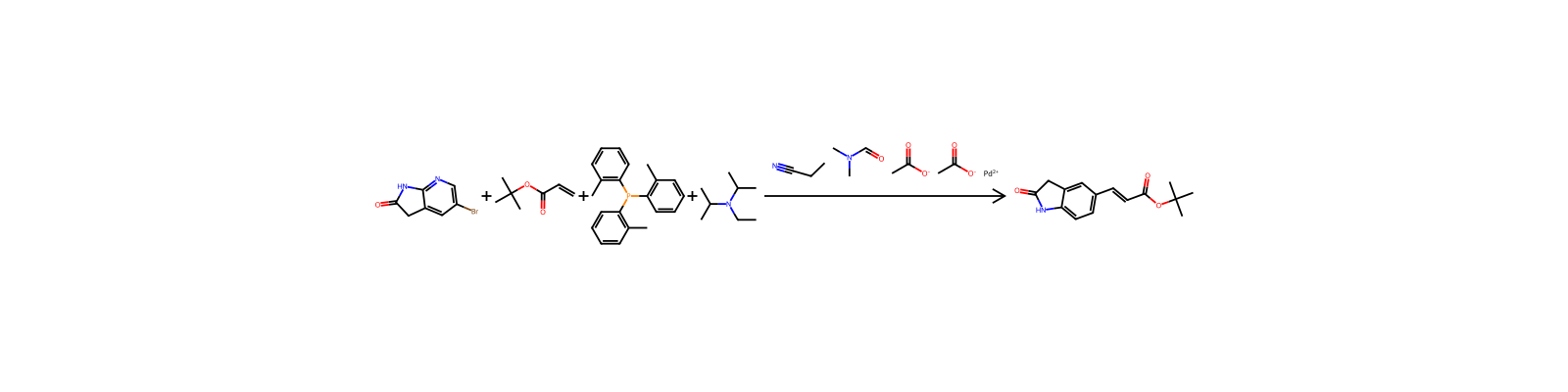

화합물 노트
불러오는 중…