홈MCP워크벤치Skills
홈워크벤치알림마이페이지
llms.txt · MCP 가이드개인정보처리방침 · 이용약관 · 지원v1.8.0
  1. 홈
  2. /화합물

2-머캅토에탄올

2-Mercaptoethanol
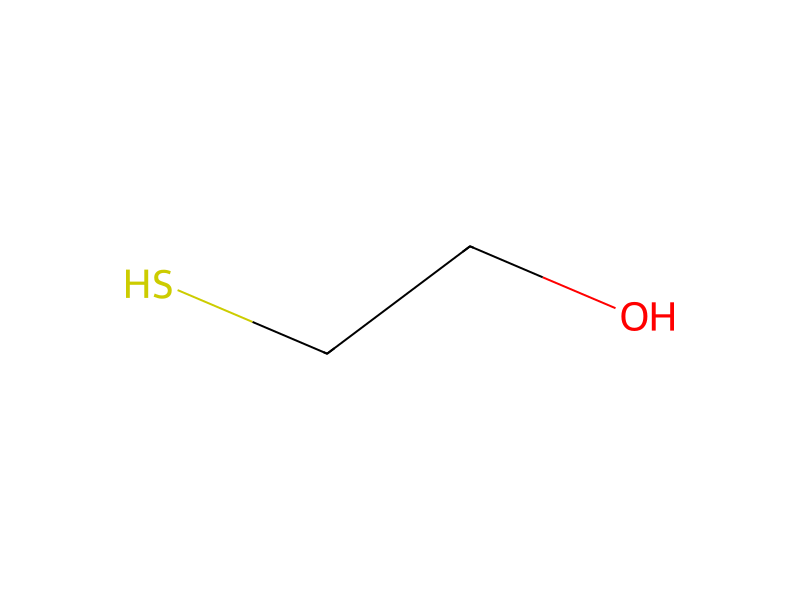
HCID 1567
새 노트새 반응견적 요청하기
인쇄 미리보기
기본 정보개요이름 및 식별자물성안전 및 규제화학 및 산업관련 반응화합물 노트
부분 구조 검색유사 구조 찾기

기본 정보

CAS
60-24-2
표준 SMILES
OCCS
InChIKey
DGVVWUTYPXICAM-UHFFFAOYSA-N
분자식
C2H6OS
평균 분자량
78.14 g/mol
단동위원소 질량
78.01393581

개요

Thioglycol appears as a water-white liquid. May be toxic by ingestion, inhalation, or skin absorption.

이름 및 식별자

우선 이름
2-Mercaptoethanol
IUPAC
2-sulfanylethanol
현지명
2-머캅토에탄올
영어명
2-Mercaptoethanol
분자식
C2H6OS
분자량
78.13

이름 및 동의어

2-mercaptoethanolBeta-Mercaptoethanol60-24-2MercaptoethanolThioglycol2-SulfanylethanolEthanol, 2-mercapto-Thioethylene glycol2-Thioethanol2-HydroxyethanethiolMonothioglycolThiomonoglycol
이름 더 보기
2-머캅토에탄올2-메르캅토에탄올메르캅토에탄올2-MEβ-MercaptoethanolBMEB-Mercaptoethanol
2-Hydroxyethyl mercaptan2-Hydroxy-1-ethanethiolMonothioethylene glycol1-Ethanol-2-thiolHydroxyethyl mercaptan2-Mercapto-1-ethanol1-Hydroxy-2-mercaptoethane2-Mercaptoethyl alcohol

데이터베이스 식별자

CAS
60-24-2
PubChem CID
1567
DTXSID
DTXSID4026343
ChEMBL
CHEMBL254951
ChEBI
CHEBI:41218
UNII
14R9K67URN
EC Number
200-464-6
Nikkaji
J1.396J

물성

구조 계산 물성

XLogP
-0.2
극성 표면적
21.2 Ų
수소 결합 공여자 수
2
수소 결합 수용자 수
2
회전 가능 결합 수
1
무거운 원자 수
4
형식 전하
0
복잡도
10

실험 및 물리화학적 성질

Chemical Classes · 2건

Other Classes -> Sulfur Compounds (Alcohols)

Flammable agents - 2nd degree

DrugsPharmaceuticals -> Listed in ZINC15
SpringerMaterials PropertiesSchoenflies notation
LogP · 2건

-0.3 (estimated)

-0.06

OdorStrong disagreeable odor
Food AdditivesFLAVORING AGENT OR ADJUVANT -> FDA Substance added to food
Density · 5건

1.1143 at 68 °F (NTP, 1992) - Denser than water; will sink

1.1143 at 20 °C/4 °C

Relative density (water = 1): 1.1

1.114-1.120 (20 °C)

1.1168 @ 20°C

Viscosity3.43 cP
Color/FormWater-white mobile liquid
Solubility · 5건

greater than or equal to 100 mg/mL at 68 °F (NTP, 1992)

Miscible with alcohol, ether, and benzene /Pure liquid/

Miscible in most organic solvents.

안전 및 규제

안전 정보는 참고용이며, 공급업체의 물질안전보건자료(SDS), 관련 법규 및 전문가 평가를 대체하지 않습니다.

GHS 분류

GHS Classification · 6건

This chemical does not meet GHS hazard criteria for 0.6% (5 of 787) of reports.

Danger

H301 (53.5%): Toxic if swallowed [Danger Acute toxicity, oral]

P203, P260, P261, P262, P264, P264+P265, P270, P271, P272, P273, P280, P301+P316, P301+P317, P301+P330+P331, P302+P352, P302+P361+P354, P304+P340, P305+P354+P338, P316, P317, P318, P319, P321, P330, P332+P317, P333+P317, P361+P364, P362+P364, P363, P391, P403+P233, P405, and P501 (click each P-code to see the statement)

Aggregated GHS information provided per 787 reports by companies from 37 notifications to the ECHA C&L Inventory. Each notification may be associated with multiple companies.

Danger

유해성 정보

Regulatory Information · 5건

Chemical: Ethanol, 2-mercapto-

Ethanol, 2-mercapto- is listed on the EPA's Chemical Data Reporting (CDR) system. Manufacturers and importers of Ethanol, 2-mercapto- are required to report information about their production and use of this chemical to the EPA under the Toxic Substances Control Act (TSCA). (40 eCFR Part 711)

Status: Active Update: 04-05-2022 https://echa.europa.eu/registration-dossier/-/registered-dossier/2206

Ethanol, 2-mercapto-: HSNO Approval: HSR003600 Approved with controls

The New Jersey Worker and Community Right to Know Act requires public and private employers to provide information about hazardous substances at their workplaces. (N.J.S.A. 34:5A-1 et. seq.)

DOT LabelPoison
Fire Hazards · 3건

Excerpt from ERG Guide 153 [Substances - Toxic and/or Corrosive (Combustible)]:

· Combustible material: may burn but does not ignite readily.

Combustible. Gives off irritating or toxic fumes (or gases) in a fire. Above 74 °C explosive vapour/air mixtures may be formed.

Fire Potential · 2건

Combustible

화학 및 산업

약리 정보

Metabolism/Metabolites · 1건

Simple aliphatic and aromatic thiols undergo S-methylation in mammals to produce the corresponding methyl thioether or sulfide. Methylation is catalysed by thiopurine methyltransferase in the cytoplasm and thiol methyltransferase in microsomes, and both reactions require S-adenosyl-l-methionine as a methyl group donor. Thiopurine methyltransferase is present in human liver, kidney, and erythrocytes; preferential substrates for this enzyme include aromatic and heterocyclic thiols. S-Methylation of aliphatic thiols is catalysed by microsomal thiol methyltransferase, and the resulting methyl thioether (sulfide) metabolite would undergo S-oxidation to give the methyl sulfoxide and methyl sulfone analogues as urinary products. Thiols may react with glutathione and other endogenous thiol substances to form mixed disulfides. Both microsomal and cytoplasmic thioltransferasess have been reported to catalyse the formation of mixed disulfides. The resulting mixed disulfides can undergo reduction back to thiols, oxidative desulfuration, or oxidation to a sulfonic acid via the intermediate thiosulfinate and sulfinic acids. The principal form in the circulation would probably be a mixed disulfide formed with albumin. /Simple thiols/

Absorption, Distribution and ExcretionInhalation exposure increased organic sulfur elimination via the urine.

용도 및 제조

Uses · 3건

Used to make dyestuffs, pharmaceuticals, rubber chemicals, flotation agents, insecticides, and plasticizers; Also used as solvent (dyestuffs), reducing agent, PVC stabilizer, and textile auxiliary; [Hawley]

Solvent for dyestuffs, intermediate for producing dyestuffs, pharmaceuticals, rubber chemicals, flotation agents, insecticides, plasticizers, water-soluble reducing agent, biochemical reagent, PVC stabilizers, agricultural chemicals, textile auxiliary.

In organic synthesis; as biochemical research tool.

U.S. Production · 2건

2023: 10,000,000 - <25,000,000 lb

Ethanol, 2-mercapto- is listed as a High Production Volume (HPV) chemical (65FR81686). Chemicals listed as HPV were produced in or imported into the U.S. in >1 million pounds in 1990 and/or 1994. The HPV list is based on the 1990 Inventory Update Rule. (IUR) (40 CFR part 710 subpart B; 51FR21438).

관련 반응

495건
반응 기록 만들기
HRID 5043 반응식
HRID 5043반응물로uspto-grants-1993_09
HRID 13417 반응식
HRID 13417반응물로uspto-grants-2010_06
HRID 15152 반응식
HRID 15152반응물로uspto-grants-2010_06
HRID 21676 반응식
HRID 21676반응물로uspto-grants-1995_06
HRID 26543 반응식
HRID 26543반응물로uspto-grants-1979_04
HRID 50028 반응식
HRID 50028반응물로uspto-grants-2004_03
HRID 50029 반응식
HRID 50029반응물로uspto-grants-2004_03
HRID 52049 반응식
HRID 52049반응물로uspto-grants-1997_04
1 / 62 페이지

화합물 노트

불러오는 중…

이 페이지에서기본 정보개요이름 및 식별자물성안전 및 규제화학 및 산업관련 반응화합물 노트
더보기
새 노트새 반응견적 요청하기

Miscible in water

Solubility in water: miscible

Flash Point · 4건

165 °F (NFPA, 2010)

74 °C

165 °F (74 °C) (open cup)

74 °C o.c.

Boiling Point · 4건

315 to 316 °F at 742 mmHg (decomposes) (NTP, 1992)

Decomp at bp 157-158 °C, 742 mm Hg

157 °C

156-158 °C

물리화학적 성질

녹는점
-100 °C · -100 °C
끓는 점
157 °C · 157 °C (lit.)
밀도
1.114 g/mL · 1.114 g/mL at 25 °C (lit.)
증기 밀도
2.69 · 2.69 (vs air)
증기압
1 mm · 1 mm Hg ( 20 °C)
굴절률
20 · n20/D 1.500(lit.)
FEMA
4582 · 4582 | 2-HYDROXYETHANETHIOL
인화점
165 °F · 165 °F
저장 조건
30 °C · Store below +30°C.
용해도
2 O: · H2O: 1 mL/mL
물리적 상태
액체
산도 계수 (pKa)
9.72 · 9.72(at 25℃)
Specific Gravity
1.119 · 1.119 (20/4℃)
색상
무색투명~미황색
수소이온지수(pH)
4.5 · 4.5-6 (500g/l, H2O, 20℃)
냄새
불쾌한 냄새
폭발한계
2.3 · 2.3-18%(V)
수용성
녹는
Merck
14 · 14,5869
JECFA Number
1925 · 1925
BRN
773648 · 773648
Henry's Law Constant
5.5 · 5.5×101 mol/(m3Pa) at 25℃, Duchowicz et al. (2020)
안정성
공기에 민감한
InChI
1S/C2H6OS/c3-1-2-4/h3-4H,1-2H2
InChIKey
DGVVWUTYPXICAM-UHFFFAOYSA-N
SMILES
OCCS
LogP
-0.2 · -0.20
NIST
2 · Ethanol, 2-mercapto-(60-24-2)
EPA
2 · 2-Mercaptoethanol (60-24-2)
Absorption
0.31 at · ≤0.31 at 280nm≤1.50 at 260nm

화학적 성질

2-mercaptoethanol(bME) is a clear colorless liquid. It is a popular effective reducer, but extremely pungent.

Above 74 °C explosive vapor/air mixtures may be formed.

Health Hazards · 2건

Excerpt from ERG Guide 153 [Substances - Toxic and/or Corrosive (Combustible)]:

· TOXIC and/or CORROSIVE; inhalation, ingestion or skin contact with material may cause severe injury or death.

Hazards Summary · 2건

A skin, eye, and respiratory tract irritant; Inhalation of high concentrations may cause CNS effects; [ICSC] Toxic by inhalation, ingestion, and skin absorption; [CAMEO] A corrosive substance that can cause injury to the skin and eyes; May cause skin sensitization; [CHEMINFO] A corrosive substance that can cause injury to the skin, eyes, and respiratory tract; Inhalation may cause pulmonary edema; May be fatal by skin absorption; [MSDSonline] No injuries were reported to persons exposed after an accidental spill; Causes corneal scarring, severe skin irritation, and foci of hepatic necrosis in animal experiments; [AIHA]

The major hazards encountered in the use and handling of 2-mercaptoethanol stem from its toxicologic properties. Toxic by all routes (ie, inhalation, ingestion, dermal contact), exposure to this water-white liquid, with a strong disagreeable odor, may occur from its use as a solvent for dyestuffs and as a chemical intermediate in the production of pharmaceuticals, rubber chemicals, flotation agents, biochemical reagents, insecticides, plasticizers, reducing agents, PVC stabilizers, and agricultural chemicals. Effects from exposure may include irritation of the eyes, nose, and skin, headache, dizziness, urinary disturbances, pulmonary edema, and respiratory distress or failure. In activities and situations where over-exposure may occur, wear a positive pressure self-contained breathing apparatus, and protective clothing. If contact should occur, irrigate exposed eyes with copious amounts of tepid water for at least 15 minutes, and wash exposed skin thoroughly with soap and water. Contaminated clothing and shoes should be removed at the site. While 2-mercaptoethanol does not ignite easily, it may burn with the production of poisonous gases. For fires involving this substance, extinguish withdry chemical, CO2, water spray, fog, or regular foam. Small spills of this substance may be taken up with sand or other noncombustible absorbent and placed into containers for later disposal. Large spills should be diked far ahead of the spill for later disposal.

DOT ID and Guide2966 153
Reactive GroupAlcohols and Polyols
UN ClassificationUN Hazard Class: 6.1; UN Pack Group: I
Reactivity Profile · 1건

Organosulfides, such as THIOGLYCOL, are incompatible with acids, diazo and azo compounds, halocarbons, isocyanates, aldehydes, alkali metals, nitrides, hydrides, and other strong reducing agents. Reactions with these materials generate heat and in many cases hydrogen gas. Many of these compounds may liberate hydrogen sulfide upon decomposition or reaction with an acid.

Chemical DangersDecomposes on heating. This produces toxic gases of sulfur oxides. Reacts with oxidants and metals.
Packaging and LabellingDo not transport with food and feedstuffs.

안전 및 보호

Fire Fighting · 2건

Excerpt from ERG Guide 153 [Substances - Toxic and/or Corrosive (Combustible)]:

Use water spray, powder, foam, carbon dioxide.

First Aid Measures · 4건

Fresh air, rest. Half-upright position. Artificial respiration may be needed. Refer for medical attention.

Remove contaminated clothes. Rinse skin with plenty of water or shower. Refer for medical attention .

First rinse with plenty of water for several minutes (remove contact lenses if easily possible), then refer for medical attention.

Rinse mouth. Refer for medical attention .

Accidental Release Measures · 2건

· CALL 911. Then call emergency response telephone number on shipping paper. If shipping paper not available or no answer, refer to appropriate telephone number listed on the inside back cover.

· ELIMINATE all ignition sources (no smoking, flares, sparks or flames) from immediate area.

First Aid · 2건

EYES: First check the victim for contact lenses and remove if present. Flush victim's eyes with water or normal saline solution for 20 to 30 minutes while simultaneously calling a hospital or poison control center. Do not put any ointments, oils, or medication in the victim's eyes without specific instructions from a physician. IMMEDIATELY transport the victim after flushing eyes to a hospital even if no symptoms (such as redness or irritation) develop.

General First Aid:

Safe StorageSeparated from oxidants, metals and food and feedstuffs. Keep in a well-ventilated room.
Exposure Control and Personal Protection· Wear positive pressure self-contained breathing apparatus (SCBA).
Fire Fighting Procedures · 2건

Alcohol foam

To fight fire use alcohol foam, CO2, or dry chemical.

Storage ConditionsSeparated from oxidants, metals, food and feedstuffs. Keep in a well-ventilated room.
Cleanup MethodsCollect leaking and spilled liquid in sealable containers as far as possible. Absorb remaining liquid in sand or inert absorbent and remove to safe place.
Nonfire Spill ResponseExcerpt from ERG Guide 153 [Substances - Toxic and/or Corrosive (Combustible)]:
Disposal Methods · 1건

SRP: The most favorable course of action is to use an alternative chemical product with less inherent propensity for occupational exposure or environmental contamination. Recycle any unused portion of the material for its approved use or return it to the manufacturer or supplier. Ultimate disposal of the chemical must consider: the material's impact on air quality; potential migration in soil or water; effects on animal, aquatic, and plant life; and conformance with environmental and public health regulations.

Spillage DisposalCollect leaking and spilled liquid in sealable containers as far as possible. Absorb remaining liquid in sand or inert absorbent. Then store and dispose of according to local regulations.

독성 정보

Interactions · 5건

Sulfhydryl agents, /including/ mercaptoethanol, increase non-specifically the potency of various agonists (acetylcholine, 5-hydroxytryptamine, nicotine, bradykinin, prostaglandin E2) on the guinea pig ileum. These effects are of non-cholinergic origin and are not related to prostaglandin synthesis. Sulfydryl agents act directly on the smooth muscle cells of the guinea pig ileum most probably by reducing disulfide bonds located on the membrane surface and by this mechanism modulate the muscular contractile activity.

The negative inotropic effect produced by low concentration of mercaptoethanol on isolated frog heart was blocked by pretreatment with atropine.

2-Mercaptoethanol induced arteriosclerosis and endothelial cell cytotoxicity in baboons were inhibited by sulfinpyrazone.

... A reduction in SCE frequency was observed when cells were cultured with 20 microM 2-Mercaptoethanol (2-ME )and IL-2 compared to interleukin-2 (IL-2) alone. Three nuclear proteins, with relative molecular masses of approximately 13,000-18,000, 20,000, and 80,000, were phosphorylated in IL-2-exposed G1-phase nuclei. Elicitation of these nuclear proteins in IL-2-exposed cells was not affected by exposure to 2-ME.

...The effect of NaBu plus IL-2 was markedly augmented by 2-mercaptoethanol (2-ME), which showed a slight or null effect on the response of untreated, IL-2-treated or NaBu-treated B cells, as assessed by both anti-TNP plaque-forming cell assay and anti-TNP IgM ELISA. ... 2-ME enhanced the anti-TNP antibody production induced by other short-chain fatty acids with three to five carbon atoms plus IL-2. The proliferation of B cells was significantly inhibited by NaBu or NaBu plus IL-2, and the proliferation was completely restored by the simultaneous addition of 2-ME.

Ecotoxicity Values · 5건

LC50 Poecilia reticulata (Guppy) 187 mg/L/24 hr /formulated product/ /Conditions of bioassay not specified in source examined/

EC50 Pseudomonas putida (cell multiplic. inhib. test) 125 mg/L/17 hr

EC50 Scenedesmus subspicatus (cell multiplic. inhib. test) 12 mg/L/72 hr

EC50 Daphnia magna (Straus) 3.2 mg/L/24 hr; toxic effect: immobilization /Conditions of bioassay not specified in source examined/

For more Ecotoxicity Values (Complete) data for 2-MERCAPTOETHANOL (10 total), please visit the HSDB record page.

Environmental Fate · 3건

TERRESTRIAL FATE: Based on a classification scheme(1), an estimated Koc value of 1.3(SRC), determined from a structure estimation method(2), indicates that 2-mercaptoethanol is expected to have very high mobility in soil(SRC). Volatilization of 2-mercaptoethanol from moist soil surfaces is not expected to be an important fate process(SRC) given an estimated Henry's Law constant of 1.8X10⁻⁷ atm-cu m/mole(SRC), derived from its extrapolated vapor pressure, 1.76 mm Hg(4), and an assigned value for water solubility of 1.00X10+6 mg/L (miscible)(3). 2-Mercaptoethanol is expected to volatilize from dry soil surfaces(SRC) based upon its vapor pressure(4). A 29% biomineralization after 55 days under methanogenic conditions(5) indicates that biodegradation is not an important environmental fate process in anoxic soil environments(SRC).

AQUATIC FATE: Based on a classification scheme(1), an estimated Koc value of 1.3(SRC), determined from a structure estimation method(2), indicates that 2-mercaptoethanol is not expected to adsorb to suspended solids and sediment(SRC). Volatilization from water surfaces is not expected(3) based upon an estimated Henry's Law constant of 1.8X10⁻⁷ atm-cu m/mole(SRC), derived from its vapor pressure, 1.76 mm Hg(4), and assigned water solubility(5). According to a classification scheme(6), an estimated BCF of 3.0(SRC), from an estimated log Kow of -0.20(7) and a regression-derived equation(8), suggests the potential for bioconcentration in aquatic organisms is low(SRC). A 29% biomineralization after 55 days under methanogenic conditions(9) indicates that biodegradation is not an important environmental fate process in anoxic aquatic environments(SRC).

ATMOSPHERIC FATE: According to a model of gas/particle partitioning of semivolatile organic compounds in the atmosphere(1), 2-mercaptoethanol, which has an extrapolated vapor pressure of 1.76 mm Hg at 25 °C(2), is expected to exist solely as a vapor in the ambient atmosphere. Vapor-phase 2-mercaptoethanol is degraded in the atmosphere by reaction with photochemically-produced hydroxyl radicals(SRC); the half-life for this reaction in air is estimated to be 8.5 hours(SRC), calculated from its rate constant of 4.6X10⁻¹¹ cu cm/molecule-sec at 25 °C(SRC) that was derived using a structure estimation method(3). 2-Mercaptoethanol does not contain chromophores that absorb at wavelengths >290 nm and therefore is not expected to be susceptible to direct photolysis by sunlight(SRC).

Food Survey Values2-Mercaptoethanol concentrations of 0.01 ppb or less were detected in samples of German wines(1).
Adverse EffectsNeurotoxin - Other CNS neurotoxin
Exposure RoutesThe substance can be absorbed into the body by inhalation of its vapour, through the skin and by ingestion.
Signs and Symptoms · 3건

Shortness of breath.

Redness. Pain.

Redness. Pain.

Soil Adsorption/Mobility · 1건

Using a structure estimation method based on molecular connectivity indices(1), the Koc of 2-mercaptoethanol can be estimated to be 1.3(SRC). According to a classification scheme(2), this estimated Koc value suggests that 2-mercaptoethanol is expected to have very high mobility in soil.

Natural Pollution Sources2-Mercaptoethanol has been identified as one of volatile substances evolved from aerobic and anaerobic microbial decomposition of liquid swine manure(1).
Human Toxicity Excerpts/SIGNS AND SYMPTOMS/ /2-Mercaptoethanol causes/ redness and pain in eyes and skin. .../Causes/ shortness of breath /via/ inhalation. The substance may cause effects on central nervous system.
Artificial Pollution Sources · 1건

2-Mercaptoethanol's production and use as a solvent for dyestuffs, intermediate for producing dyestuffs, pharmaceuticals, rubber chemicals, flotation agents, insecticides, plasticizers, water-soluble reducing agent, biochemical reagent, PVC stabilizers, agricultural chemicals, and textile auxiliary(1) may result in its release to the environment through various waste streams(SRC). 2-Mercaptoethanol is a hydrolysis product of the chemical warfare agent mustard gas(2).

Environmental Biodegradation · 1건

ANAEROBIC: 2-Mercaptoethanol, was shown to be biomineralized under methanogenic conditions(1). 2-Mercaptoethanol, present at 100 mg/L reached 29% biodegradation in 55 days using 120 mL flasks containing sludge from an upflow anaerobic blanket reactor treating liquid hen manure at 1 g volatile suspended solids (VSS)/L, 0.4 g Chemical Oxygen Demand (COD), basal medium, and incubated at 30 °C(1). Therefore, this compound is not expected to biodegrade rapidly under anaerobic conditions(SRC). Addition of cosubstrates, glucose or a combination of propionic or butyric acids, did not affect the rate of degradation(1). The compound is moderately toxic to microorganisms(1).

안전 데이터

wgk
3
tsca
TSCA listed
rtecs
KL5600000
ridadr
UN 2966
HS 번호
29309070
risk_code
20/22-24-34-51/53-36/37/38-22-23/24/25-50/53-48/22-43-41-38
hazard_code
T,N
safety_code
26-36/37/39-45-61-29-23-27-60
포장분류
II
위험 등급
6.1
기존화학 물질
KE-23095
F 고인화성물질
3-10-13-23
자연 발화 온도
295 °C
Hazard Classifications
Acute Tox. 2 DermalAcute Tox. 3 InhalationAcute Tox. 3 OralAquatic Acute 1Aquatic Chronic 2Eye Dam. 1Repr. 2Skin Irrit. 2Skin Sens. 1ASTOT RE 2 Oral
스토리지 클래스
6.1A - Combustible acute toxic Cat. 1 and 2very toxic hazardous materials
유해 물질 데이터
60-24-2(Hazardous Substances Data)
Consumer UsesCorrosion inhibitor
Industry UsesChain transfer agent
Methods of Manufacturing · 1건

Base-catalyzed cleavage of epoxides with hydrogen sulfide gives mercaptoalcohols. Symmetrical bis(1-hydroxyalkyl) sulfides are formed as byproducts. Inorganic bases, amines and anion exchange resins, zeolites, or guanidine can be used as catalysts. In industry, preparation of mercaptoethanol by addition of H2S to ethylene oxide is catalyzed by either a cation exchange resin or the byproduct thiodiglycol.

Use Classification · 2건

Flavouring Agent -> FLAVOURING_AGENT -> JECFA Functional Classes

Flavoring Agents -> JECFA Flavorings Index

General Manufacturing Information · 4건

All Other Chemical Product and Preparation Manufacturing

Ethanol, 2-mercapto-: ACTIVE

Hydrolysis product of the chemical warfare agent mustard gas

Thiols can be prepared by a variety of methods. The most-utilized of these synthetic methods for tertiary and secondary thiols is acid-catalyzed synthesis; for normal and secondary thiols, the most-utilized methods are free-radical-initiated, alcohol substitution, or halide substitution; for mercaptoalcohols, the most-utilized method is oxirane addition; and for mercaptoacids and mercaptonitriles, the most-utilized methods are Michael-type additions. /Thiols/

응용 분야 · 2건

용도2-Mercaptoethanol is used in the preparation of nano-graphene for cellular imaging and drug delivery as well as multifunctional polymeric micelle. It acts as a reducing agent used in electrophoresis, amino acid detection, and distinguishing ssDNA/dsDNA. It is also employed as a standard buffer. It is also used in the preparation of PVC heat stabilizers and as a chain transfer agent in the manufacture of PVC. Further, it is used in some RNA isolation procedures to eliminate ribonuclease. It is utilized as a corrosion inhibitor and ore floatation agent. In biochemistry, it is useful to study the activity of the immune system. Solubilizes proteins by reducing disulfide linkages.

일반 설명A water-white liquid. May be toxic by ingestion, inhalation, or skin absorption.

상·하류 제품 정보

상류 원료

Strong alkaline anion exchange resin에틸렌 클로로히드린나트륨하이드로설파이드티오디글리콜

하류 제품

RUFLOXACINacrylate ternary copolymer bound disulfide platinum complex catalystGanciclovir카복신에틸렌 황화물2-클로로에탄티올S-2-Hydroxyethyl-L-cysteine2-methoxyethanethiol리놀레산메틸에스테르S-니트로소글루타티온2-(Methylthio)ethanolC.I. Disperse Violet 361-Oxa-4-thia-8-aza-spiro[4.5]decaneCHEMBRDG-BB 9071407

추가 설명

정의ChEBI: 2-Mercaptoethanol is a primary alcohol and an alkanethiol. It has a role as a geroprotector.