
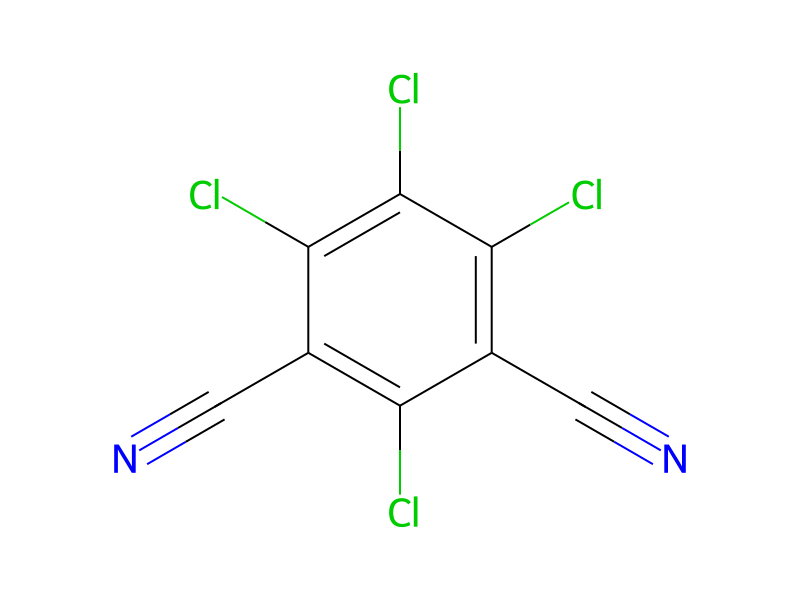
기본 정보
- 표준 SMILES
N#Cc1c(Cl)c(Cl)c(Cl)c(C#N)c1Cl- InChIKey
CRQQGFGUEAVUIL-UHFFFAOYSA-N- 분자식
- C8Cl4N2
- 평균 분자량
- 265.9 g/mol
- 단동위원소 질량
- 263.881559
이름 및 식별자
- 우선 이름
- Chlorothalonil
- IUPAC
- 2,4,5,6-tetrachlorobenzene-1,3-dicarbonitrile
- 현지명
- 클로로타로닐
- 영어명
- Chlorothalonil
- 분자식
- C8Cl4N2
- 분자량
- 265.91
이름 및 동의어
CHLOROTHALONIL1897-45-6TetrachloroisophthalonitrileDaconilBravom-TcpnNopcocideDacosoilForturfTermilSweepExotherm termil
이름 더 보기
클로로타로닐클로로탈로닐2,4,5,6-사염화-1,3-벤젠디카르보니트릴사염화이소프탈로니트릴TPN2,4,5,6-TETRACHLOROISOPHTHALONITRILEREACHCHLORTHALONILCHLOROTALONILOle2,4,5,6-tetrachlorobenzene-1,3-dicarbonitrile
Daconil M1,3-DicyanotetrachlorobenzeneDaconil 2787meta-TCPNChloroalonilClortosipExothermRepulse
데이터베이스 식별자
- CAS
1897-45-6- PubChem CID
- 15910
- DTXSID
DTXSID0020319- ChEMBL
CHEMBL468167- ChEBI
CHEBI:3639- UNII
- J718M71A7A
- EC Number
- 217-588-1
- Nikkaji
- J2.133D
물성
구조 계산 물성
- XLogP
- 2.9
- 극성 표면적
- 47.6 Ų
- 수소 결합 공여자 수
- 0
- 수소 결합 수용자 수
- 2
- 회전 가능 결합 수
- 0
- 무거운 원자 수
- 14
- 형식 전하
- 0
- 복잡도
- 284
실험 및 물리화학적 성질
LogP
log Kow = 3.05
3.05
OdorOdorless in pure form
Density
1.7 at 77 °F (NTP, 1992) - Denser than water; will sink
1.732 at 20 °C
Relative density (water = 1): 1.8
2.8 @25 °C
Color/Form
Colorless crystals
WHITE CRYSTALLINE SOLID
Solubility
less than 0.1 mg/mL at 70 °F (NTP, 1992)
In water, 0.81 mg/L at 25 °C
Soluble in benzene
Solubility (g/L, 25 °C): 20.9 acetone; 22.4 1,2-dichloroethane; 13.8 ethyl acetate; 0.2 n-heptane; 1.7 methanol; 74.4 xylene
Solubility in water, g/100ml at 25 °C:
CorrosivityNon-corrosive
Boiling Point
662 °F at 760 mmHg (NTP, 1992)
350 °C
350 °C
350 °C @760 [mm Hg]
Decomposition
May decompose at high temp to emit hydrogen chloride.
When heated to decomposition it emits very toxic fumes of /hydrogen chloride, nitrogen oxides, and hydrogen cyanide/.
Melting Point
482 to 484 °F (NTP, 1992)
252.1 °C
250-251 °C
Vapor Pressure
less than 0.01 mmHg at 104 °F ; 9.2 mmHg at 338.7 °F (NTP, 1992)
0.00000057 [mmHg]
5.7X10⁻⁷ mm Hg at 25 °C
Vapor pressure, Pa at 40 °C:
0.00000057 [mm Hg] @25 °C
Henry's Law ConstantHenry's Law constant = 2.5X10⁻⁷ atm-cu m/mole at 25 °C
Physical Description
Chlorothalonil appears as colorless crystals or granules or light gray powder. Melting point 250-251 °C. No odor when pure; technical grade has a slightly pungent odor. A fungicide formulated as water-dispersible granules, wettable powder, or dust.
Colorless or white odorless solid; [HSDB] White solid; Formulated in the form of dust, granular, wettable powder, dry flowable, flowable concentrate, impregnated material, and ready-to-use; [Reference #2]
ODOURLESS COLOURLESS CRYSTALS.
물리화학적 성질
- 녹는점
- 250 · 250-251°
- 끓는 점
- 760 · bp760 350°
- 밀도
- 425 · d425 1.7
- 증기압
- 7.6 x · 7.6 x 10-5 Pa (25 °C)
- 인화점
- 2 °C · 2 °C
- 저장 조건
- 0 · 0-6°C
- 용해도
- 180 mg/L · 180mg/L in organic solvents at 20 ℃
- 물리적 상태
- 가루
- 수용성
- 0.6 · 0.6-1.2mg l-1(25°C)
- 색상
- 하얀색
- 냄새
- 순수한 형태로 무취
- Merck
- 14 · 14,2166
- BRN
- 1978326 · 1978326
- Henry's Law Constant
- 5 · 5.0×101 mol/(m3Pa) at 25℃, Kawamoto and Urano (1989)
- 안정성
- 감광성
- 주요 응용
- 농업청소용품화장품환경음식 및 음료개인 위생 관리
- InChI
- 1S/C8Cl4N2/c9-5-3(1-13)6(10)8(12)7(11)4(5)2-14
- InChIKey
- CRQQGFGUEAVUIL-UHFFFAOYSA-N
- SMILES
- Clc1c(Cl)c(C#N)c(Cl)c(C#N)c1Cl
- LogP
- 2.94 at · 2.94 at 25℃
- NIST
- Tetrachloroisophthalonitrile(1897-45-6)
- EPA
- Chlorothalonil (1897-45-6)
화학적 성질
Chlorothalonil is a combustible, white, odorless, crystalline solid
안전 및 규제
GHS 분류
GHS Classification
Danger
H317: May cause an allergic skin reaction [Warning Sensitization, Skin];H318: Causes serious eye damage [Danger Serious eye damage/eye irritation];H330: Fatal if inhaled [Danger Acute toxicity, inhalation];H335: May cause respiratory irritation [Warning Specific target organ toxicity, single exposure; Respiratory tract irritation];H351: Suspected of causing cancer [Warning Carcinogenicity];H400: Very toxic to aquatic life [Warning Hazardous to the aquatic environment, acute hazard];H410: Very toxic to aquatic life with long lasting effects [Warning Hazardous to the aquatic environment, long-term hazard]
P203, P260, P261, P264+P265, P271, P272, P273, P280, P284, P302+P352, P304+P340, P305+P354+P338, P316, P317, P318, P319, P320, P321, P333+P317, P362+P364, P391, P403+P233, P405, and P501 (click each P-code to see the statement)
Danger
유해성 정보
Regulatory Information
Chemical: 1,3-Benzenedicarbonitrile, 2,4,5,6-tetrachloro-
Hazard Traits - Carcinogenicity;Authoritative List - Prop 65;Report - regardless of intended function of ingredient in the product
Commission Regulation No 844/2012
05/53/EC, Reg. (EU) 2017/1511, Reg. (EU) 2018/1262, Reg. (EU) 2019/677, Reg. (EU) No 533/2013, Reg. (EU) No 540/2011
Status: Active Update: 17-10-2022 https://echa.europa.eu/registration-dossier/-/registered-dossier/32255
Chlorothalonil: HSNO Approval: HSR002825 Approved with controls
Other Safety InformationIMAP assessments - 1,3-Benzenedicarbonitrile, 2,4,5,6-tetrachloro-: Environment tier I assessment;IMAP assessments - CMR chemicals not registered under REACH: Human health tier II assessment
DOT LabelPoison
Fire Hazards
Literature sources indicate that this compound is nonflammable. (NTP, 1992)
Liquid formulations containing organic solvents may be flammable. Gives off irritating or toxic fumes (or gases) in a fire. Risk of fire and explosion if formulations contain flammable/explosive solvents.
Fire PotentialChlorothalonil is non-flammable and non-explosive.
Health Hazards
SYMPTOMS: Symptoms of exposure to this compound include dermatitis and gastrointestinal, skin and upper respiratory tract irritation.;ACUTE/CHRONIC HAZARDS: This compound is a positive animal carcinogen. When heated to decomposition it emits toxic fumes of chloride ion, NOx and cyanide ion. (NTP, 1992)
Hazards Summary
No cases of systemic poisoning have been documented, but allergic contact dermatitis has been reported. [EPA Pesticides] Occupational asthma reported in farmer; [Malo] It is a strong skin irritant; Allergic contact dermatitis reported in flower and vegetable growers and carpenters; [Kanerva, p. 786] Chlorothalonil can cause immunologic, occupational contact urticaria. [Kanerva, p. 219] A severe eye, mild skin, and respiratory tract irritant; May cause skin sensitization; [ICSC] Reports of contact dermatitis in agricultural workers, cabinet makers, and employees of a chlorothalonil manufacturing facility; Occupational asthma also reported; Workers in a packaging plant reported intense pain on ocular exposure; Moderate conjunctivitis and corneal irritation (no corneal opacity) were observed; [HSDB] A mild skin irritant; Can cause permanent eye injury; A weak skin sensitizer; [Syngenta MSDS]
Reactive GroupNitriles;Aryl Halides
EC ClassificationSymbol: T+, N; R: 26-37-40-41-43-50/53; S: (2)-28-36/37/39-45-60-61
UN ClassificationUN Hazard Class: 6.1
Special Reports
USEPA/Office of Prevention, Pesticides and Toxic Substances; Reregistration Eligibility Decision Document - Chlorothalonil. EPA 738-R-99-004 (April 1999). The RED summarizes the risk assessment conclusions and outlines any risk reduction measures necessary for the pesticide to continue to be registered in the U.S.[Available from, as of June 5, 2014: http://www.epa.gov/pesticides/reregistration/status.htm]
DHEW/NCI; Bioassay of Chlorothalonil for Possible Carcinogenicity (1978) Technical Report Series No. 41; DHEW Pub No. (NIH) 78-841[Available from, as of April 4, 2003: http://ntp.niehs.nih.gov/ntp/htdocs/LT_rpts/tr041.pdf]
WHO/IPCS; Environmental Health Criteria No. 183: Chlorothalonil (1996)[Available from, as of March 15, 2006: http://www.inchem.org/documents/ehc/ehc/ehc183.htm]
FIFRA Requirements
Tolerances are established for the fungicide chlorothalonil (tetrachloroisophthalonitrile) and its metabolite 4-hydroxy-2,5,6-trichloroisophthalonitrile in or on the following food commodities.[Table#3237]
Tolerances are established for the metabolite 4-hydroxy-2,5,6-trichloroisophthalonitrile in or on the following food commodities. /4-Hydroxy-2,5,6-trichloroisophthalonitrile/[Table#3238]
Tolerances with regional registration, as defined in section 180.1(l), are established for the combined residues of chlorothalonil and its metabolite in or on the following raw agricultural commodities:[Table#3239]
The Agency has determined that chlorothalonil products, labeled and used as specified in this Reregistration Eligibility Decision, will not pose unreasonable risks or adverse effects to humans or the environment. Under the mandate of the Food Quality Protection Act of 1996, the Agency has determined that there is a reasonable certainty that no harm will result to infants and children from aggregate exposure to chlorothalonil. Therefore, the Agency concludes that products containing chlorothalonil are eligible for reregistration contingent upon the implementation of the mitigation measures set forth in this document.
As the federal pesticide law FIFRA directs, EPA is conducting a comprehensive review of older pesticides to consider their health and environmental effects and make decisions about their continued use. Under this pesticide reregistration program, EPA examines newer health and safety data for pesticide active ingredients initially registered before November 1, 1984, and determines whether the use of the pesticide does not pose unreasonable risk in accordance to newer safety standards, such as those described in the Food Quality Protection Act of 1996. Chlorothalonil is found on List A, which contains most pesticides that are used on foods and, hence, have a high potential for human exposure. List A consists of the 194 chemical cases (or 350 individual active ingredients) for which EPA issued registration standards prior to FIFRA '88. Case No: 0097; Pesticide type: fungicide; Registration Standard Date: 09/01/84; Case Status: OPP is reviewing data from the pesticide's producers regarding its human health and/or environmental effects, or OPP is determining the pesticide's eligibility for reregistration and developing the Reregistration Eligibility Decision (RED) document.; Active ingredient (AI): chlorothalonil; Data Call-in (DCI) Date(s): 07/31/91, 09/06/91, 03/03/95, 10/13/95; AI Status: The producers of the pesticide have made commitments to conduct the studies and pay the fees required for reregistration, and are meeting those commitments in a timely manner.
안전 및 보호
Fire Fighting
Fires involving this compound should be controlled with a dry chemical, carbon dioxide or Halon extinguisher. (NTP, 1992)
Use water spray, foam, powder, carbon dioxide.
First Aid Measures
Fresh air, rest.
Remove contaminated clothes. Rinse and then wash skin with water and soap. Refer for medical attention .
Rinse with plenty of water (remove contact lenses if easily possible). Refer immediately for medical attention.
Rinse mouth. Refer for medical attention .
First Aid
EYES: First check the victim for contact lenses and remove if present. Flush victim's eyes with water or normal saline solution for 20 to 30 minutes while simultaneously calling a hospital or poison control center. Do not put any ointments, oils, or medication in the victim's eyes without specific instructions from a physician. IMMEDIATELY transport the victim after flushing eyes to a hospital even if no symptoms (such as redness or irritation) develop.;SKIN: IMMEDIATELY flood affected skin with water while removing and isolating all contaminated clothing. Gently wash all affected skin areas thoroughly with soap and water. If symptoms such as redness or irritation develop, IMMEDIATELY call a physician and be prepared to transport the victim to a hospital for treatment.;INHALATION: IMMEDIATELY leave the contaminated area; take deep breaths of fresh air. IMMEDIATELY call a physician and be prepared to transport the victim to a hospital even if no symptoms (such as wheezing, coughing, shortness of breath, or burning in the mouth, throat, or chest) develop. Provide proper respiratory protection to rescuers entering an unknown atmosphere. Whenever possible, Self-Contained Breathing Apparatus (SCBA) should be used; if not available, use a level of protection greater than or equal to that advised under Protective Clothing.;INGESTION: DO NOT INDUCE VOMITING. If the victim is conscious and not convulsing, give 1 or 2 glasses of water to dilute the chemical and IMMEDIATELY call a hospital or poison control center. Be prepared to transport the victim to a hospital if advised by a physician. If the victim is convulsing or unconscious, do not give anything by mouth, ensure that the victim's airway is open and lay the victim on his/her side with the head lower than the body. DO NOT INDUCE VOMITING. IMMEDIATELY transport the victim to a hospital.;OTHER: Since this chemical is a known or suspected carcinogen you should contact a physician for advice regarding the possible long term health effects and potential recommendation for medical monitoring. Recommendations from the physician will depend upon the specific compound, its chemical, physical and toxicity properties, the exposure level, length of exposure, and the route of exposure. (NTP, 1992)
Safe StorageProvision to contain effluent from fire extinguishing. Separated from food and feedstuffs. Store in an area without drain or sewer access.
Fire Fighting ProceduresFire Extinguishing Media: CO2, foam, dry chemical or water.
Storage Conditions
Keep in cool, dry, ventilated place.
Safe Storage of Pesticides. Always store pesticides in their original containers, complete with labels that list ingredients, directions for use, and first aid steps in case of accidental poisoning. Never store pesticides in cabinets with or near food, animal feed, or medical supplies. Do not store pesticides in places where flooding is possible or in places where they might spill or leak into wells, drains, ground water, or surface water.
Cleanup Methods
Solid spillage should be picked up with an industrial vacuum cleaner and disposed of in accordance with local regulations.
If a spill occurs, clean it up promptly. Don't wash it away. Instead, sprinkle the spill with sawdust, vermiculite, or kitty litter. Sweep it into a plastic garbage bag, and dispose of it as directed on the pesticide product label.
After Applying a Pesticide, Indoors or Outdoors. To remove pesticide residues, use a bucket to rinse tools or equipment three times, including any containers or utensils that you used when mixing the pesticide. Then pour the rinsewater into the pesticide sprayer and reuse the solution by applying it according to the pesticide product label directions. After applying any pesticide wash your hands and any other parts of your body that may have come in contact with the pesticide. To prevent tracking pesticides inside, remove or rinse your boots or shoes before entering your home. Wash any clothes that have been exposed to a lot of pesticide separately from your regular wash.
Nonfire Spill Response
SMALL SPILLS AND LEAKAGE: If a spill of this chemical occurs, FIRST REMOVE ALL SOURCES OF IGNITION, then you should dampen the solid spill material with acetone and transfer the dampened material to a suitable container. Use absorbent paper dampened with acetone to pick up any remaining material. Seal your contaminated clothing and the absorbent paper in a vapor-tight plastic bag for eventual disposal. Solvent wash all contaminated surfaces with acetone followed by washing with a soap and water solution. Do not reenter the contaminated area until the Safety Officer (or other responsible person) has verified that the area has been properly cleaned.;STORAGE PRECAUTIONS: You should store this material under ambient temperatures. (NTP, 1992)
Disposal Methods
SRP: The most favorable course of action is to use an alternative chemical product with less inherent propensity for occupational harm/injury/toxicity or environmental contamination. Recycle any unused portion of the material for its approved use or return it to the manufacturer or supplier. Ultimate disposal of the chemical must consider: the material's impact on air quality; potential migration in soil or water; effects on animal and plant life; and conformance with environmental and public health regulations.
Chlorothalonil can be incinerated in a unit operating @ 850 °C equipped with off-gas scrubbing equipment. Recommendable method: Incineration.
Safe Disposal of Pesticides. The best way to dispose of small amounts of excess pesticides is to use them - apply them - according to the directions on the label. If you cannot use them, ask your neighbors whether they have a similar pest control problem and can use them. If all of the remaining pesticide cannot be properly used, check with your local solid waste management authority, environmental agency, or health department to find out whether your community has a household hazardous waste collection program or a similar program for getting rid of unwanted, leftover pesticides. These authorities can also inform you of any local requirements for pesticide waste disposal.
Safe Disposal of Pesticides. An empty pesticide container can be as hazardous as a full one because of residues left inside. Never reuse such a container. When empty, a pesticide container should be rinsed carefully three times and the rinsewater thoroughly drained back onto the sprayer or the container previously used to mix the pesticide. Use the rinsewater as a pesticide, following label directions. Replace the cap or closure securely. Dispose of the container according to label instructions. Do not puncture or burn a pressurized container like an aerosol - it could explode. Do cut or puncture other empty pesticide containers made of metal or plastic to prevent someone from reusing them. Wrap the empty container and put it in the trash after you have rinsed it.
Spillage Disposal
Personal protection: chemical protection suit and protective gloves. Do NOT let this chemical enter the environment. Sweep spilled substance into covered containers. If appropriate, moisten first to prevent dusting. Carefully collect remainder. Then store and dispose of according to local regulations.
Preventive Measures
SRP: The scientific literature for the use of contact lenses by industrial workers is inconsistent. The benefits or detrimental effects of wearing contact lenses depend not only upon the substance, but also on factors including the form of the substance, characteristics and duration of the exposure, the uses of other eye protection equipment, and the hygiene of the lenses. However, there may be individual substances whose irritating or corrosive properties are such that the wearing of contact lenses would be harmful to the eye. In those specific cases, contact lenses should not be worn. In any event, the usual eye protection equipment should be worn even when contact lenses are in place.
Prevent dispersion of dust! Avoid all contact! Avoid exposure of adolescents and children!
Do not eat, drink, or smoke during work. Wash hands before eating.
Wear the items of protective clothing the label requires: for example, non-absorbent gloves (not leather or fabric), rubber footwear (not canvas or leather), a hat, goggles, or a dust-mist filter. If no specific clothing is listed, gloves, long-sleeved shirts and long pants, and closed shoes are recommended.
For more Preventive Measures (Complete) data for CHLOROTHALONIL (7 total), please visit the HSDB record page.
Isolation and Evacuation
Excerpt from ERG Guide 151 [Substances - Toxic (Non-Combustible)]:;IMMEDIATE PRECAUTIONARY MEASURE: Isolate spill or leak area in all directions for at least 50 meters (150 feet) for liquids and at least 25 meters (75 feet) for solids.;SPILL: See ERG Table 1 - Initial Isolation and Protective Action Distances on the UN/NA 3276 datasheet.;FIRE: If tank, rail tank car or highway tank is involved in a fire, ISOLATE for 800 meters (1/2 mile) in all directions; also, consider initial evacuation for 800 meters (1/2 mile) in all directions. (ERG, 2024)
독성 정보
Body Burden
Chlorothalonil was detected in maternal serum samples and in corresponding cord serum of 150 patients(1).
According to the Nonoccupational Pesticide Exposure Study (NOPES), 9, 13, and 20% of the population in Jacksonville, FL were potentially exposed to chlorothalonil in indoor air during respective time periods of August 21-September 18, 1986, March 20-April 13, 1987, and February 1-17, 1988; 4, 9, and 9% of the population were potentially exposed in outdoor air during the same respective time periods and 7, <1, and 19% were potentially exposed in personal air. Mean concentrations of chlorothalonil in personal air samples in Jacksonville, FL were determined to be 0.5 ng/cu m during August 21-September 18, 1986 and 2.5 ng/cu m during February 1-17, 1988. Mean concentrations in personal air samples in Springfield/Chicopee, FL were determined to be 0.8 ng/cu m during June 1-17, 1987 (spring) and 0.1 ng/cu m during March 11-28, 1988 (winter). In Springfield/Chicopee, FL, <1% and 2% of the population (nonoccupational) were potentially exposed to chlorothalonil in indoor air during the spring and winter, respectively; 12% (spring) and 1% (winter) were potentially exposed in outdoor air and 12% (spring) and 2% (winter) in personal air(1).
Treatment
Antidotes to cyanide poisoning include hydroxocobalamin and sodium nitrite, which release the cyanide from the cytochrome system, and rhodanase, which is an enzyme occurring naturally in mammals that combines serum cyanide with thiosulfate, producing comparatively harmless thiocyanate. Oxygen therapy can also be administered. (L97)
Interactions
... Japanese medaka (Oryzias latipes) /were exposed/ to environmentally relevant concentrations of azinphos-methyl, chlorothalonil, endosulfan, and mixtures of all three ... Fry exposed to ... chlorothalonil and a combination of the chemicals showed reduced activity. Adult sex ratios were biased toward females ... with those exposed to azinphos-methyl, chlorothalonil, and the pesticide mixture departing significantly from an even sex ratio. There was no evidence of additive or synergistic effects of pesticide mixtures.
... Atrazine and chlorothalonil concentrations > or = 25 microg/L and 33.3 microg/L, respectively, caused significant decreases in D. tertiolecta population growth rate. At much higher concentrations (> or = 400 microg/L) chlorpyrifos also elicited a significant effect on D. tertiolecta population growth rate. The population growth rate EC50 values determined for D. tertiolecta were 64 microg/L for chlorothalonil, 69 microg/L for atrazine, and 769 microg/L for chlorpyrifos. Atrazine and chlorpyrifos in mixture displayed additive toxicity, whereas atrazine and chlorothalonil in mixture had a synergistic effect.
Target OrgansUrinary
Health Effects
Exposure to high levels of cyanide for a short time harms the brain and heart and can even cause coma, seizures, apnea, cardiac arrest and death. Chronic inhalation of cyanide causes breathing difficulties, chest pain, vomiting, blood changes, headaches, and enlargement of the thyroid gland. Skin contact with cyanide salts can irritate and produce sores. (L96, L97)
Ecotoxicity Values
LC50; Species: Anas platyrhynchos (Mallard duck) 8 days old; dietary 2000 ppm for 9 days (95% confidence limit: 1499-2678 ppm)
LC50; Species: Anas platyrhynchos (Mallard duck) juveniles; dietary >10000 ppm for 8 days /96% AI formulated product/
LD50; Species: Anas platyrhynchos (Mallard duck) 14 days old; oral >4640 mg/kg /96% AI formulated product/
LD50; Species: Coturnix coturnix japonica (Japanese quail) oral >2000 mg/kg /98.6% chlorothalonil/
For more Ecotoxicity Values (Complete) data for CHLOROTHALONIL (56 total), please visit the HSDB record page.
Environmental Fate
TERRESTRIAL FATE: Based on a classification scheme(1), Koc values of 900-14,000(2-3), indicate that chlorothalonil is expected to have low to no mobility in soil(SRC). Volatilization of chlorothalonil from moist soil surfaces is not expected to be an important fate process(SRC) given a Henry's Law constant of 2.5X10⁻⁷ atm-cu m/mole(4). Chlorothalonil is not expected to volatilize from dry soil surfaces(SRC) based upon a vapor pressure of 5.7X10⁻⁷ mm Hg at 25 °C(4). Aerobic biodegradation half-lives of chlorothalonil in four different soils ranged from 10 to 40 days(2). The field dissipation half-life of chlorothalonil was 48 days(5).
AQUATIC FATE: Based on a classification scheme(1), Koc values of 900-14,000(2-3), indicates that chlorothalonil is expected to adsorb to suspended solids and sediment(SRC). Volatilization from water surfaces is not expected(4) based upon a Henry's Law constant of 2.5X10⁻⁷ atm-cu m/mole(5). Chlorothalonil is not expected to undergo hydrolysis at pH 5 and 7; however at pH 9 it was hydrolyzed to 2,5,6-trichloro-4-hydroxyisophtalonitrile and 3-cyano-2,4,5,6-tetrachlorobenzamide with a half-life of 38.1 days(6). An aqueous photolysis half-life of 65 days was measured for chlorothalonil, suggesting photolysis in sunlit surface waters is possible(2). According to a classification scheme(7), BCF values of 9.4 to 264 in fish(2,8), suggest the bioconcentration in aquatic organisms is low to high depending on species and tissue (edible or inedible)(SRC). Chlorothalonil degrades under aerobic and anaerobic aquatic conditions. Aerobic aquatic half-lives of chlorothalonil in marine water were reported as 8.1 and 8.8 days(9). Anaerobic half-lives of chlorothalonil in two different flooded soils were in the range of 5 to 15 days(2). The anaerobic biodegradation half-life of chlorothalonil in pond sediment was <1.9 days(10).
ATMOSPHERIC FATE: According to a model of gas/particle partitioning of semivolatile organic compounds in the atmosphere(1), chlorothalonil, which has a vapor pressure of 5.7X10⁻⁷ mm Hg at 25 °C(2), will exist in both the vapor and particulate phases in the ambient atmosphere. Vapor-phase chlorothalonil is degraded in the atmosphere by reaction with photochemically-produced hydroxyl radicals(SRC); the half-life for this reaction in air is estimated to be 6.5 years(SRC), calculated from its rate constant of 6.2X10⁻¹⁵ cu cm/molecule-sec at 25 °C(SRC) that was derived using a structure estimation method(3). Particulate-phase chlorothalonil may be removed from the air by wet and dry deposition(SRC). Chlorothalonil has been shown to undergo direct photolysis in aqueous solutions with a half-life of 65 days(4), which indicates that direct photolysis in the atmosphere may be possible(SRC).
Food Survey Values
During October 1, 1981 and September 30, 1986, chlorothalonil was found in 165 US agricultural commodities at >0-0.05 ppm, in 113 at 0.05-0.1 ppm, in 237 at 0.1-0.5 ppm, in 64 at 0.5-1.0 ppm, in 30 at 1.0-2.0 ppm, and 18 agricultural commodities at > 2.0 ppm(1). This study does not distinguish between domestic and imported commodities or between surveillance and compliance samples(1). During October 1, 1981 and September 30, 1986, chlorothalonil was found in 57 US domestic agricultural commodities conducted by surveillance sampling at >0-0.05 ppm, in 61 at 0.05-0.1 ppm, in 128 at 0.1-0.5 ppm, in 53 at 0.5-1.0 ppm, in 26 at 1.0-2.0 ppm, and in 17 domestic agricultural commodities at > 2.0 ppm(2). During October 1, 1981 and September 30, 1986, chlorothalonil was found in 108 U.S. imported agricultural commodities conducted by surveillance sampling at >0-0.05 ppm, in 51 at 0.05-0.1 ppm, in 102 at 0.1-0.5 ppm, in 10 at 0.5-1.0 ppm, in 4 at 1.0-2.0 ppm, and in 1 imported agricultural commodity at >2.0 ppm(2). Chlorothalonil was qualitatively identified in raw agricultural commodities during FY78-82 according to FDA's program for monitoring pesticides in foods(3). Chlorothalonil was qualitatively identified in 257 of 27,065 human food samples during FY88-89(4). According to the California Department of Food and Agriculture's (CDFA) pesticide monitoring program, chlorothalonil was qualitatively identified in 3 of 25 broccoli , 5 of 8 carrots, 1 of 19 cauliflower, 12 of 13 celery, 1 of 21 dry onions, and 3 of 8 potato samples in 1989(5). Chlorothalonil has been identified, not quantified, in domestic and imported foods in the US every year from 1996-2003 in the FDA Pesticide Residue Monitoring Program(6).
Chlorothalonil was identified between 1983 and 1984 in 10 of 10 composite samples of sweet cherries from Ontario, Canada; it was quantified in 5 of the 10 samples at an average concentration of 0.02 mg/kg(1). Chlorothalonil was quantitatively identified between 1980 and 1985 in 4 of 4 composite samples of cauliflower, 2 of 12 composite samples of cucumbers, and 5 of 13 composite samples of tomatoes from Ontario, Canada at average concentrations of 0.42, 0.01, and 0.07 mg/kg, respectively(2). Of 173 agricultural products analyzed in 2006 from Japan, four were reported to contain chlorothalonil at 1.2-16.0 ng/g(3). Chlorothalonil residue was detected at <0.0015-1.00 mg/kg in 120 green house cultivated tomato samples collected May 2009 to Jun 2010 from 20 export growers from 10 packaging houses in Souss-Massa, Morocco(4). Chlorothalonil was detected in 195 of 2223 fruit and vegetable samples collected from Sao Paulo General Storage and Wholesale markets, Brazil from Jan 1994 to Dec 2001; positive concentrations were detected in apple, cucumber, grape, green bean, guava, lettuce, melon, onion, papaya, peach, spice, strawberry, pepper, tangerine, tomato and water melon with a range of 0.01 to 9.24 mg/kg(5). A market basket survey of produce conducted in Trinidad, West Indies from Oct 1996 to May 1997 reported that chlorothalonil was not detected in sweet pepper, celery, cabbage, lettuce, cauliflower, Pak-choi, cucumber, spinach, chive tomato, hot pepper, cilantro, okra, watercress, eggplant, sorrel fruit or green beans(6). Chlorothalonil was identified, not quantified, in strawberries, black currants, tomatoes, cucumbers, and melons in the 1995-1996 Danish National Pesticide Monitoring Program(7).
Chlorothalonil was detected at levels of 0.001-1.35 mg/kg in most samples of apples, cabbages, chinese cabbages, cucumbers, peaches, pears, spinach, strawberries and tomatoes marketed in Tokyo.
Adverse Effects
Skin Sensitizer - An agent that can induce an allergic reaction in the skin.;Asthma - Reversible bronchoconstriction (narrowing of bronchioles) initiated by the inhalation of irritating or allergenic agents.;IARC Carcinogen - Class 3: Chemicals are not classifiable by the International Agency for Research on Cancer.
Exposure Routes
The substance can be absorbed into the body by inhalation.
Oral (L96) ; inhalation (L96) ; dermal (L96)
Milk ConcentrationsEXPERIMENTAL: NO RESIDUES OF DACONIL WERE FOUND IN MILK OF DAIRY COWS FED.../DACONIL/...
Toxicity Summary
IDENTIFICATION AND USE: Chlorothalonil forms colorless and odorless crystals in pure form. It is a substituted benzene fungicide used to control fungal diseases in vegetables, fruit, turf, and ornamental plants. Chlorothalonil is registered for use in the U.S., but approved pesticide uses may change periodically and so federal, state and local authorities must be consulted for currently approved uses. HUMAN EXPOSURE AND TOXICITY: Contact dermatitis was observed in a number of employees in a chlorothalonil manufacturing plant. There were 19 cases out of 103 employees. About 60% of the employees showed some kind of skin abnormality compared with 18.5% of employees not working with chlorothalonil. When the hygiene conditions of the plant were improved the overall proportion of skin abnormalities fell to about 20% and there were no cases of chlorothalonil contact dermatitis. One report concerned a Danish cabinet maker who developed dermatitis on his hands after 9 months of painting furniture with wood preservatives containing chlorothalonil. Another report referred to three cases: two with erythema on the face, particularly periorbitally, and one with eczema of the hands, in people engaged in similar work. Patients showed a positive reaction to patch tests with 0.01% chlorothalonil in acetone. Ocular exposures to chlorothalonil from employees at a packaging plant involved intense pain with mild to moderate conjunctivitis and irritation of the corneal surface. Ocular edema was also seen in more extensive exposures. With lesser exposures, complete recovery occurred within 24 hr. Recovery took slightly longer following extensive exposure. In no instance was corneal opacity observed. ANIMAL STUDIES: Instillation of chlorothalonil (96%) to rabbit eyes resulted in severe irritation with persistent corneal opacity, iris effects, and conjunctival irritation. In a carcinogenicity study in rats, chlorothalonil (98.1%) was administered in the diet up to 175 mg/kg/day for 116 wee
Organic nitriles decompose into cyanide ions both in vivo and in vitro. Consequently the primary mechanism of toxicity for organic nitriles is their production of toxic cyanide ions or hydrogen cyanide. Cyanide is an inhibitor of cytochrome c oxidase in the fourth complex of the electron transport chain (found in the membrane of the mitochondria of eukaryotic cells). It complexes with the ferric iron atom in this enzyme. The binding of cyanide to this cytochrome prevents transport of electrons from cytochrome c oxidase to oxygen. As a result, the electron transport chain is disrupted and the cell can no longer aerobically produce ATP for energy. Tissues that mainly depend on aerobic respiration, such as the central nervous system and the heart, are particularly affected. Cyanide is also known produce some of its toxic effects by binding to catalase, glutathione peroxidase, methemoglobin, hydroxocobalamin, phosphatase, tyrosinase, ascorbic acid oxidase, xanthine oxidase, succinic dehydrogenase, and Cu/Zn superoxide dismutase. Cyanide binds to the ferric ion of methemoglobin to form inactive cyanmethemoglobin. (L97)
규제 정보
Regulatory Information
Chemical: 1,3-Benzenedicarbonitrile, 2,4,5,6-tetrachloro-
Hazard Traits - Carcinogenicity;Authoritative List - Prop 65;Report - regardless of intended function of ingredient in the product
Commission Regulation No 844/2012
05/53/EC, Reg. (EU) 2017/1511, Reg. (EU) 2018/1262, Reg. (EU) 2019/677, Reg. (EU) No 533/2013, Reg. (EU) No 540/2011
Status: Active Update: 17-10-2022 https://echa.europa.eu/registration-dossier/-/registered-dossier/32255
Chlorothalonil: HSNO Approval: HSR002825 Approved with controls
FIFRA Requirements
Tolerances are established for the fungicide chlorothalonil (tetrachloroisophthalonitrile) and its metabolite 4-hydroxy-2,5,6-trichloroisophthalonitrile in or on the following food commodities.[Table#3237]
Tolerances are established for the metabolite 4-hydroxy-2,5,6-trichloroisophthalonitrile in or on the following food commodities. /4-Hydroxy-2,5,6-trichloroisophthalonitrile/[Table#3238]
Tolerances with regional registration, as defined in section 180.1(l), are established for the combined residues of chlorothalonil and its metabolite in or on the following raw agricultural commodities:[Table#3239]
The Agency has determined that chlorothalonil products, labeled and used as specified in this Reregistration Eligibility Decision, will not pose unreasonable risks or adverse effects to humans or the environment. Under the mandate of the Food Quality Protection Act of 1996, the Agency has determined that there is a reasonable certainty that no harm will result to infants and children from aggregate exposure to chlorothalonil. Therefore, the Agency concludes that products containing chlorothalonil are eligible for reregistration contingent upon the implementation of the mitigation measures set forth in this document.
As the federal pesticide law FIFRA directs, EPA is conducting a comprehensive review of older pesticides to consider their health and environmental effects and make decisions about their continued use. Under this pesticide reregistration program, EPA examines newer health and safety data for pesticide active ingredients initially registered before November 1, 1984, and determines whether the use of the pesticide does not pose unreasonable risk in accordance to newer safety standards, such as those described in the Food Quality Protection Act of 1996. Chlorothalonil is found on List A, which contains most pesticides that are used on foods and, hence, have a high potential for human exposure. List A consists of the 194 chemical cases (or 350 individual active ingredients) for which EPA issued registration standards prior to FIFRA '88. Case No: 0097; Pesticide type: fungicide; Registration Standard Date: 09/01/84; Case Status: OPP is reviewing data from the pesticide's producers regarding its human health and/or environmental effects, or OPP is determining the pesticide's eligibility for reregistration and developing the Reregistration Eligibility Decision (RED) document.; Active ingredient (AI): chlorothalonil; Data Call-in (DCI) Date(s): 07/31/91, 09/06/91, 03/03/95, 10/13/95; AI Status: The producers of the pesticide have made commitments to conduct the studies and pay the fees required for reregistration, and are meeting those commitments in a timely manner.
State Drinking Water Guidelines
(FL) FLORIDA 1.5 ug/l
(ME) MAINE 45 ug/l
(MN) MINNESOTA 30 ug/L
안전 데이터
- wgk
- 3
- tsca
- TSCA listed
- rtecs
- NT2600000
- ridadr
- 3276
- 독성
- LD50 orally in rats: >10.0 g/kg (Turner)
- HS 번호
- 29269090
- risk_code
- 26-37-40-41-43-50/53-36-20/21/22-11
- hazard_code
- T+;N,N,T+,Xn,F
- safety_code
- 28-36/37/39-45-60-61-36/37-26-16
- 포장분류
- I
- 위험 등급
- 6.1(a)
- 기존화학 물질
- KE-33285
- Hazard Classifications
- Acute Tox. 2 InhalationAquatic Acute 1Aquatic Chronic 1Carc. 2Eye Dam. 1Skin Sens. 1STOT SE 3
- 스토리지 클래스
- 6.1A - Combustible acute toxic Cat. 1 and 2very toxic hazardous materials
- 유해 물질 데이터
- 1897-45-6(Hazardous Substances Data)
- 함량 및 규제정보
- 물질구분: 유독물질; 혼합물(제품)함량정보: 클로로타로닐 및 이를 0.1% 이상 함유한 혼합물
- 유해화학물질 필터링
- 97-1-279
화학 및 산업
약리 정보
Mechanism of Action
Administration of a monoglutathione conjugate to rats caused similar lesions in the kidney to parent chlorothalonil ... Studies undertaken in vitro using isolated kidney mitochondria have shown that respiration is inhibited in the presence of synthetic mono- and dithiol conjugates derived from chlorothalonil. ... A correlation appears to exist between the interspecies differences in susceptibility to renal toxicity and the differences in capacity to produce these thiol-derived metabolites as rats excrete more thiol-derived metabolites than dogs.
The effects on rodent kidneys is due to the formation of dithiols and trithiols from the action of renal beta-lyase on cysteine S-conjugates. These appear to derive from the glutathione conjugates of chlorothalonil.
Chlorothalonil (TCIN) suppressed both baseline and stimulated O(2)(-) production in a dose-dependent manner. Similar results were obtained using zymosan and phorbol 12-myristate-13-acetate. Inhibition of glutathione synthesis by pre-treatment with buthionine sulfoximine (BSO) enhanced the suppression of O(2)(-) production. Dithiothreitol (DTT) reduced TCIN-induced macrophage dysfunction. TCIN did not initiate lipid peroxidation in macrophages
Available data on metabolism of chlorothalonil in rats and dogs indicates that the parent chemical is conjugated in liver to glutathione or cysteine-S-conjugates. These conjugates are then absorbed from the gastrointestinal tract. Cysteine-S-conjugates, glutathione conjugates, or mercapturic acids reaching the kidney come into contact with proximal tubular cells, where eventual "activation" of pre-mercapturic acids occurs through the action of cysteine conjugate beta-lyase, an enzyme found in the cytosol and mitochondria of the cells of the renal proximal tubules. Nephrotoxicity of cysteine-S-conjugates through activation to thiol metabolites is related to renal cortical mitochondrial dysfunction. Respiratory control has been shown to be disrupted by the di- and tri-thiol analogs of chlorothalonil. Osmotic changes occur within the renal cortical tubular cells as a result of toxic insult by the thiol metabolites of chlorothalonil, resulting in vacuolar degeneration followed by cellular regeneration.
Metabolism/Metabolites
When yeast cells were exposed to TCIN, derivatives formed resembled those formed by reaction of glutathione with TCIN in vitro. Coenzyme A and 2-mercaptoethanol also ... formed derivatives with TCIN in vitro. Infrared spectra and chromatography of the 4 derivatives ... indicated ... 1-4 halogens ... substituted by 2-mercaptoethanol. ... Daconil decomposed in fresh rumen contents with production of two unidentified metabolites.
In plants, 4-hydroxy-2,5,6-trichloroisophthalonitrile is found as a metabolite.
The metabolism of chlorothalonil was investigated in liver and gill cytosolic and microsomal fractions from channel catfish (Ictalurus punctatus) using HPLC. All fractions catalyzed the metabolism of chlorothalonil to polar metabolites. Chlorothalonil metabolism by cytosolic fractions was reduced markedly when glutathione was omitted from the reaction mixtures. The lack of microsomal metabolism in the presence of either NADPH or an NADPH-regenerating system indicated direct glutathione S-transferase catalyzed conjugation with glutathione without prior oxidation by cytochrome P450. Cytosolic and microsomal glutathione S-transferases from both tissues were also active toward 1-chloro-2,4-dinitrobenzene, a commonly employed reference substrate. In summary, channel catfish detoxified chlorothalonil in vitro by glutathione S-transferase-catalyzed glutathione conjugation in the liver and gill. The present report is the first to confirm microsomal glutathione S-transferase activity toward 1-chloro-2,4-dinitrobenzene in gill and toward chlorothalonil in liver, and also of gill cytosolic glutathione S-transferase activity towards chlorothalonil, in an aquatic species.
Male Sprague-Dawley rats were administered, via oral gavage, (14)C-chlorothalonil (purity 99.7%) at a dose level of 200 mg/kg in order to isolate and identify the urinary metabolites. Urine was collected 17, 24 and 48 hr after dosing. Urinary metabolites accounted for 2.4% of the administered dose and, except for 30% of the radiolabel which was non-extractable from the urine, were found to be trimethylthiomonochloro-isophthalonitrile and dimethylthiodichloro-isophthalonitrile. These thiols were excreted in urine both as free thiols and as their methylated derivatives. ...A metabolic pathway /was suggested/ such that hepatic metabolism proceeds through conjugation with GSH followed by enzymatic degradation. The smaller conjugates are then transported via the bloodstream to the kidney, where they are converted to thiol metabolites and excreted in the urine.
For more Metabolism/Metabolites (Complete) data for CHLOROTHALONIL (12 total), please visit the HSDB record page.
Organic nitriles are converted into cyanide ions through the action of cytochrome P450 enzymes in the liver. Cyanide is rapidly absorbed and distributed throughout the body. Cyanide is mainly metabolized into thiocyanate by either rhodanese or 3-mercaptopyruvate sulfur transferase. Cyanide metabolites are excreted in the urine. (L96)
MeSH Pharmacological Classification
Chemicals that kill or inhibit the growth of fungi in agricultural applications, on wood, plastics, or other materials, in swimming pools, etc.
Agents destructive to snails and other mollusks.
Absorption, Distribution and Excretion
Following administration of 1 mg/kg body weight (14)C chlorothalonil to male Sprague-Dawley rats by endotracheal instillation, gavage or dermal application, less than 6% of the administered dose was recovered in the blood or urine within 48 hr after dosing.
In rats, given a single, oral low dose (1.5mg/kg) of chlorothalonil, around 20-22% of the absorbed dose is excreted in bile and around 10% in urine. At higher dose (200 mg/kg) a considerably lower proportion (8%) of the absorbed dose is excreted in bile, indicating that this is a saturable process. These data indicate that overall absorption from the GI tract is in the order of 30-32% of the administered dose. The majority ... is excreted in feces with at least 80% of administered dose excreted by this route within 96 hr. Approximately 90% of the administered dose was excreted within 34-48 hr although excretion was less rapid at doses of 50 mg/kg and above. Highest tissue concentrations were observed in the kidney, approximately 0.1% of the dose. A similar metabolic profile was seen on repeated dosing and there was no evidence of bioaccumulation.
... Data for the monkey show that, following a single oral dose of 50 mg/kg, 1.8-4.15% of the dose appeared in urine with very low levels of thiol-derived metabolites appearing in urine. Fecal excretion predominated with around 92% of the dose eliminated via this route over 96 hr. Absorption and excretion were rapid and there was no evidence of bioaccumulation.
Low levels of /orally administered chlorothalonil to mouse/ were found in the tissues and urinary excretion indicated that at least 10% of the dose was absorbed with the majority (70-80%) of the dose excreted in feces.
For more Absorption, Distribution and Excretion (Complete) data for CHLOROTHALONIL (12 total), please visit the HSDB record page.
용도 및 제조
Uses
Used as a fungicide on vegetables, trees, fruits, turf, ornamentals, and other crops; [EXTOXNET] Used as a fungicide and preservative in paints, adhesives, and wood; [Kanerva, p. 786] Used as a biocide in paint; [Adams, p. 475] Used as a preservative in adhesives; [HSDB] Act mainly as a fungicide and mildewicide, but possesses some bactericidal, microbicidal, algaecidal, insecticidal, and acaricidal properties; Used as broad spectrum non-systemic pesticide, mildewicide for paints and other surface treatments, and protectant for wood; Contains hexachlorobenzene (HCB) as an impurity; [Reference #2]
Painting (Pigments, Binders, and Biocides) [Category: Paint];Working with Glues and Adhesives [Category: Other];Applying Wood Preservatives [Category: Other];Farming (Pesticides) [Category: Industry]
For chlorothalonil (USEPA/OPP Pesticide Code: 081901) ACTIVE products with label matches. /SRP: Registered for use in the U.S. but approved pesticide uses may change periodically and so federal, state and local authorities must be consulted for currently approved uses./
Fungicide, wood protectant, antimold and antimildew agent, bactericide, microbiocide, algaecide, insecticide, and acaricide.
Fungicide on a variety of vegetable crops, peanuts, lawns & turfs
Fungicide, bactericide, nematocide. Agricultural and horticultural fungicide.
Impurities
... Technical-grade chlorothalonil was reported to contain the following cmpd (avg %): chlorothalonil, 97.6; tetrachlorophthalonitrile, less than 0.1; tetrachloroterephthalonitrile, 0.5; pentachlorobenzonitrile, 1.2; partially chlorinated dicyanobenzenes (all isomers), 0.4; unchlorinated dicyanobenzenes (all isomers), 0.3; matter insoluble in xylene, 0.2.
The chlorothalonil September 1984 Registration Standard required that levels of hexachlorobenzene (HCB), a recognized impurity in technical chlorothalonil, must be at or below 0.05% (500 ppm) for registration or reregistration of the products ...
A June 1987 Data Call-In (DCI) required data concerning polyhalogenated dibenzo-p-dioxins and dibenzofurans (PCDDs and PCDFs) in technical chlorothalonil. Although additional data are required concerning the levels of PCDDs/PCDFs in chlorothalonil, initial studies indicate that PCDFs are present in the Veterans Ilex technical, and that no PCDDs/PCDFs are present at levels at or above the Agency-specified /limits of quantification/ (LOQs) in the GB Biosciences technical chlorothalonil... .
U.S. Imports(1976) 1.71X10+9 G (PRINCPL CUSTMS DISTS)
U.S. Production
(1975) 1.6X10+9 G (CONSUMPTION)
(1976) PROBABLY GREATER THAN 2.27X10+6 G
Consumption Patterns
FUNGICIDE, OF WHICH APPROXIMATELY 63% IS USED ON PEANUTS, 17% ON VEGETABLE CROPS OTHER THAN POTATOES, 9% IN PAINTS, 6% ON POTATOES, & 6% ON LAWNS & TURF (1975)
Predominant uses of chlorothalonil are on peanuts (about 34% of total chlorothalonil used in the US), potatoes (about 12%), tomatoes (about 7%), paint (about 13%), and golf courses (about 10%). Other important sites include lawns, and cucurbits.
Methods of Manufacturing
Chlorothalonil can be obtained by reaction of tetrachloroisophthaloyl chloride with ammonia, followed by treatment with a dehydrating agent such as phosphorus pentoxide, or by chlorination of isonaphthalonitrile.
Preparation: R. D. battershell, H. Bluestone, United States of America 3290353 (1966 to Diamond Alkali); R. M. Bimber, United States of America 3652637 (1972 to Diamond Shamrock).
Formulations/Preparations
Premix Partners: Acibenzolar-S-methyl; Azoxystrobin; Carbendazim; Copper Oxychloride; Cymoxanil; Cyproconazole; Difenoconazole; Dimethomorph; Fludioxonil; Fluoxastrobin; Hexaconazole; Metalaxyl; Metalaxyl-M; Penthiopyrad; Picoxystrobin; Potassium Phosphite; Propamocarb Hydrochloride; Propiconazole; Pyrimethanil; Sulfur; Tebuconazole; Tetraconazole; Thiophanate-methyl; Vinclozolin.
Flowable, water dispersible granule, wettable powder, exothermic dust.
Registration Notes: Outside USA: Disarm C in Canada and Japan. Treoris in Canada.
Trade names: Agronil; Aminil; Ancogard; Banko; Barrachlor; Bronco; Butik; Celeste; Centauro; Chloronil; Chlorosul; Chlorothate; Clorval; Taloberg; Control; Daylin; Equus; Quali-Pro; Fertilonil; Funginil; Gyunzerotan; Hektanil; Karisma; Maconil; Oranil 75; Rothalonil; Rumble; Taloflow; Talone; Talonil; Thalonex; Wopro-chlorothalonil.
For more Formulations/Preparations (Complete) data for CHLOROTHALONIL (35 total), please visit the HSDB record page.
Household ProductsInformation on 21 consumer products that contain Chlorothalonil in the following categories is provided:;• Home Maintenance;• Pesticides
Use ClassificationEnvironmental transformation -> Pesticides (parent, predecessor)
General Manufacturing Information
1,3-Benzenedicarbonitrile, 2,4,5,6-tetrachloro-: ACTIVE
The WHO Recommended Classification of Pesticides by Hazard identifies chlorothalonil as unlikely to present an acute hazard in normal use; Main Use: fungicide, other than for seed treatment.
응용 분야
개요Chlorothalonil is a pesticide fungicide commonly used in the cultivation of ornamental plants and flowers, rice, and onions. In banana plantations it is used in fumigations by airplanes. It can be used as a preservative of paints and of woods. Chlorothalonil can induce contact urticaria, irritant and allergic contact dermatitis, erythema dychromicum perstans or folliculitis mainly in agricultural workers, in those in wood-related professions or in hortieulturists.
용도Chlorothalonil is a polychlorinated aromatic broad spectrum non-systematic fungicide. Chlorothalonil is used heavily in agriculture field on crops such as peanuts, potatoes and tomatoes. Chlorothaloni l is a probable human carcinogen (Group B2) and is highly toxic to fish and aquatic invertabrates.
일반 설명Colorless crystals or granules or light gray powder. Melting point 250-251°C. No odor when pure; technical grade has a slightly pungent odor. A fungicide formulated as water-dispersible granules, wettable powder, or dust.
상·하류 제품 정보
상류 원료
하류 제품
공급사50 곳
国药集团化学试剂有限公司86-21-63210123 · [email protected]
梯希爱(上海)化成工业发展有限公司021-67121386 · [email protected]
上海阿拉丁生化科技股份有限公司400-6206333 13167063860 · [email protected]
爱斯特(成都)生物制药股份有限公司+86-28-85122536 85324413 · [email protected]
Dayang Chem (Hangzhou) Co.,Ltd.+86-0571-88938639 17705817739 · [email protected]
Syntechem Co.,Ltd[email protected]
上海迈瑞尔生化科技有限公司4006356688 18621169109 · [email protected]
武汉易泰科技有限公司上海分公司18930552037 · [email protected]
安耐吉化学&3A(安徽泽升科技股份有限公司)400-0056266 · [email protected]
上海柯维化学技术有限公司021-64609169 18901607656 · [email protected]
武汉丰泰威远科技有限公司+86-27-8746-5837 +86-18627785180 · [email protected]
武汉丰泰威远科技有限公司027-87465837 19945049750 · [email protected]
玛雅试剂+86 (573) 82222445 (0)18006601000 452520369 · [email protected]
四川库利南科技有限公司400-1166-196 18981987031 · [email protected]
斯百全化学(上海)有限公司021-021-021-67601398-809-809-809 15221380277 · [email protected]
武汉海正工贸发展有限公司027-8866 0053/88660577/88660578
上海源叶生物科技有限公司13636370518 · [email protected]
艾科试剂4008-755-333 18080918076 · [email protected]
上海思域化工科技有限公司86-21-34053660 · [email protected]
江苏艾康生物医药研发有限公司025-66113011 13913916777 · [email protected]
TOKYO CHEMICAL INDUSTRY CO., LTD.03-36680489 · [email protected]
越林试剂021-62960152 · [email protected]
南京生利德生物科技有限公司025-57798810 18652991625 · [email protected]
HBCChem, Inc.+1-510-219-6317 · [email protected]
成都零六生物科技有限公司400-1166-196 13458535857 · [email protected]
杭州杰恒化工有限公司0571-87396432 · [email protected]
上海永叶生物科技有限公司86-021-61559134 15921386130 · [email protected]
上海有朋化工有限公司021-69005955 13701776567 · [email protected]
北京海力扬化学科技有限公司13718199399 · [email protected]
四川海诺威科技有限公司13708085536 13708085536 · [email protected]
上海凯赛化工有限公司021-33516722 13701817765 · [email protected]
上海彤源化工有限公司021-021-69182866 13701855675 · [email protected]
凯试(上海)科技有限公司021-50135380 · [email protected]
上海蓝润化学有限公司021-69515658 ; 69515628 13701998368 · [email protected]
上海容立化学科技有限公司021-69992220 13701886816 · [email protected]
上海康拓化工有限公司021-69185552 13701777608 · [email protected]
池州凯隆进出口贸易有限公司[email protected]
天津阿尔塔科技有限公司022-6537-8550 15522853686 · [email protected]
TargetMol中国(陶术生物)021-021-33632979 15002134094 · [email protected]
上海陶术生物科技股份有限公司+1-781-999-5354; +1-00000000000 · [email protected]
九鼎化学(上海)科技有限公司4009209199 · [email protected]
西安美川生物科技有限公司029-89275612 +8618991951683 · [email protected]
厦门志信化学有限公司+86-5922680277 +86-13806087780 · [email protected]
泰安市江舟生物科技有限公司1385-13854830759 13854830759 · [email protected]
上海岚克医药科技发展有限公司0086-21-58956006
上海西陇生化科技有限公司021-52907766-8042
上海朋索生化科技有限公司021-59118555 13701823997 · [email protected]
山东西亚化学有限公司4009903999 13395398332 · [email protected]
成都华纯科技有限公司400-1166-196 15982826727 · [email protected]
南京罗迈美生物科技有限公司[email protected]
추가 설명
정의ChEBI: A dinitrile that is benzene-1,3-dicarbonitrile substituted by four chloro groups. A non-systemic fungicide first introduced in the 1960s, it is used to control a range of diseases in a wide variety of crops.
관련 반응
4건


연결된 노트
불러오는 중…